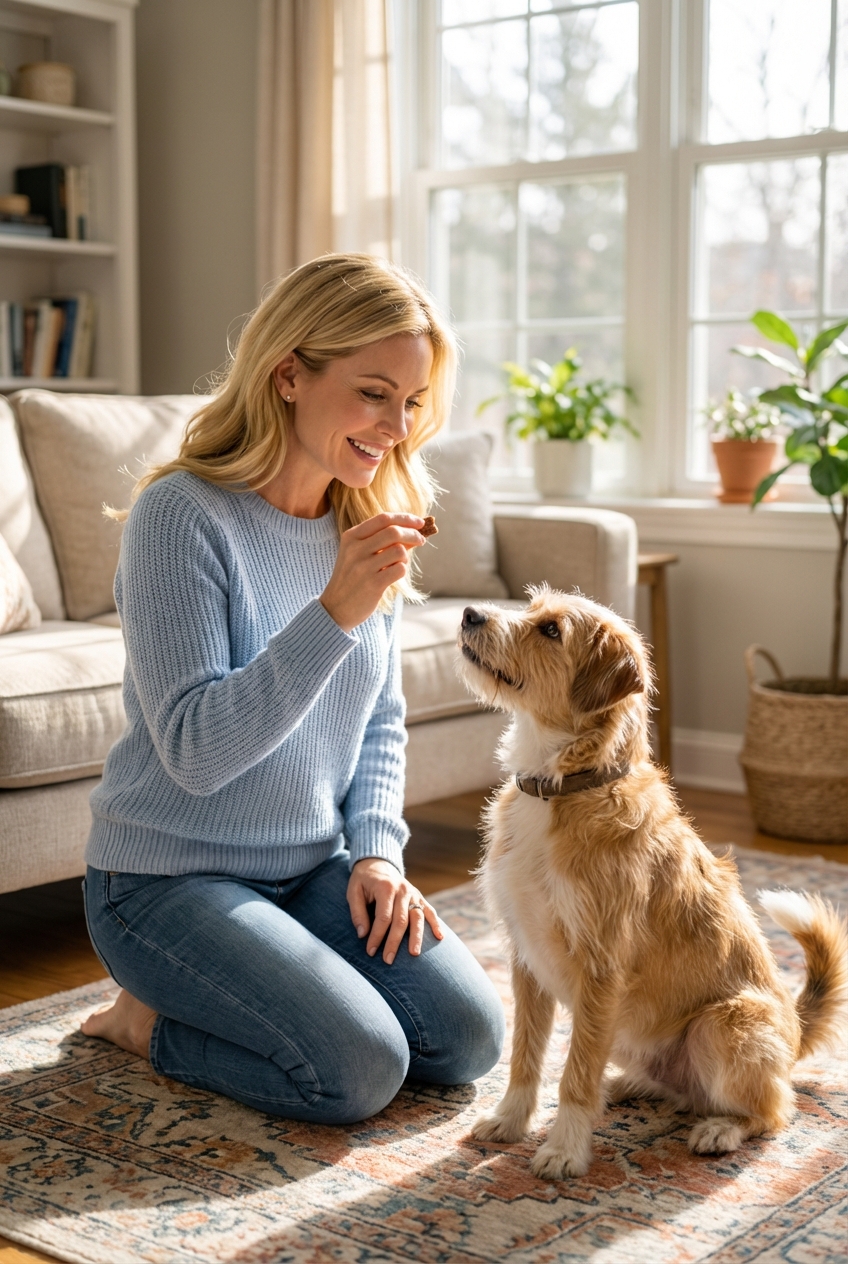
Master clicker training with clear, humane steps: charge the clicker, improve timing, place rewards correctly, teach sit/name/touch, try shaping, fade the cl...
Article
•
Designer Mixes
How to Use a Clicker for Dog Training

Shari Shidate
Designer Mixes contributor
Clicker training is one of my favorite ways to teach dogs because it is simple, kind, and incredibly clear for your pup. Instead of correcting mistakes, you focus on marking the exact moment your dog does something right, then rewarding it. Over time, your dog starts offering great behaviors because learning feels safe and fun.
This guide will walk you through what a clicker is, how it works, and how to use it in real life at home, in your yard, and on walks.
What clicker training is (and why it works)
A clicker is a small handheld device that makes a consistent “click” sound. In training, the click is a marker, meaning it tells your dog: “Yes, that exact thing you just did is what earns a reward.”
Clicker training is based on operant conditioning, specifically positive reinforcement. When a behavior is followed by something your dog wants (like a tasty treat), that behavior becomes more likely to happen again.
- Clear communication: The click is consistent and often more precise than a verbal marker.
- Less frustration: Dogs learn by being guided toward success.
- Confidence building: Great for shy, anxious, or easily overwhelmed dogs.
What you need before you start
You do not need fancy gear. You just need good timing and rewards your dog truly cares about.
Supplies
- Clicker: Any standard clicker is fine. If your dog is noise-sensitive, choose a softer clicker or put the clicker in your pocket to muffle the sound.
- Treats: Tiny, soft, high-value pieces. Think pea-sized.
- Treat pouch: Optional, but it makes training smoother.
- Quiet space: Start somewhere with minimal distractions.
Choosing the right reward
Many dogs will work for kibble in a quiet room, but distractions change the game. For early training and for outdoors, use something special like small bits of chicken, or a soft training treat. Cheese can work too, but go easy because some dogs are sensitive to rich foods.
If your dog loves toys, a quick tug or toss can also work.
Step 1: Charge the clicker
Before your dog understands the click, you teach them that click = treat. This is called charging (or loading) the clicker.
How to do it
- Stand or sit with your dog in a calm room.
- Click once.
- Immediately give a treat.
- Repeat 10 to 20 times.
Keep it easy and upbeat. No cues. No asking for behaviors yet. You are building a positive association.
How to know it worked
After a handful of repetitions, your dog should start looking for the treat when they hear the click. That “Where is my snack?” look is exactly what you want.
The clicker training rule that matters most: Timing
Your click should happen the instant the behavior happens. Not after your dog finishes, not when they walk back to you, and not when you reach into the treat bag.
Click marks the moment. The treat delivers the payment.
If your timing is off, do not worry. This is a skill for humans too. Start with easy behaviors so you and your pup can succeed together.
Step 2: Teach an easy win (sit)
Sit is a great first clicker behavior because most dogs naturally offer it.
Option A: Capture the sit
- Wait quietly.
- The moment your dog’s bottom touches the floor, click.
- Give a treat.
- Repeat until your dog starts sitting more often to earn clicks.
Option B: Lure the sit
- Hold a treat at your dog’s nose.
- Slowly move it up and back over their head.
- As they sit, click the instant their bottom hits.
- Treat.
Once sit is happening reliably, you can add the verbal cue “sit” right before they do it. Say it once, then wait. If they sit, click and reward.
If you ever click at the wrong moment, do not try to “take it back.” Just give the treat, take a breath, and set up an easier repetition so you can click the right thing next time.
Common clicker mistakes (and quick fixes)
Reaching before clicking
Try to keep your treat hand still until after the click. If your hand moves first, your dog may start watching the hand instead of listening for the marker.
A simple fix: hold a few treats in your non-clicker hand, click, then deliver the treat smoothly right after.
Taking too long to reward
The click comes first, and the treat should follow quickly. Keep treats ready so the reward is delivered within a second or two.
Clicking to get your dog’s attention
The click is not “hey!” It is “yes!” If you use it to call your dog or interrupt behavior, it loses meaning.
Asking for too much too fast
Dogs learn best in tiny steps. If your dog stops succeeding, make the task easier, reduce distractions, or increase reward value.
Training too long
Short sessions prevent burnout. Many dogs do best with 1 to 3 minutes, especially beginners and young dogs. You can always do a few mini sessions per day, and stop while your dog is still eager.
Clicker training games you can use daily
These are simple, fun exercises that build focus and manners without feeling like a drill.
Name game (attention)
- Say your dog’s name once.
- When they look at you, click.
- Reward.
This builds the foundation for polite walking and recall.
Hand target (touch)
- Hold out an open palm near your dog’s nose.
- When they sniff or touch it, click.
- Reward.
Touch is wonderful for guiding your dog away from distractions and can be used as a friendly “come here” skill.
Settle on a mat
- Place a blanket or mat on the floor.
- Click and reward for any interaction: looking at it, stepping on it, then lying down.
- Gradually reward calm, relaxed body language.
This is especially helpful for high-energy mixes who need help learning an off switch.
How to phase out the clicker (without losing progress)
You do not have to click forever. Once a behavior is reliable, you can use the clicker less often and move to real-life rewards and occasional treats.
Fade treats thoughtfully
- Keep praising and occasionally reward for great responses.
- Switch to a variable schedule, meaning not every correct behavior earns food.
- Still reward the hardest versions: around distractions, longer duration, or farther distance.
Think of treats like paychecks. If the job gets harder, the pay should match.
Use a verbal marker too
Many families also teach a marker word like “yes” for hands-free moments. Use it the same way as the click: mark the behavior, then reward.
Using a clicker for problem spots
Once your dog understands the clicker, you can take those foundation skills and aim them at real-life challenges. You are still doing the same thing: mark what you want, then reinforce it until it becomes your dog’s new habit.
Jumping on people
Instead of clicking the jump, click what you want: four paws on the floor. The moment your dog approaches calmly or sits, click and reward. Ask guests to ignore jumping and only greet when your dog is grounded.
Leash pulling
Start indoors, then in the yard, then on calm sidewalks. Click and reward for a loose leash and for checking in with you. Increase distractions gradually.
For management, it also helps to pause, change direction, or take a few steps back when the leash goes tight. This prevents your dog from practicing pulling their way to what they want.
Barking for attention
Do not click barking. It can help to click and reward a moment of quiet, but be careful: some dogs learn “bark, pause, get paid.”
Instead, try to prevent rehearsal and reward earlier. If you know barking usually starts when you sit down or pick up your phone, click and reward calm behavior before the barking happens. Teaching an alternative like “touch” or “go to mat” gives your dog a clear job that is incompatible with barking at you.
Safety and wellness notes
Training should support your dog’s whole health. If your dog suddenly seems unable to sit, jump, or move comfortably, or if they become unusually reactive, consider a veterinary check. Pain, ear infections, dental discomfort, and GI upset can all affect behavior and learning.
- Keep treats tiny to avoid stomach upset and excess calories.
- Adjust meals if you are using a lot of food rewards that day.
- Watch stress signs like lip licking, yawning, whale eye, tucked tail, or refusing treats.
A simple 7-day clicker plan
If you want structure, here is an easy week to build momentum.
- Day 1: Charge the clicker (10 to 20 clicks with treats).
- Day 2: Capture or lure sit.
- Day 3: Add name game.
- Day 4: Teach touch (hand target).
- Day 5: Practice sit and touch in a new room.
- Day 6: Start mat settle with easy rewards.
- Day 7: Combine skills: name, touch, then settle.
Keep sessions short, end on a win, and celebrate the small improvements. Those are the building blocks of a well-mannered, confident dog.