Tight mats can hurt and hide skin problems. Follow a vet assistant’s step-by-step method to remove small mats safely, avoid scissors, and know when a groom...
Article
•
Designer Mixes
How to Untangle Matted Dog Hair

Shari Shidate
Designer Mixes contributor
Mats happen to the best of dogs and the best of pet parents. A little friction from collars, harnesses, playtime, or a damp coat can turn into tight tangles fast, especially in doodles, poodles, spaniels, double-coated breeds, and long-haired mixes. The good news is that many mats can be safely worked out at home if you go slowly, use the right tools, and know when to stop.
As a veterinary assistant in Frisco, Texas, I have seen painful mats that pull the skin, trap moisture, and even hide sores. This step-by-step guide will help you untangle matted dog hair with less stress for you and your pup.
Why mats matter
Mats are not just a cosmetic issue. When hair packs tightly together, it can:
- Pull on the skin and cause constant discomfort
- Trap moisture near the skin, which can lead to hot spots and skin infections
- Hide parasites like fleas and ticks
- Reduce airflow and make it harder for the coat to regulate temperature
- Make grooming and vet exams harder because the skin cannot be properly checked
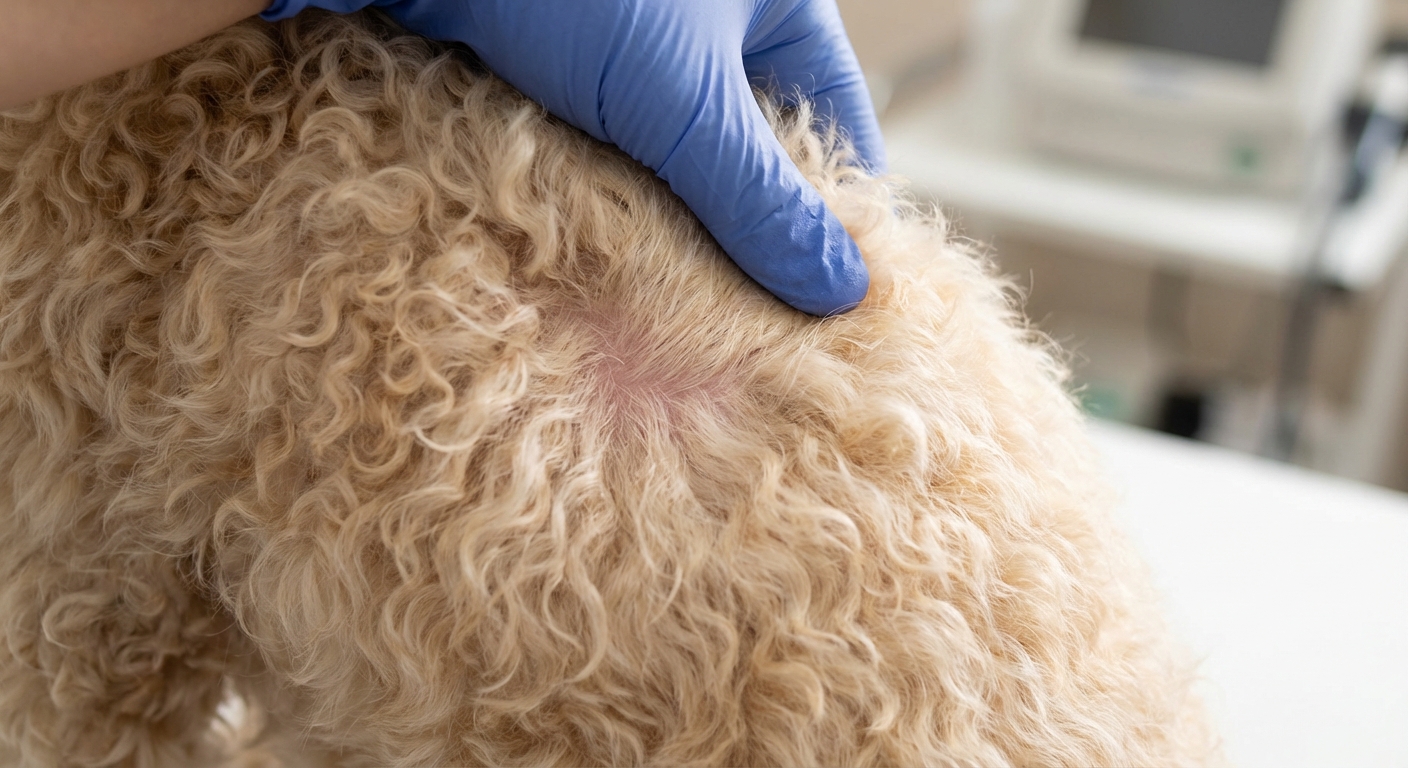
If your dog flinches when you touch a matted area, has a bad odor, redness, oozing, or you see bugs, it is time to pause and consider professional help.
Know what you are dealing with
Tangles vs. mats vs. pelted coat
- Tangles are surface knots. You can usually tease these apart with your fingers and a slicker brush.
- Mats are tighter clumps that sit closer to the skin and need careful section-by-section work.
- Pelted means the coat is fused into a dense layer over a large area. At that point, brushing can be painful and shaving is often the most humane choice.
A quick check: use your fingers to part the hair down to the skin. If you cannot see skin in multiple areas, or your comb will not go through at the roots, the coat may be approaching pelted.
Supplies that make a big difference
Having the right tools helps you avoid tugging and accidentally scraping skin. Here is a simple home kit:
- Slicker brush for surface tangles and finishing
- Metal greyhound comb (medium and fine) to confirm the coat is truly mat-free
- Dematting tool or mat splitter for stubborn mats, used with great care
- Detangling spray made for pets, or a light coat conditioner diluted with water
- Blunt-tip grooming scissors for cutting away small, isolated mats that are away from skin
- High-value treats and a lick mat or stuffed Kong for calm cooperation
- Good lighting and a non-slip surface
Please skip: human hair products with heavy fragrance, essential oils, or alcohol. And never use a razor blade, seam ripper, or craft scissors on mats.
Step-by-step: Untangling matted dog hair safely
Step 1: Choose the right moment
Start when your dog is already relaxed, like after a walk or a meal. Aim for short sessions, even 3 to 5 minutes at a time. You are building trust, not trying to win a race.
Step 2: Locate mats and protect the skin
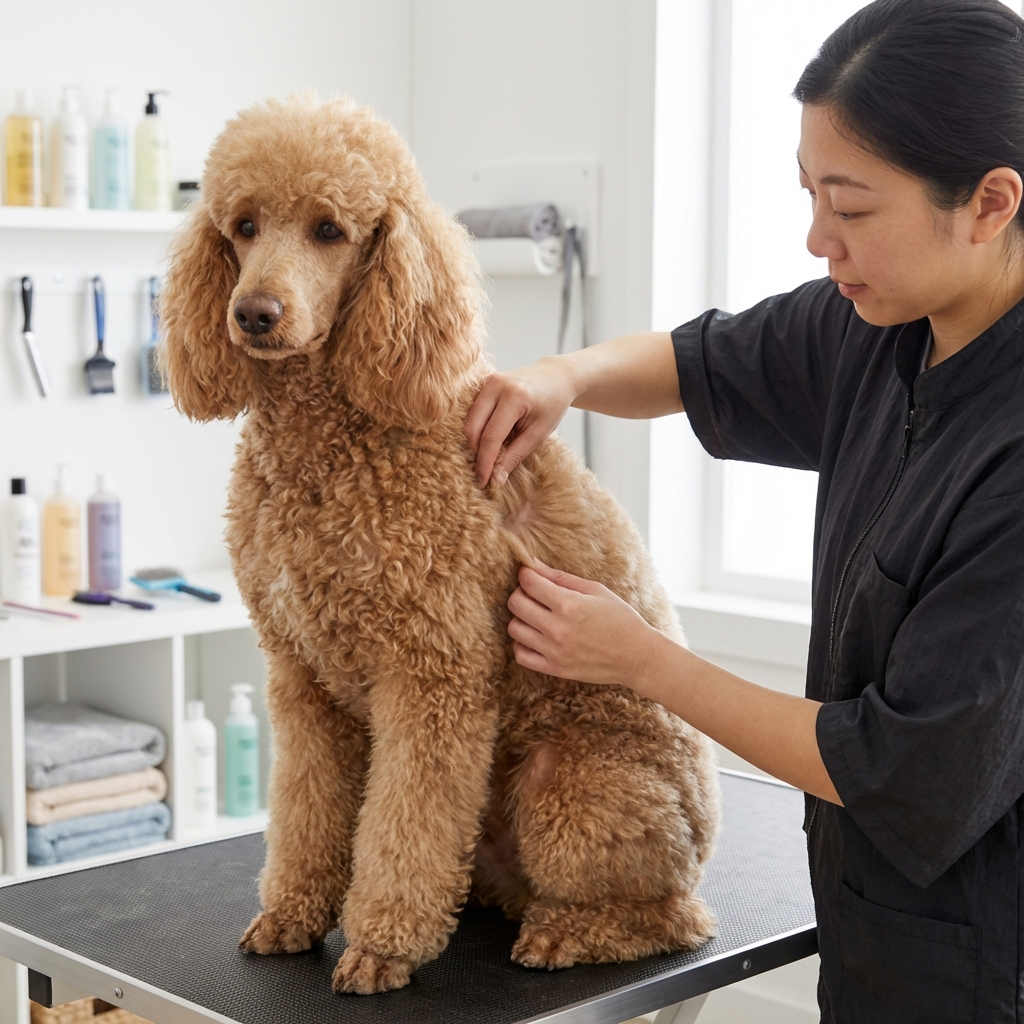
Use your fingers to find mats around common trouble spots: behind the ears, under the collar, armpits, inner thighs, belly, tail base, and between the toes. Hold the hair at the base of the mat, right near the skin, with one hand. This “anchors” the coat so your brushing does not tug the skin.
Step 3: Add slip
Mist detangling spray lightly onto the mat and surrounding hair. Let it sit for 30 to 60 seconds. A little slip reduces breakage and pulling.
Step 4: Break the mat into smaller pieces
Instead of attacking the whole clump, use your fingers to gently pull the mat apart into smaller sections. Think of it like loosening a knot in a shoelace. Small wins add up quickly.
Step 5: Work from the ends toward the skin
Using a slicker brush or comb, start at the outer edge of the mat, brushing a few hairs at a time. Gradually move inward. If you start at the skin, it hurts more and tightens the mat.
Step 6: Use a dematting tool only if needed
If the mat is stubborn, a dematting tool can help split it. Use short, gentle strokes, and always keep the tool angled away from the skin. Stop if your dog reacts, if you see redness, or if you cannot clearly see where the skin is.
Step 7: “Comb check” to confirm it is truly done
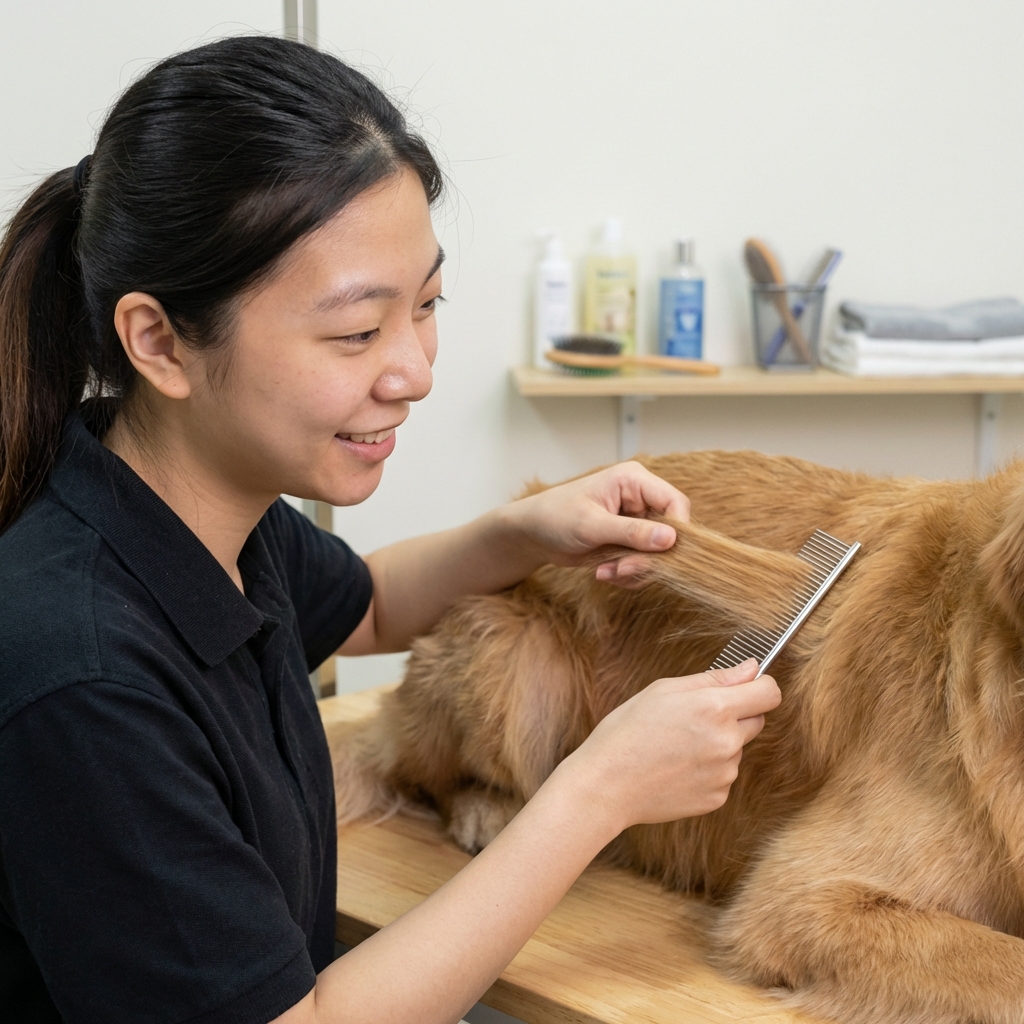
Once the area looks fluffy, run a metal comb through from skin to ends. If the comb glides smoothly, you are mat-free. If it snags near the roots, there is still a hidden knot and you need a bit more careful work.
Step 8: Reward and take breaks
Offer treats during and after. If your dog is stressed, stop and try again later. Multiple calm sessions are safer than one long, frustrating one.
When it is safer to clip or call a pro
Some mats should not be brushed out at home. Contact a professional groomer, or your veterinary clinic, if:
- The mat is tight to the skin and you cannot fit a comb under it
- Mats cover a large area or the coat feels like one solid layer
- Your dog is snapping, yelping, or panicking
- The mat is in a high-risk zone like armpits, groin, ears, or between toes
- You see redness, odor, moisture, scabs, or bugs
For severe matting, shaving can be the kindest option. Groomers use professional clippers and techniques to reduce the risk of skin cuts, especially where skin can be thin or folded under a mat.
Kind rule of thumb: if removing a mat will hurt, it is not “beauty.” It is a medical comfort issue, and your dog deserves the gentlest solution.
Extra care for common problem areas
Behind the ears
Ear mats are common and can hide skin irritation. Use very small sections and a comb check. If the mat is tight, do not scissor close to the ear leather.
Armpits and harness lines
This area is tender and moves a lot. If your dog wears a harness daily, check and brush here several times a week.
Tail and sanitary area
Mats here can trap debris and moisture. If it is messy or smelly, a professional sanitary trim may be safer and cleaner.
Between toes
Toe mats can cause slipping and soreness. If your dog will not tolerate paw handling, ask a groomer or your vet team for help.
Prevention: the easiest way to “untangle” mats
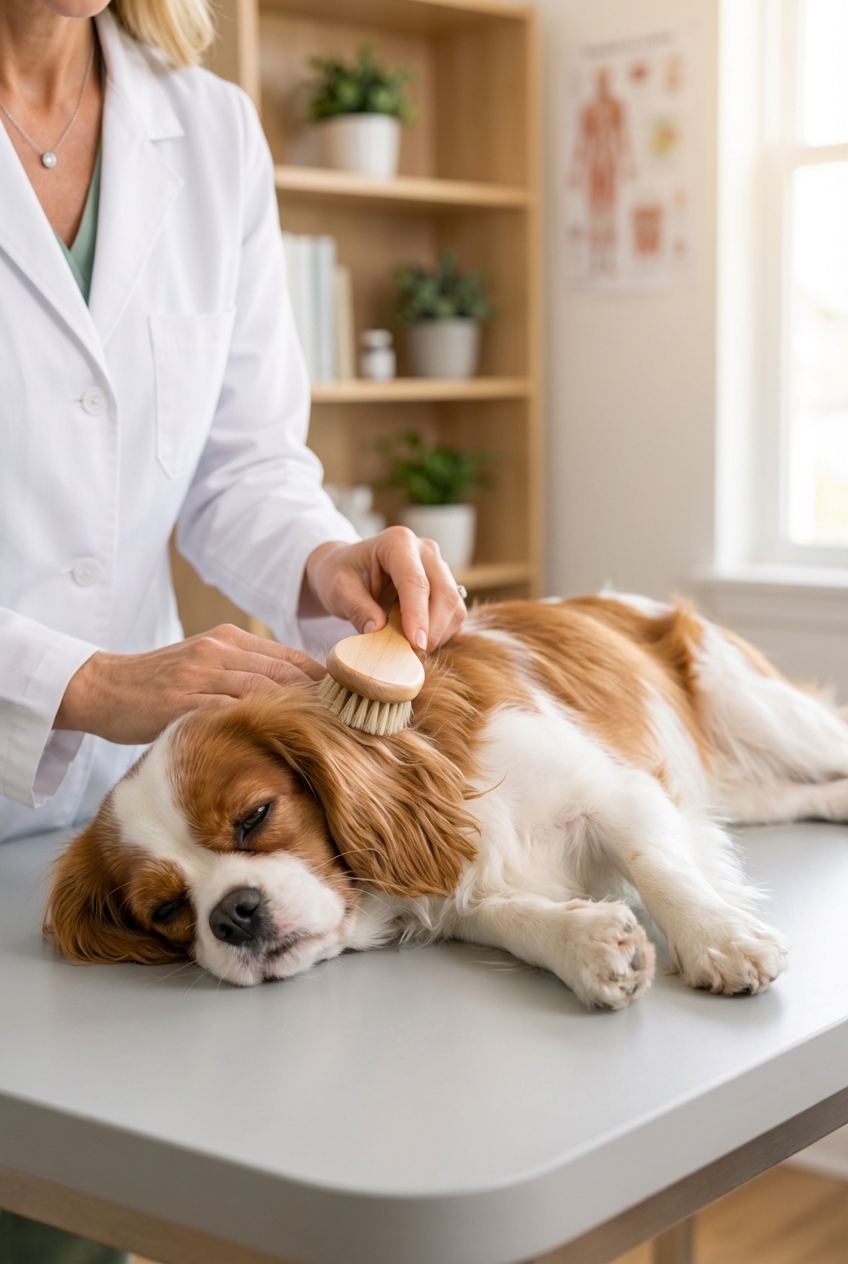
Once mats are gone, keeping them away is so much easier than repeating the struggle. A simple plan:
- Line brush 3 to 5 times per week for curly and long coats. Part the hair in rows and brush to the skin.
- Comb check after brushing, especially in friction spots.
- Keep coats dry. Towel dry thoroughly after rain or bathing. Damp coats mat fast.
- Use conditioner during baths and rinse well. Dirty, dry coats tangle more.
- Regular trims every 6 to 8 weeks for high-maintenance coats.
- Collar and harness checks. Remove and brush under them daily if your dog mats easily.
If your dog has a “doodle” or poodle-type coat, consider scheduling professional grooming before the coat gets long enough to tangle easily. That single habit prevents most severe matting.
Quick FAQs
Can I use scissors to cut out mats?
Only for small mats that are clearly away from skin, and only with blunt-tip grooming scissors. Skin can be pulled up into the mat like a fold, especially in armpits, groin, and behind ears. When in doubt, use clippers or a professional.
Should I bathe my dog before removing mats?
Usually no. Water tightens mats like felt. Detangle first, then bathe and condition, then dry fully and brush again.
My dog hates brushing. What can I do?
Start with tiny sessions and high-value rewards. Try a lick mat, brush during calm times, and focus on one small area per day. If your dog is in pain from matting, professional grooming and a fresh start can make home brushing much easier.