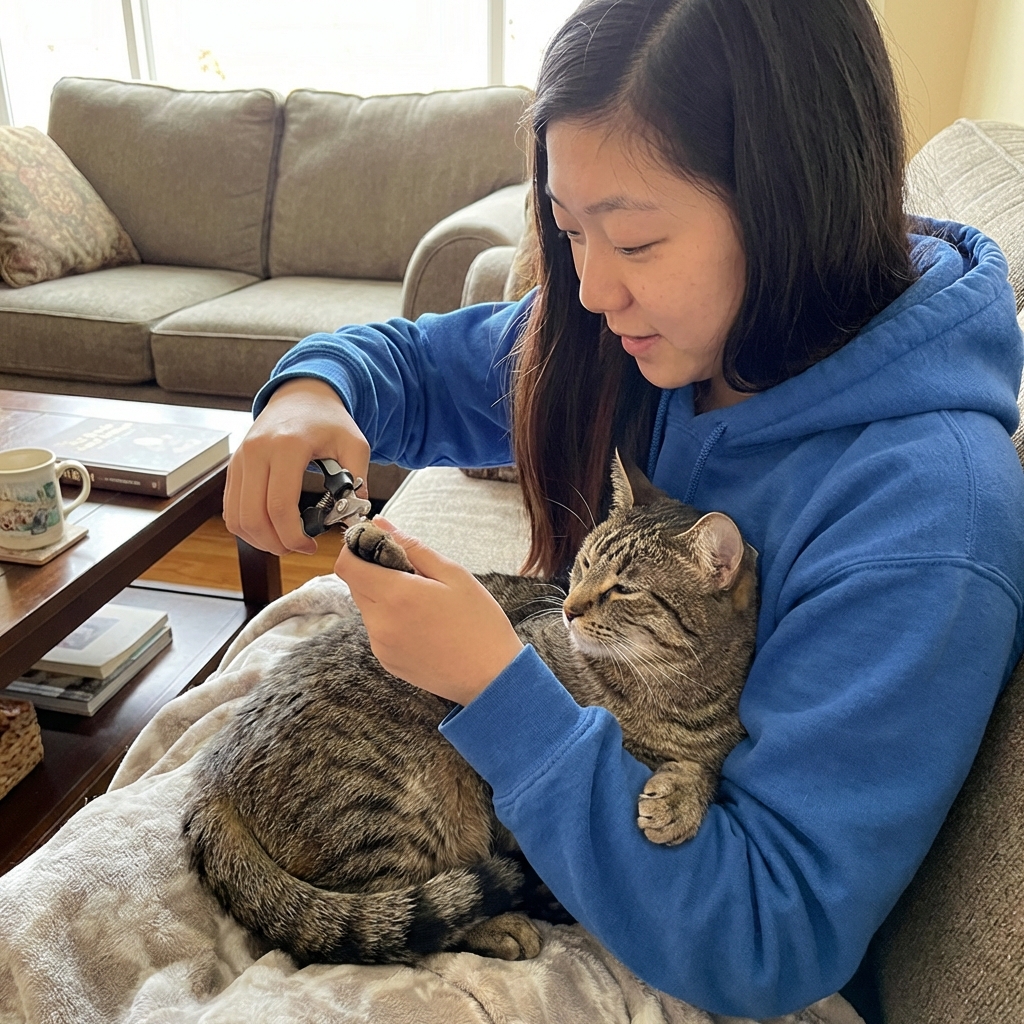
Trim your cat’s nails at home with calm, vet-approved techniques. Learn nail anatomy, the best clippers, how far to cut, low-stress handling, and what to d...
Article
•
Designer Mixes
How to Trim Your Cat's Nails Without Stress

Shari Shidate
Designer Mixes contributor
Trimming your cat’s nails can feel intimidating, especially if you have tried once and ended up with a squirmy cat and a racing heart. The good news is that most cats can learn to tolerate nail trims, and many even relax into the routine when it is done gently and consistently.
As a veterinary assistant, I like to remind pet parents of one key truth: a calm nail trim is less about “holding your cat still” and more about setting up the environment, the timing, and the technique so your cat feels safe.
Why trimming matters
Indoor cats still need nail care. Without regular trims, nails can get sharp enough to snag on carpet or furniture, and in some cats they can overgrow and curl toward the paw pad. Long nails also tend to make accidental scratches more common during play or when your cat jumps off your lap.
- Comfort: helps prevent overgrowth and painful snagging
- Home harmony: reduces damage to skin, clothing, and furniture
- Health checks: gives you a routine moment to look for swelling, litter clumps, or tenderness
What you need
Having the right supplies within arm’s reach prevents that stressful moment where you let go to grab something and your cat bolts.
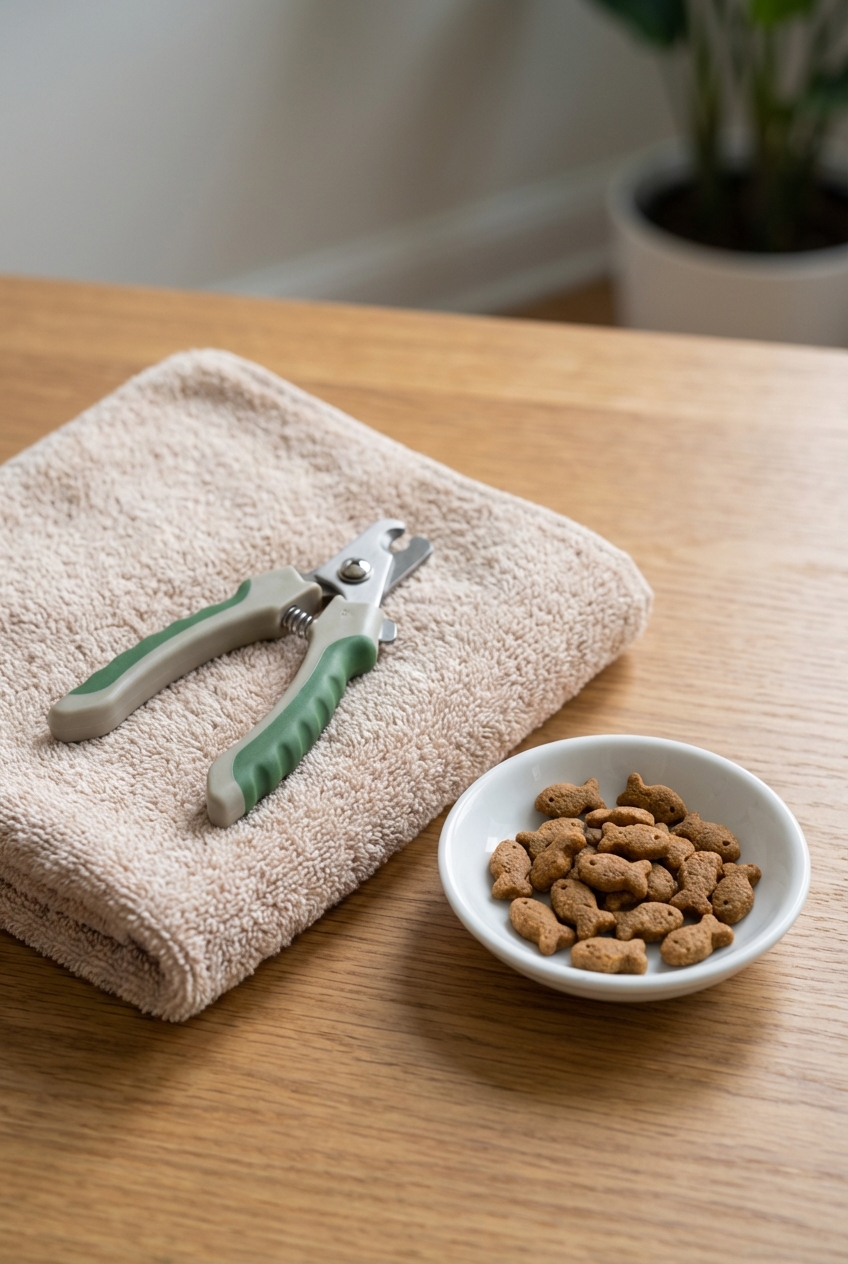
- Cat nail trimmers: scissor-style or guillotine-style. Many cats do best with small, sharp scissor-style trimmers for control and a clean cut.
- A treat your cat loves: tiny, high-value rewards like freeze-dried meat or a lickable treat.
- A towel or soft blanket: for comfort and gentle restraint if needed.
- Styptic powder: just in case you quick a nail. If you use a styptic pencil, make sure it is pet-safe. Some human products can sting and may include ingredients you do not want on a cat.
- Cornstarch: a temporary backup for minor bleeding while you apply firm pressure.
- A good light: helps you see the quick, especially on light-colored nails.
- A steady, non-slip surface: a towel on your lap or a yoga mat on the table can help your cat feel secure.
Where to cut
A cat’s nail has an outer hard shell and an inner quick that contains blood vessels and nerves. If you cut into the quick, it hurts and bleeds, and that one experience can make future trims much harder.
How to spot the quick
- Light nails: the quick often looks like a pink triangle inside the nail.
- Dark nails: the quick is harder to see. Trim tiny amounts, focusing on just the sharp tip.
A safe rule: trim only the curved, sharp tip and stop well before any pink area or darker central core.
Do not forget the dew claw (the thumb nail on the front legs). It does not always wear down naturally and is one of the most likely nails to overgrow or curl.
Set the stage
The biggest stress reducer is choosing a moment when your cat is already relaxed. Many cats do best after a meal, after play, or during a sleepy cuddle window.
Environment checklist
- Pick a quiet room and turn off loud TVs or music.
- Sit on the floor or a stable chair so you feel grounded.
- Keep other pets out of the room.
- Have treats ready and open before you bring your cat over.
Think “short and successful” instead of “finish every nail no matter what.” Two nails today and two tomorrow still counts as a win.
Step by step
1) Practice paw handling
Touch your cat’s paws briefly, then reward. The goal is to teach your cat that paw handling predicts something good.
2) Position your cat
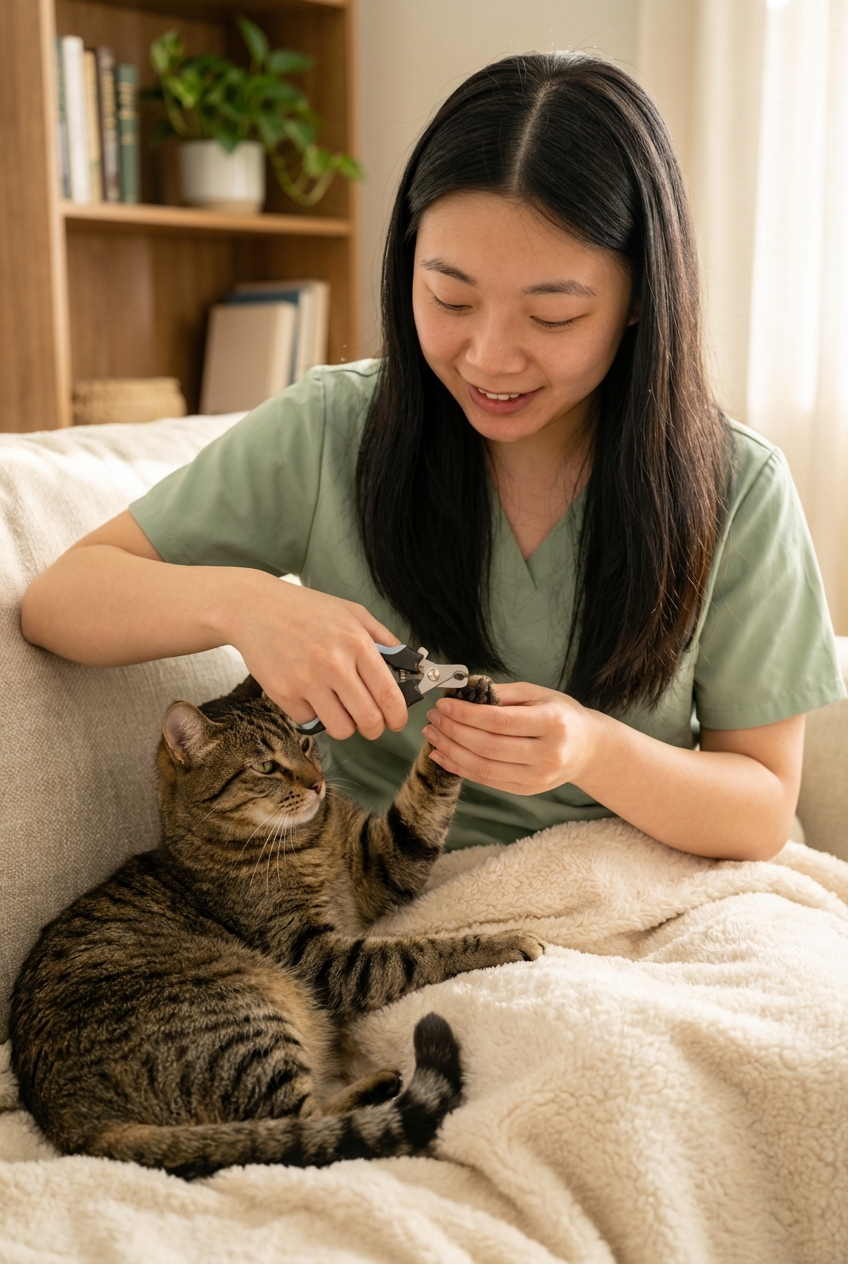
Many cats do best facing away from you in your lap, or sitting beside you on a couch. Avoid looming over your cat. Keep your shoulders soft and your movements slow.
3) Extend the nail
Hold the paw gently. Press lightly on the pad and the top of the toe to extend the claw. Avoid squeezing the toe itself.
4) Make one clean cut
Trim the tip only. Aim for a small slice. If you are unsure, trim less. You can always take more off, but you cannot undo a cut into the quick.
Angle tip: clip across the tip, not along the length of the nail. If you cut too parallel to the nail, you are more likely to pinch or split it.
5) Reward right away
Give a treat after each nail, especially in the beginning. This helps build cooperation and keeps your cat from feeling trapped.
6) End on a good note
Stop before your cat gets irritated. If your cat starts tail-thumping, pulling away, growling, or whipping their head around, take a break and try again later.

How often to trim
Many cats do well with trims about every 2 to 4 weeks, but it varies. Some cats, especially kittens, seniors, and cats with fast-growing nails, may need weekly touch-ups. Others can go longer.
Cat-specific signs it may be time include nails snagging on blankets, sharper tips than usual, visible overgrowth, or a dew claw that is starting to curve. You may also hear occasional clicking on hard floors, but that is not a perfect clue because cats can retract their claws.
Front nails often need trimming more often than back nails, and dew claws deserve extra attention.
What not to do
- Do not chase your cat: it turns nail trims into a scary game.
- Do not force all four paws at once: especially if your cat is new to trimming.
- Do not yell or punish: it increases fear and makes handling harder.
- Do not use dull clippers: they can crush the nail and cause discomfort.
- Do not hold your cat tighter when they struggle: pause, breathe, reset, or stop.
If you quick a nail
It happens, even to professionals. The key is to stay calm so your cat does not associate panic with trimming.
What to do
- Apply styptic powder to the nail tip with gentle pressure for 10 to 30 seconds.
- If you do not have styptic powder, use cornstarch as a temporary option and apply steady, firm pressure until it slows.
- Keep your cat quiet for a few minutes so the clot can form.
If bleeding does not stop within about 10 minutes, or if your cat seems very painful, contact your veterinarian.
Tips for different cats
Kittens
Kittens learn quickly. Do short practice sessions where you clip just one or two needle tips and reward. Early positive experiences can prevent years of stress.
Senior cats
Older cats may have thicker nails and may not wear them down as well. Go slowly, use sharp clippers, and watch for arthritis. If your cat is sensitive about paw handling, ask your vet team for a comfort-focused plan.
Spicy cats
If your cat escalates fast, your safest option may be to work with your veterinary clinic or a certified feline groomer. Some cats benefit from pre-visit calming strategies or veterinarian-prescribed medication for handling. Safety matters for you and your cat.
Quick troubleshooting
- Your cat will not extend claws: try when they are sleepier, use a better light, and press gently on the pad and top of the toe. If your cat tenses, pause and reward.
- Nails are very dark: trim only the sharp tip and take tiny slices. When in doubt, stop early.
- Your cat mouths or bites: end the session, then restart on another day with shorter reps, more treats, and a towel wrap if needed. If biting is frequent, ask your vet team for help.
Other ways to help
Nail trimming is helpful, but it is not the only tool.
- Scratching posts: offer tall, sturdy posts and flat scratchers in favorite hangout areas.
- Soft nail caps: can reduce damage for some cats, but they must be applied correctly and monitored.
- Regular play: helps many cats burn off nervous energy before handling.
When to ask for help
Reach out to a vet clinic or groomer if:
- Your cat’s nails are curling toward the paw pad, especially the dew claw.
- Your cat cries, limps, or resists strongly when paws are touched.
- You cannot trim without being scratched or bitten.
- You see swelling, discharge, or an injured nail.
You are not failing if you need help. Some cats truly do better with trained hands and the right support tools.
A gentle routine
If you want a simple plan, try this for two weeks:
- Days 1 to 4: touch paws for 3 to 5 seconds, reward, stop.
- Days 5 to 8: extend one nail, reward, stop.
- Days 9 to 14: trim 1 to 3 nails per session, reward after each nail.
Most cats build tolerance faster than you expect when they feel in control and the experience stays predictable and kind.