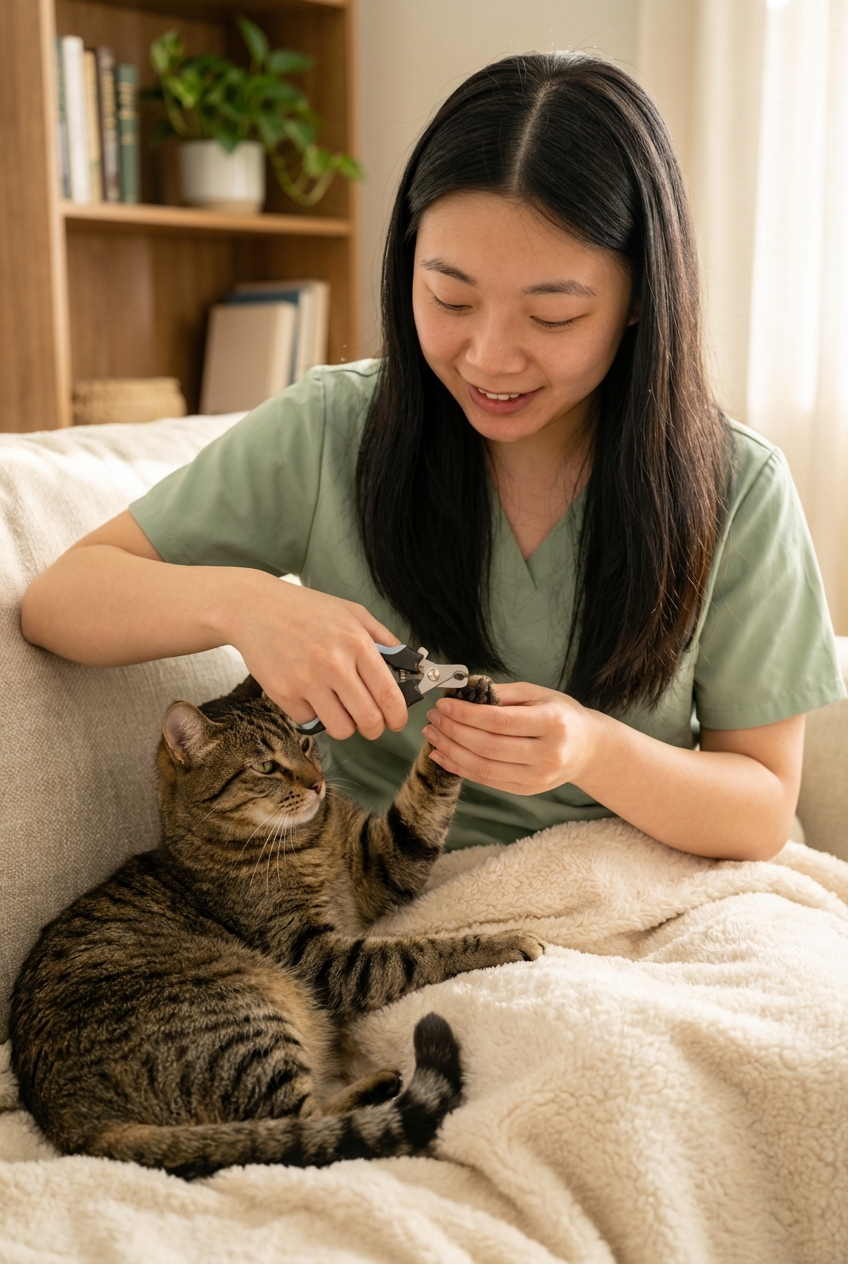
Trim your cat’s nails at home with calm, vet-approved techniques. Learn nail anatomy, the best clippers, how far to cut, low-stress handling, and what to d...
Article
•
Designer Mixes
How to Trim a Cat’s Nails

Shari Shidate
Designer Mixes contributor
Trimming your cat’s nails is one of those small habits that can make a big difference in day-to-day comfort for both of you. It can help reduce painful snagging, protect furniture, and prevent scratches that happen during normal play. And when it is done gently and consistently, most cats learn to tolerate it well.
As a veterinary assistant, I always tell pet parents the same thing: the goal is not perfection. The goal is a calm, safe routine that keeps nails from getting sharp and overgrown.

Before you start: what you are trimming
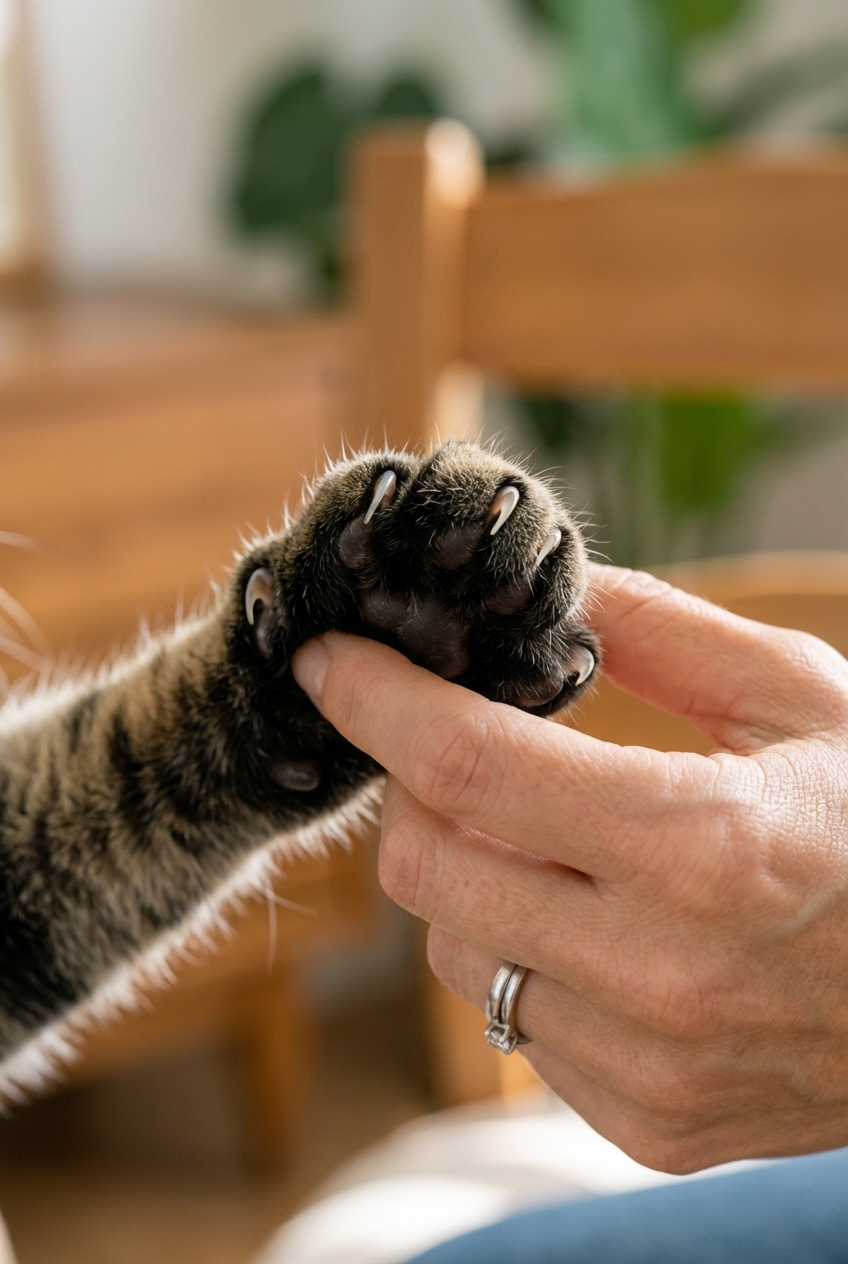
A cat’s nail has two main parts:
- The outer nail (the sharp curved part you want to shorten)
- The quick (a living area inside the nail with blood vessels and nerves)
If you cut into the quick, it hurts and it bleeds. The good news is you usually only need to remove the very tip to make a big difference.
What you need
- Cat nail trimmers (small scissor-style or guillotine-style). Human nail clippers can work in a pinch, but cat trimmers give you better control.
- Good lighting, ideally near a window or with a bright lamp.
- Styptic powder (or styptic pencil) in case you nick the quick.
- Treats your cat truly loves, or a lickable treat for easy calming rewards.
- A towel (optional) if your cat does better gently wrapped.
If your cat has dark nails, a small flashlight can help you see where the quick begins.
Step-by-step: a calm, safe nail trim
1) Pick the right moment
Choose a time when your cat is naturally relaxed, often after a meal or a play session. Avoid trimming when your cat is already stressed or wound up.
2) Get your cat comfortable with paw handling
If your cat is new to nail trims, start for a few days by simply touching paws briefly, then giving a treat. This builds trust and predictability.
3) Extend one claw
Hold the paw gently. With your thumb and forefinger, press lightly on the toe pad and the top of the toe to extend the claw.
4) Identify the quick
On light or clear nails, the quick often looks like a pink triangle inside the nail. On dark nails, trim only the sharp tip at first. If you look at the cut end of a dark nail, you will often see a pale center. Stop before you reach any darker, moist-looking core.
5) Trim the tip only
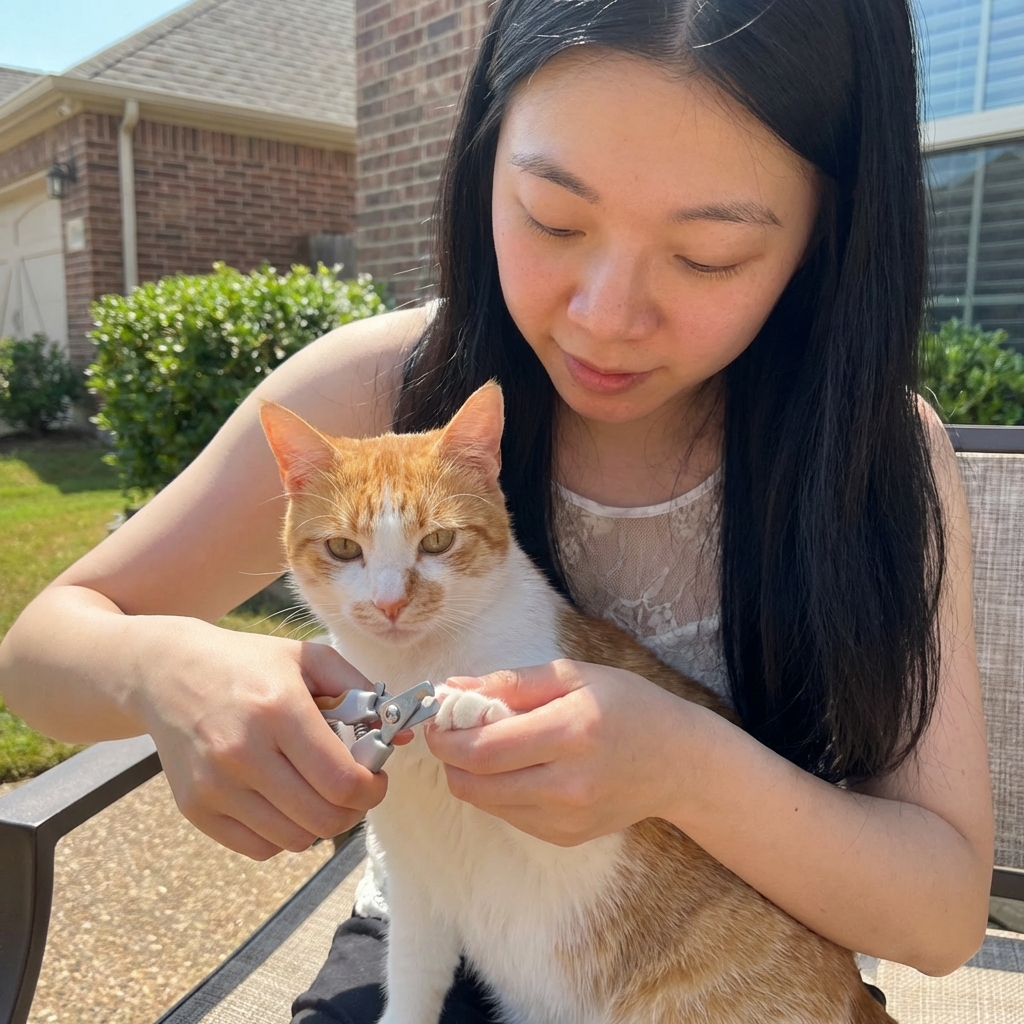
Cut a small amount, about 1 to 2 mm off the end, at a slight angle. Do not cut straight across deep into the curve. You are basically dulling the sharp hook.
6) Reward immediately
Give a treat after each nail, or even after each paw. For many cats, frequent small rewards are the key to long-term success.
7) Keep sessions short
You do not have to do all four paws in one sitting. Many cats do best with 1 to 3 nails at a time. That is still progress.
How often should you trim?
Most indoor cats do well with trims every 2 to 4 weeks. Kittens may need it a bit more often because those tiny nails can feel like needles. Senior cats can also need closer monitoring because nails may thicken and grow differently with age.
If you hear nails clicking on hard floors, see nails snagging on blankets, or notice your cat getting stuck in carpet, that is a sign it is time.
If you accidentally cut the quick
First, take a breath. It happens, even to professionals.
- Apply styptic powder to the nail tip and hold gentle pressure for 10 to 30 seconds.
- If you do not have styptic, cornstarch can help in a pinch.
- Keep your cat calm and avoid re-trimming that nail for a while.
Call your veterinarian if bleeding will not stop within a few minutes, or if your cat seems unusually painful afterward.
Common nail-trimming questions people ask (with trusted answers)
Should I trim the back nails too?
Yes. Front nails usually cause the most snags and scratches, but back nails can get sharp as well. Some cats wear down back nails more naturally, so you may trim those less often.
My cat hates it. What can I do?
- Go slower: start with paw touches only, then one nail, then build up.
- Try a lickable treat: many cats will stay busy licking while you trim.
- Change location: a quiet bathroom or a calm bedroom can help.
- Wrap with a towel if needed, but keep it gentle. Forced restraint can increase fear in some cats.
Do scratching posts replace nail trims?
Scratching is healthy and helps remove the outer nail sheath, but it does not always keep nails short enough, especially for indoor cats. Scratching posts plus regular trims is the best combination for many households.
Is declawing a better option?
In most cases, no. Declawing is an amputation of the last bone of each toe and can lead to pain and behavior changes. Nail trims, scratching surfaces, and training are safer, kinder solutions for most cats.
When to let a professional handle it
Consider booking a nail trim with a groomer or your veterinary clinic if:
- Your cat becomes aggressive or extremely fearful during handling
- Your cat has very thick, overgrown, or curling nails
- Your cat is older, arthritic, or painful and does not tolerate paw manipulation
- You cannot see the quick well (very dark nails) and you feel unsure
A stress-free trim is always the priority. There is no shame in getting help.
My gentle, realistic takeaway
You do not have to become a perfect cat nail trimmer overnight. Start small, keep it calm, and celebrate tiny wins. One nail trimmed safely today is better than a stressful struggle that makes next time harder.
If you want, tell me your cat’s age, temperament, and whether their nails are light or dark, and I can suggest a simple trimming routine that fits your home.