Vet-assisted guide to puppy diarrhea: emergency red flags, bland diet options, pumpkin and probiotics, hydration support, foods to avoid, feeding schedule, a...
Article
•
Designer Mixes
How to Treat Puppy Diarrhea

Shari Shidate
Designer Mixes contributor
Puppy diarrhea is one of those issues that can go from “probably fine” to “we need a vet” faster than most pet parents expect. Puppies are small, they dehydrate quickly, and their immune systems are still developing. The good news is that many cases are mild and short-lived, and with the right steps you can often help your puppy feel better quickly while knowing exactly when it is time to call your veterinarian.
We will cover both immediate care and the behavior and management changes that help prevent repeat episodes.
Safety note: This guide is educational and not a substitute for veterinary care. If your puppy is very young, very small, or acting sick, do not wait it out.
First: Is this an emergency?
When I am helping clients as a veterinary assistant, this is always step one. Diarrhea itself is a symptom, not a diagnosis. Some causes are simple, and some can be dangerous in puppies.
Go to an emergency vet now if you notice any of the following
- Blood in the stool (bright red or black, tarry stool)
- Repeated vomiting or cannot keep water down
- Lethargy, collapse, weakness, or your puppy seems “not themselves”
- Signs of dehydration: sticky or tacky gums, sunken eyes, skin stays tented when gently lifted
- Bloated belly or severe abdominal pain
- Diarrhea in a very young puppy (under 12 weeks), or a toy breed that is tiny
- Known toxin exposure (chocolate, xylitol, grapes or raisins, rodent bait, medications, compost)
- No vaccines or unknown vaccine status (parvovirus risk)
Call your vet urgently (same day if possible) if
- Diarrhea lasts more than 24 hours, even if your puppy seems okay
- The diarrhea is getting more frequent or more watery
- Your puppy is still playful but is not eating normally
If you are unsure, call your vet. A quick phone triage can prevent a bigger crisis later.
What it usually looks like
Not all diarrhea is the same. Paying attention to the details helps your vet narrow the cause quickly.
What “mild” usually means
- Soft stool (think soft-serve) or one or two looser poops
- No vomiting
- Normal or near-normal energy
- Drinking water
If your puppy is having many urgent trips, passing puddles of water, or cannot settle between potty breaks, treat that as more than mild.
Track these details
- Frequency: once or twice versus many urgent trips
- Consistency: soft-serve, watery, mucus-covered
- Color: normal brown, pale or gray, bright yellow, black or tarry
- Contents: mucus, visible worms, foreign material like grass or plastic
- Other signs: vomiting, appetite changes, fever, coughing, sneezing
If it helps, use a simple 1 to 7 stool score at home, where 1 is very hard pellets and 7 is watery diarrhea. Most “normal” puppy stools land around 3 to 4.
Common causes in puppies
When people hear “behavior guide,” they sometimes expect obedience tips. But with diarrhea, behavior is actually diagnostic. What your puppy eats, chews, and explores has everything to do with their gut health.
Most common causes
- Diet change: switching foods too fast, new treats, rich foods
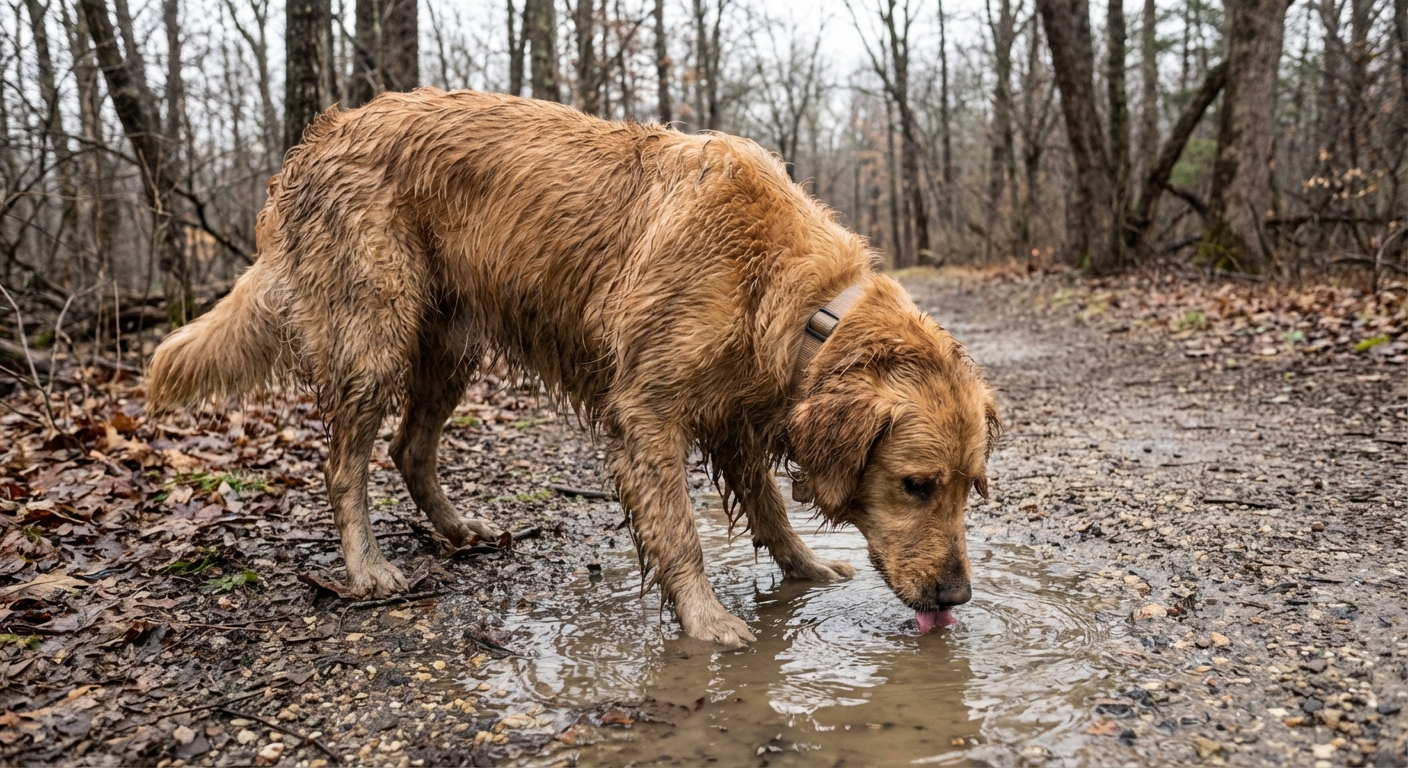
- Dietary indiscretion: eating trash, sticks, mulch, cat poop, table scraps
- Stress: new home, crate training, daycare, travel
- Parasites: roundworms, hookworms, giardia, coccidia
- Viral illness: parvo and other contagious stomach viruses (especially unvaccinated pups)
- Bacterial overgrowth or infection
- Food intolerance or sensitivity
- Foreign body: swallowing toys, socks, bones, corn cobs
Puppies are curious, and their mouths do a lot of “investigating.” If your puppy loves chewing and grabbing things on walks, treat diarrhea as a clue to tighten up management and supervision.
Home care for mild cases
If your puppy is bright, playful, drinking water, not vomiting, and the diarrhea is mild, you can often start supportive care at home while keeping a close eye on changes.
Step 1: Protect hydration
Dehydration is the biggest risk with diarrhea in puppies.
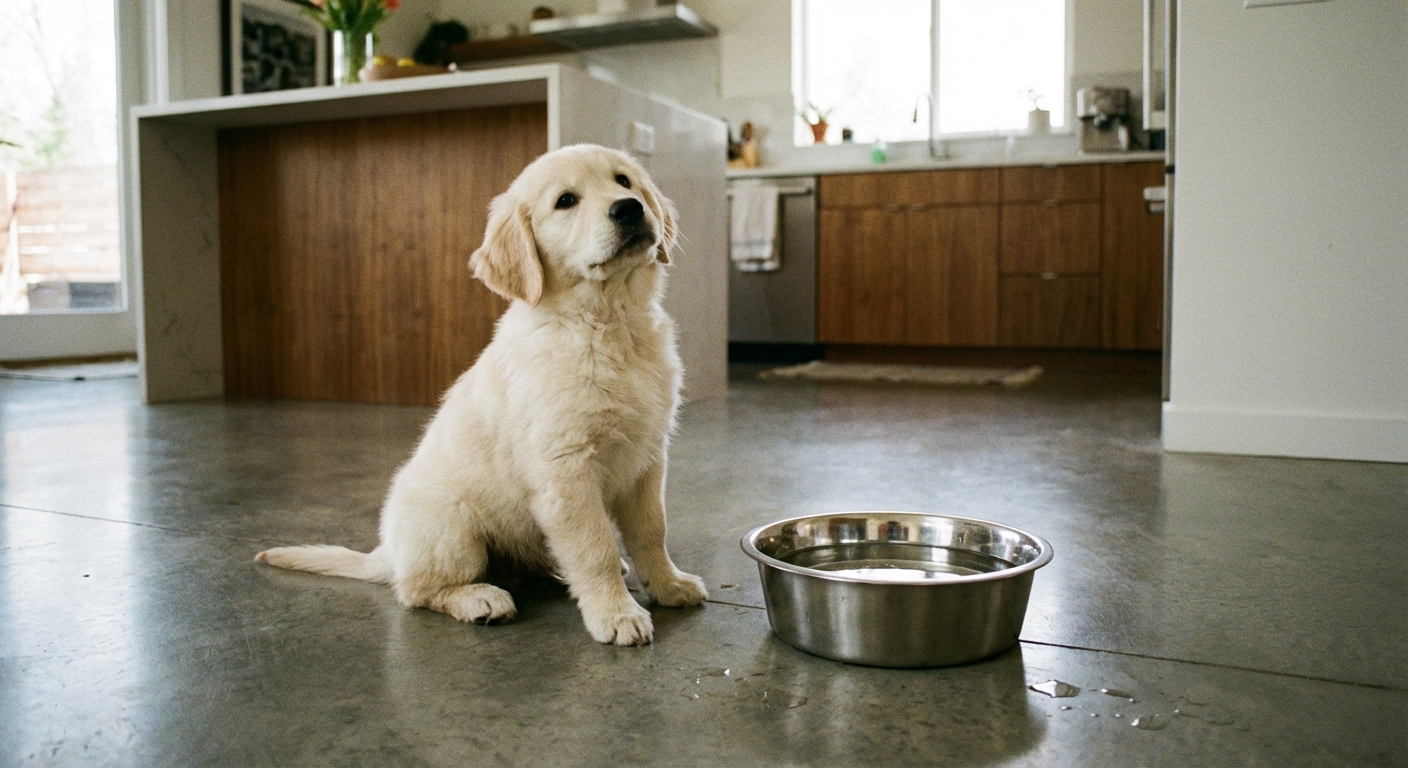
- Offer fresh water at all times.
- Encourage small, frequent drinks.
- If your puppy refuses water, or vomits after drinking, call your vet right away.
Step 2: Use a bland, simple diet
For many mild cases, a short bland diet helps the gut settle. Common options are boiled, skinless chicken breast with white rice. Some puppies do better with lean turkey. This is short term only and not a complete puppy diet.
If your puppy has suspected food sensitivities, recurrent GI issues, or chicken has been a trigger before, ask your vet about a GI prescription diet instead of defaulting to chicken and rice.
- Feed small meals every 4 to 6 hours.
- Keep it bland for 24 to 48 hours unless your vet instructs otherwise.
- Then transition back slowly to the regular puppy food over 3 to 5 days.
Important: Do not add fatty foods, milk, or “people food comfort meals.” Fatty foods can worsen diarrhea and can trigger pancreatitis in susceptible dogs.
Step 3: Consider vet-approved gut support
Many veterinarians recommend probiotics made for dogs. These may help support stool quality and recovery in some puppies, especially after stress or mild stomach upset.
- Choose a dog-specific probiotic (ask your vet for a brand they trust).
- Avoid random human supplements unless your veterinarian approves.
Step 4: Rest the routine
Too much excitement can keep the gut revved up, especially in sensitive puppies.
- Skip daycare, dog parks, and big social outings until stools are normal.
- Keep walks short, calm, and predictable.
- Prioritize sleep and quiet time.
What not to do
These are the most common mistakes I see pet parents make, and they can unintentionally make diarrhea worse.
- Do not give over-the-counter human anti-diarrheal meds (including loperamide or Imodium) unless your veterinarian specifically instructs you. Some dogs can have serious side effects, and it can mask dangerous conditions.
- Do not abruptly switch foods again and again. Too many changes can keep the gut irritated.
- Do not fast very young puppies without veterinary guidance. Puppies need steady calories to avoid low blood sugar. Many vets also prefer small, frequent bland meals instead of fasting for diarrhea.
- Do not assume worms are “no big deal.” Parasites are extremely common in puppies and require proper treatment.
The behavior guide
This is where you can make a huge difference long-term. Many repeat diarrhea episodes come from repeat opportunities to eat the wrong thing.
Trash and counter surfing
- Use a lidded trash can or keep trash behind a closed door.
- Keep food off low tables during puppy months.
- Teach a simple cue like leave it using positive reinforcement.
Outdoor scavenging
- Pick up stool promptly in your yard.
- Avoid areas with heavy dog traffic until vaccines are complete.
- On walks, use a short leash during the “sniff and snack” phase.
- If your puppy eats everything outside, ask your vet about a properly fitted basket muzzle for safety in specific situations. It must allow panting and drinking, and it should be introduced slowly with positive conditioning. It is not a substitute for supervision.
Chewing management
- Puppy-proof like you would for a toddler: socks, kids toys, hair ties, rocks, and plants are common hazards.
- Offer safe chew options sized appropriately for your puppy.
- Supervise chew time and remove items that break apart easily.
Stress support
Stress is real for puppies, even when the change is “happy.” A new home, crate training, or guests can all trigger loose stools.
- Keep feeding times consistent.
- Use calm routines and predictable potty breaks.
- Reward relaxed behavior, not just excited behavior.
When to call your vet
For puppies, I recommend a lower threshold for calling. Here is a practical checklist.
Call your veterinarian if
- Diarrhea lasts more than 12 to 24 hours
- Your puppy has mucus in stool repeatedly
- There is any vomiting plus diarrhea
- Your puppy is not eating or suddenly acting quiet
- You see worms or suspect parasite exposure
- Your puppy recently had a new vaccine or medication and now has GI upset
- You have multiple pets and more than one has diarrhea (possible contagious cause)
Your vet may recommend a fecal test, deworming, giardia testing, or supportive medications. In puppies, getting the right diagnosis early is often the fastest route to relief.
Contagious risk and cleanup
Some causes of diarrhea are contagious, especially parasites like giardia and serious viral illness like parvo. If your puppy has diarrhea and you are not sure of the cause, be extra cautious.
- Pick up stool promptly and dispose of it in a sealed bag.
- Wash hands after cleanup.
- Keep your puppy away from other dogs until stools are normal and your vet says it is safe.
- For disinfecting, ask your vet what is appropriate. Parvo requires specific cleaners and contact times, and not all household products work.
What to bring to the vet
You can save time and get better answers by coming prepared.
- A fresh stool sample in a sealed bag or container
- A list of foods, treats, chews, and any new items
- Any possible trash or toxin exposure
- Vaccine history and deworming schedule
- Notes on stool frequency and appearance (a stool score helps)
Prevention
You do not need perfection to prevent most diarrhea. You just need consistency.
Simple prevention plan
- Slow diet transitions: mix old and new food over 7 to 10 days
- Limit treats: keep treats to under 10 percent of daily calories
- Stick to one chew at a time: avoid mixing lots of new chew types in the same week
- Routine fecal checks: many vets recommend regular testing during puppyhood
- Follow your deworming plan: puppies are commonly dewormed on a schedule even if you do not see worms, so stay on the protocol your vet gives you
- Keep vaccines on schedule and avoid high-risk areas until fully protected
If you are curious about adding fresh, whole foods, go slowly and keep portions small at first. A puppy’s digestive system often needs time to adapt.
Quick reference
- Confirm no emergency signs.
- Offer water and monitor hydration.
- Feed small bland meals for 24 to 48 hours (with vet guidance for very young pups).
- Use a dog-specific probiotic if your vet approves.
- Reduce stress and excitement.
- Call your vet if it lasts beyond 12 to 24 hours or if any concerning signs appear.
Your puppy’s gut can be surprisingly resilient when you support it early. And if you are ever unsure, trust your instincts and call your veterinary team. That is what we are here for.