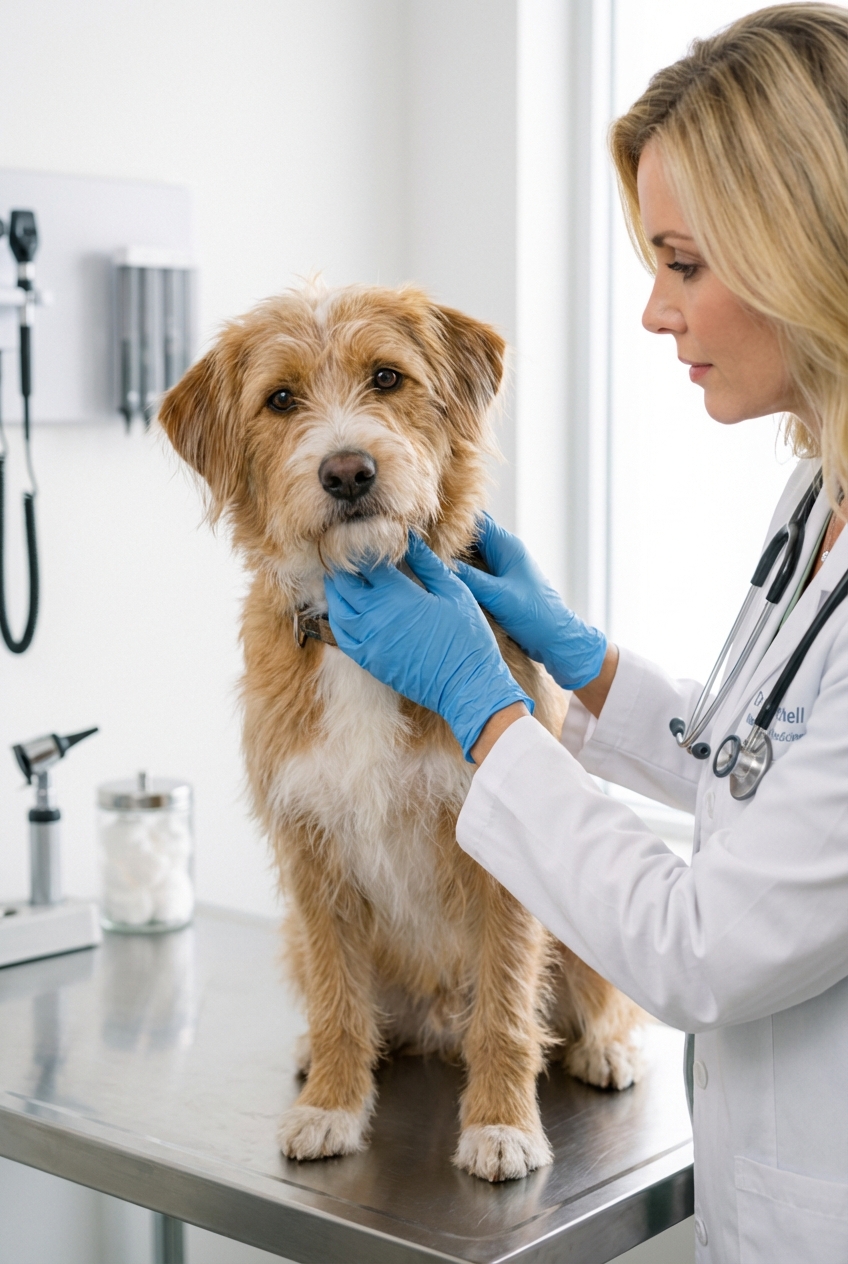
Understand what causes dog mange, the difference between sarcoptic scabies and demodectic mange, common symptoms, diagnosis, treatment, and safe at-home steps.
Article
•
Designer Mixes
How to Treat Mange in Dogs

Shari Shidate
Designer Mixes contributor
Mange can progress quickly and look scary. One week your dog seems fine, and the next you are seeing patchy hair loss, crusty skin, and nonstop scratching. The good news is that mange is treatable, and most dogs recover beautifully with the right plan and a little patience.
As a veterinary assistant here in Frisco, Texas, I always tell families this: your first job is to keep your dog comfortable and prevent spread, and your second job is to confirm which type of mange you are dealing with. Treatment depends on the cause.

What mange is (plain English)
Mange is a skin disease caused by mites. These tiny parasites live on or in the skin and trigger inflammation, itching, hair loss, and sometimes secondary infections.
Two main types
- Sarcoptic mange (scabies): intensely itchy and contagious to other dogs. It can also cause temporary, itchy bumps on people from contact, although the mites generally cannot complete their life cycle on humans.
- Demodectic mange (demodex): caused by mites that normally live on the skin in small numbers. It is usually not contagious. It tends to show up in puppies, young dogs, or dogs with immune stress.
These can look similar at home, which is why testing matters.
Signs to watch for
Not every itchy dog has mange, but these signs raise suspicion:
- Intense itching, especially at night (often sarcoptic)
- Red bumps, scabs, crusting, or thickened skin
- Patchy hair loss around the ears, elbows, hocks, belly, face, or paws
- “Dandruffy” coat, oily odor, or skin that looks dirty even after a bath
- Sores from chewing and scratching
- Recurrent skin infections
If your dog seems painful, lethargic, has a fever, or has widespread raw skin, treat it as urgent.
Common look-alikes
Because mange can mimic other skin problems, it is easy to guess wrong at home. Your vet may also be thinking about:
- Fleas or flea allergy dermatitis
- Environmental or food allergies
- Ringworm (dermatophytosis), which can be contagious to people and pets
- Bacterial folliculitis or yeast overgrowth
This is another reason a clinic visit saves time and frustration.
First steps at home
While you are scheduling a vet visit, you can do a few safe, practical things right away.
1) Limit contact until you know the type
If there is any chance it is sarcoptic mange, assume it is contagious until proven otherwise.
- Keep your dog from close snuggling with other pets.
- Have kids wash hands after touching the dog.
- Use one washable blanket for your dog and launder it frequently.
2) Prevent self-trauma
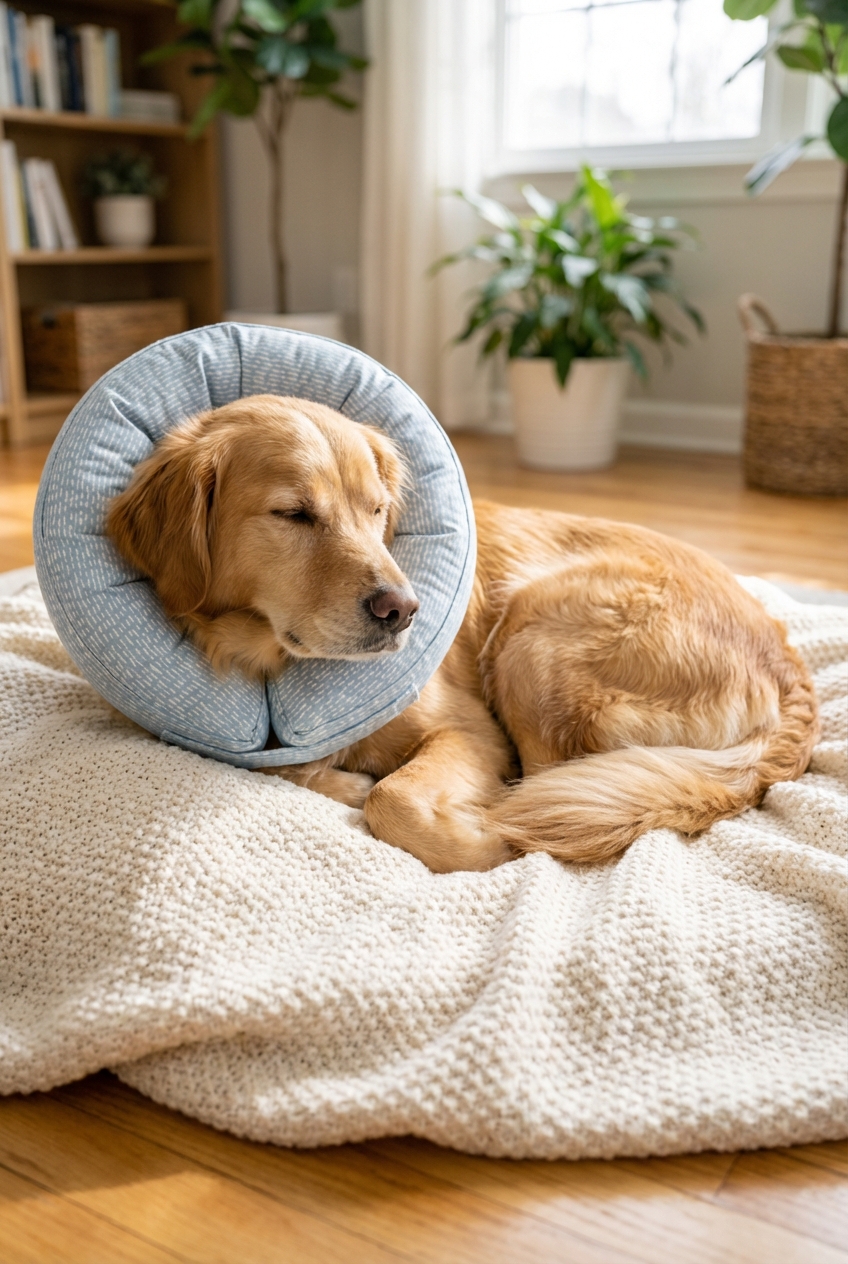
Scratching opens the door to infection. If your dog is chewing or rubbing, use an e-collar or soft cone and keep nails trimmed.
3) Skip “internet cures”
Please skip harsh home remedies like gasoline, motor oil, peroxide mixes, or undiluted essential oils. These can burn the skin and make the problem harder to treat.
Family rule: if you would not put it on a baby’s inflamed skin, do not put it on your dog’s inflamed skin.
4) Avoid leftover meds or product stacking
Do not use leftover antibiotics, leftover steroids, or old parasite products without a veterinarian’s direction. Also do not combine flea and tick products (or add dips, sprays, or “natural” treatments) unless your vet tells you it is safe. Mixing products can cause side effects and does not always improve results.
How vets diagnose mange
The most common tests are quick and done right in the clinic:
- Skin scraping: a small sample of skin is examined under a microscope to look for mites or eggs.
- Tape prep or skin cytology: checks for yeast and bacteria that often tag along.
Important to know: sarcoptic mites can be difficult to find on a scraping. Your vet may use clues like a strong itch pattern, ear-edge crusting, a positive pinnal-pedal reflex, exposure history (dog parks, grooming, boarding), and response to treatment. In some regions, additional testing like serology may be available, but it is not always definitive.
You may hear someone mention mites being swallowed during grooming. That is true, but fecal testing is not a standard or reliable way to diagnose mange, so most clinics do not use it for this purpose.

Treating sarcoptic mange
Sarcoptic mange typically requires prescription medication and a bit of environmental follow-through. The goal is to kill mites, reduce itching, and treat secondary infection.
Vet treatment often includes
- Prescription parasite control that is effective against mites (many modern isoxazoline products work very well). Your veterinarian will choose a safe option based on your dog’s age, size, and health history. Depending on the product and where you live, this may be labeled or extra-label use, and your vet will guide you.
- Anti-itch support (sometimes short-term) so the skin can heal and your dog can rest. Do not give human meds unless your veterinarian explicitly tells you what and how much. Also, steroids can make demodex worse, which is one more reason diagnosis and a vet-guided plan matter.
- Antibiotics or antifungals if there is a bacterial or yeast infection.
What to do at home
- Treat all in-contact dogs as directed by your vet. If one dog has scabies, household dogs often need treatment too.
- Wash bedding in hot water and dry on high heat.
- Vacuum couches, rugs, and your pet’s favorite spots regularly for a couple of weeks.
- Finish the full course even if your dog looks better after the first dose.
It helps to know that sarcoptic mites do not live forever in the environment. Off the host, survival is usually short (often around 2 to 3 days), but it can vary with temperature and humidity. That is why I recommend focused cleaning, not panic-level disinfecting.
Even after the mites are gone, itching and skin flaking can take time to settle because the body is calming down from an allergic-type reaction.
When is my dog not contagious?
This is a great question for your vet because it depends on the medication used and your dog’s situation. Many dogs are much less contagious after an effective first treatment, but your veterinarian will tell you when it is safe to resume normal contact and routines.
Treating demodectic mange
Demodex is usually about an imbalance, not “catching” something. Many dogs respond very well once the mites are controlled and the skin barrier is supported.
Treatment depends on severity
- Localized demodex (small patches): may be monitored or treated with targeted therapy, depending on your vet’s recommendation and your dog’s comfort.
- Generalized demodex (larger areas, multiple sites, or paws): typically needs prescription mite-killing medication plus follow-up testing until cleared.
Why follow-up matters
Demodex is often managed until skin scrapings show control. Stopping too early can lead to relapse. Your vet may schedule rechecks every few weeks.
If demodex appears for the first time in an adult dog, your veterinarian may recommend looking for underlying issues (for example endocrine disease or immune suppression). That is not meant to alarm you. It is part of treating the whole dog, not just the skin.
Safe comfort care
Home care does not replace medical treatment, but it can make a huge difference in how your dog feels day to day.
Gentle bathing
- Use a vet-approved medicated shampoo if prescribed (antibacterial, antifungal, or soothing).
- Do not over-bathe unless directed. Too much bathing can dry and irritate already-inflamed skin.
- Rinse thoroughly. Residue can worsen itching.
Skin barrier support
- Ask your veterinarian about omega-3 fatty acids (EPA and DHA). Evidence supports omega-3s for skin inflammation and coat quality in many dogs.
- Feed a consistent, high-quality diet. Skin is built from protein, essential fats, vitamins, and minerals.
Itch support at home
- Keep your dog cool. Heat can intensify itch.
- Use soft, clean bedding.
- Distract with gentle enrichment like food puzzles or short sniff walks if your vet approves.
Cleaning the home
You do not need to disinfect your whole house like a hospital. Focus on high-contact items.
- Wash bedding, blankets, and washable toys.
- Vacuum carpets, rugs, and upholstery.
- Clean collars, harnesses, and brushes.
- Replace heavily worn grooming tools if they cannot be cleaned well.
If your dog has sarcoptic mange, your vet may give extra guidance for the environment and other pets. Remember, mites generally survive off-host only a short time, so steady, targeted cleaning is plenty.
Can people catch it?
Sarcoptic mange from dogs can cause temporary itching and red bumps on people, especially where a dog is carried or snuggled. If anyone in the family develops a rash, call your human healthcare provider and mention possible scabies-type exposure from a pet. Also note: human scabies is typically caused by a different mite, so your provider can help sort out what is most likely and what treatment is appropriate.
Demodectic mange is not considered contagious to people in normal circumstances.
What not to do
- Do not use permethrin products on cats in the home. Permethrin can be dangerous for cats even through contact with treated dogs.
- Do not apply essential oils, tea tree oil, or “natural dips” unless your vet explicitly okays the product and dilution. Many are toxic or irritating.
- Do not share grooming tools between pets until cleared.
- Do not stop medication early just because hair is growing back.
When to call the vet ASAP
Seek prompt care if you see any of the following:
- Rapidly spreading hair loss or crusting
- Open sores, pus, strong odor, or oozing
- Swollen paws, limping, or nail bed inflammation
- Loss of appetite, lethargy, fever, or signs of pain
- Puppies, seniors, pregnant dogs, or dogs with chronic illness
Recovery timeline
Most families want one simple answer: “How long until my dog is better?” It depends on the type, the severity, and whether there is infection, but these are common patterns:
- Itching often improves within days to a couple of weeks after effective mite treatment, but may linger as the skin heals.
- Hair regrowth usually takes several weeks and sometimes a few months.
- Skin texture and pigmentation can take time to normalize, especially if the case was severe.
Take weekly photos in the same lighting. It is a simple way to see progress when day-to-day changes feel slow.
A simple plan
If you are feeling overwhelmed, here is your step-by-step:
- Schedule a vet visit for diagnosis.
- Limit close contact with other pets until you know the type.
- Start the prescribed mite treatment and follow the schedule exactly.
- Support skin comfort with vet-approved bathing and nutrition.
- Clean bedding and vacuum high-contact areas.
- Show up for rechecks until your vet confirms your dog is clear.
You are not behind and you are not alone. Mange is common, treatable, and with consistent care, most dogs get back to their happy, comfortable selves.