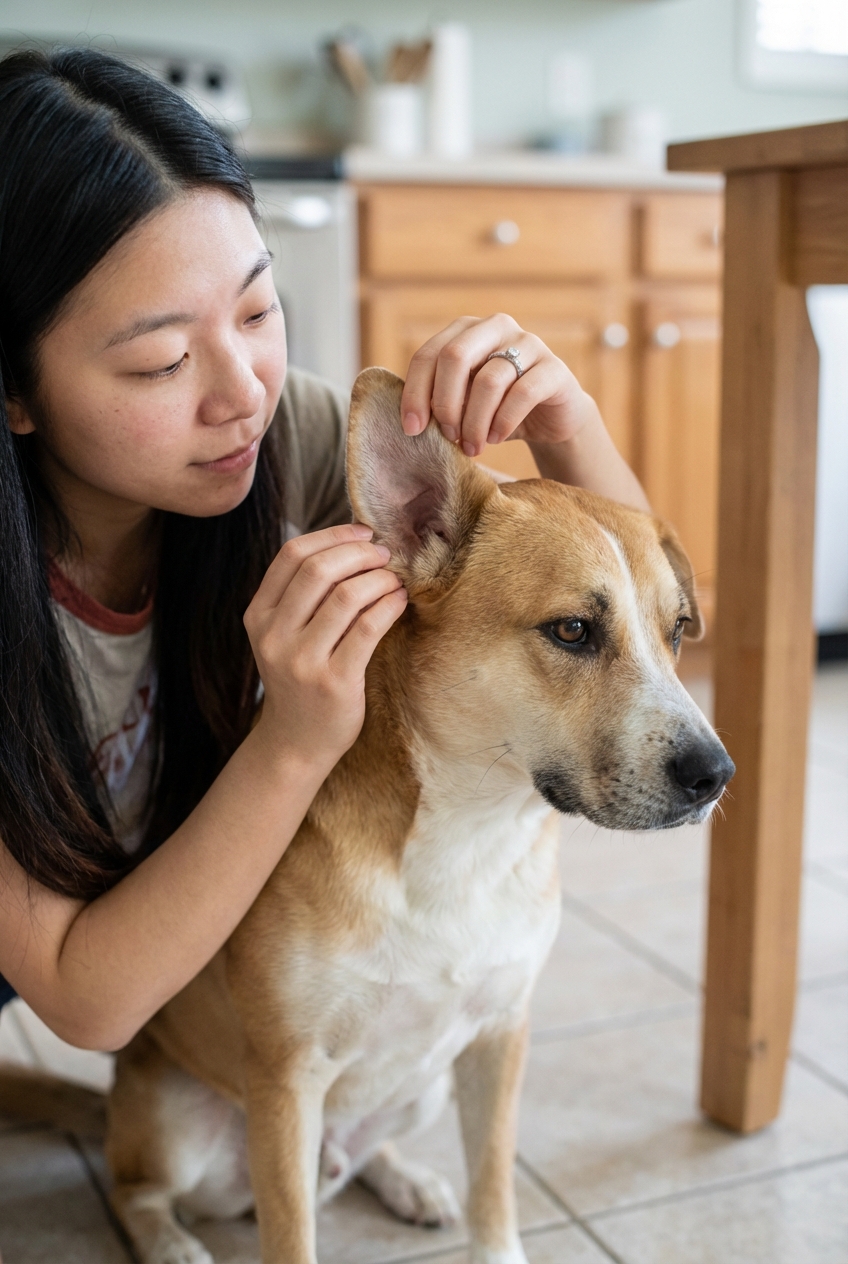
Ear mites can cause intense itching and dark “coffee-ground” debris. Learn the signs, why diagnosis matters, safe ear-cleaning steps, treatment options, ...
Article
•
Designer Mixes
How To Treat Ear Mites In Dogs

Shari Shidate
Designer Mixes contributor
Ear mites are tiny parasites that can make dogs absolutely miserable. They cause intense itchiness, dark debris in the ear canal, and sometimes secondary ear infections. The good news is that with the right treatment plan and a little consistency, most dogs feel better fast.
As a veterinary assistant here in Frisco, Texas, I always remind families of two essentials: you need the right medication, and you need to treat the whole pet (and often the whole household), not just a dirty-looking ear. In many cases, that means using a vet-recommended topical or oral parasite product that reaches the skin surface, not only ear drops.
What ear mites are
Ear mites (most commonly Otodectes cynotis) live on the skin surface inside the ear canal and feed on skin debris and wax. They are contagious and spread mainly through close contact between animals. Shared bedding, crates, blankets, and grooming tools can also play a role, especially in multi-pet homes.
How dogs get ear mites
- Close contact with an infected dog or cat
- New pets brought into the home (especially kittens and shelter animals)
- Boarding, daycare, grooming, or dog park exposure
- Sharing bedding, blankets, or crates
Ear mites are especially common in multi-pet households because cats can carry them and pass them to dogs even if the cat is not showing dramatic signs.
Signs of ear mites
Ear mites can look a lot like yeast or bacterial ear infections. That is why a proper diagnosis matters.
Typical symptoms
- Intense itching, scratching at ears, or rubbing face on carpet
- Head shaking or head tilt
- Red, irritated ear canals
- Dark brown or black debris that can resemble coffee grounds
- Crusty skin around the ear flap
- Hair loss or scabs near the ears from scratching
If your dog seems painful when you touch the ears, has a strong odor, or has thick discharge, there may be a secondary infection that needs additional medication beyond mite treatment.
Confirming the diagnosis
Many ear problems look similar from the outside. Veterinarians typically confirm ear mites by examining ear debris under a microscope. This quick check can identify mites or eggs and also helps assess whether yeast or bacteria are present. Your vet will combine that with an ear exam (often with an otoscope) to evaluate irritation, swelling, and whether the eardrum looks intact.
Why this matters: if you treat “ear mites” but your dog actually has a bacterial infection, the ear may continue to worsen and become painful. Also, some products that are safe for an intact ear canal can be risky if the eardrum is damaged.
If you are not 100% sure it is ear mites, schedule an exam. Treating the wrong ear problem can delay relief and increase complications.
Other causes that can look similar
- Yeast or bacterial ear infections
- Allergies (environmental or food related)
- Foreign material in the ear (like a foxtail)
- Ear canal anatomy that traps moisture and wax
- Less commonly, growths or polyps
How to treat ear mites
Most successful ear mite treatment plans include three parts: medication that kills mites, ear cleaning when appropriate, and treating all exposed pets.
Step 1: Use a proven medication
Veterinarians commonly prescribe products that kill mites effectively. Some options work with one or two scheduled doses, while others require daily ear drops for 7 to 14 days (sometimes longer), depending on the product and how inflamed the ears are. Treatment options may include:
- Topical parasiticides applied to the skin (some monthly flea and tick preventives also treat ear mites)
- Ear medications placed into the ear canal (sometimes combined with anti-inflammatory or antimicrobial ingredients if infection is present)
- Isoxazoline-class parasite medications in some cases, which can have strong mite activity (sometimes extra-label depending on the product and region, and used as directed by your veterinarian)
Important: Always follow the exact dosing schedule. Stopping early can allow surviving mites and newly hatched mites to restart the problem.
Step 2: Clean the ears safely (only if your vet says to)
Cleaning removes debris that protects mites and irritates the ear canal. But ear cleaning should be done carefully because inflamed ears can be sensitive, and some dogs have a ruptured eardrum that changes what products are safe.
When your vet recommends cleaning, here is a safe approach for many dogs:
- Use a vet-approved ear cleaner (avoid hydrogen peroxide, alcohol, or essential oils in the ear)
- If you are shopping, look for gentle, pet-labeled cleaners intended for routine ear flushing and ask your clinic what they recommend for your dog’s ears
- Fill the ear canal with cleaner as directed
- Gently massage the base of the ear for 20 to 30 seconds
- Let your dog shake their head
- Wipe only what you can see on the inner ear flap with cotton or gauze
- Do not insert cotton swabs into the canal
Step 3: Treat every pet in the household
This is the step many families miss. If one pet has ear mites, any dogs or cats in close contact often need treatment too, even if they are not scratching yet. Otherwise, mites can pass back and forth and you end up in a frustrating cycle.
Cat safety note: If you have cats at home, only use parasite products your veterinarian approves. Some dog-only flea and tick medications can be dangerous or even fatal to cats.
Step 4: Reduce spread at home
Ear mites live primarily on pets, so direct pet-to-pet contact is the main way they spread. Still, a little home cleanup can help support treatment and reduce irritation from dirty debris.
- Limit close contact between pets until treatment has started (and avoid sharing bedding during treatment when possible)
- Wash bedding, blankets, and soft toys in hot water
- Vacuum carpets and upholstery
- Clean grooming tools and wipe down crates
Step 5: Recheck if symptoms do not improve
Many dogs start itching less within a few days, but full resolution can take longer depending on inflammation and whether an infection is present. If your dog is still uncomfortable after about a week, or symptoms return soon after treatment, schedule a recheck.
What not to do
- Do not use essential oils in the ear canal. Many are irritating or toxic to pets.
- Do not pour vinegar, peroxide, or alcohol into an inflamed ear.
- Do not use leftover ear drops from a prior infection without veterinary guidance.
- Do not assume dark ear debris always means mites. Yeast can look similar.
- Do not skip treating other pets if they have close contact.
How long treatment takes
With effective medication, mites can be killed quickly, sometimes within days. But itching and irritation can linger while the ear canal heals and debris clears. Many treatment plans cover the mite life cycle and may last 2 to 4 weeks, depending on the medication used and how severe the inflammation is.
If your dog has a secondary bacterial or yeast infection, recovery can take longer because you are treating two problems at once.
Call the vet right away
Please seek veterinary care promptly if you notice any of the following:
- Ear pain, crying, or yelping when the ear is touched
- Swelling of the ear flap (possible hematoma)
- Head tilt, loss of balance, or disorientation
- Bad odor, pus-like discharge, or bleeding
- Symptoms in a puppy, senior dog, or immunocompromised dog
- No improvement after starting treatment
These signs can point to a more serious infection, deeper ear involvement, or complications from intense scratching.
Prevention tips
Ear mites are contagious, but you can lower the risk of repeat issues with a few practical habits:
- Keep your dog on a veterinarian-recommended parasite preventive that covers mites when appropriate
- Check ears weekly for odor, redness, or debris
- Clean ears only as recommended, especially for dogs prone to ear issues
- Vet-check new pets before introducing them to the household
- Wash shared bedding regularly in multi-pet homes
Also, do not underestimate the basics that support healthier skin and ears overall: good nutrition, keeping allergies managed, and staying on top of routine parasite prevention.

Quick FAQ
Can humans get ear mites from dogs?
It is uncommon, but transient skin irritation can happen in rare cases. Ear mites strongly prefer animal hosts. If anyone in the home develops a rash after a pet is diagnosed, contact your physician. If symptoms persist or worsen, get medical care.
Are ear mites the same as fleas or ticks?
No. Ear mites are different parasites, but some modern parasite preventives cover multiple pests including mites. Your veterinarian can help you choose the right product.
Why does my dog still scratch after treatment?
Inflammation can persist even after mites are gone. Also, your dog may have a secondary yeast or bacterial infection, allergies, or ear canal swelling that needs additional treatment.