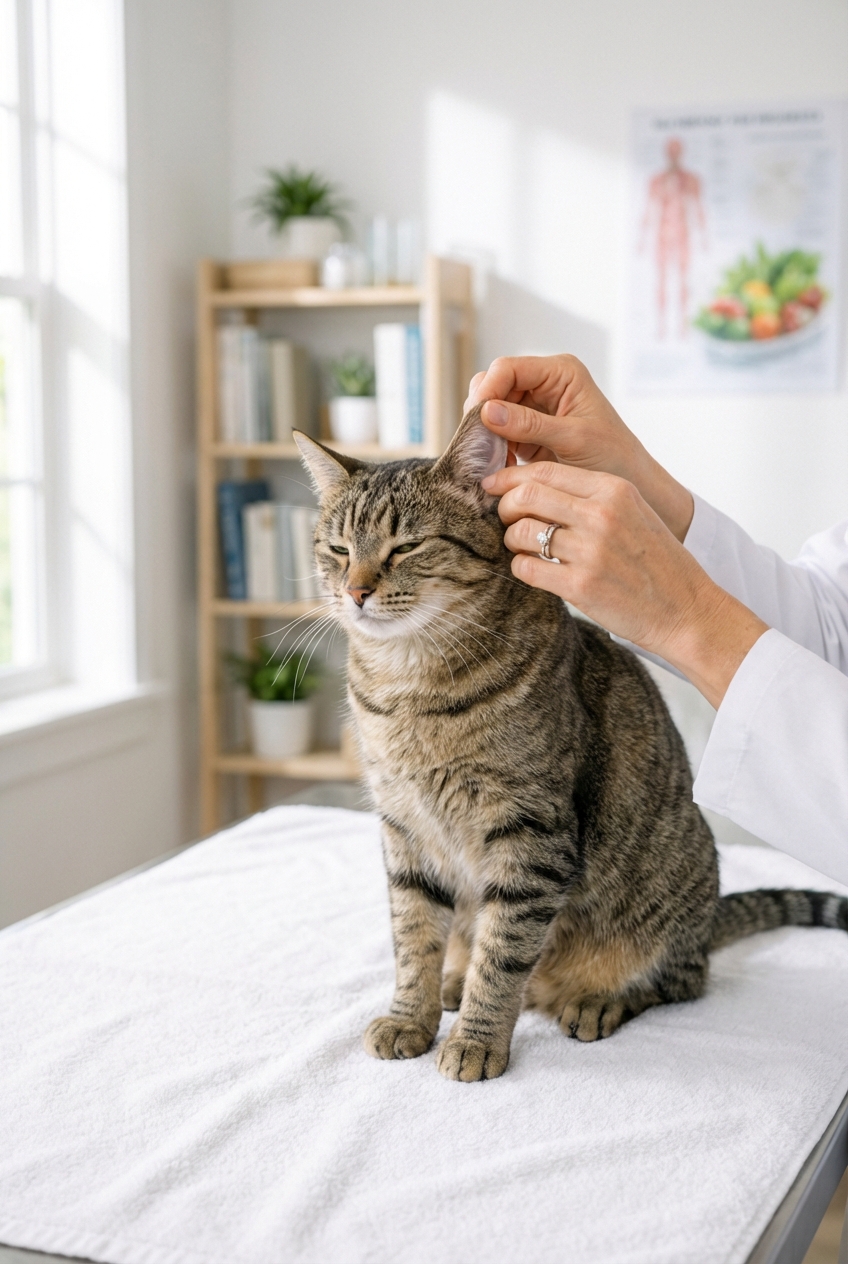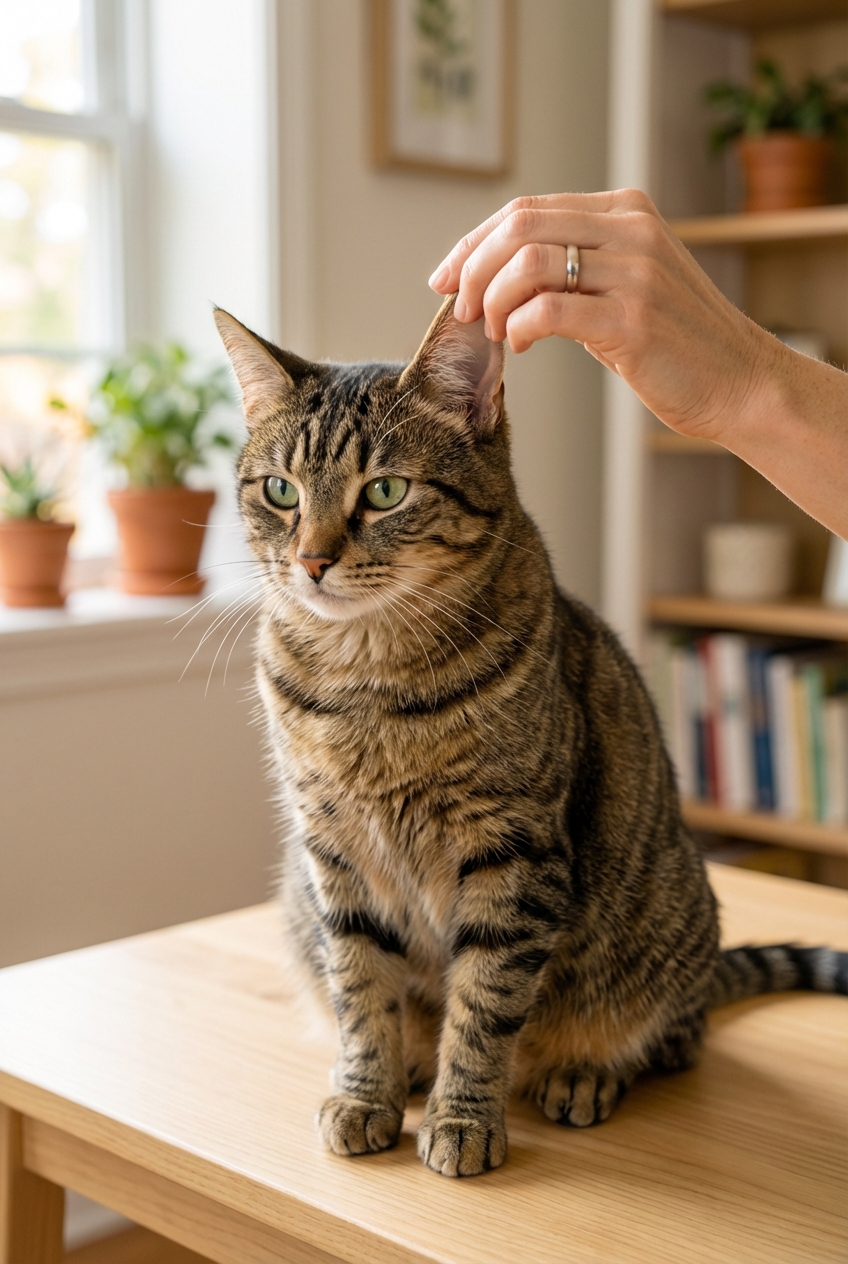
From “coffee ground” ear debris to nonstop scratching, learn how vets diagnose ear mites and the most effective treatments, safe ear cleaning steps, and ...
Article
•
Designer Mixes
How to Treat Ear Mites in Cats at Home

Shari Shidate
Designer Mixes contributor
First, a quick reality check
If you've ever seen a cat shake their head nonstop or scratch their ears until they yelp, you know how miserable ear mites can be. The good news is that ear mites are very treatable. The tricky part is that they are also easy to misread. Yeast, bacteria, allergies, foreign material, and even ear polyps can look similar from the outside.
At-home care can support comfort, but the most evidence-based, fastest path is still getting the right diagnosis and using a vet-approved medication. If you treat the wrong problem, you can lose time and increase the risk of complications, including painful infection and (in severe cases) eardrum damage.
What ear mites look like
Ear mites (most commonly Otodectes cynotis) live in the ear canal and feed on skin debris and tissue fluids. They are especially common in kittens, rescues, and multi-pet homes.
Common signs
- Dark, crumbly debris that looks like coffee grounds
- Itchy ears, intense scratching, head shaking
- Redness or scabs around the ear flap
- Ear odor (can happen, but strong smell often suggests infection too)
- Hair loss around the ears from self-trauma
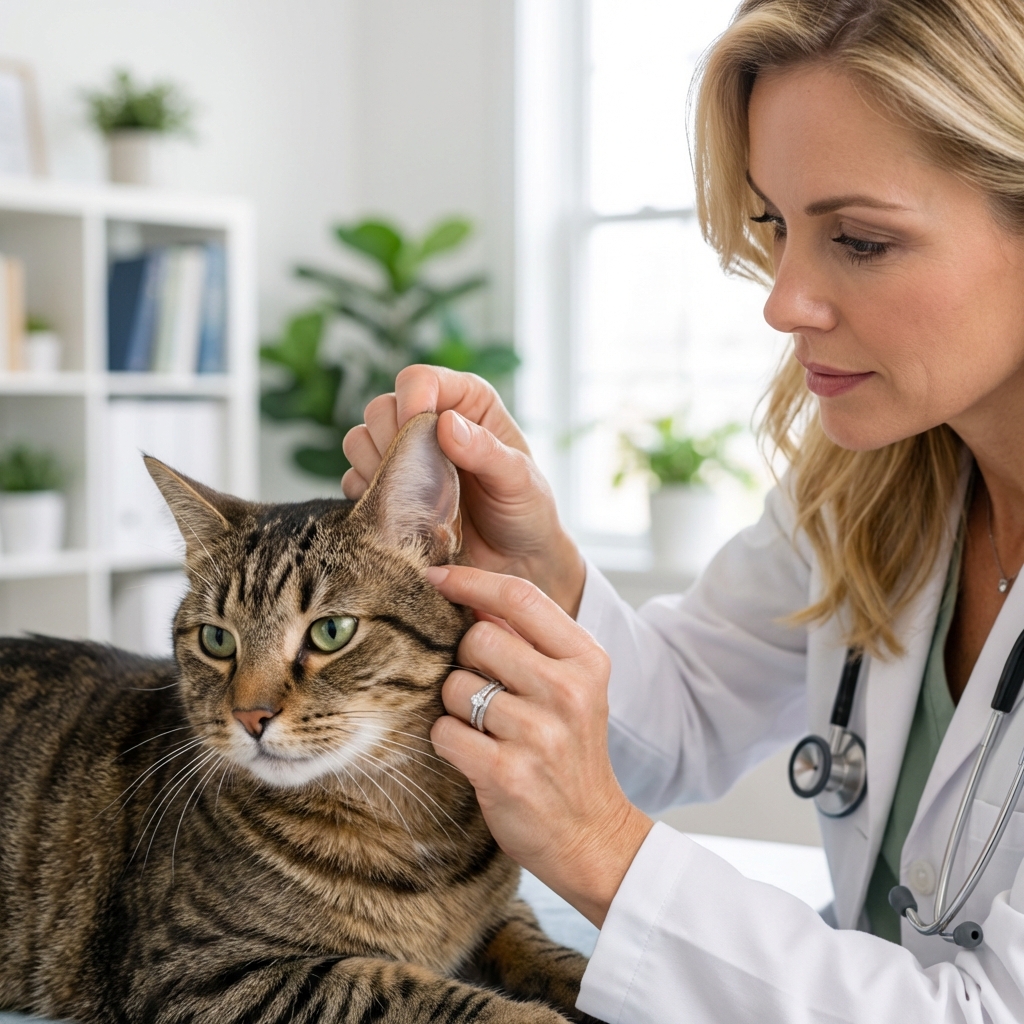
One important note: the “coffee grounds” look is a classic clue, but it is not a guarantee. Your veterinarian confirms mites by looking in the ear and checking debris under a microscope (often alongside ear cytology).
When not to treat at home
Please skip DIY and call your vet promptly if you notice any of the following. These are common red flags that can mean infection, injury, or a deeper issue.
- Ear is very painful to touch or your cat cries when you approach the ear
- Head tilt, loss of balance, circling, or unusual eye movements
- Swelling of the ear flap (possible aural hematoma)
- Bleeding, open wounds, or a foul, heavy odor
- Thick yellow or green discharge
- Your cat is under 8 weeks old, elderly, pregnant, or has chronic illness
Also avoid putting anything in the ear if you suspect a ruptured eardrum. Only a veterinary exam can confirm that the eardrum is intact.
At-home steps that help
Think of home care in two lanes: (1) reduce irritation and debris safely and (2) stop reinfestation in the whole household. Medication is what kills mites. Cleaning supports healing and comfort, but cleaning alone rarely eradicates mites. Also, not every step below needs to happen daily, follow your veterinarian’s schedule.
Step 1: Keep it calm
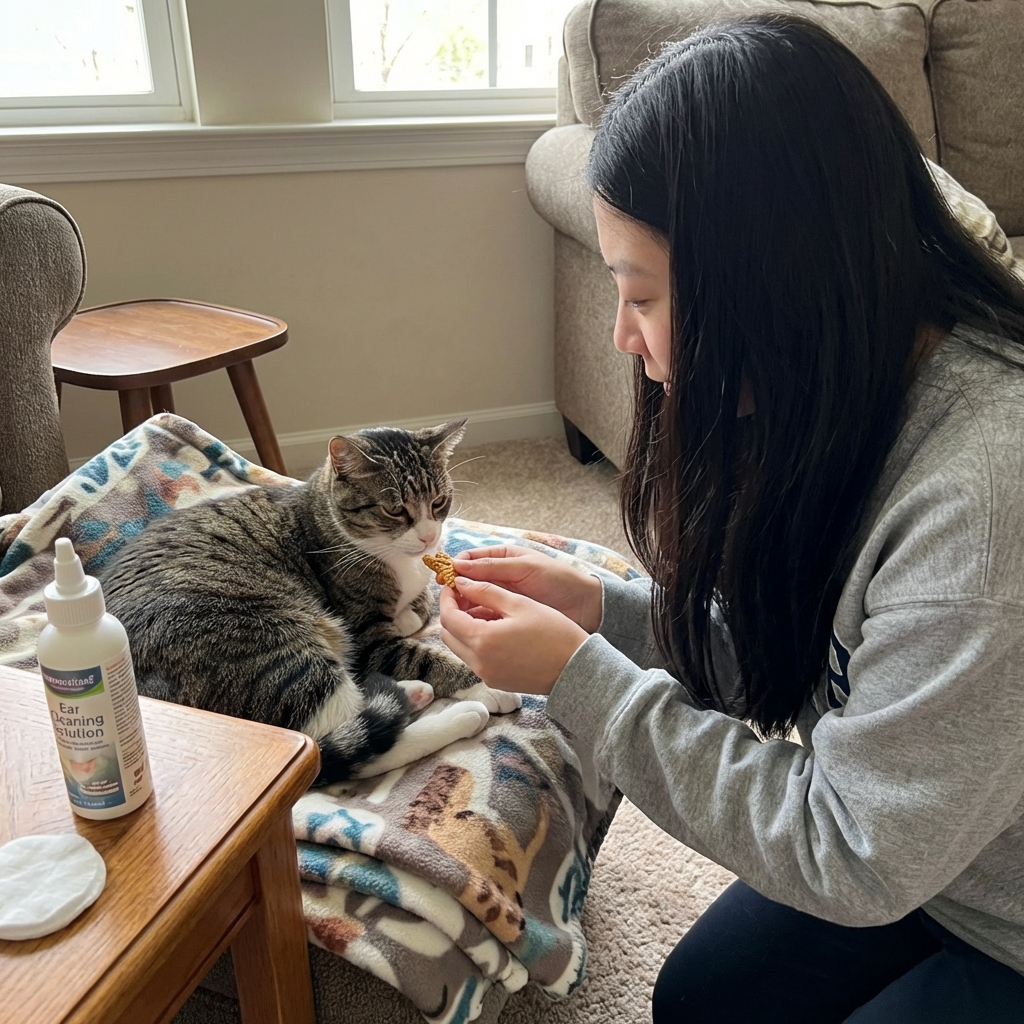
- Choose a quiet room and a time when your cat is naturally sleepy.
- Have treats ready and keep sessions short, 2 to 5 minutes.
- Wrap your cat in a towel “burrito” if needed, leaving the head out.
Step 2: Use a cat-safe ear cleaner
If your veterinarian has confirmed mites and recommended an ear cleaner, follow that plan. A good ear cleaner helps loosen debris so medication can reach the mites. Use only products labeled for cats (or specifically approved by your vet), since some dog products and ingredients are not cat-safe.
How to clean safely:
- Warm the bottle in your hands first. Cold liquid can be startling.
- Lift the ear flap gently and fill the ear canal with the recommended amount.
- Massage the base of the ear for 20 to 30 seconds. You should hear a soft “squish.”
- Let your cat shake their head.
- Wipe only what you can see on the outer ear with cotton or gauze.
Do not push cotton swabs down the ear canal. That can compact debris and cause injury.

Step 3: Use the right mite medicine
Many of the most effective, vet-recommended mite treatments are prescription products, and in many clinics these are topical spot-on medications (often in the isoxazoline family). Depending on your region, there may also be non-prescription options, but effectiveness and safety can vary by product and by cat.
The safest approach is to ask your veterinarian what to use for your cat’s age, weight, and health status, especially for kittens and cats with other medical issues.
Why this matters: mites can survive and reproduce quickly, and missing doses can let the cycle restart. If you are unsure whether you applied a dose correctly, call your vet rather than doubling up.
Step 4: Treat every pet
Ear mites spread through contact. In homes with multiple cats (and sometimes dogs), your veterinarian may recommend treating all pets, even if only one is visibly itchy. If you only treat the “worst” cat, reinfestation is very common.
Step 5: Lower reinfection
- Wash pet bedding on hot and dry thoroughly.
- Vacuum soft surfaces where pets sleep.
- Clean grooming tools with hot soapy water.
You do not need extreme home fumigation. Consistent hygiene plus treating all pets is usually enough, but follow your veterinarian’s guidance if you are dealing with a heavy infestation or have an immunocompromised pet in the home.
What to avoid
As a veterinary assistant, I have seen well-meaning home remedies make ears worse. Here is what to skip unless your veterinarian specifically instructs you otherwise.
- Hydrogen peroxide or alcohol: can irritate inflamed tissue and delay healing.
- Essential oils (tea tree, eucalyptus, etc.): cats are especially sensitive and toxicity is a real risk.
- Olive oil or mineral oil “only” treatments: may loosen debris, but typically does not reliably eliminate mites and can mask a worsening infection.
- Leftover dog medications or old prescriptions: dosing and safety are different and expired meds can fail.
- Over-cleaning: aggressive daily cleaning can inflame the canal more. Follow your vet’s schedule.
Quick Q&A
How long does it take to get rid of ear mites?
Many cats improve quickly once effective medication is started, sometimes within a few days. Full resolution often takes a few weeks depending on the product, the amount of debris, and whether a secondary infection is present.
Should I clean my cat’s ears every day?
Not always. Some treatment plans involve cleaning at the start and then only as needed. Too much cleaning can irritate the ear canal. Ask your veterinarian for a cleaning frequency that matches your cat’s ear condition.
Can humans catch ear mites from cats?
It is uncommon. Ear mites strongly prefer animals and do not typically establish long-term infestations in humans, but temporary skin irritation can happen in rare cases. Good handwashing after handling your cat and cleaning bedding is a smart precaution.
Do I need to treat my house?
You usually do not need special sprays. Focus on treating all pets, washing bedding, and vacuuming favorite nap spots.
Why does the ear still look dirty after starting treatment?
Dead mites and old debris can linger. Also, many cats develop yeast or bacterial ear infections from all the inflammation and scratching, which may require additional prescription ear medication. If the debris stays heavy or the odor worsens after a few days, it is time for a recheck.
How to know it's working
Look for small, steady improvements. Your cat may not be perfect overnight, but you should see progress.
- Less head shaking and scratching
- Less redness at the ear opening
- Less dark debris over time
- Better mood and sleep
If your cat seems worse at any point, especially if pain increases, schedule a veterinary visit. A secondary infection may need medication too. If you are not seeing clear improvement within about 7 to 10 days, a recheck is a smart next step.
Preventing repeat issues
- Quarantine new pets: Keep new cats separated until they have had a basic exam and parasite plan, especially in multi-cat homes.
- Use routine parasite prevention: Ask your vet what ongoing product makes sense for your cat’s lifestyle and region.
- Do quick ear checks: After boarding, fostering, or bringing home a rescue, glance at the ears weekly for early signs of debris and itching.
A gentle closing note
Ear mites are common and nothing to feel embarrassed about, especially if you have a new rescue or a kitten. What matters most is acting early, treating consistently, and treating all pets who may be exposed. With the right care, most cats get comfortable again fast.
If you are unsure whether you are seeing mites or an infection, a quick ear swab at the vet can save your cat a lot of discomfort and save you a lot of guesswork.