Chicken and rice can soothe mild stomach upset and help dogs transition back to normal food. Learn safe recipes, portions, how long to feed it, and when to c...
Article
•
Designer Mixes
How to Treat Dog Diarrhea

Shari Shidate
Designer Mixes contributor
Diarrhea is one of the most common reasons families panic about their dog’s health. I get it. When your pup is having frequent loose stools, it can feel urgent, messy, and honestly a little scary.
The good news is that many cases of mild diarrhea improve quickly with the right home care. The important part is knowing when it is safe to help at home and when you should call your veterinarian right away. This handbook walks you through both, step by step, in a family-friendly way.
What counts as diarrhea in dogs?
Dog diarrhea usually means stools that are looser, more frequent, or more urgent than your dog’s normal routine. It can look like soft-serve, pudding-like stool, watery stool, or stool with mucus.
Common patterns you may notice
- Large-bowel diarrhea: often frequent, small amounts, mucus, straining, urgency (but patterns can overlap).
- Small-bowel diarrhea: often larger volume stools and more watery, sometimes with weight loss or more gas (it can still be frequent in some dogs).
- Acute: sudden onset, usually days to about 2 weeks.
- Chronic: recurring or lasting longer than about 2 to 3 weeks (cutoffs vary a bit in veterinary medicine).
If you are unsure, that is okay. The action steps below still apply.
Call your vet now: red flags
Home care is for mild diarrhea in an otherwise bright, hydrated dog. If you see any of the signs below, it is safest to call your veterinarian or an emergency clinic.
- Blood in stool (bright red, lots of blood, or dark, tarry stool). If it looks like “raspberry jam” diarrhea, treat it as an emergency.
- Repeated vomiting or your dog cannot keep water down
- Signs of dehydration: very dry or tacky gums, sticky saliva, weakness, not peeing, or a noticeable “skin tent” that stays up (this can be tricky to judge, so when in doubt, call)
- Severe lethargy, collapse, or your dog seems painful
- Bloated belly or repeated unproductive retching
- Diarrhea in a puppy, especially under 6 months. If your puppy is not fully vaccinated, parvo is one reason diarrhea can turn serious fast.
- Diarrhea in a senior dog or a dog with chronic illness (kidney disease, diabetes, hormone disorders like Cushing’s or Addison’s, cancer)
- Suspected toxin or foreign object (string, socks, bones, trash, meds, xylitol, grapes, rodent bait)
- Fever: a rectal temperature over 103°F (39.4°C). “Feeling hot” is not always reliable, and trembling can be pain, stress, or nausea, so call if you are concerned.
- Diarrhea lasting more than 24 to 48 hours despite gentle care, or sooner if your dog is small, very young, has other health issues, or is worsening
Parent tip: If you have kids at home, treat bloody diarrhea like you would a serious human symptom. It is not a “wait and see” situation.
Why dogs get diarrhea
Diarrhea is a symptom, not a diagnosis. Here are the usual suspects I see in real life:
- Dietary indiscretion: trash, rich people food, greasy leftovers, too many treats
- Sudden food change (even switching brands too fast)
- Stress: travel, guests, fireworks, boarding, new baby, schedule changes
- Parasites: giardia, roundworms, hookworms, whipworms
- Viral or bacterial illness: risk goes up in high-dog-traffic settings (parks, daycare, boarding), especially for puppies or unvaccinated dogs
- Food intolerance or allergy
- Medication side effects, especially antibiotics or NSAIDs
- Pancreatitis: often after fatty meals, can be serious
- Chronic GI diseases: inflammatory bowel disease, malabsorption, endocrine issues
The cause affects the treatment, which is why red flags and persistence matter.
First steps at home
If your dog is acting mostly normal, has mild diarrhea, and there are no red flags, these are reasonable first steps for the first 12 to 24 hours.
Step 1: Pause and assess
- Baseline: what is normal for your dog (energy, appetite, stool schedule)?
- Energy: Are they alert and responsive?
- Appetite: Are they interested in food?
- Hydration: Are the gums moist? Are they drinking?
- How many episodes? A couple of loose stools is different than nonstop trips outside.
- Frequency and urgency: How often are they going out, and are they having accidents?
- Exposure: Any new treats, table food, chews, medications, daycare, travel, or stress?
Write down what you see. If you need a vet visit, this information helps a lot.
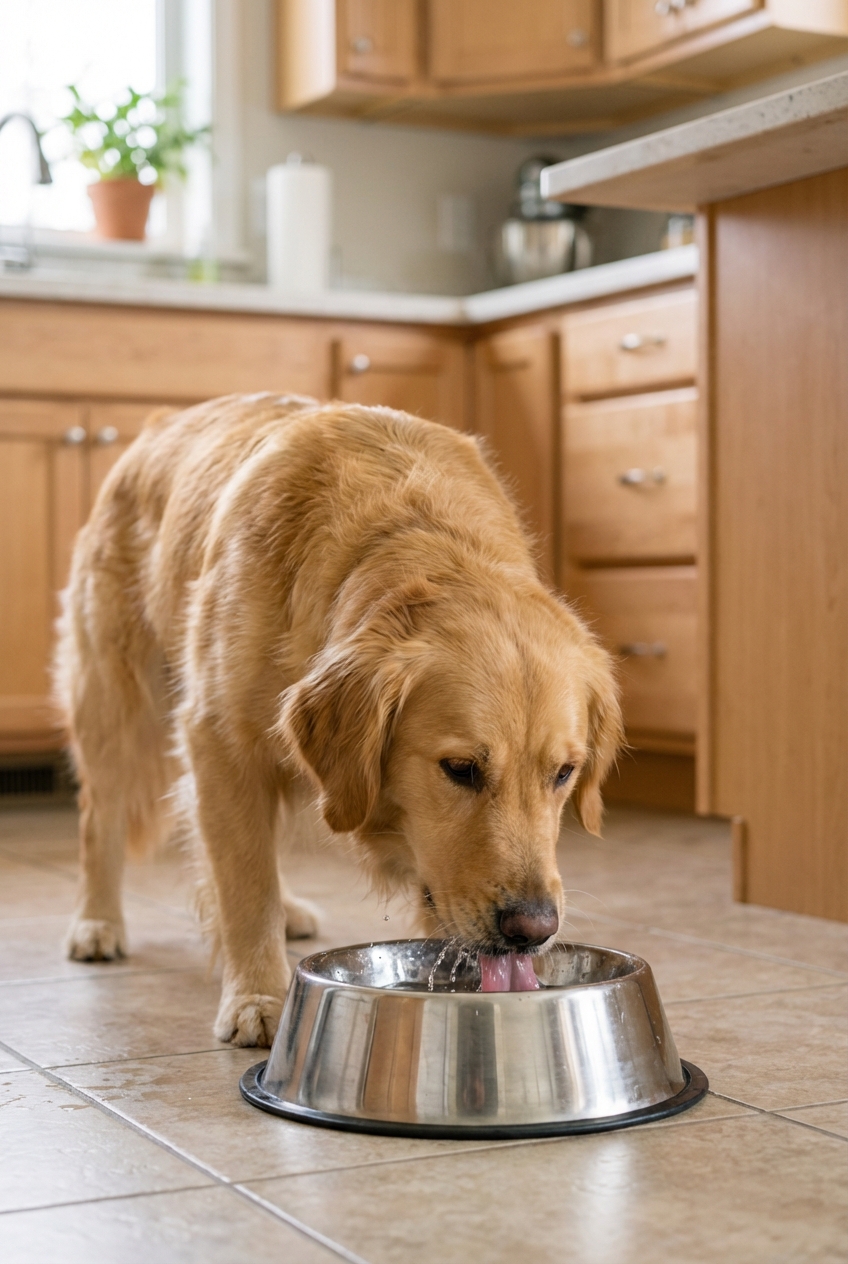
Step 2: Protect hydration
The biggest short-term risk with diarrhea is dehydration. Offer:
- Fresh water at all times
- More frequent potty breaks to prevent accidents
- Optional: ice cubes for dogs who will not drink much
If your dog is vomiting too, do not force fluids. Call your vet for guidance. Some dogs may do better with tiny, frequent sips or ice chips, but only if your veterinarian says it is appropriate for your situation.
Step 3: Temporary gut rest (not for every dog)
Some veterinarians recommend a brief fast for otherwise healthy adult dogs with mild diarrhea, often 8 to 12 hours. Other vets prefer skipping fasting and going straight to small bland meals. If your vet has recommended fasting for your dog in the past, it may be reasonable to follow that plan.
Fasting is not appropriate for:
- Puppies
- Toy breeds prone to low blood sugar
- Dogs with diabetes or other medical issues
- Any dog that seems weak or shaky
If you are unsure, skip the fast and go straight to small bland meals.
What to feed: bland diet
For many mild cases, a bland diet for 24 to 48 hours can calm the gut. The goal is easy-to-digest protein plus a simple carbohydrate, in small meals.
Simple bland meal options
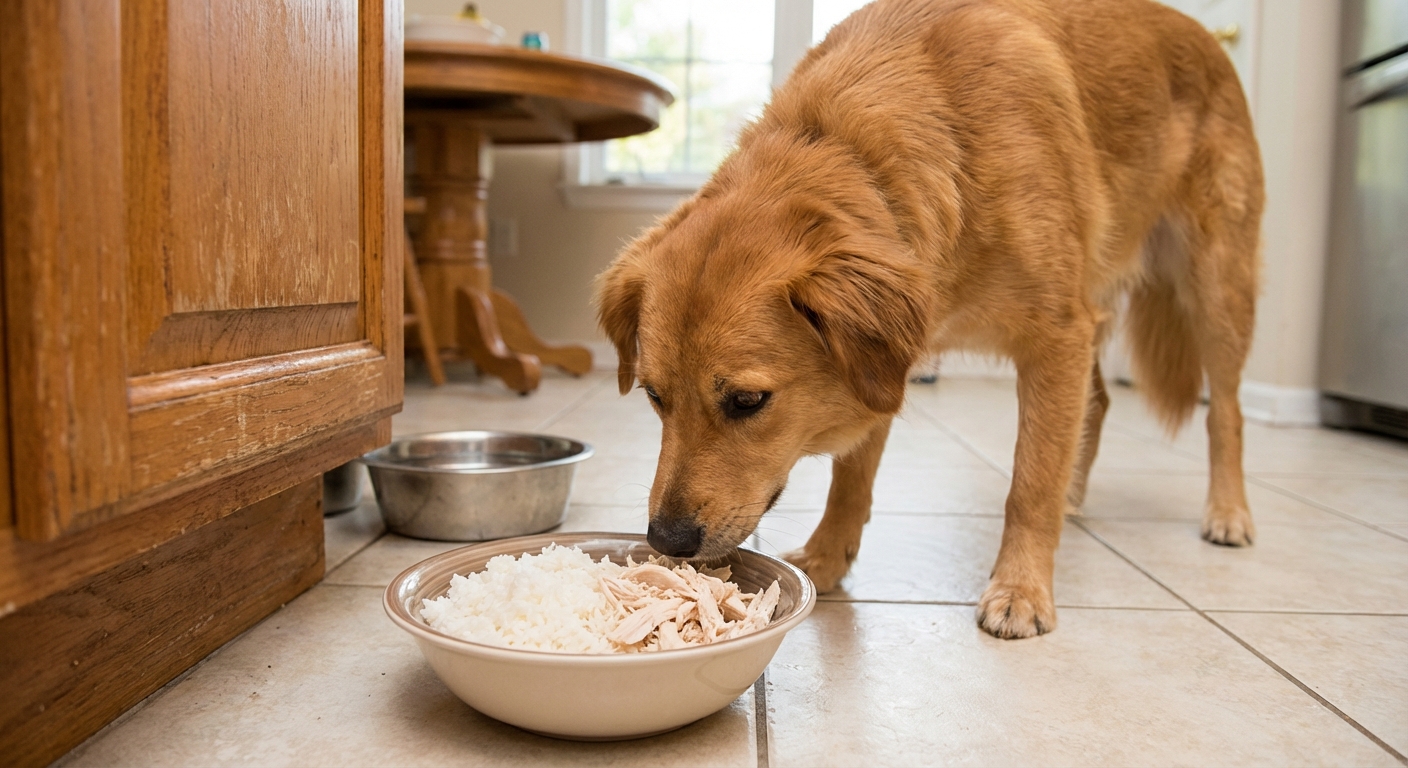
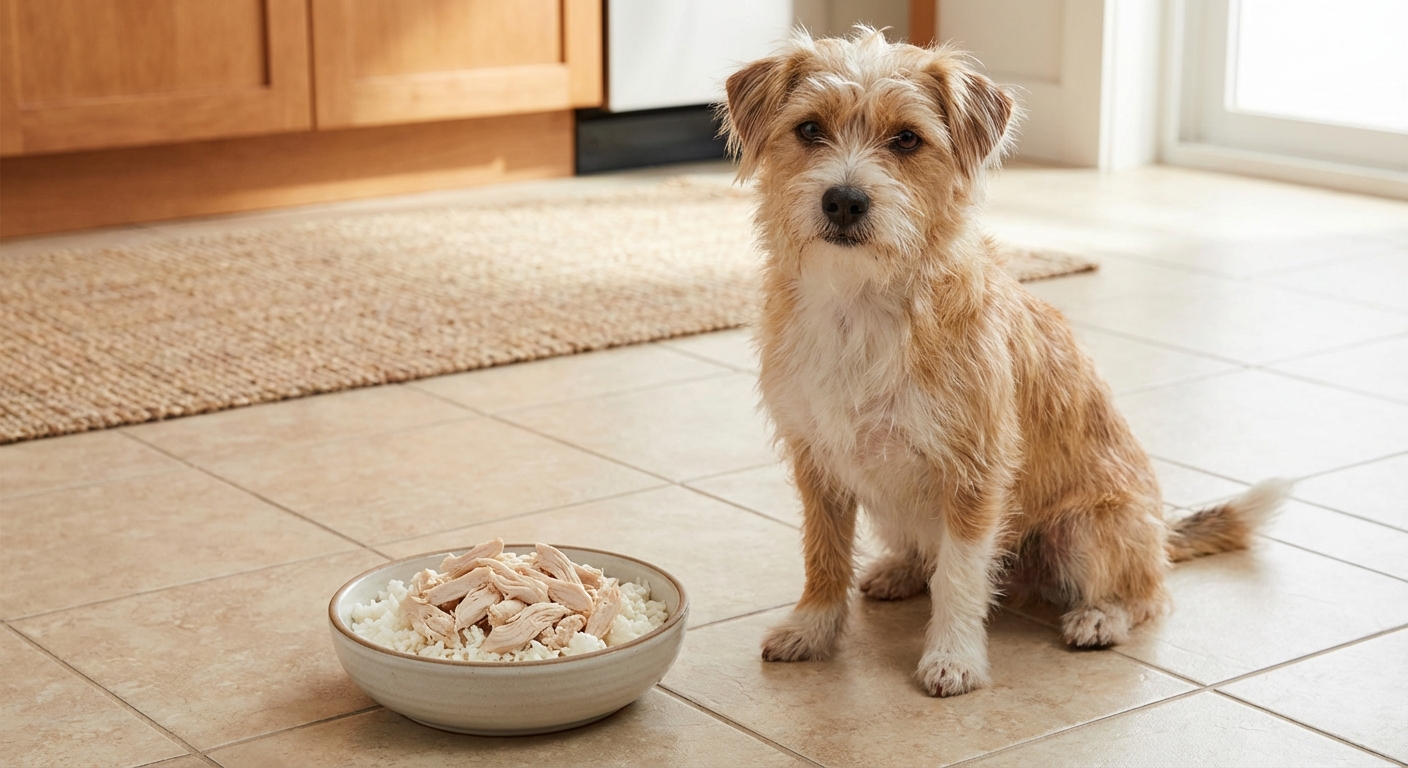
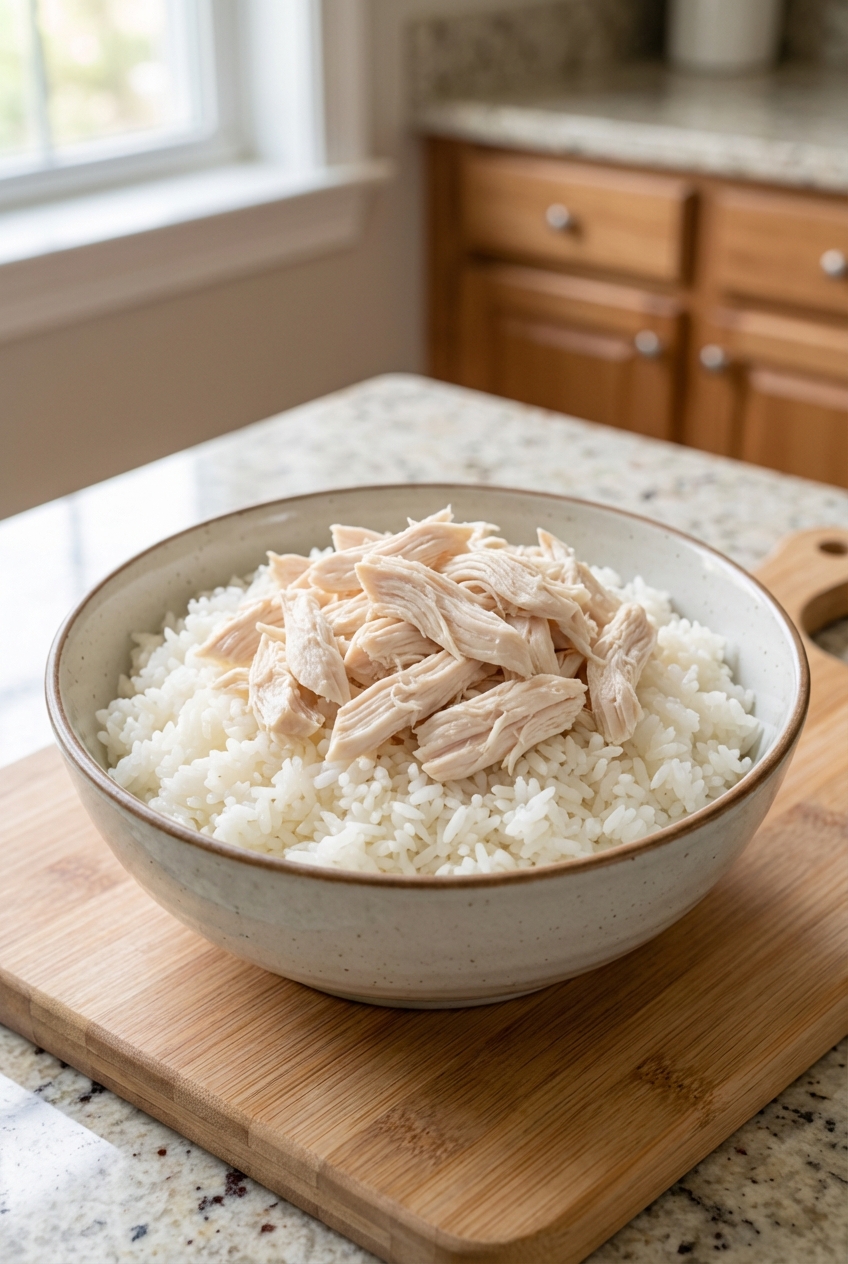
- Boiled skinless chicken breast + plain white rice
- Lean ground turkey (cooked, drained) + white rice
- Scrambled egg (no butter, no oil) + white rice
Portion approach (easy to remember): a common starting point is about 2 parts carb to 1 part protein for the first day, then gradually shift toward normal proportions as stool firms up. If your dog does better with a different balance (or your vet has a preferred plan), follow that.
How much and how often
- Feed small meals every 6 to 8 hours
- Start with 25% to 50% of their usual meal size per feeding
- If stool improves, slowly increase portions over 1 to 2 days
Foods to avoid
- Fatty foods, greasy meat, bacon, cheese-heavy meals
- New treats, bully sticks, rawhides, pig ears
- Milk (many dogs are lactose intolerant)
- Spicy foods
- Raw diets during an active GI upset (save raw for when they are fully normal again, if you feed it at all)
- High-fiber “healthy” add-ons right away (save those for later)
Helpful add-ons
These options are commonly used in veterinary care for mild diarrhea. Always use products meant for dogs, and if your dog takes medications or has chronic illness, check with your veterinarian first.
Probiotics for dogs
A canine probiotic can support the gut microbiome during upset stomach and after stress or antibiotics. Look for a reputable brand with a clear expiration date and storage instructions.
Plain pumpkin (not pie filling)
Plain canned pumpkin can help some dogs because it provides gentle soluble fiber. Start small and adjust based on results:
- Small dogs: 1 teaspoon once or twice daily
- Medium dogs: 1 to 2 teaspoons once or twice daily
- Large dogs: 1 tablespoon once or twice daily
If your dog is sensitive, start even smaller. If pumpkin makes stools worse or increases gas, stop and call your vet if symptoms continue.
Oral rehydration support
For mild dehydration risk, ask your vet whether an electrolyte solution is appropriate. Avoid sweetened sports drinks.
Anti-diarrhea meds?
This is where I want families to be especially careful. Some human medications can be dangerous for dogs or can mask a serious problem.
Do not give without veterinary guidance
- Loperamide (common anti-diarrhea medicine): can be risky for dogs with the MDR1 (ABCB1) gene mutation (seen in some Collies, Australian Shepherds, Shelties, and related breeds), and it is not appropriate if infection, toxin exposure, or blockage is possible.
- Pepto-type products (bismuth): may interact with other meds and can cause stool to look very dark, which can hide an important symptom.
- Any pain medication made for humans: many are toxic to dogs.
- OTC combo stomach remedies: avoid multi-ingredient products unless your vet specifically tells you to use them.
If you are thinking about medication, the safest move is a quick call to your vet. Many clinics can advise you based on your dog’s age, weight, breed, and symptoms.
Poop check: what to track
As unglamorous as it is, stool details help you decide what to do next.
- Color: chocolate brown is normal; black and tarry or lots of bright red is urgent
- Consistency: soft, watery, mucus-covered, formed but thin
- Frequency: how many times per day
- Volume: small spurts vs big puddles
- Extras: mucus, worms, foreign material, grass
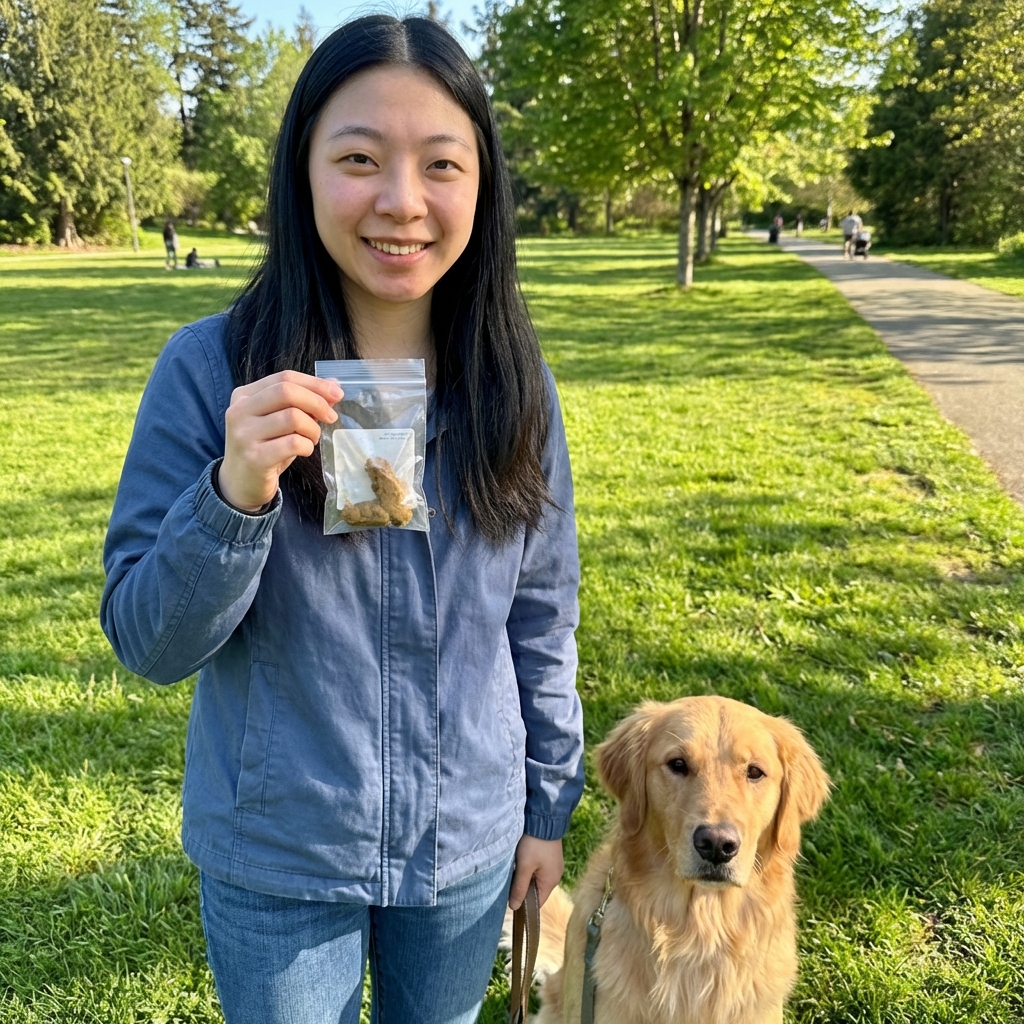
If you can safely do so, take a photo for your veterinarian. Also consider saving a small stool sample in a sealed bag for parasite testing.
Sample tip: label it with your dog’s name and the time collected. If you cannot drop it off right away, refrigerate it and bring it to your clinic as soon as you can (your vet can tell you their preferred timing).
Cleaning and family safety
Some causes of diarrhea, like giardia, can spread in the environment and may affect other pets. The risk to people is generally considered low, but good hygiene still matters, especially with kids or anyone immunocompromised.
- Pick up stool promptly, even in your own backyard
- Wash hands after potty breaks and cleanup
- Clean hard surfaces with a pet-safe disinfectant
- Wash bedding if there were accidents
- Do not let kids play in areas with fresh stool
If multiple pets develop diarrhea, schedule a vet visit. That pattern often points to parasites, an infectious bug, or a shared food issue.
Back to normal food
Once stools are improving and your dog is acting normal, transition slowly to avoid a relapse.
A simple 3 to 4 day transition
- Day 1: 75% bland diet, 25% regular food
- Day 2: 50% bland diet, 50% regular food
- Day 3: 25% bland diet, 75% regular food
- Day 4: 100% regular food
If diarrhea returns during the transition, step back to the previous day’s ratio and call your vet if it does not improve.
Prevent diarrhea
Prevention is not about perfection. It is about setting your dog’s gut up for success.
- Switch foods slowly over 7 to 10 days
- Limit rich treats and keep new chews to small “test” amounts
- Keep trash secured and supervise outdoor time
- Stay current on parasite prevention as advised by your vet
- Regular fecal testing, especially if your dog goes to parks or daycare
- Support gut health with consistent diet and optional vet-recommended probiotics
If your dog gets diarrhea every time life gets stressful, you are not imagining it. The gut and nervous system are closely connected. A predictable routine and gentle diet consistency can make a big difference.
Quick checklist: home plan
- Confirm no red flags
- Offer water and frequent potty breaks
- Optional brief fast for healthy adult dogs only (and only if it fits your vet’s guidance for your dog)
- Start bland meals in small portions
- Add a canine probiotic and consider plain pumpkin
- Track stool appearance, frequency, and any vomiting
- Call your vet if not improving within 24 to 48 hours, or sooner if symptoms worsen or your dog is very young, very small, or medically fragile
Sometimes diarrhea really is your dog’s body reacting to something mild, like stress or a too-rich snack. Other times it is an early sign of a bigger problem. When you stay calm, watch for red flags, and get help early when something feels off, you give your dog the safest path back to normal.