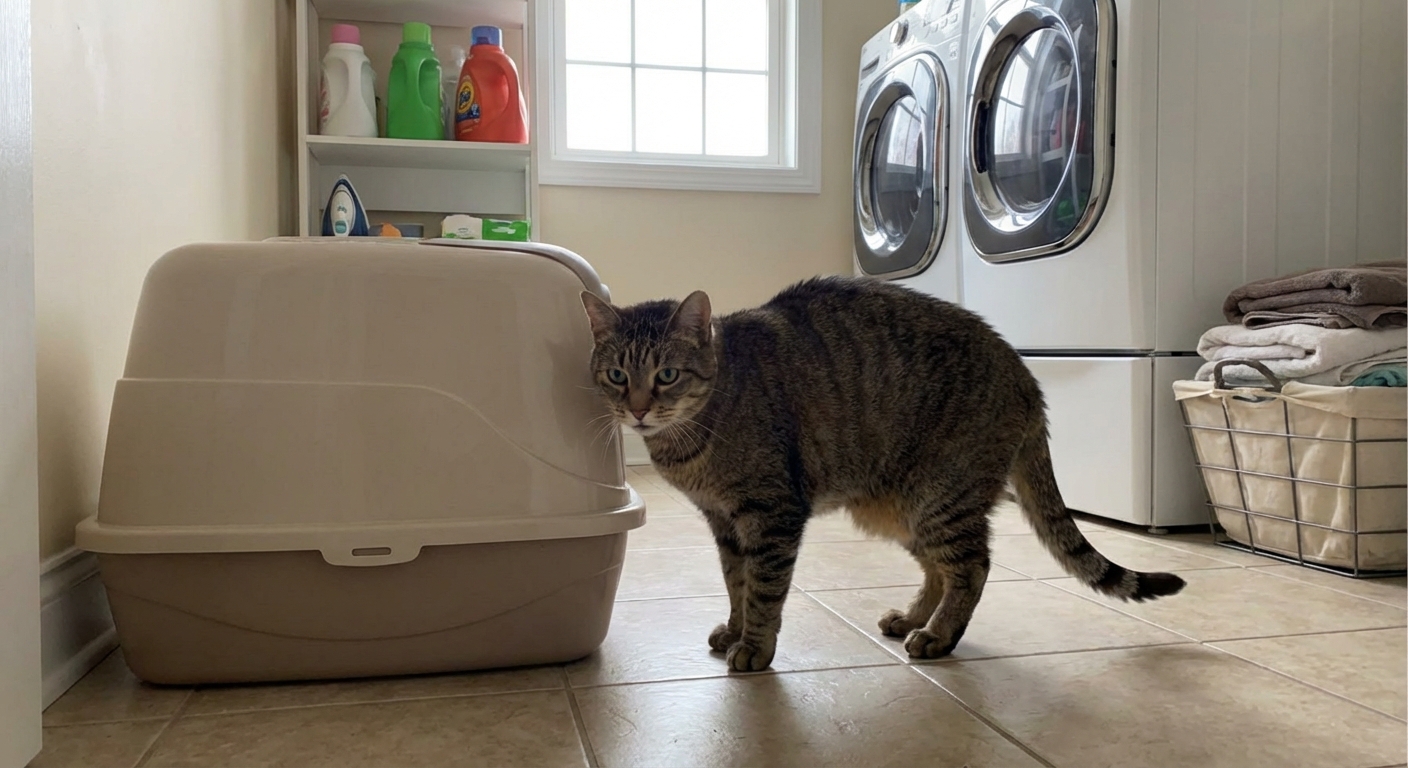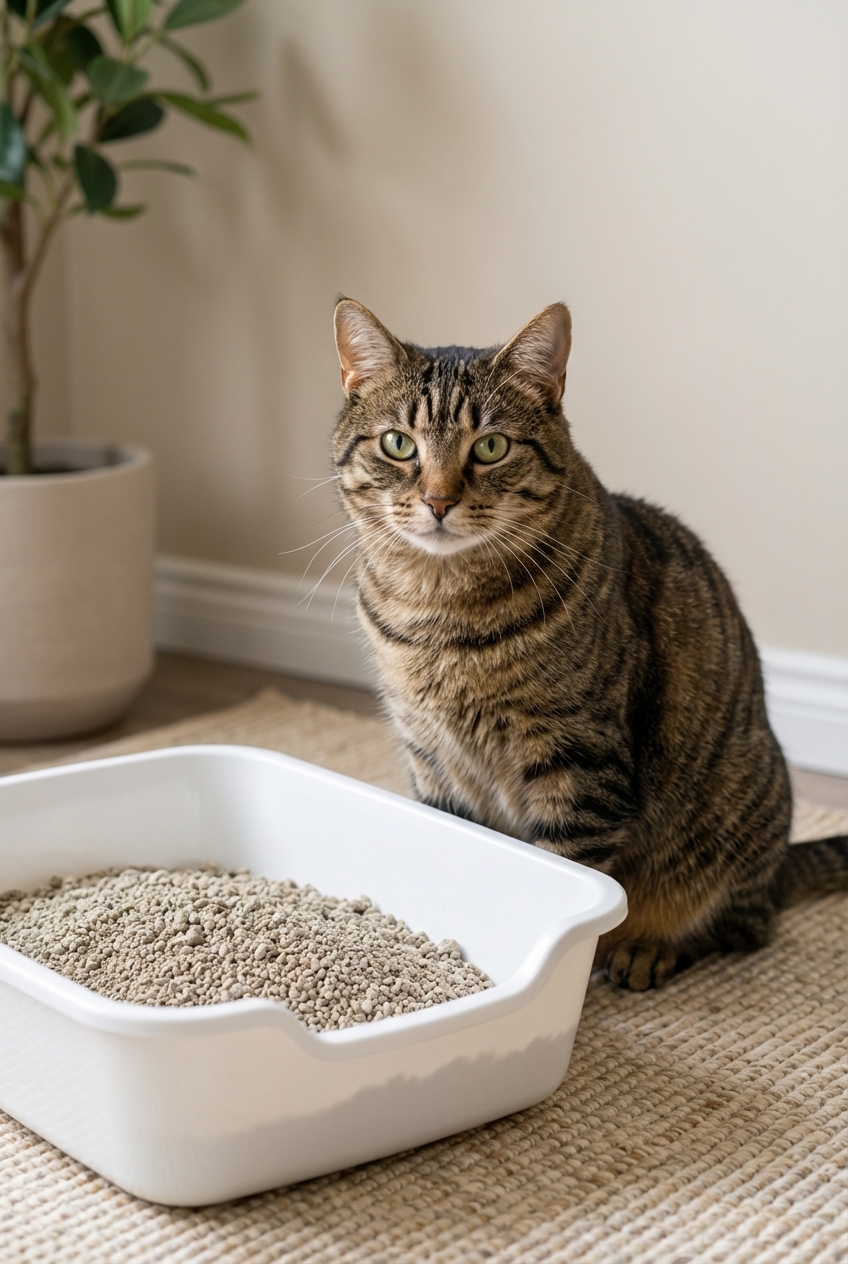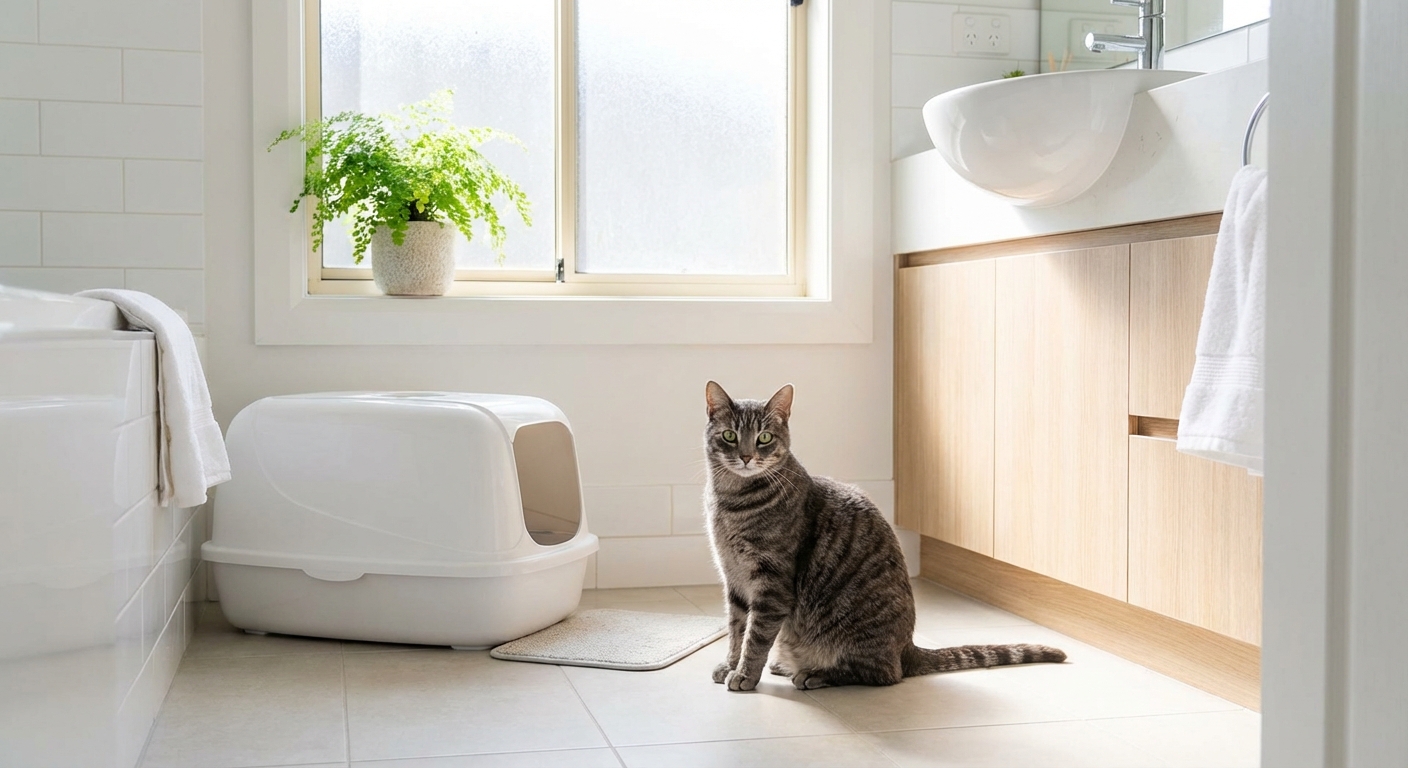
A practical guide to helping a constipated cat at home: hydration tips, plain pumpkin, vet-guided Miralax (PEG 3350), fiber, hairball support, red flags, and...
Article
•
Designer Mixes
How to Treat Constipation in a Cat

Shari Shidate
Designer Mixes contributor
When a cat is constipated, it can look like a simple bathroom problem, but it can quickly turn into a painful, stressful medical issue. As a veterinary assistant, I have seen cats strain for days and then feel immediate relief once the right plan is in place. The key is to act early, use safe home steps, and know when constipation is a true emergency.
Important note: If your cat is straining and producing no stool, crying out, vomiting, refusing food, or acting weak, skip the home tips and call your veterinarian or an emergency clinic right away. Straining can also be caused by urinary blockage, especially in male cats, and that is life-threatening.
One more boundary: These tips can support mild constipation, but they do not replace an exam. If you are unsure, it is always okay to call your vet for guidance.
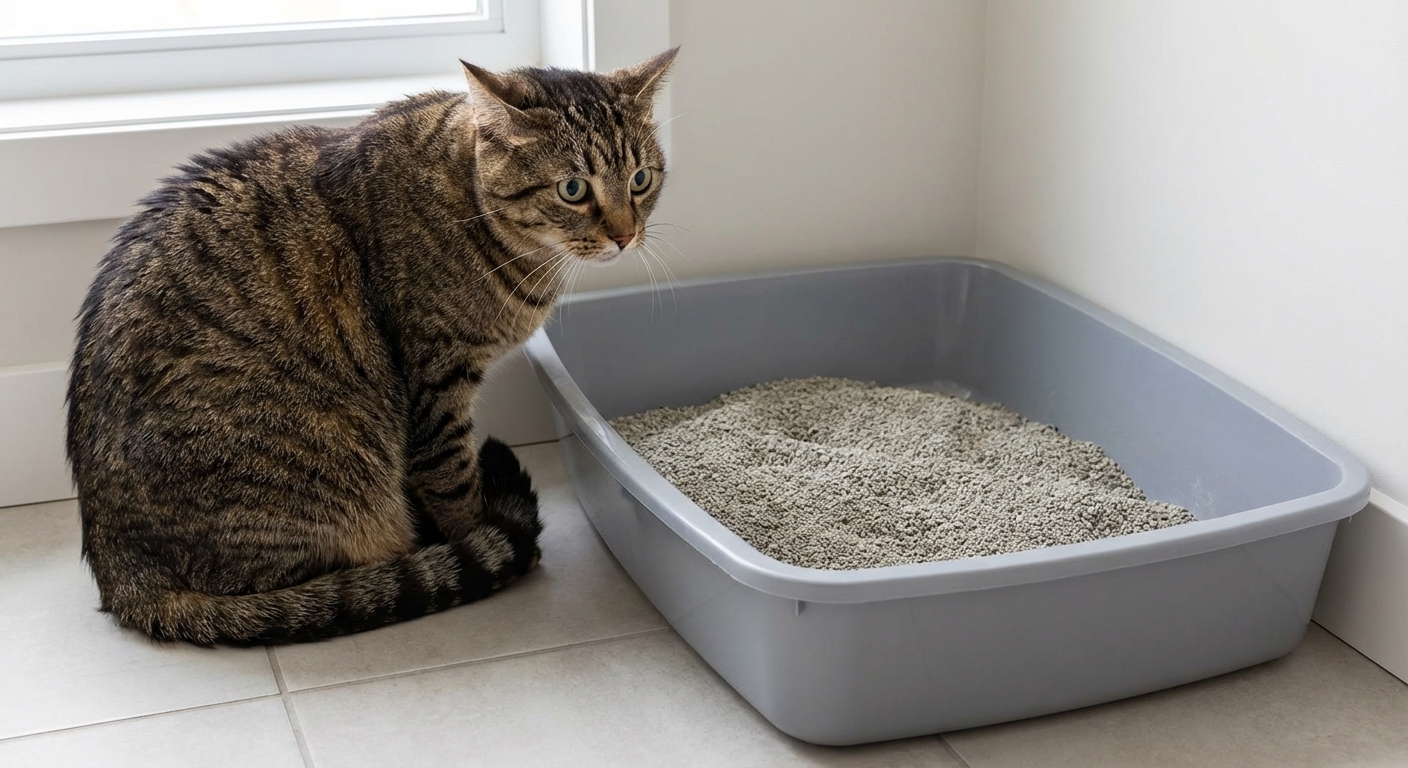
What constipation looks like in cats
Constipation means your cat is passing stool less often than normal or passing hard, dry stool that is difficult to move out. Some cats still try frequently, but only manage tiny pebbles or nothing at all.
- Bathroom signs: fewer bowel movements, straining, spending a long time in the litter box, small dry pellets, hard stools.
- Body and behavior signs: decreased appetite, hiding, grouchiness when you touch the belly, discomfort when walking or squatting.
- Sometimes you will also see: vomiting, dehydration, weight loss, dull coat, litter box avoidance because it hurts to go.
Constipation vs. urinary blockage: If your cat is repeatedly going to the litter box and producing no urine or only a few drops, that is an emergency. Cats can look like they are constipated when the real issue is urinary obstruction.
Common causes
Constipation is usually a symptom, not a diagnosis. Figuring out the “why” helps prevent repeat episodes.
- Not enough water intake: Cats that eat only dry food may take in less total water, but it varies by individual. Any illness that causes dehydration can also trigger constipation.
- Diet balance issues: Some cats do better with added fermentable fiber, while others need a different approach such as lower residue diets, especially with chronic problems. Your vet can help choose the right direction.
- Pain or arthritis: If squatting hurts, a cat may hold it, making stool drier and harder.
- Hair ingestion: Hair can contribute to slower, firmer stool in some cats, especially during heavy shedding.
- Obesity and low activity: Movement helps the gut move.
- Stress or litter box issues: Dirty box, box in a busy area, new pets, moving homes.
- Medications: Some meds can slow the gut, including opioids and other pain medications. Other drugs and supplements can also contribute, so tell your vet everything your cat is taking.
- Underlying medical conditions: chronic kidney disease, diabetes with neuropathy, pelvic injury or narrowing, neurologic disease, megacolon, electrolyte imbalances, anal sac or rectal disease, foreign material or obstruction.
When to call the vet first
Home care is only appropriate for mild constipation in an otherwise bright, eating, drinking cat. Call your veterinarian promptly if any of these apply.
- No stool for about 48 hours (or sooner if your cat is uncomfortable).
- Repeated straining with no stool produced.
- Vomiting, lethargy, not eating, or hiding more than usual.
- Bloated or painful belly, crying, or aggression when touched.
- Very young, very old, or medically fragile cats.
- History of megacolon or chronic constipation.
- Any concern your cat is actually blocked from urinating.
In clinic, we would always rather help early than see a cat arrive severely impacted, dehydrated, and miserable.
Safe at-home steps for mild constipation
If your cat is comfortable, still eating and drinking, and you are confident they are urinating normally, these steps can help. If your cat worsens at any point, or if there is no stool after 24 hours of home measures, call your veterinarian.
1) Increase water intake right away
Hydration is the foundation. When stool sits in the colon, the body pulls water from it, turning it into hard, dry material. Adding water back often helps within a day or two for mild cases.
- Switch to wet food temporarily (or long-term if your vet agrees). You can add a tablespoon or two of warm water to make a “gravy.”
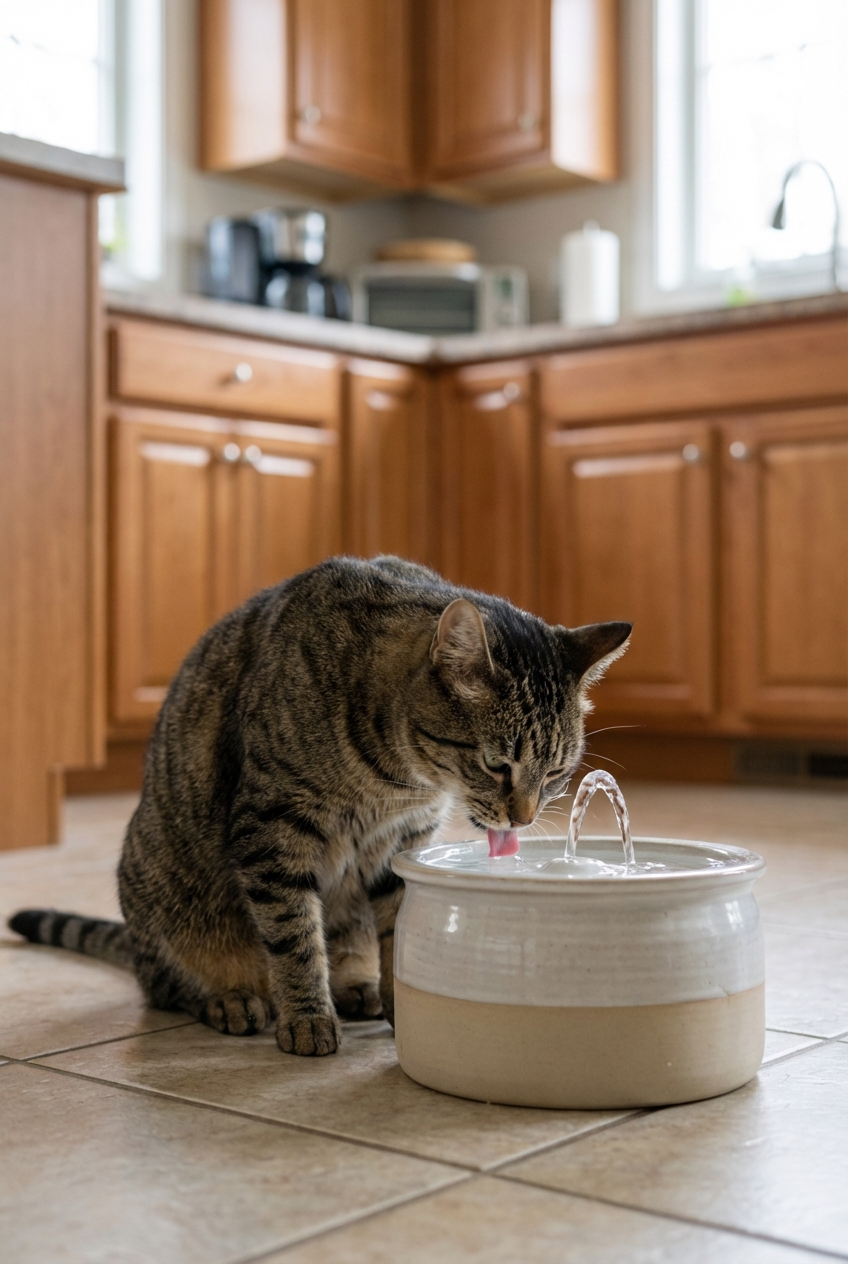
- Offer a fountain or more water bowls in quiet locations.
- Flavor the water with a small amount of tuna water (no onion or garlic ingredients) or low-sodium broth made without onion or garlic.
2) Add gentle fiber, slowly
For many cats, a small amount of fiber helps normalize stool consistency and encourages movement. Too much too fast can cause gas, cramps, diarrhea, or refusal to eat. If that happens, stop and call your vet.
- Plain canned pumpkin (not pumpkin pie filling): start low. For many average adult cats, try 1/2 to 1 teaspoon mixed into food once daily. Some cats do better with up to 2 teaspoons. If stools get loose or your cat seems gassy or uncomfortable, stop.
- Psyllium (vet-approved): often used in tiny amounts. Ask your veterinarian for the right dose for your cat.
If your cat has chronic constipation, your vet may recommend a prescription diet and will help you choose whether added fiber or a different strategy makes more sense for your cat.
3) Encourage movement and comfort
- Play sessions for 5 to 10 minutes a few times a day can stimulate gut motility.
- Warm, quiet resting spots reduce stress and may help a reluctant cat relax enough to go.
- Improve litter box setup: unscented litter, scoop daily, one box per cat plus one extra, easy-to-enter box for seniors.
4) Support grooming if hair is a factor
If you notice heavy shedding, frequent grooming, or hair in stool, grooming support can help overall stool passage.
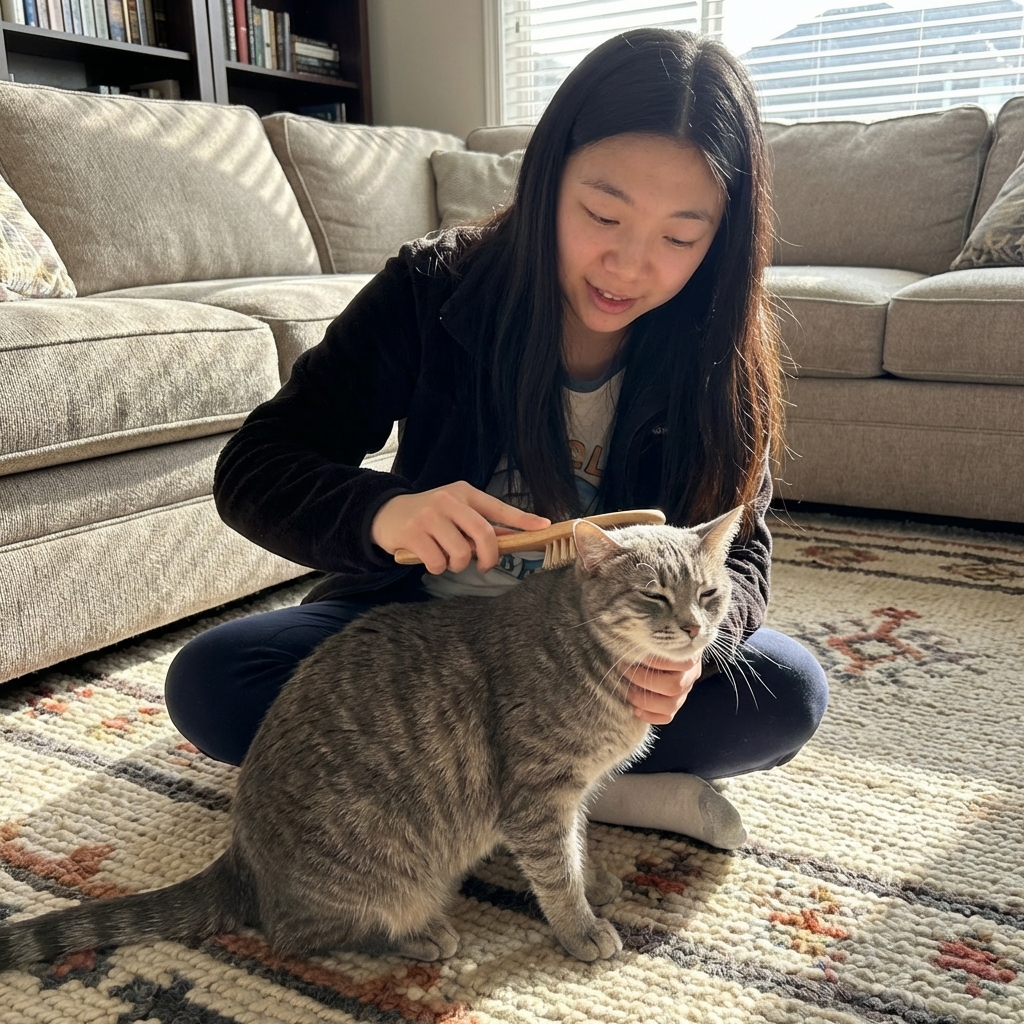
- Brush more often during shedding seasons.
- Ask your vet about hairball diets or cat-safe products that fit your cat’s health profile.
What not to do
These are the mistakes I most want you to avoid because they can make cats much sicker.
- Do not give human laxatives unless your veterinarian specifically instructs you. Many are unsafe for cats.
- Do not use enemas at home unless your veterinarian directs you. Some enema products are toxic to cats.
- Do not use mineral oil by mouth. If aspirated, it can cause serious lung injury.
- Do not use human suppositories unless your veterinarian tells you to.
- Do not give essential oils or “natural detox” products. Many are toxic to cats.
- Do not use OTC hairball laxatives without vet guidance, especially in cats with other medical conditions or cats that are not eating well.
- Do not force-feed water with a syringe if your cat resists, as this can lead to aspiration.
Vet treatment (what to expect)
If home steps are not enough or your cat is uncomfortable, your veterinarian can provide safe, targeted help.
- Exam and history: hydration status, belly palpation, litter box habits, diet, and medications.
- X-rays: help assess stool burden and look for signs of obstruction, pelvic narrowing, or megacolon. In some cases, other imaging or tests may be needed.
- Fluids: subcutaneous or intravenous fluids to correct dehydration.
- Cat-safe laxatives or stool softeners: your vet may prescribe medications like polyethylene glycol or lactulose when appropriate.
- Enema: performed with cat-appropriate products and monitoring.
- De-obstipation: in severe impaction, manual removal under anesthesia may be needed.
Constipation vs. obstipation: Constipation is difficult stool passage. Obstipation is severe blockage or impaction where stool cannot pass at all without medical help. This is one reason early treatment matters.
If constipation keeps coming back, long-term management might include diet changes, daily medication, pain control for arthritis, weight management, and stress reduction.
Preventing constipation
Once your cat is back to normal, prevention is where you can make the biggest difference. Think hydration, routine, and comfort.
- Prioritize moisture: wet food, added water, and multiple fresh water stations.
- Keep a consistent diet: change foods slowly over 7 to 10 days when needed.
- Support healthy weight: extra weight can reduce activity and worsen constipation.
- Daily enrichment: play, climbing, food puzzles, and routine reduce stress and encourage movement.
- Grooming support: regular brushing, especially for long-haired cats.
- Senior cat comfort: low-entry litter boxes, soft bedding, and veterinary pain management if arthritis is present.
A simple habit I love: keep a tiny “litter box log” for a week anytime you change diet or notice stool changes. Frequency and stool quality tell you a lot earlier than you think.
Quick checklist: next 24 hours
- Confirm your cat is urinating normally.
- Offer wet food and add extra water.
- Try 1/2 to 1 teaspoon plain canned pumpkin mixed into food if your cat will eat it.
- Encourage gentle play and a calm environment.
- If no stool after 24 hours of home steps, if your cat seems painful, or if symptoms return often, call your vet.
Constipation is common, but your cat should not have to suffer through it. With early action and the right veterinary help when needed, most cats can get comfortable quickly and stay that way.