Stop fleas fast with a simple 3-part plan: use cat-safe medication, clean your home to break the life cycle, and prevent re-infestation for months. Avoid uns...
Article
•
Designer Mixes
How to Treat Cats for Fleas

Shari Shidate
Designer Mixes contributor
Fleas can make even the sweetest cat miserable, and they can also create real health problems in your home. The good news is that you can treat fleas effectively when you use a step-by-step plan and choose products made for cats.
As a veterinary assistant, I always tell pet parents the same thing: treat the cat, treat the environment, and stay consistent long enough to break the flea life cycle.
One quick “clinic reality” note: many families do everything right for a week, then stop when they see improvement. That is often when newly emerging fleas show up and the problem feels like it is “back.”
Know what you’re fighting
Adult fleas are only the tip of the iceberg. Fleas have four life stages: egg, larva, pupa, and adult. In most homes, the majority of the flea population is off your cat as eggs, larvae, and pupae in the environment.
- Adults live on the cat and bite.
- Eggs fall off into bedding, carpets, and cracks in flooring.
- Larvae hide in dark places and feed on organic debris.
- Pupae can wait weeks to months before emerging, especially in cooler, low-traffic areas.
This is why one bath or one vacuuming session rarely solves the issue by itself.
First, confirm it is fleas
Not every itchy cat has fleas. Also, some cats itch intensely from flea allergy dermatitis, even if you never spot a flea. Here are common clues:
- Frequent scratching, especially around the neck, base of the tail, and belly
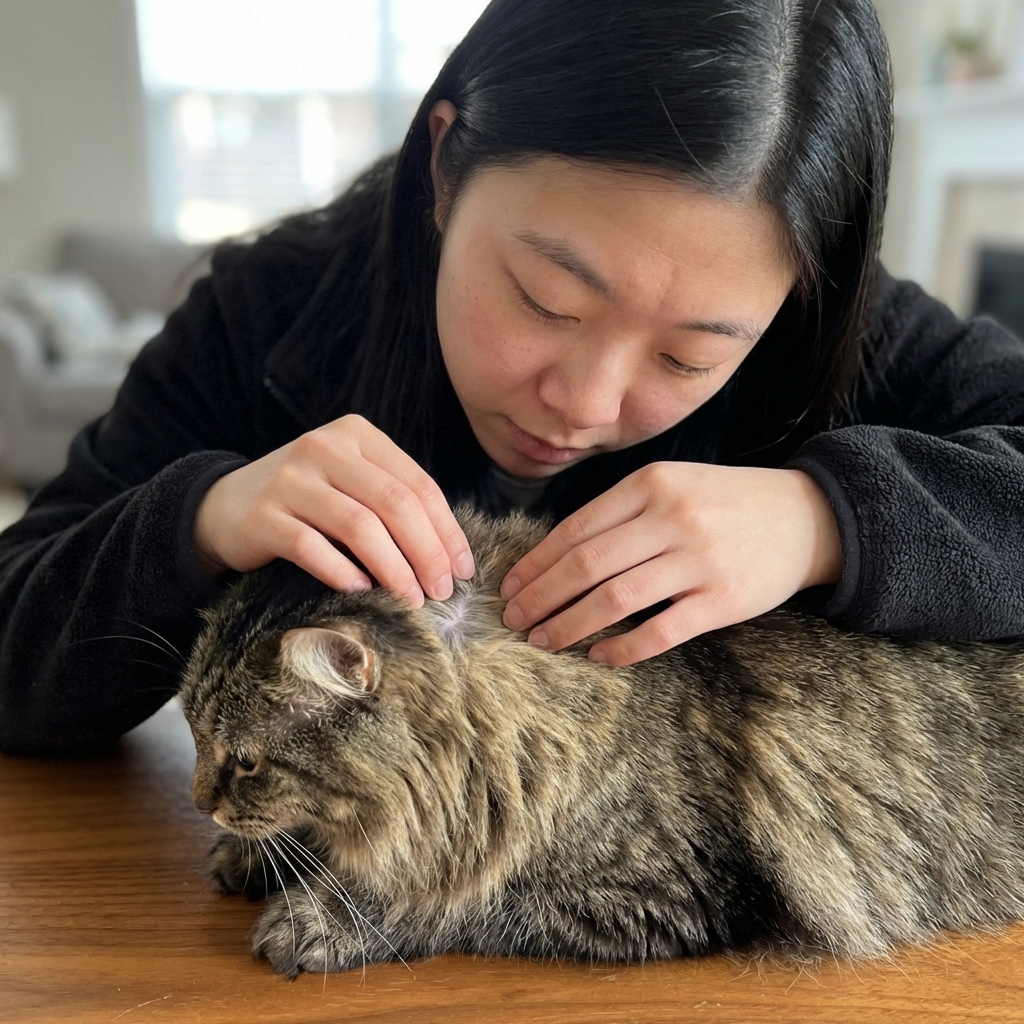
- Small black specks in the coat that look like pepper (flea dirt)
- Hair loss or scabs from overgrooming
- Tiny fast-moving insects in the fur
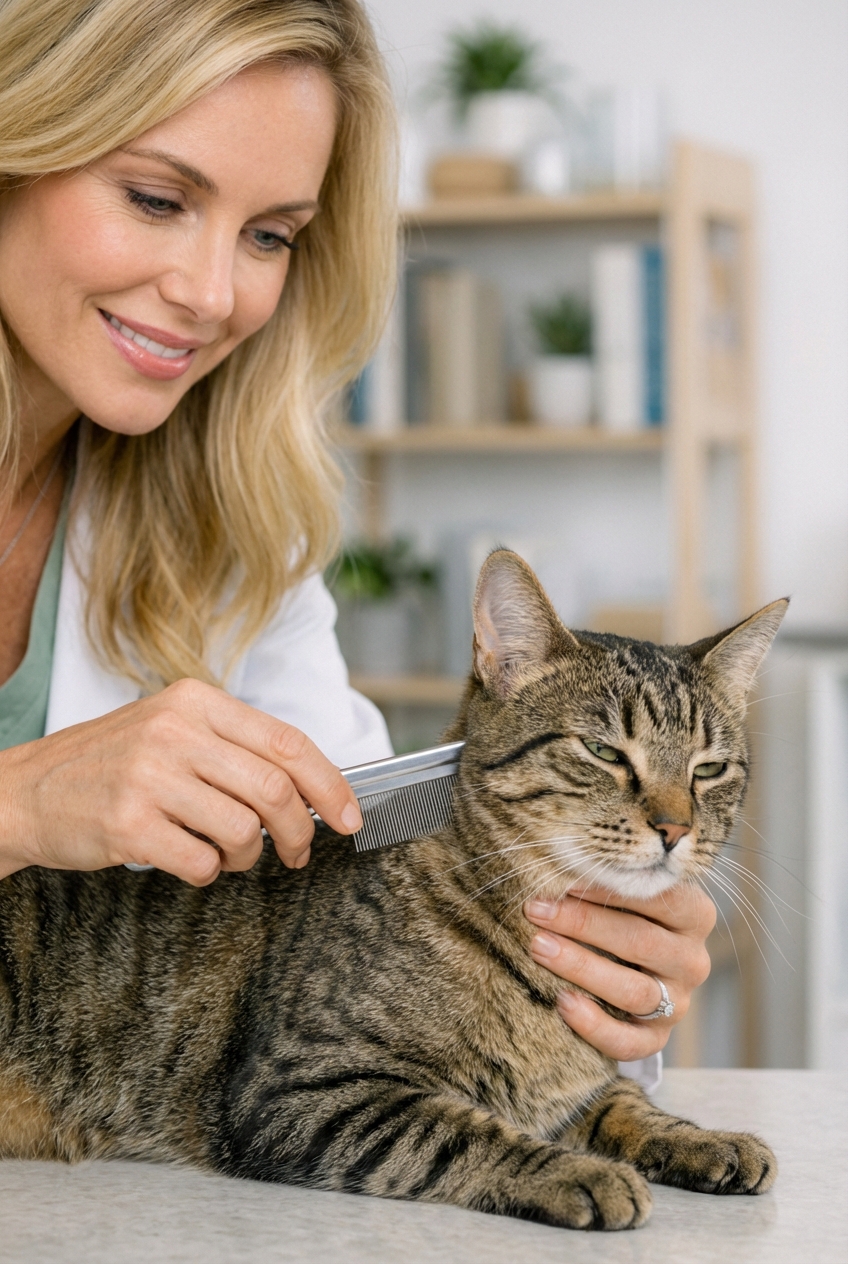
Try the “white paper towel test.” Comb your cat with a flea comb over a white towel. If you see black specks, wet them. If they turn reddish-brown, that is digested blood and strongly suggests fleas.
Choose a cat-safe flea treatment
The safest, most reliable results usually come from veterinary-recommended topical or oral preventatives. Many modern flea products kill adult fleas quickly, and some also stop egg production.
Common options your vet may recommend
- Topical spot-on treatments applied to the skin at the back of the neck
- Oral flea medications that kill fleas after they bite (how fast they work varies by active ingredient)
- Flea collars that repel and kill fleas for extended periods (effectiveness and safety vary widely, so stick with reputable cat-specific brands and avoid cheap, off-brand collars)
Important: Always match the product to your cat’s species, age, and weight. Kittens and senior cats may need different choices than healthy adults.
Do not stack products
More is not always better. Do not combine multiple flea products (for example, a collar plus a topical plus an oral medication) unless your veterinarian tells you it is safe. Doubling up can increase the risk of side effects or overdose.
Dog products are dangerous for cats
Never use a dog flea and tick product on a cat unless your veterinarian specifically tells you it is safe. Many dog products contain permethrin, which can be toxic to cats and may cause tremors, seizures, or worse.
What about “natural” flea remedies?
I understand the desire to go natural, but please be cautious. Essential oils can be risky for cats because cats metabolize certain compounds differently than dogs and people. Even products marketed as “natural” can cause drooling, vomiting, wobbliness, or serious toxicity in some cats. Reactions depend on the product and dose, and cats are especially sensitive to certain oils.
Steps to treat your cat
Step 1: Comb and remove fleas
Use a fine-toothed flea comb daily for 7 to 14 days. Dip the comb in soapy water to trap and kill fleas you remove.
Step 2: Start a proven flea medication
Apply or administer the flea treatment exactly as directed. If you bathe your cat, check the product label. Some topicals require you to wait before or after bathing to work properly.
Step 3: Treat every pet in the household
If you have multiple cats or a dog, they all need flea control. Otherwise, fleas simply hop between hosts and your problem never fully ends.
Step 4: Watch for anemia in kittens
Kittens can become anemic from flea bites faster than adult cats. Call your veterinarian promptly if you notice:
- Pale gums
- Weakness or lethargy
- Fast breathing
- Not eating well
Do not skip home treatment
To truly get ahead of fleas, you have to target eggs, larvae, and pupae in your home. Here is what works best in most households.
Vacuum like you mean it
- Vacuum carpets, rugs, baseboards, couch cushions, and under furniture.
- Do it daily for the first 7 to 10 days if possible, then several times per week.
- Empty the canister outdoors or seal the vacuum bag in a trash bag right away.
Wash bedding and soft items
- Wash pet bedding, throw blankets, and washable slipcovers in hot water.
- Dry on high heat when the fabric allows.
Consider an IGR for stubborn infestations
If fleas keep coming back, ask your veterinarian about an environmental product with an insect growth regulator (IGR), which stops immature fleas from developing into biting adults. This can be especially helpful in heavy infestations.
Safety note: Follow the label, remove pets during application, and ventilate well. If you have fish, reptiles, birds, or small mammals, ask your vet before using any home sprays or foggers since species sensitivity can vary.
Do not forget outdoor sources
Fleas can come from porches, patios, yards, under decks, and wildlife. Even indoor-only cats can get fleas through other pets or hitchhikers brought in on clothing. If fleas keep reappearing, outdoor exposure is worth considering in your plan.
How long does it take?
In many homes, you will see improvement within days, but full control often takes 4 to 12 weeks depending on infestation level and how consistent you are. Heavy infestations, missed doses, and skipping environmental steps tend to push it toward the longer end. Pupae can “hide out” and emerge later, which is why it can feel like fleas are returning even when you are doing many things right.
Consistency is what breaks the cycle. Monthly prevention is not just for stopping fleas later, it is what helps you fully finish the job now.
When to call the vet
Please reach out to your veterinarian if any of the following apply:
- Your cat is very young, elderly, pregnant, nursing, or has chronic illness
- You see sores, hot spots, or significant hair loss
- Your cat has tapeworm segments (fleas can transmit tapeworms)
- Fleas persist after 4 weeks of correct, consistent treatment
- Your cat has tremors, drooling, vomiting, or weakness after any flea product
There is no shame in needing help. Fleas are persistent, and your veterinarian can tailor a plan that is safest for your specific cat.
Prevent fleas long-term
Once the infestation is under control, prevention keeps your cat comfortable and your household sane.
- Keep your cat on a veterinarian-recommended monthly flea preventative year-round, especially in warm climates.
- Wash bedding regularly and vacuum high-traffic pet areas weekly.
- If your cat goes outdoors, prevention becomes even more important.
- Check for fleas any time you see itchiness return, and do not wait weeks to respond.
Your cat deserves relief, and you deserve a home where you are not constantly battling tiny jumpy pests. Start with a cat-safe medication, clean strategically, and stick with it long enough to win.