Step-by-step home care for mild dog diarrhea and vomiting: short food break, small sips of water, bland diet, pumpkin, probiotics, dehydration checks, and ur...
Article
•
Designer Mixes
How to Treat a Dog’s Upset Stomach and Behavior Changes

Shari Shidate
Designer Mixes contributor
When a dog’s stomach feels off, their behavior often changes too. A normally bouncy pup may become clingy, restless, or suddenly “grumpy.” Some dogs hide. Others pace, lick the floor, or ask to go outside very frequently. As a veterinary assistant in Frisco, Texas, I see this pattern all the time: often tummy trouble first, then behavior shifts.
This guide walks you through what to do at home, what not to do, and when to call your veterinarian. I’ll keep it practical and evidence-minded, because the best plan is the one you can actually follow.
What an upset stomach looks like
“Upset stomach” is a broad term. It can range from mild indigestion to something more serious. Common signs include:
- Vomiting (food, yellow foam, or clear fluid)
- Diarrhea (soft stool to watery stool)
- Gagging or retching
- Loss of appetite or eating grass
- Excessive drooling, lip licking, or swallowing
- Gurgly belly sounds
- Flatulence
- Signs of nausea like turning away from food or licking floors
If your dog also seems uncomfortable, watch for pain signals like a tucked belly, a hunched posture, trembling, or refusing to lie down comfortably.
Vomiting vs. regurgitation
This matters because it changes the risk level.
- Vomiting usually comes with nausea, belly contractions, drooling, and heaving.
- Regurgitation often looks more sudden and effortless, with food or water coming back up shortly after eating or drinking.
Repeated regurgitation (especially with weight loss, coughing, or trouble swallowing) is a good reason to call your vet, since it can point to esophageal issues.
Why stomach issues change behavior
Behavior is communication. When a dog feels nauseated or crampy, you may see:
- Clinginess or wanting to be near you for comfort
- Restlessness, pacing, or frequent position changes
- Hiding or avoiding touch
- Irritability, especially around the belly or when picked up
- Accidents in the house due to urgency
- Increased grass eating or scavenging
These behaviors are not “bad manners.” They are often your dog’s way of coping with nausea, discomfort, or urgent bowel movements.
Quick safety check
Home care is reasonable for mild stomach upset in an otherwise healthy dog. But some signs mean you should call your veterinarian promptly or seek urgent care.
Go urgently if you notice any of these
- Repeated vomiting, or vomiting that will not stop
- Vomiting plus diarrhea that is frequent or watery
- Blood in vomit or stool, or black tarry stool
- Severe lethargy, collapse, or weakness
- Bloated, hard abdomen, unproductive retching, or signs of bloat
- Obvious abdominal pain, crying, or a “prayer position” that does not resolve
- Refusal to drink, or signs of dehydration (sticky gums, sunken eyes)
- Known or suspected toxin exposure (xylitol, chocolate, grapes/raisins, certain meds)
- Possible foreign object ingestion (toys, socks, bones, corn cobs)
- Puppies, senior dogs, pregnant dogs, or dogs with chronic disease (kidney disease, diabetes, Addison’s)
- Unvaccinated or under-vaccinated puppies with vomiting or diarrhea (parvo is an emergency)
- Symptoms lasting more than 24 hours, or any worsening trend
If you are unsure, it is always appropriate to call your vet for guidance. A quick phone triage can save you time and stress.
At-home care (step-by-step)
If your dog is bright, alert, and only mildly affected, these are steps that are commonly recommended by veterinarians for uncomplicated stomach upset. Guidance can vary by dog and by clinic, so call your vet if you are unsure.
1) Stop rich extras
For the next 24 to 48 hours, pause:
- Fatty scraps (bacon, sausage, fried foods)
- New chews, rawhides, bones, pig ears
- Dairy (especially if your dog is not used to it)
- High-fat treats and table scraps
Sudden fat can trigger pancreatitis in some dogs, which is not a “wait it out” problem.
2) Hydration first
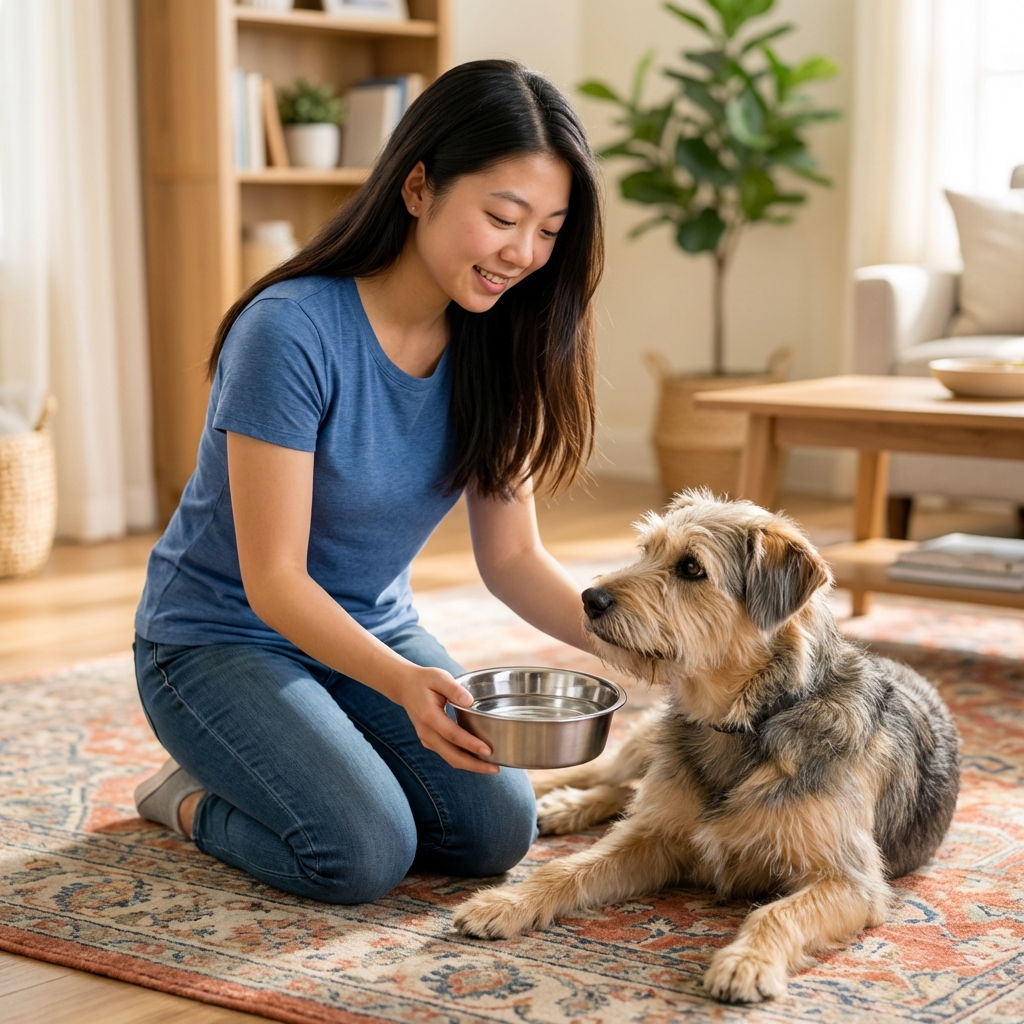
Water matters more than food in the short term. Offer fresh water and encourage small, frequent sips.
- If your dog gulps water and then vomits, offer smaller amounts more often.
- For some dogs, ice chips can be easier to tolerate.
Quick dehydration check (not perfect): gums should feel slick and moist, not tacky or dry. You can also gently lift the skin over the shoulder blades and see if it snaps back promptly. If you suspect dehydration, call your vet.
3) Food break only when appropriate
For adult dogs with mild vomiting, some veterinarians recommend a brief food break (often 6 to 12 hours) while still offering water. Others prefer early, small bland meals instead. Recommendations differ.
Do not fast very small dogs, puppies, or dogs with diabetes or other conditions unless your vet specifically directs you. If your dog seems weak, cannot keep water down, or continues vomiting during the break, stop and contact your veterinarian.
4) Reintroduce food after a vomiting-free window
Once your dog has been vomiting-free for several hours and is interested in food, start small. A common approach is 4 to 6 small meals per day.
If your dog vomits again after eating, do not keep offering more food. Go back to water only and call your vet for next steps.
5) Feed a bland diet for 2 to 3 days
Common options include:
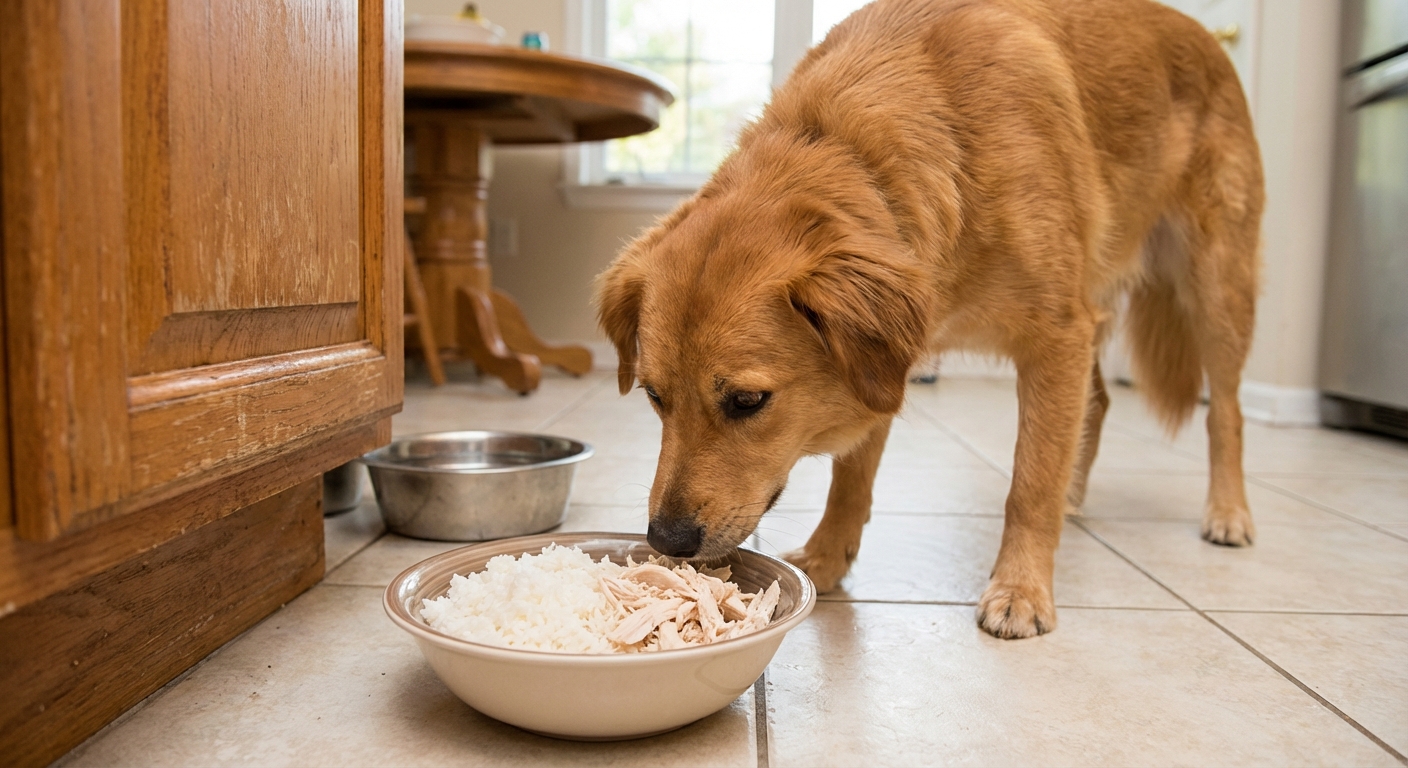
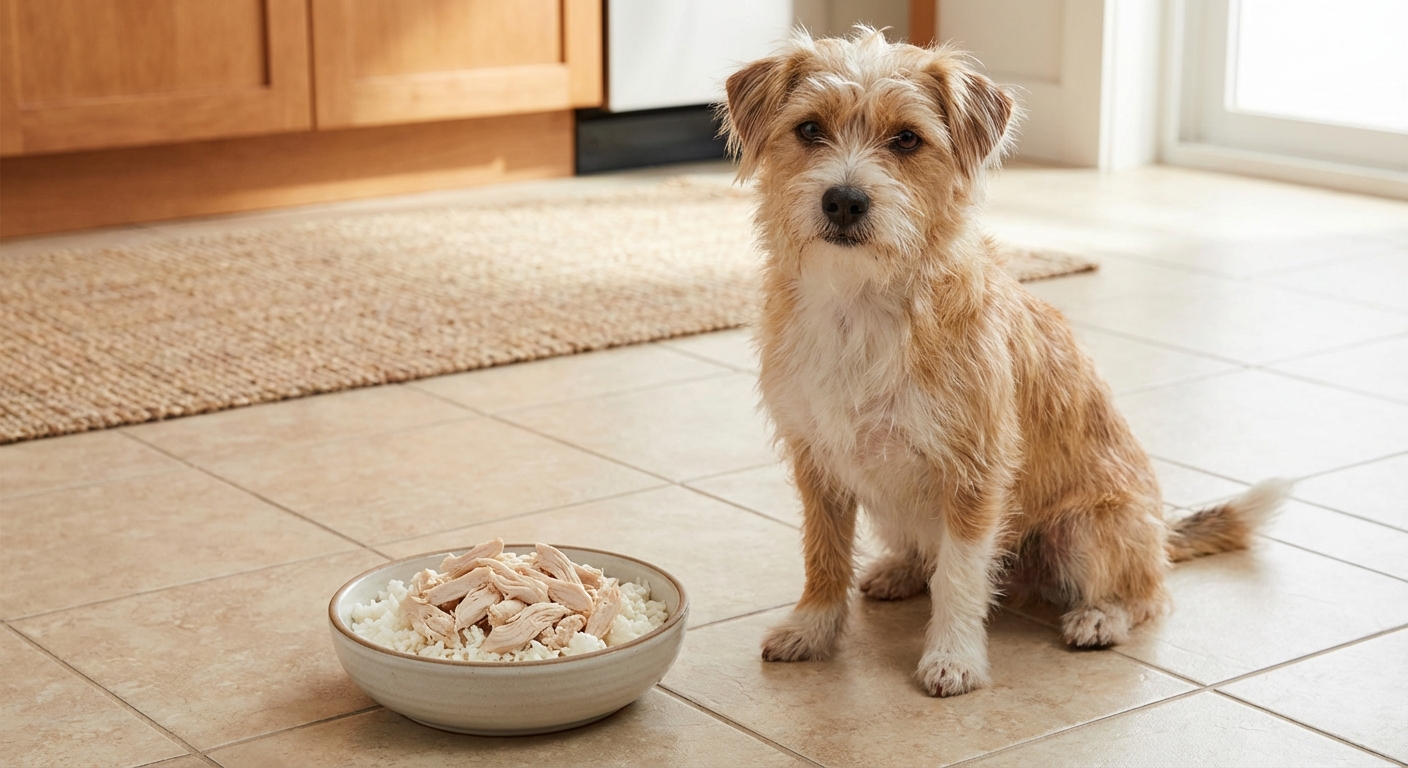
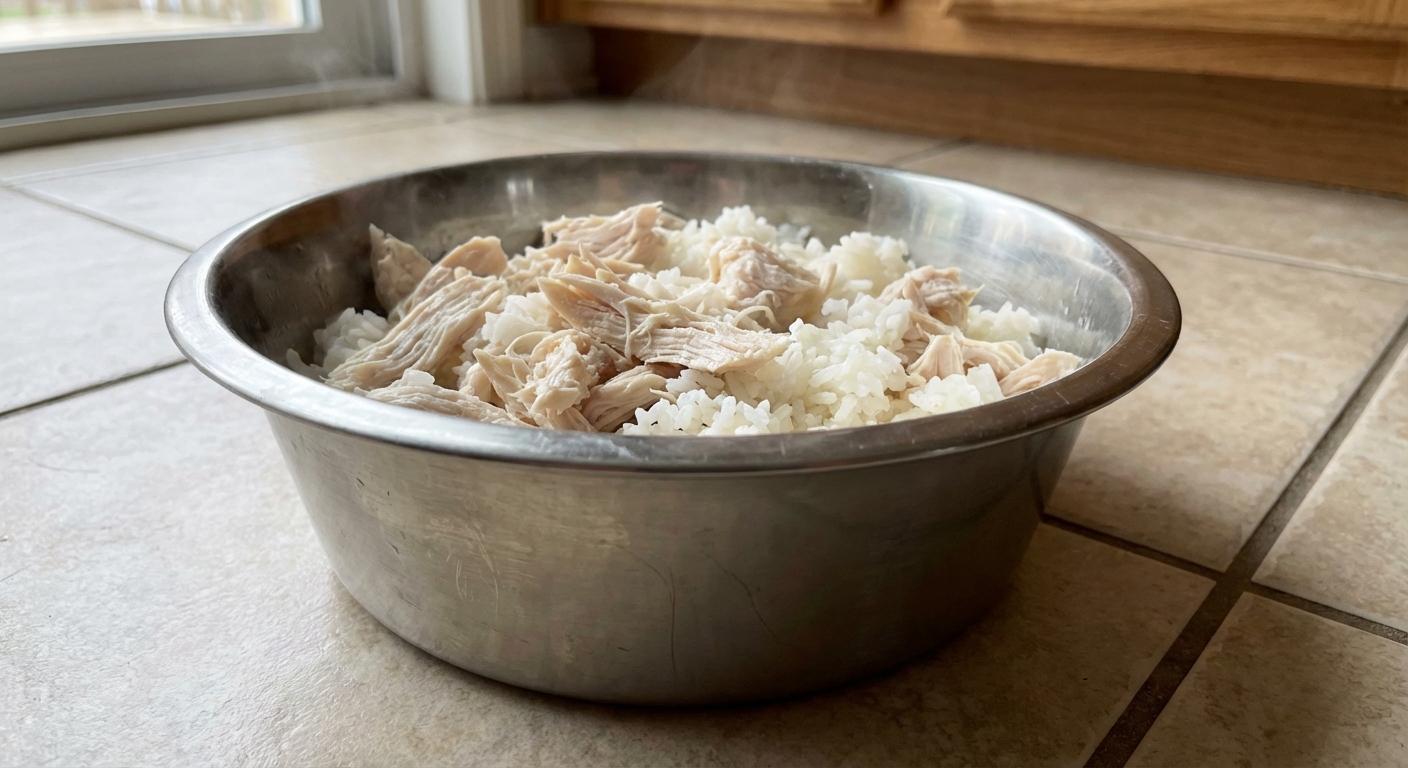
- Boiled skinless chicken breast plus white rice
- Lean ground turkey plus white rice
- Plain fully cooked potato can work for some dogs, but it must be unseasoned (no butter, oil, salt, or garlic). Rice is often simpler for most households.
- Commercial veterinary GI diets (your vet can recommend one): helpful for dogs who do not do well on home-cooked bland food
Start with small portions. As a very rough guide, many dogs tolerate 1 to 2 tablespoons per 10 pounds of body weight per meal to begin, then you can increase gradually if there is no vomiting and stools are improving. If your dog has a history of pancreatitis or needs a special diet, ask your vet what bland option fits best.
6) Gentle gut helpers (use carefully)
Some dogs benefit from simple add-ons:
- Plain canned pumpkin (not pie filling): sometimes used for mild diarrhea or constipation. A common starting amount is 1 teaspoon per 10 pounds of body weight, mixed into food, 1 to 2 times daily. Too much can worsen diarrhea or add extra calories, so start small.
- Probiotics made for dogs: can be helpful during mild GI upset and after diet disruption. Choose a veterinary-formulated product and follow the label, or ask your vet for a specific recommendation.
Skip home “remedies” that are not dog-safe, and do not use essential oils.
7) Transition back slowly
After stools firm up and appetite is normal, transition over 3 to 5 days:
- Day 1: 75% bland, 25% regular
- Day 2: 50% bland, 50% regular
- Day 3: 25% bland, 75% regular
- Day 4: 100% regular
Go slower if your dog has a sensitive stomach.
What not to do
- Do not give human medications like Pepto-Bismol, ibuprofen, naproxen, or acetaminophen unless a veterinarian specifically instructs you. Some are dangerous for dogs. Also note that bismuth products can turn stool black and may mask bleeding, which can make symptoms harder to interpret.
- Do not abruptly switch diets to a new food while the stomach is already upset.
- Do not force-feed. Nausea plus stress can worsen vomiting.
- Do not ignore repeated vomiting, especially if nothing is staying down.
- Do not assume it is “just something they ate” if your dog is unusually quiet, painful, bloated, or deteriorating.
Behavior support
Supporting behavior is part of treating the stomach. When dogs feel unwell, they need comfort, predictability, and fewer triggers.
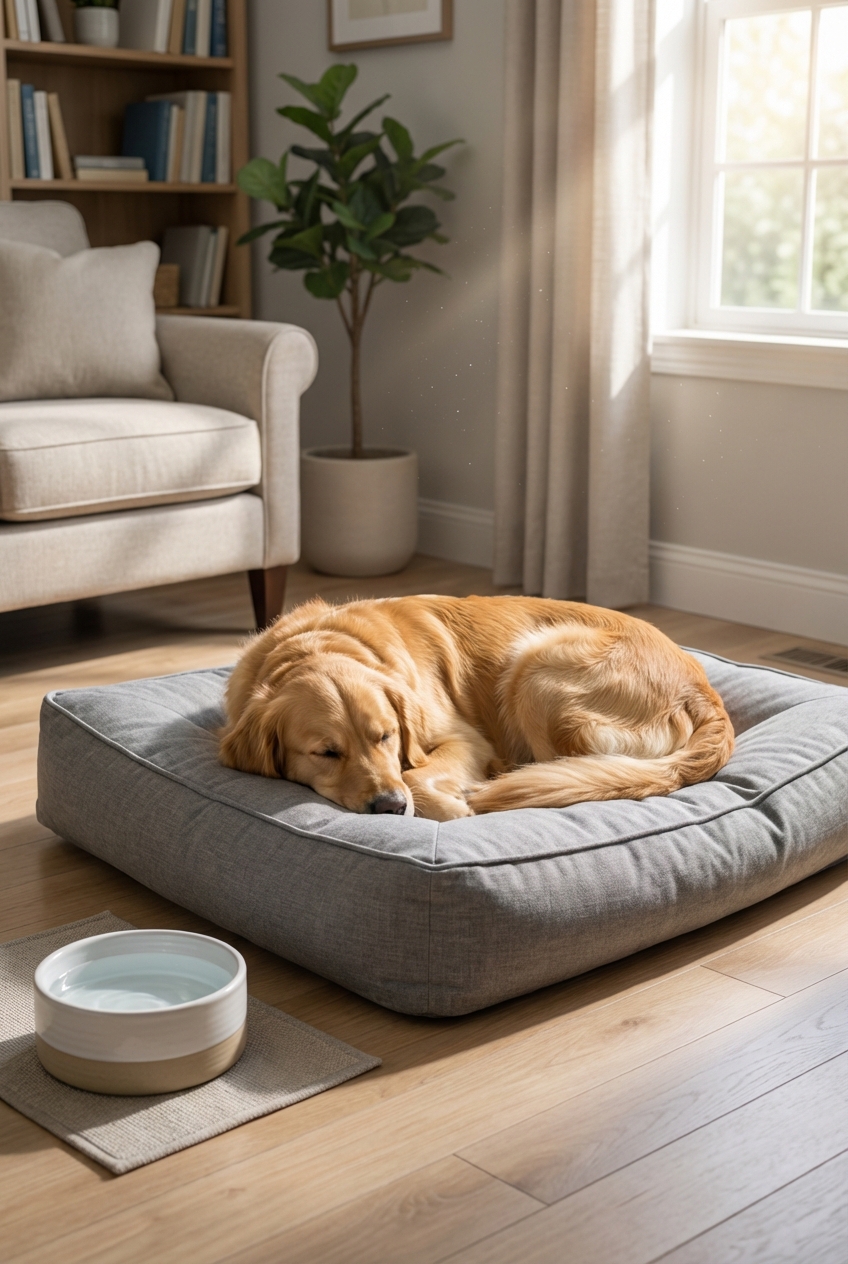
Set up a calm space
- Choose one quiet room with easy-to-clean floors if possible.
- Offer a clean bed and keep lighting low and noise minimal.
- Limit stairs and jumping if your dog seems uncomfortable.
Make bathroom access easy
Many “weird behaviors” are really urgency. A dog with diarrhea may:
- Circle and sniff excessively
- Whine at the door
- Pace or appear anxious
Take your dog out more frequently than usual. Praise calm potty trips and avoid scolding accidents. Your dog is not being stubborn, they are struggling with timing.
Keep activity light
Skip intense play and long runs until your dog is back to normal. Short, gentle leash walks can help some dogs feel calmer and can encourage a normal bathroom routine, but keep them easy.
Prevent scavenging
Nauseated dogs may try to eat grass, raid trash, or lick floors. Management helps:
- Pick up toys and chews temporarily
- Use a secure trash can
- Supervise backyard time if your dog is a plant-eater
Watch for pain reactions
If your dog growls or pulls away when touched, assume discomfort first. Avoid belly handling and consider that even picking up a small dog can worsen nausea or abdominal pain.
Sanitation and contagious risk
Some causes of vomiting and diarrhea can spread between dogs. While your dog is sick:
- Pick up stool promptly and dispose of it securely.
- Clean soiled areas with an appropriate disinfectant for pet messes.
- Limit contact with other dogs, shared water bowls, and high-traffic dog areas until stools are normal.
Track symptoms for your vet
If you do need veterinary care, clear notes make a big difference. Track:
- When symptoms started
- Number of vomiting episodes and what it looked like
- Stool frequency and appearance
- Appetite changes
- Water intake
- Any new foods, treats, chews, medications, or possible trash access
- Energy level and behavior changes
If possible, take a photo of abnormal stool or vomit for your vet. It can be surprisingly helpful.
Common causes
Sometimes it is simple, and sometimes it is not. Common causes include:
- Dietary indiscretion (trash, greasy food, too many treats)
- Sudden diet change
- Food intolerance or sensitivity
- Parasites (especially in puppies or dogs with exposure risk)
- Stress (boarding, travel, household changes)
- Infections (viral or bacterial gastroenteritis)
- Pancreatitis
- Foreign body obstruction
- Chronic GI disease (IBD and others)
If your dog has frequent episodes, it is worth investigating. Recurrent “tummy trouble” is a message.
Prevention tips
- Keep treats simple and limit them to about 10% of daily calories.
- Transition foods slowly over 7 to 10 days.
- Use puzzle feeders to reduce gulping and speed-eating.
- Secure the trash and supervise outdoor time.
- Ask your vet about a probiotic if your dog is prone to soft stools.
- Feed consistent meals at consistent times to support gut rhythms.
Trust the trend
I tell pet parents this all the time: one mild off day can happen. But if your dog is getting worse, not better, that trend matters. If your gut says “this is not my dog,” call your veterinarian. You are not overreacting. You are advocating.
Gentle food, steady hydration, calm routines, and close observation solve many mild stomach upsets. Fast action and veterinary care protect your dog when it is more than mild.
References (for general guidance): AVMA pet care resources and veterinary hospital triage guidance for vomiting and diarrhea.