Learn veterinarian-aligned steps for treating an open wound on your dog: stop bleeding, prevent licking, clean and flush safely, bandage correctly, and recog...
Article
•
Designer Mixes
How to Treat a Dog Wound

Shari Shidate
Designer Mixes contributor
When you love dogs, a scrape or cut can feel like an emergency. The good news is many minor wounds can be safely handled at home if you stay calm, keep things clean, and know when it is time to call your veterinarian. As a veterinary assistant in Frisco, Texas, I have seen the difference that simple, evidence-based first aid can make.
This handbook walks you step-by-step through dog wound care, what to keep in your home first-aid kit, and the red flags that mean you should seek professional care right away.
Quick note: This guide is for first aid and minor wounds. It is not a substitute for a veterinary exam or diagnosis.
First: Is it an emergency?
Before you touch the wound, take 10 seconds to scan your dog and the situation. If your dog is panicking or in significant pain, they may bite even if they are normally sweet.
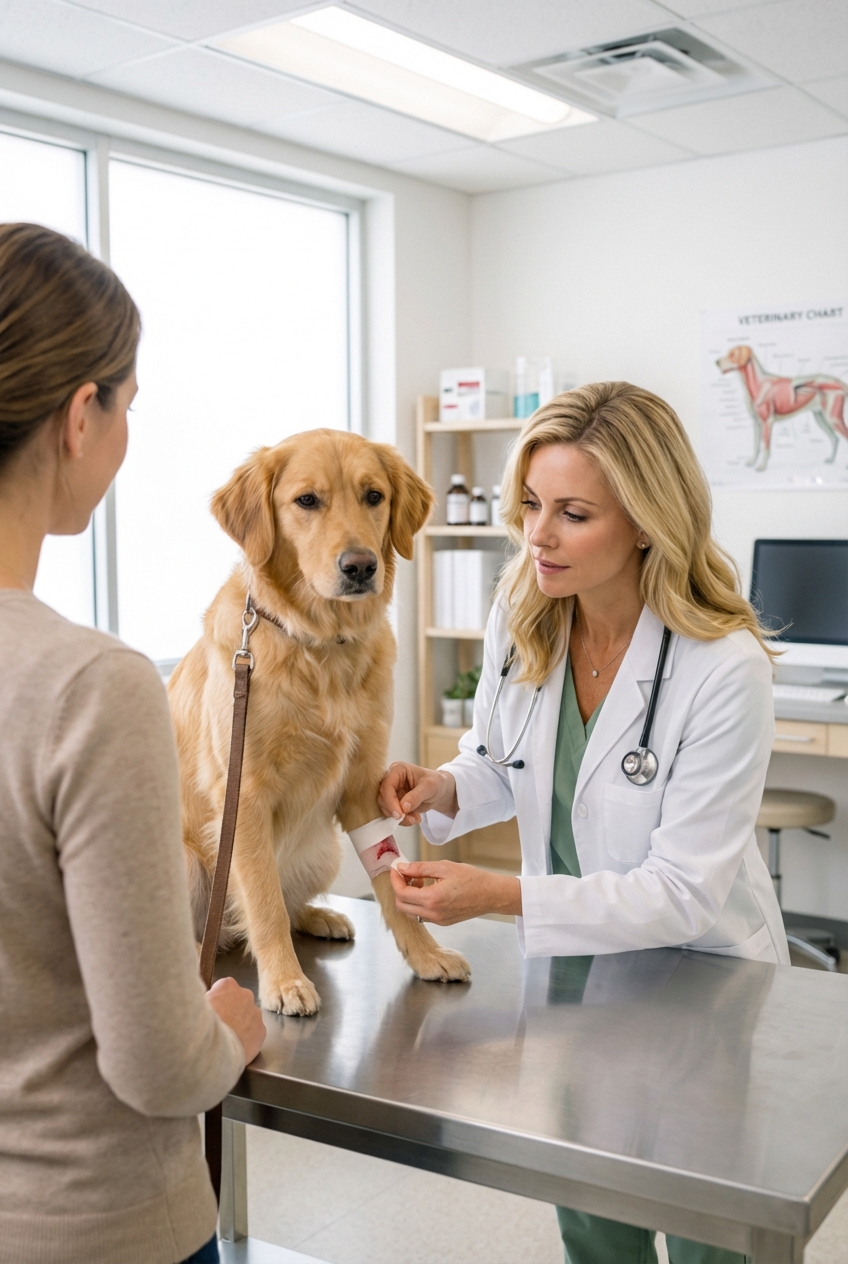
Go to an emergency vet now if you see any of these
- Bleeding that will not stop after 10 minutes of steady pressure
- Heavy bleeding that soaks through towels quickly or spurts
- Deep wounds where you can see fat, muscle, or bone
- Punctures or bite wounds (these often look small but trap bacteria deep under the skin)
- Wounds near the eye, inside the mouth, or on the genitals
- Large skin tears or tissue flaps
- Difficulty breathing, collapse, pale gums, weakness, or extreme lethargy
- Possible broken bone, severe limping, or a limb held up and trembling
- Burns (chemical, electrical, or significant heat burns)
- Snakebite suspicion or rapid swelling after a sting
- An object stuck in the wound (glass, stick, thorn, metal)
If you are unsure, call your vet or a local emergency clinic and describe the wound. It is always okay to ask.
Safety first: Calm your dog and protect yourself
Dogs can react to pain fast. Your goal is to reduce stress so you can help without getting hurt.
- Use a calm voice and move slowly.
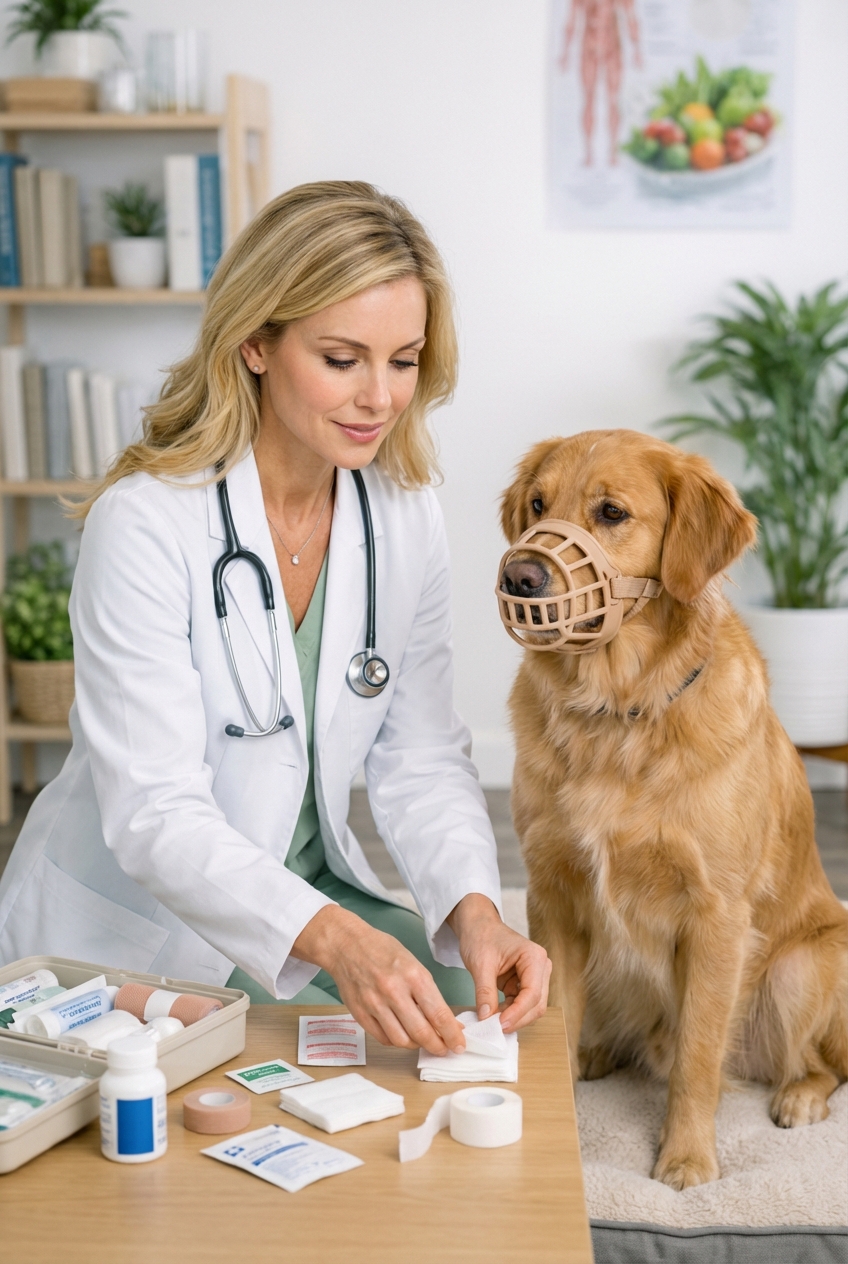
- Muzzle if needed. A basket muzzle is ideal, but in a pinch you can use a strip of gauze or a leash. Do not muzzle a vomiting dog or one that is struggling to breathe.
- Ask for help if possible. One person can gently restrain while the other cleans and bandages.
- Keep cats and kids away until you are done.
Step-by-step: Treating a minor dog wound at home
These steps are appropriate for superficial cuts, small abrasions, and minor scrapes. If the wound is deep, heavily contaminated, or caused by a bite, jump to the vet section below.
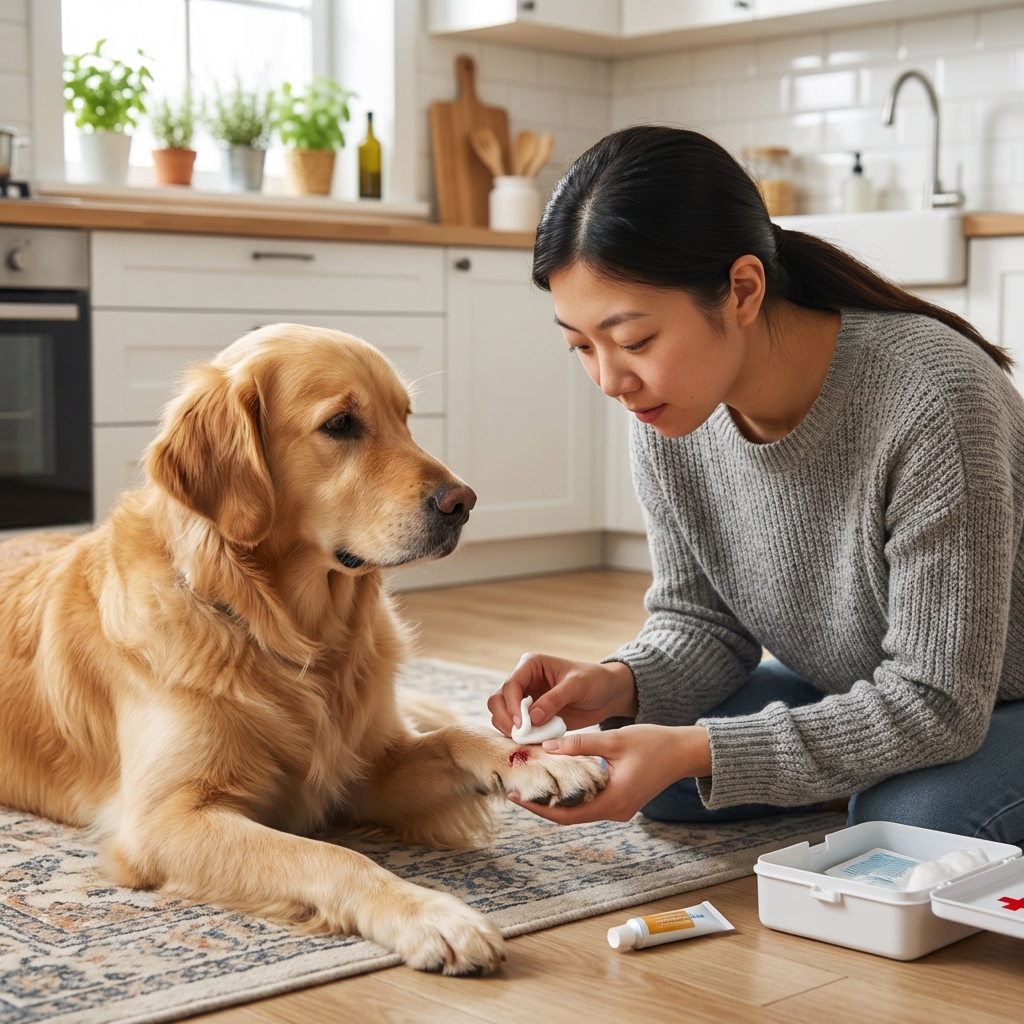
1) Stop the bleeding
- Apply firm, steady pressure with clean gauze or a clean cloth for 3 to 5 minutes without peeking.
- If blood soaks through, place new gauze on top. Do not remove the first layer if it is stuck.
- If bleeding continues and you need to travel, you can apply a snug compression wrap over the dressing to hold pressure. Do not use a tourniquet unless a veterinarian specifically instructs you to.
2) Clip or part the hair (if you can do it safely)
Fur holds dirt and bacteria. If your dog tolerates it, trim the hair around the wound with blunt-tip scissors or pet clippers. Do not cut the wound itself, and do not struggle if your dog is upset.
3) Look for debris and flush well
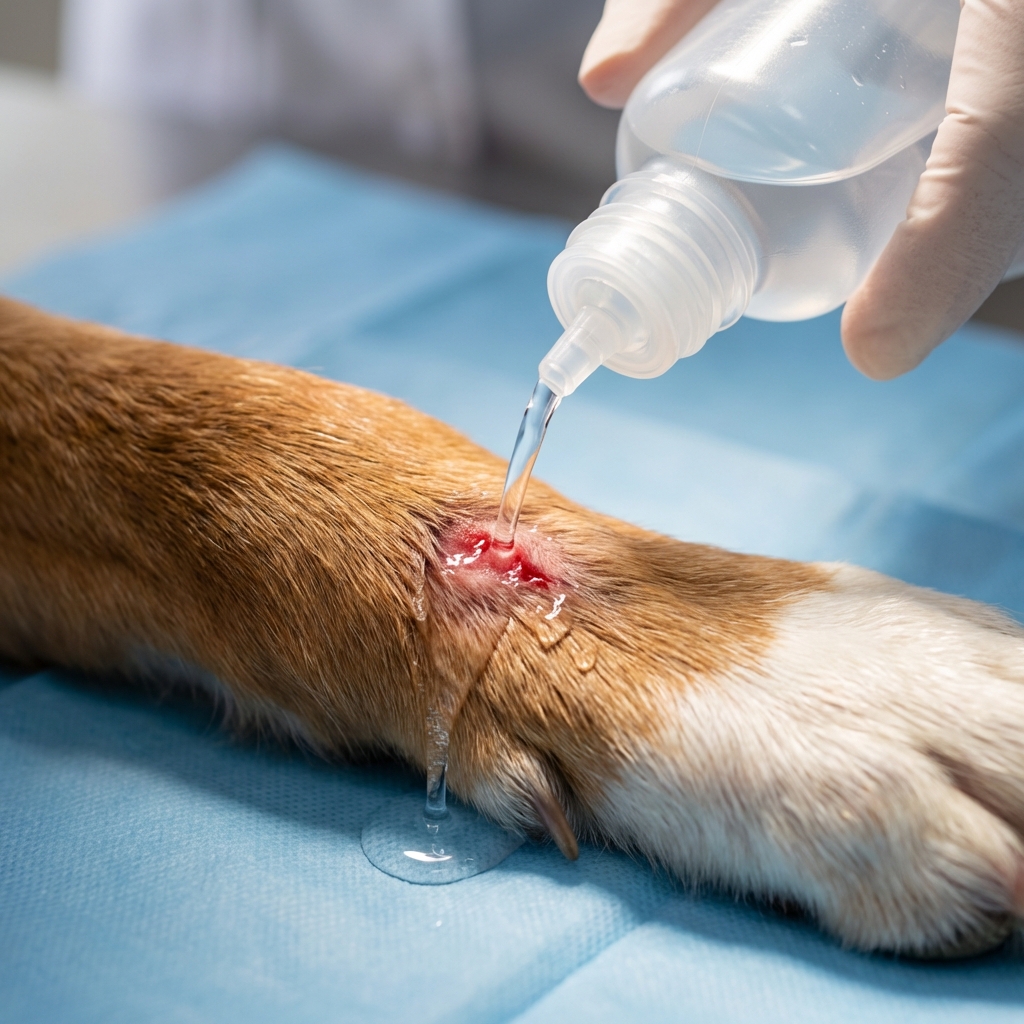
For most simple wounds, the best first medicine is gentle, thorough flushing.
- Check for debris first. Use good light (a flashlight helps) and look for embedded glass, thorns, plant awns (foxtails), or splinters.
- If you see something deeply embedded or sticking out, do not pull it out. Cover the area with a bulky dressing to stabilize it and go to the vet.
- Use sterile saline if you have it.
- If you do not have sterile saline, make an emergency rinse with 1 teaspoon of table salt in 2 cups of warm water. For safety, use boiled then cooled water or bottled water, and let it cool to lukewarm.
- Use a syringe or squeeze bottle to flush debris away.
Avoid: hydrogen peroxide and rubbing alcohol. They can damage healthy tissue and slow healing.
4) Clean the surrounding skin
After flushing, you can gently clean around the wound with diluted antiseptic.
- Chlorhexidine: Follow the product label or your vet's directions. A common goal is around 0.05% for wound cleaning. If you are diluting a stronger concentrate, aim for a very pale solution. Some products look blue and some look pink when concentrated, so use the label and dilution guidance instead of color alone.
- Povidone-iodine: Dilute with water until it looks like weak iced tea.
Use gauze, not cotton balls, so fibers do not stick.
5) Decide: Cover it or leave it open?
Some wounds heal best with light protection, especially on feet and lower legs where dirt is unavoidable.
- Leave it open if it is a small superficial scrape on a clean, dry area your dog will not lick.
- Cover it if it is on the paw, near the ground, mildly oozing, or likely to get dirty.
In general, once a minor wound is dry, clean, and clearly improving, you can often transition to leaving it open at home while still preventing licking.
6) If you bandage, do it correctly
A good bandage protects, but a bad bandage can cause swelling, circulation problems, and skin sores.
- Place a non-stick pad on the wound.
- Add a layer of soft rolled gauze.
- Finish with a self-adherent wrap (often called Vet Wrap) but do not pull it tight.
- Check toes for swelling, coldness, or discoloration. You should be able to slide a finger under the wrap.
- Change bandages at least daily, sooner if wet or dirty.
If a bandage gets wet, it becomes a bacteria-friendly environment. Change it promptly.
Bandage warning: If toes swell, feel cold, look discolored, your dog suddenly seems more painful, or the bandage smells bad, remove the bandage and call a veterinarian right away.
Prevent licking: The #1 reason wounds get worse
Dogs are determined groomers, and saliva can introduce bacteria and break down healing tissue.
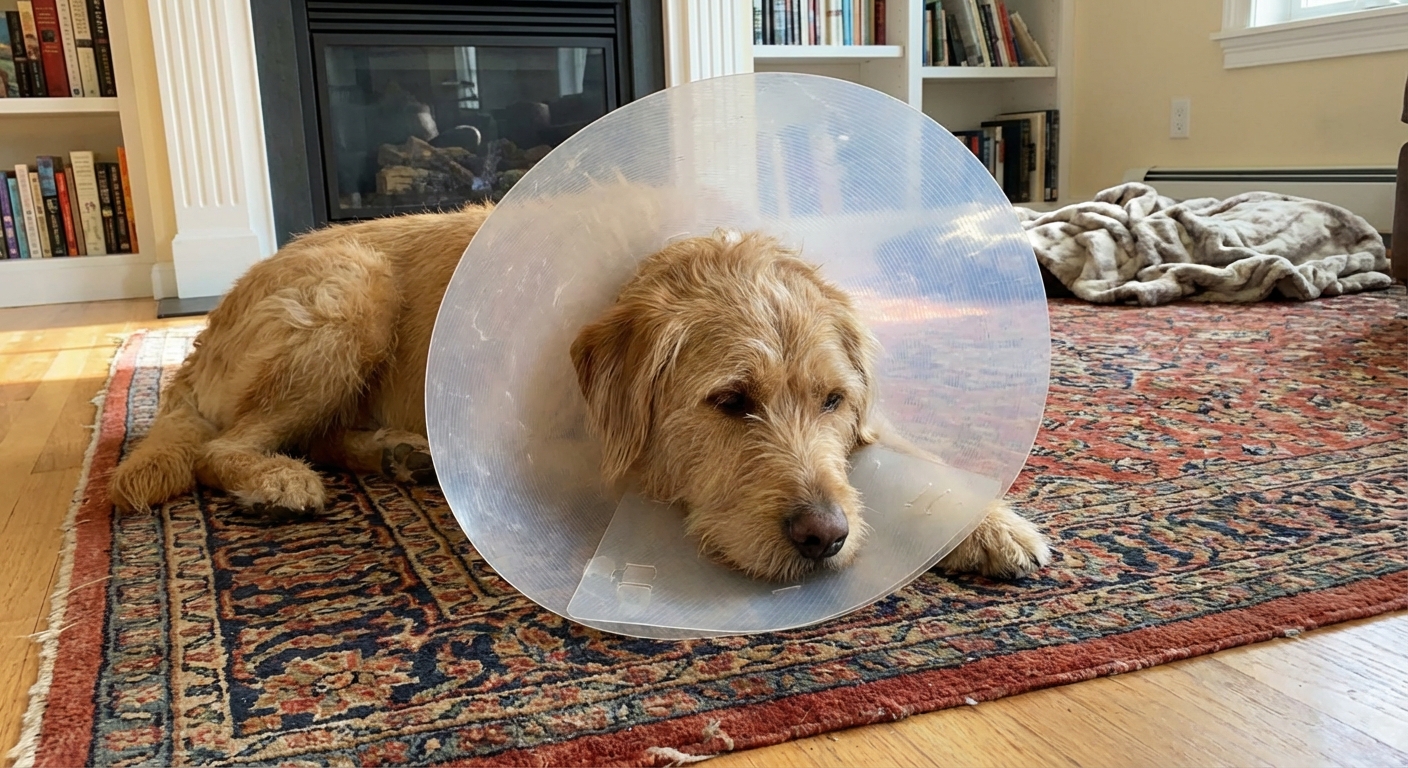
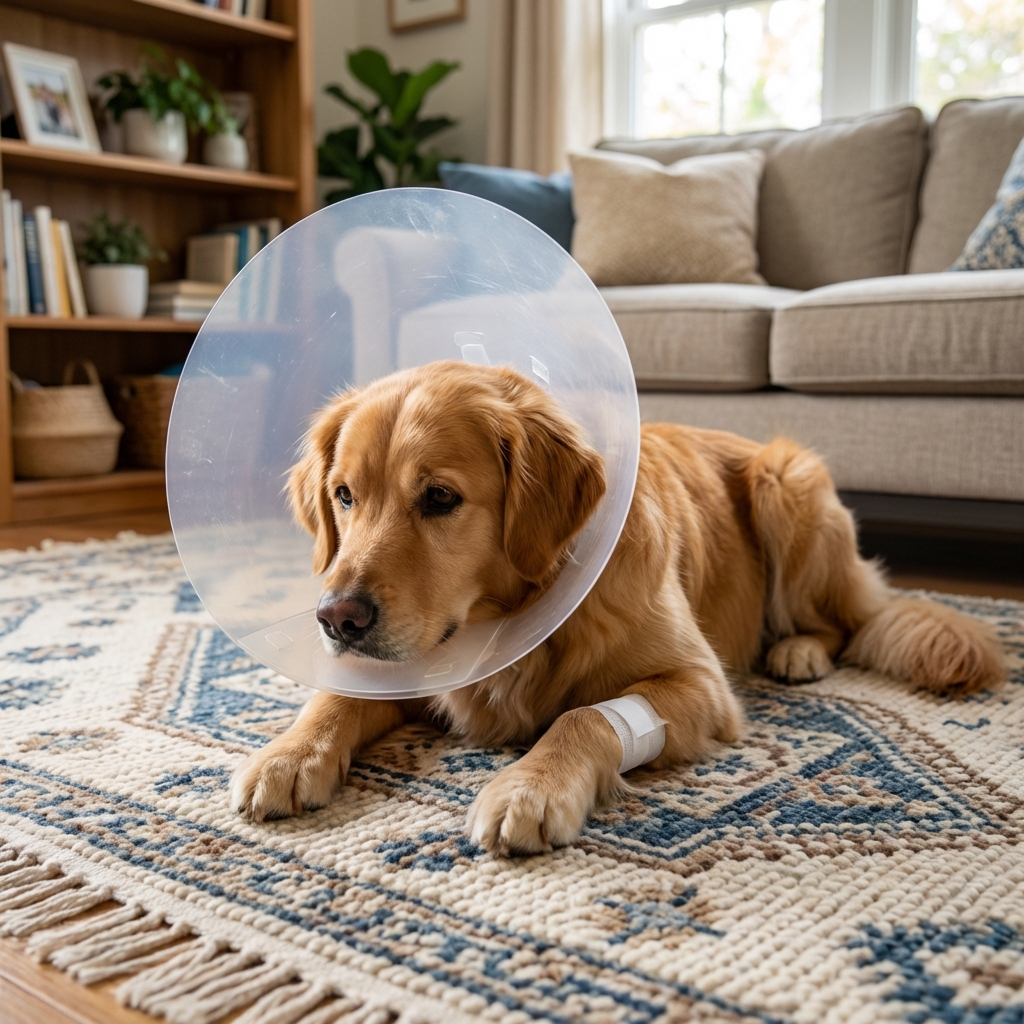
- Use an E-collar (cone), inflatable collar, or a well-fitted recovery suit.
- Keep nails trimmed. Scratching can reopen wounds.
- Offer enrichment: a stuffed food toy, a lick mat, or calm chew time helps distract during healing.
What to watch for during healing
Most minor wounds look noticeably better within 48 to 72 hours. A little pinkness is normal. Increasing redness, swelling, or pain is not.
Signs of infection or complications
- Worsening redness or heat around the wound
- Swelling that increases day by day
- Pus or a bad smell
- Persistent oozing or bleeding
- New limping, tenderness, or yelping when touched
- Fever, lethargy, reduced appetite
- Edges of the wound turning dark, gray, or black
If you see any of these, contact your veterinarian. Infections can move quickly, especially with puncture wounds and injuries on paws.
Bite wounds and punctures: Why they need a vet
I want to be very clear here because it saves dogs from painful abscesses. A bite or puncture wound often seals over on the surface, trapping bacteria underneath. That can lead to infection, swelling, fever, and sometimes tissue death.
Your vet may recommend:
- Clipping and thorough flushing under sedation if needed
- Antibiotics and pain relief
- Drains for deeper wounds
- Tetanus is uncommon in dogs. Your vet will advise if any specific risk applies.
Paw wounds and torn nails
Paws are tricky because they are constantly exposed to dirt and moisture. Keep walks short and use a clean bootie or fresh bandage for outdoor potty breaks.
Minor paw pad scrapes
- Flush with saline
- Use a non-stick pad and a light wrap
- Change daily and keep dry
Broken or bleeding nail
Nail injuries are surprisingly painful. If the nail is split or bleeding heavily, you will usually need your vet. For very minor bleeding, apply pressure with gauze. Styptic powder can help, but if your dog is distressed or the nail is cracked up into the quick, seek care.
Foxtails and thorns
If your dog was running in tall grass and you suspect a foxtail or thorn (especially between toes), do not wait. These can travel under the skin and cause serious infection. Call your vet.
What not to put on a dog wound
Some common household products can delay healing or be dangerous if licked.
- Hydrogen peroxide (damages healing tissue)
- Rubbing alcohol (painful and damaging)
- Essential oils (many are toxic to pets and irritating to skin)
- Human pain creams (can be toxic if ingested)
- Oral human pain medicine (for example ibuprofen, naproxen, acetaminophen, aspirin) unless your veterinarian specifically directs you. These can be toxic and may be fatal.
- Powders and harsh sprays not labeled for pets
- Butter, cooking oils, or ointments that encourage licking and trap debris
If you want to use a topical product beyond saline and diluted antiseptic, ask your veterinarian first, especially if your dog is a dedicated licker.
DIY dog first-aid kit for wounds
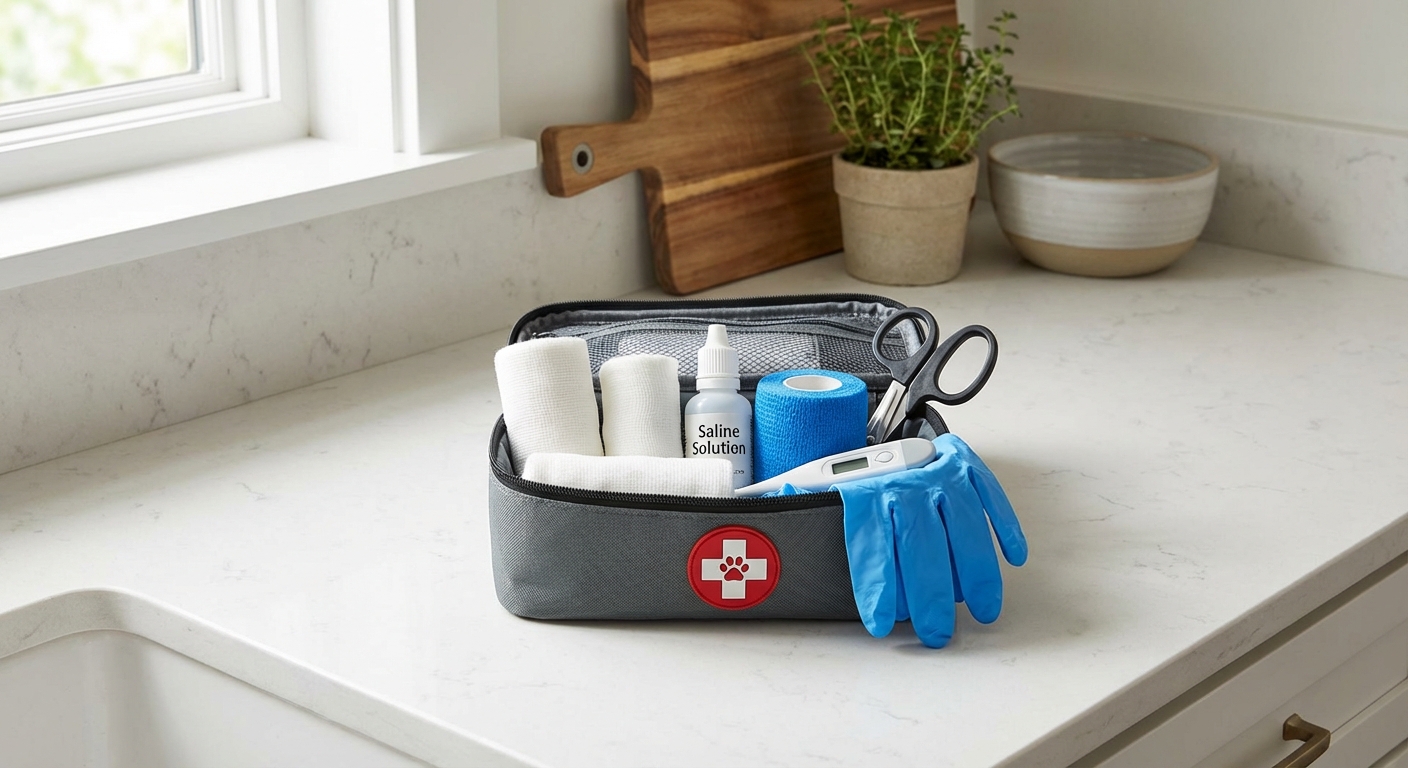
Having supplies ready is half the battle. Here is a practical kit for most pet homes.
- Sterile saline or wound wash
- Chlorhexidine solution or wipes (pet-safe)
- Non-stick sterile pads
- Rolled gauze and conforming bandage
- Self-adherent wrap
- Blunt-tip scissors and tweezers
- Disposable gloves
- Digital thermometer and water-based lubricant
- E-collar or inflatable collar
- Clean towels
- Flashlight (great for spotting tiny debris)
- Contact numbers for your vet and nearest emergency clinic
When to call your vet (even if it looks small)
- Any wound in a puppy, senior dog, or immunocompromised dog
- Wounds that are not improved in 48 to 72 hours
- Wounds caused by another animal, including bites and scratches
- Foreign material suspected (glass, thorns, foxtails)
- Wounds over joints that open with movement
- Any wound with significant swelling
If cost is a concern, tell the clinic. Many practices can help you prioritize what is most important to do first.
Healing support: Food, rest, and smart movement
Wound healing is not just about what you put on the skin. It is also about what your dog has available to rebuild tissue.
- Rest matters. Limit running and rough play for a few days, longer for deeper wounds.
- Protein supports repair. If your dog is healthy and eating well, keep meals consistent and protein-forward.
- Hydration supports circulation and recovery.
- Keep bandages dry and your home environment clean.
Bottom line: clean it, protect it, prevent licking, and watch closely. Most problems happen when a wound is ignored or constantly licked.
Quick reference: At-home wound care checklist
- Calm your dog and protect yourself
- Stop bleeding with steady pressure
- Check for debris, then flush thoroughly with saline
- Clean around the wound with diluted antiseptic
- Cover if needed with a non-stick pad and light wrap
- Prevent licking with an E-collar
- Change bandage daily and keep dry
- Watch for infection and call your vet if anything worsens