Stop dog fleas quickly with a proven 3-part plan: treat your dog with safe, vet-recommended meds, deep-clean your home, and tackle the yard if needed—plus ...
Article
•
Designer Mixes
How to Treat a Dog for Fleas

Shari Shidate
Designer Mixes contributor
Fleas are tiny, but they can make your dog absolutely miserable and they can take over your home faster than most people realize. The clever part of flea control is this: you are not just treating your dog. You are treating your dog, your home, and the flea life cycle at the same time.
As a veterinary assistant here in Frisco, Texas, I have seen many loving pet parents do “all the right things” but still struggle because they only addressed the adult fleas they could see. Let’s fix that with a simple, evidence-based plan you can actually follow.
First, confirm it is fleas
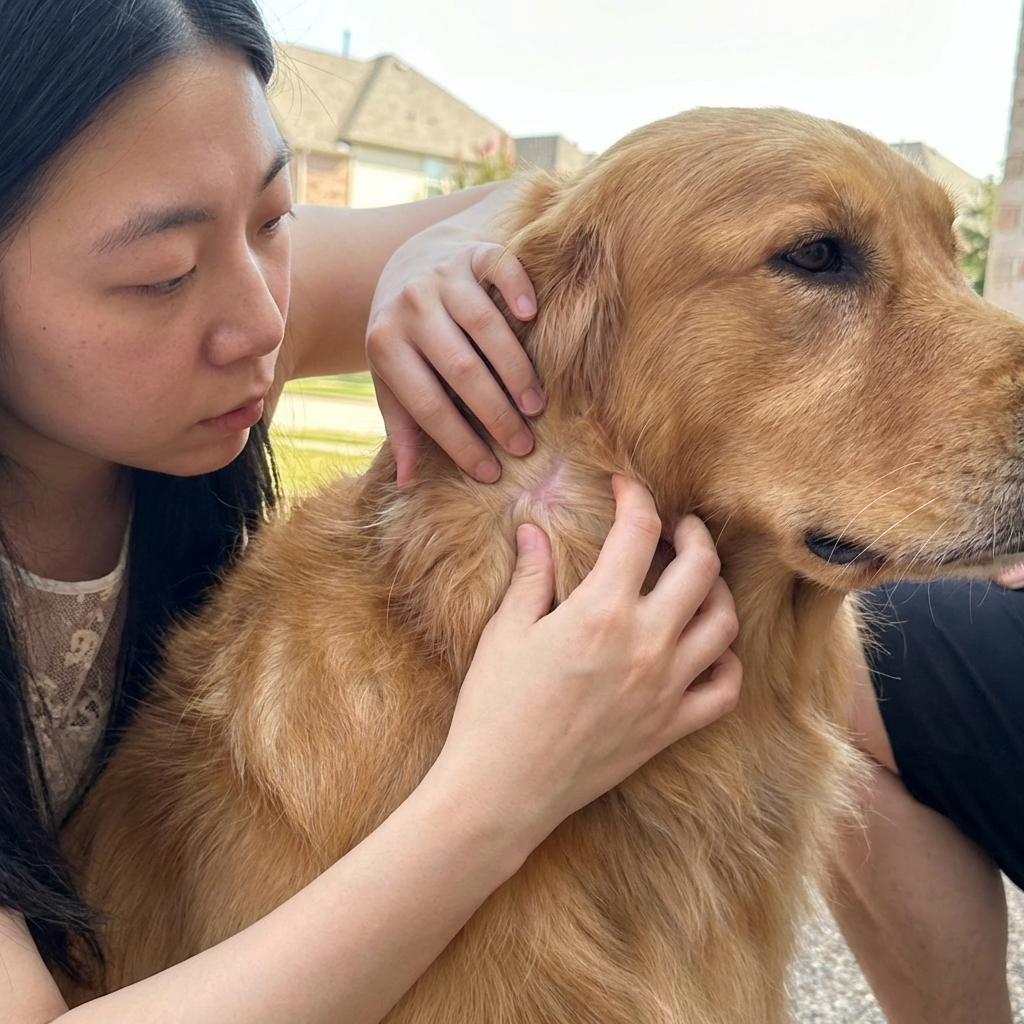
Itching can come from fleas, allergies, mites, or skin infection. Before you treat, do a quick check.
Quick at-home flea check
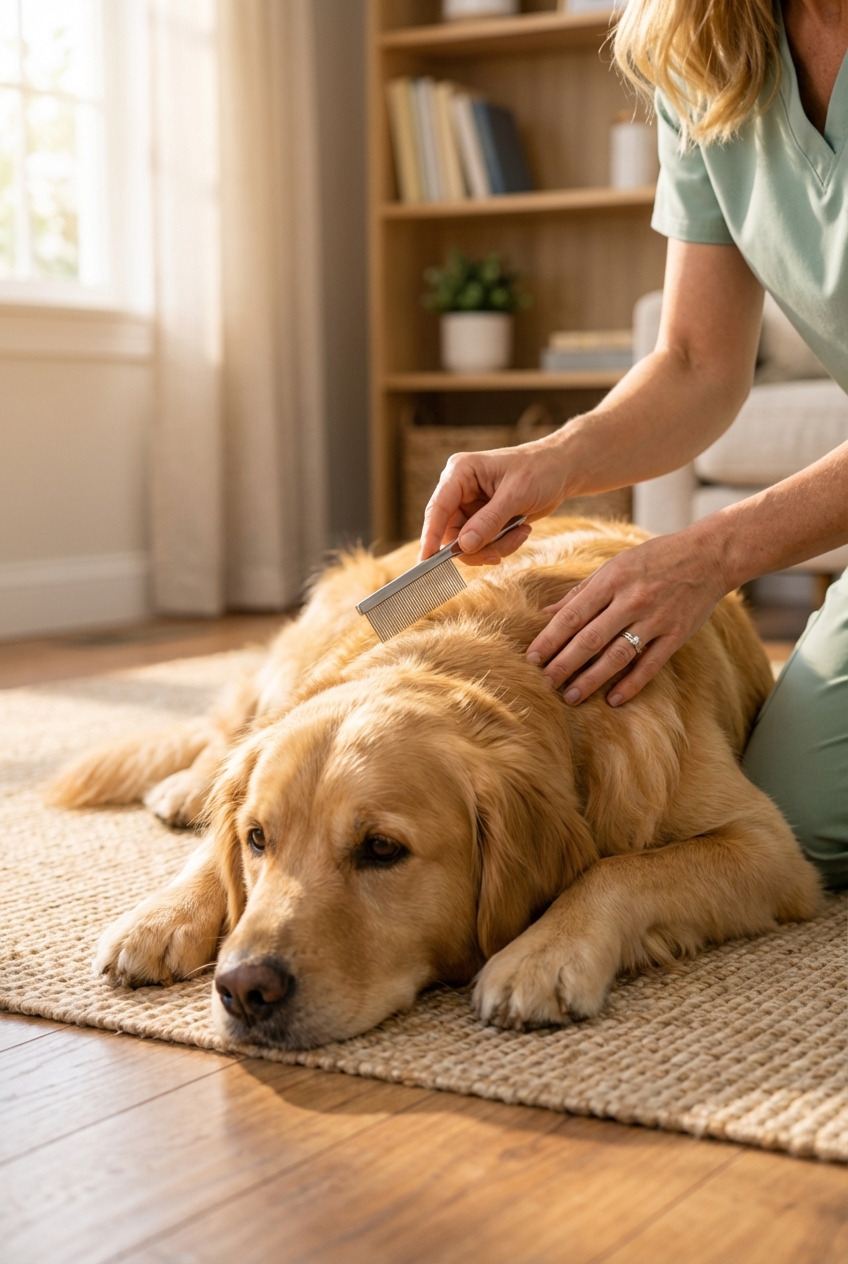
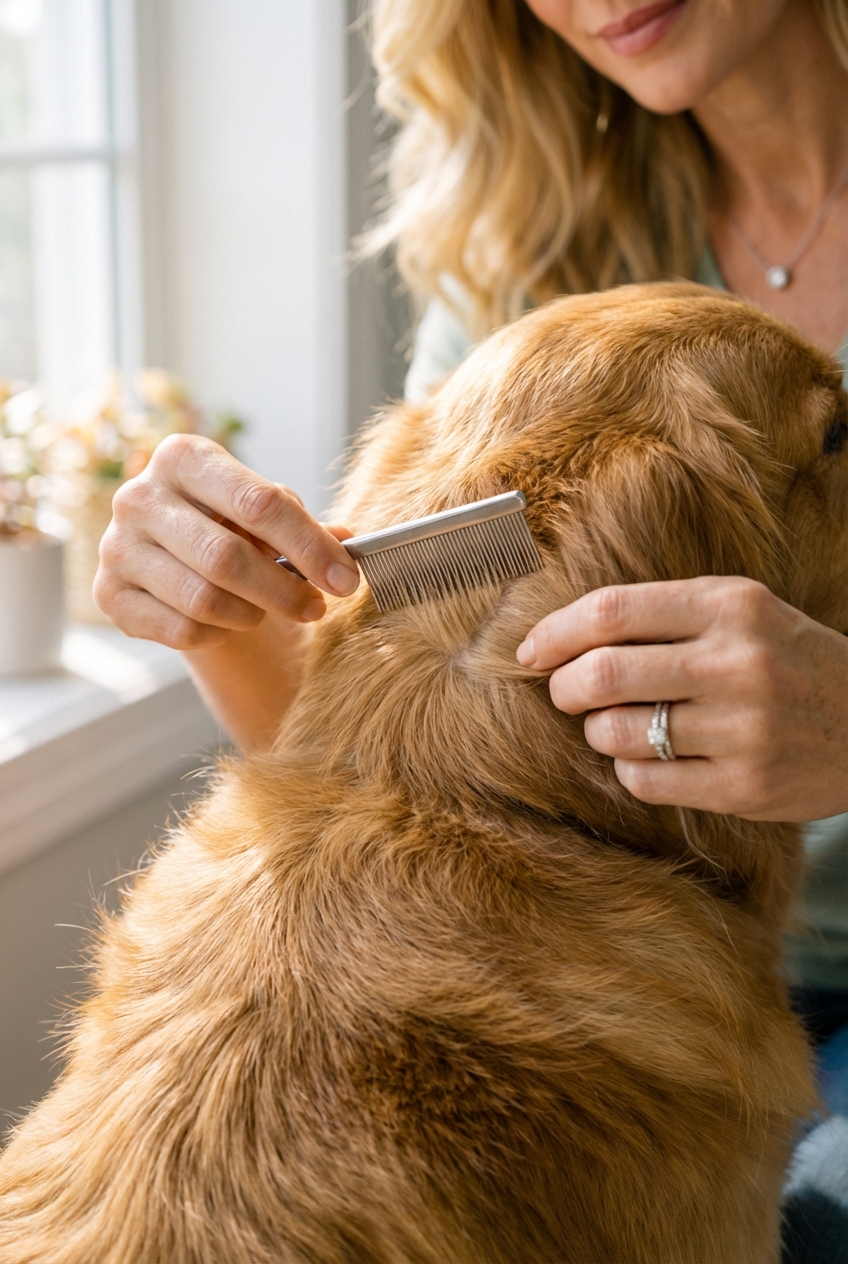
- Use a flea comb and comb behind the ears, at the base of the tail, and along the belly.
- Look for live fleas or small black specks (flea dirt).
- Do the “flea dirt test”: place those specks on a damp white paper towel. If it turns reddish-brown, it is digested blood from fleas.
If your dog has intense itching, scabs, hair loss, or red moist patches, it is time to call your veterinarian. Flea allergy dermatitis is very common and can look dramatic even with only a few bites.
Know the flea life cycle
This is why fleas feel “impossible” sometimes. Adult fleas are only a small part of the problem.
- Adults live on your pet and lay eggs.
- Eggs fall off into carpets, bedding, and cracks in flooring.
- Larvae hatch and hide in dark areas.
- Pupae can wait weeks to months before emerging. They are also tough: pupal cocoons can resist many sprays, and adults often emerge when they sense host cues like vibrations, warmth, and carbon dioxide.
So if you only kill adults today, new adults can hatch tomorrow. Your plan needs both a fast kill and ongoing prevention.
The simple 3-part plan
1) Treat your dog with a vet-recommended preventive
For most dogs, the most reliable option is a modern flea preventive that kills adult fleas and helps break the cycle. Options include oral chewables and topical treatments. Your veterinarian can help you choose based on age, weight, other pets in the home, and medical history.
Do not skip this step: Treat every pet in the household at the same time, even the one that “doesn’t seem itchy.” Dogs and cats can act as flea reservoirs and keep the problem going. Use species-appropriate products, and ask your vet for the safest plan for multi-pet homes.
Safety note: Never use a dog product on a cat, and do not use cat products on a dog. Some dog topicals contain permethrin, which can be dangerous for cats.
Another quick safety note: If your dog has a history of seizures or other neurologic concerns, mention that to your veterinarian so they can guide you to the best option for your pet.
2) Use a fast knockdown option if needed
If your dog is crawling with fleas right now, you may want immediate relief while the monthly preventive gets fully established.
- Bath option: A gentle bath can remove fleas and flea dirt. Ask your vet before using medicated shampoos, especially for puppies or dogs with skin disease.
- Fast oral adulticide: Some short-acting oral products (nitenpyram-type) can kill adult fleas quickly but do not provide long-term prevention. They can be useful as part of a plan, not the whole plan.
After any bath, keep your dog warm and dry, and follow up with ongoing prevention as directed.
3) Treat the home as part of the plan
This step is where most flea plans succeed or fail.
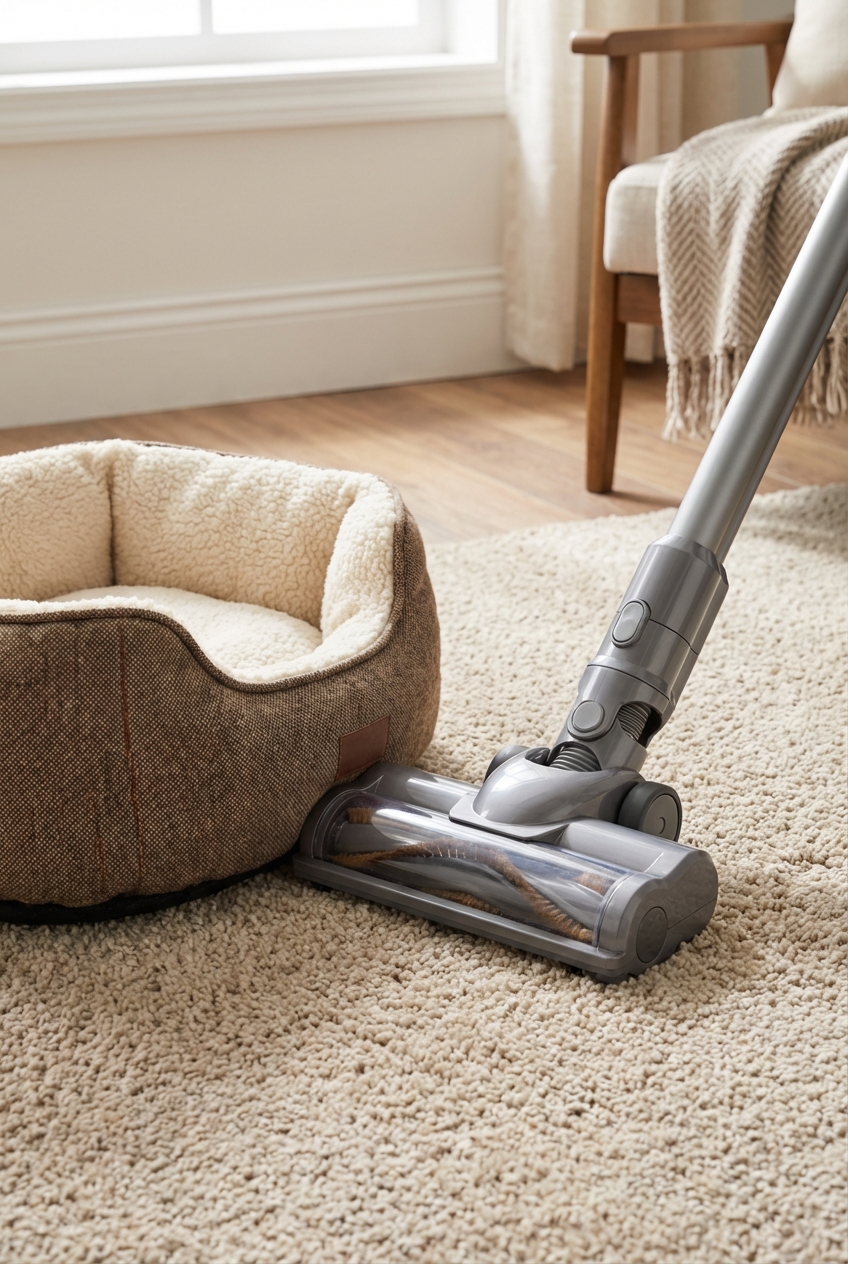
- Vacuum daily for 7 to 10 days, then several times a week for a month. Focus on baseboards, under furniture, and along pet resting spots.
- Wash bedding weekly on the hottest setting that is safe for the fabric, including blankets your dog lies on and any crate pads.
- Empty the vacuum canister outside immediately, or seal the bag in a trash bag.
If fleas are heavy in the home, a veterinarian-approved household flea spray with an insect growth regulator can help. Follow label directions carefully and keep pets out until dry.
If you are truly overwhelmed or dealing with a severe infestation, it can also be worth calling a licensed pest control professional and asking specifically about pet-safe options and insect growth regulators.
Soothe itchy skin
Even after fleas are killed, the skin can stay inflamed for days to weeks, especially in flea-allergic dogs.
Simple comfort measures
- Cool compresses on itchy hot spots for a few minutes at a time.
- Prevent licking and chewing with an e-collar if needed. Chewing can turn mild irritation into infection quickly.
- Ask your vet about itch control if your dog is truly uncomfortable. Sometimes an anti-itch medication is the kindest, fastest relief.
If you notice a moist, painful patch that smells, oozes, or grows quickly, that can be a hot spot and needs veterinary attention.
Natural and DIY options
I love gentle, supportive care, but I also want to keep you and your dog safe. Many “natural flea cures” sound good but do not reliably break the life cycle, and some can irritate the skin or cause toxicity.
Helpful supportive ideas
- Frequent vacuuming and washing bedding are natural and very effective.
- Flea combing daily can reduce adults and helps you monitor progress.
Be cautious with these
- Essential oils: some are toxic to pets and many can cause skin irritation. Never apply undiluted oils to your dog.
- Garlic: dosing is tricky and can be unsafe, especially in small dogs or certain breeds. Do not use it as flea control without veterinary guidance.
- “All-natural” sprays: even plant-based ingredients can trigger dermatitis. Avoid products not clearly labeled for pets or household use, and ask your vet before spraying anything your pet can lick, inhale, or absorb through the skin.
If you want a lower-chemical approach, ask your vet about the least frequent dosing schedule that still gives your dog full protection. In flea-heavy areas like Texas, consistent prevention is usually the healthiest choice.
Outdoor steps
Fleas love shade and moisture. Your yard does not need to be sterile, but a few simple habits can reduce flea pressure.
- Mow and trim to reduce shady, humid zones.
- Focus on where pets rest, like under decks, patios, and dog houses.
- Discourage wildlife (opossums, stray cats) from hanging out near your home, because they can bring fleas.
How long does it take?
With the right plan, you often see improvement within 24 to 48 hours, but that depends on the product used and how heavy the infestation is. Full control can take 4 to 12 weeks because pupae can keep emerging, and in some homes it may take longer. That is normal and not a sign you failed.
The key is consistency. Skipping doses, treating only one pet, or stopping home cleaning too early is the most common reason fleas come roaring back.
Call the vet right away
- Your dog is a puppy, senior, pregnant, or has chronic illness.
- You see pale gums, weakness, or extreme lethargy, which can signal anemia in severe infestations.
- There are scabs, open sores, hot spots, or a bad odor from the skin.
- Your dog is still very itchy after fleas are controlled, which may mean allergies or infection.
You are doing a loving thing by treating fleas quickly. Relief is possible, and you do not have to guess your way through it.
Quick checklist
- Confirm fleas with a comb and flea dirt test.
- Treat every pet in the home with a vet-recommended, species-appropriate preventive and give it on schedule.
- Consider a fast knockdown option for immediate relief if approved by your vet.
- Vacuum daily for 7 to 10 days and wash bedding weekly.
- Stick with the plan for at least 8 to 12 weeks to fully break the cycle, and longer if your home is still seeing new hatch-outs.