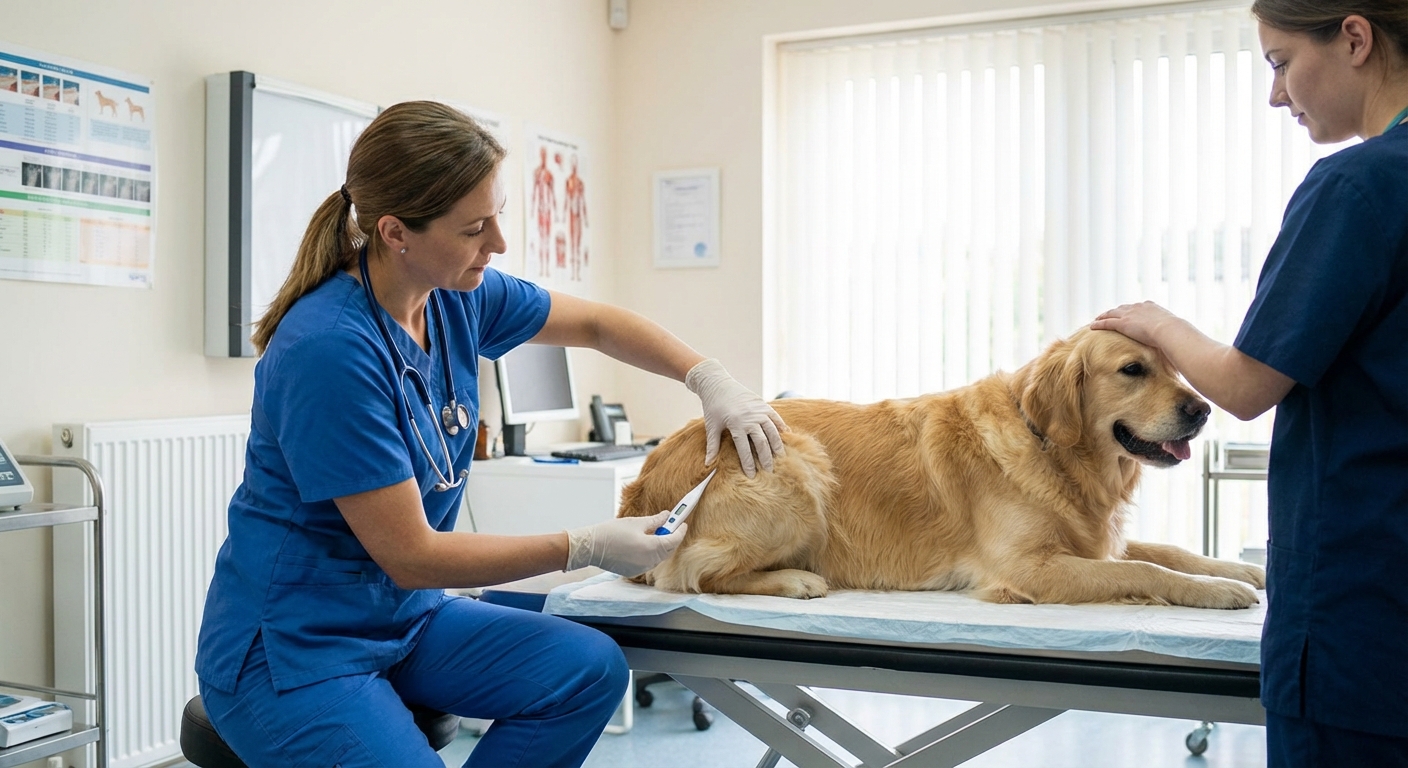
Worried your dog has a fever? Learn what counts as fever, how to take a safe temperature, what to do at home, what to avoid, and when to seek urgent vet care.
Article
•
Designer Mixes
How to Treat a Dog Fever

Shari Shidate
Designer Mixes contributor
If your dog feels unusually warm, is acting “off,” or just isn’t themselves, it is natural to worry about fever. As a veterinary assistant here in Frisco, Texas, I have seen how quickly a simple concern can turn into a real emergency, but I have also seen how a calm, step-by-step plan helps families do the right thing.
This guide will help you confirm whether your dog truly has a fever, understand what you can safely do at home, and know when to call your veterinarian right away.
What is a fever in dogs?
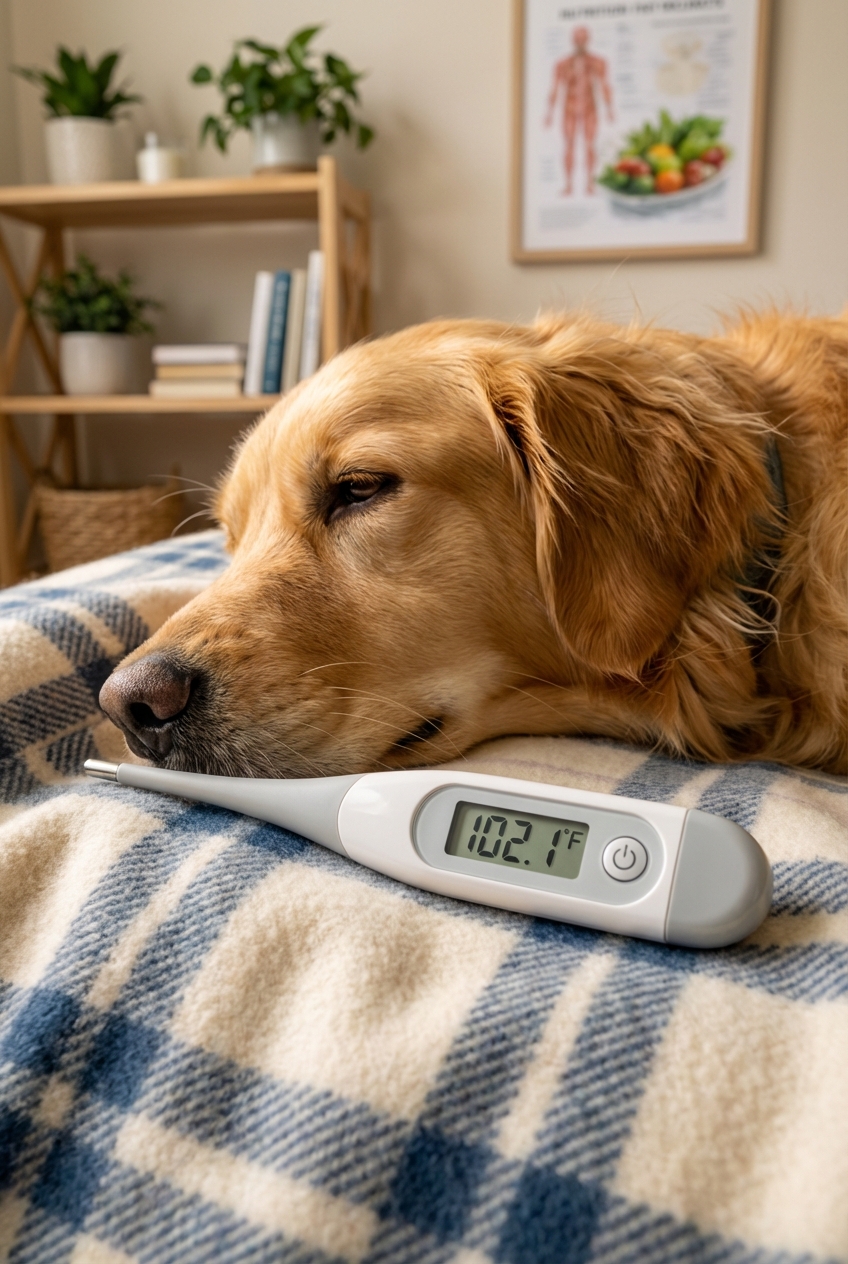
A dog’s normal temperature range is generally 101°F to 102.5°F (38.3°C to 39.2°C), but it can vary a bit by individual dog, time of day, stress, and recent activity. Most veterinarians consider a fever to be 103°F or higher (39.4°C+).
Temperatures in the 104°F to 106°F range can become dangerous. The closer your dog gets to 105°F to 106°F, the more urgent the situation becomes. 106°F is a critical emergency and needs immediate veterinary care.
Important note: a warm, dry nose does not reliably indicate fever. The only dependable way to confirm fever is to take your dog’s temperature with a thermometer.
Signs that suggest fever
Fever is a symptom, not a diagnosis. Dogs can spike a temperature for many reasons, including infection, inflammation, immune-mediated disease, toxins, pain, or heat-related illness.
- Lethargy, low energy, sleeping more than usual
- Shivering or trembling (even in a warm room)
- Reduced appetite or refusing treats
- Rapid breathing or panting at rest
- Warm ears or belly (a clue, but not proof)
- Vomiting or diarrhea
- Coughing, sneezing, nasal discharge
- Limping or acting painful when touched
If your dog seems confused, collapses, has pale gums, has trouble breathing, or cannot stand, treat this as an emergency even before you confirm a temperature.
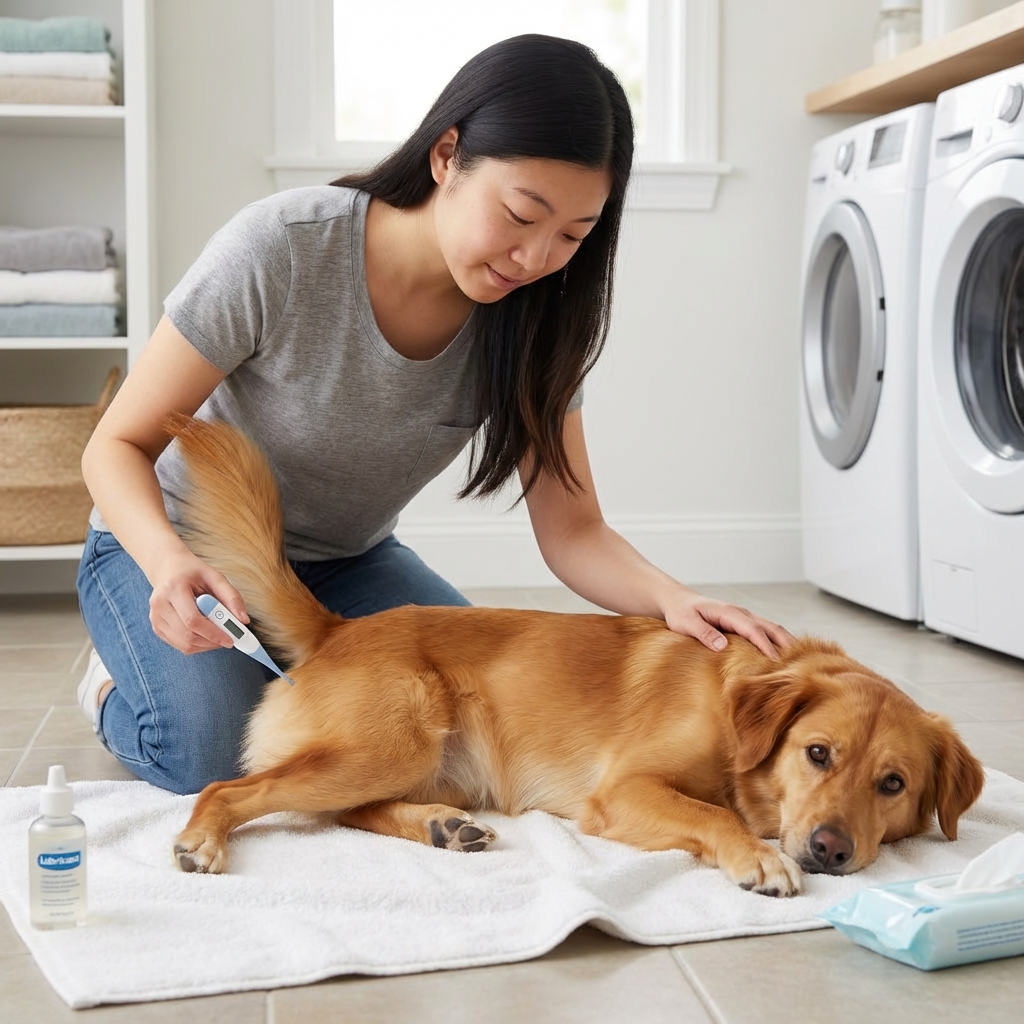
How to take your dog’s temperature
Before you assume it is a fever, get an accurate temperature. A rectal temperature is the most accurate option at home.
What you need
- Digital thermometer (ideally a pet or flexible-tip thermometer)
- Lubricant (petroleum jelly or water-based lubricant)
- Paper towel or tissue
- Alcohol wipes or soap and water to clean the thermometer
- A helper, if possible
Step-by-step
- Keep things calm. Put your dog on a non-slip surface and offer gentle reassurance.
- Apply a small amount of lubricant to the thermometer tip.
- Lift the tail and insert the thermometer gently about 1 inch (less for small dogs). Aim slightly forward (toward the nose), not upward.
- Hold it steady until it beeps, then remove and read.
- Clean the thermometer thoroughly.
Quick note on ear thermometers: many ear thermometers are not reliable for dogs unless they are veterinary-grade and used correctly. If you get an odd reading in the ear, confirm with a rectal temperature or call your clinic for guidance.
When not to do this: if your dog is extremely painful, aggressive, or panicking, do not risk a bite. Call your veterinarian and explain what you are seeing.
What you can do at home
If your dog is mildly febrile (around 103°F), is stable, and you can reach your veterinarian for guidance, supportive care may help while you arrange the next step.
1) Encourage hydration
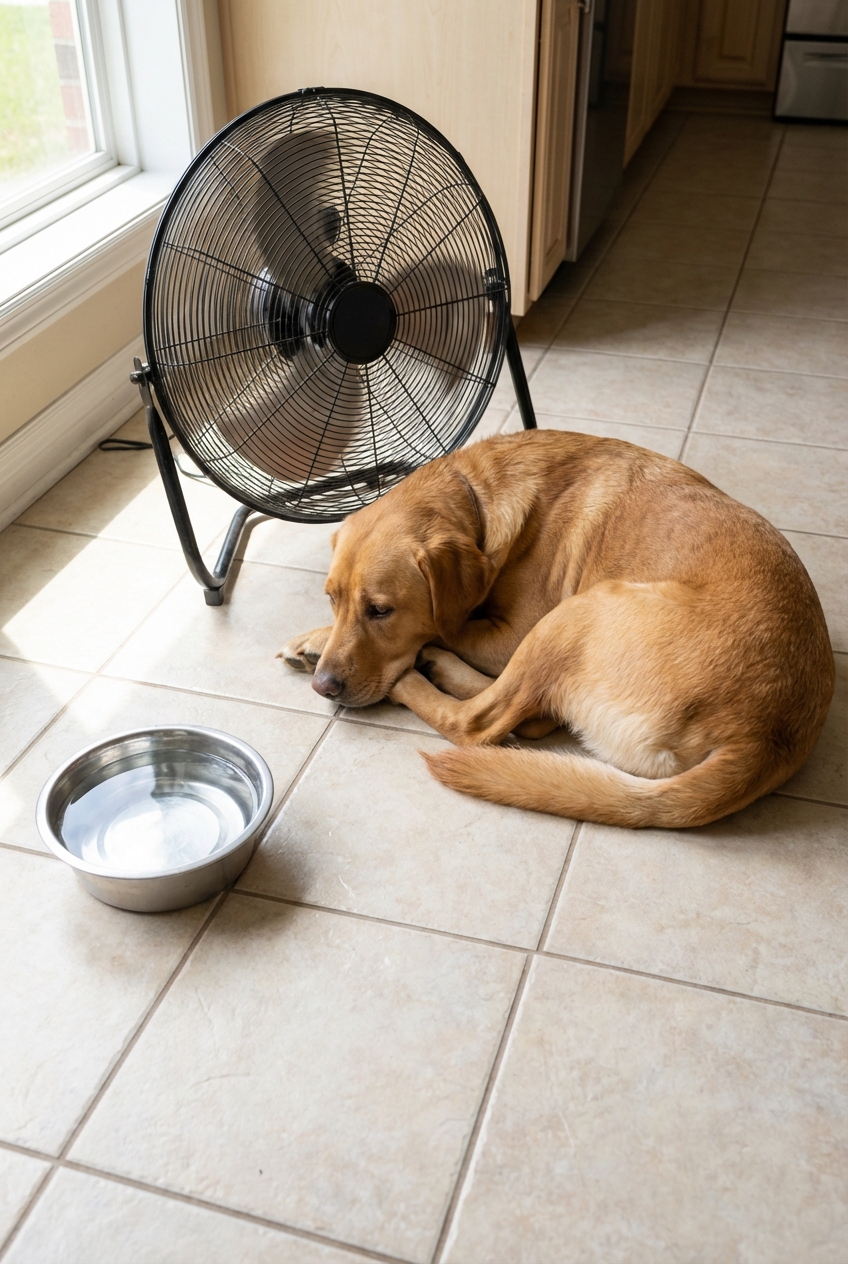
Dehydration can worsen fever and slow recovery. Offer fresh, cool water and keep the bowl nearby.
- If your dog refuses water, try offering ice chips or a splash of low-sodium broth in water.
- You can offer small amounts frequently instead of a full bowl at once.
2) Create a cool, quiet rest space
Turn on a fan, close blinds, and keep your dog in a calm room. Limit activity. Fever burns energy fast, and rest matters.
3) Gentle cooling (only briefly, and with caution)
For illness-related fever, aggressive cooling is not usually the goal at home. If your dog is uncomfortable and only mildly elevated, you can use cool (not cold) water on the paws and ears, or a cool damp cloth on the belly and groin area while you contact your veterinarian for next steps.
- Do not use ice baths. Rapid chilling can cause shivering, which may increase body temperature.
- Stop cooling if your dog starts shivering.
- Recheck temperature in 15 to 30 minutes and keep your vet updated.
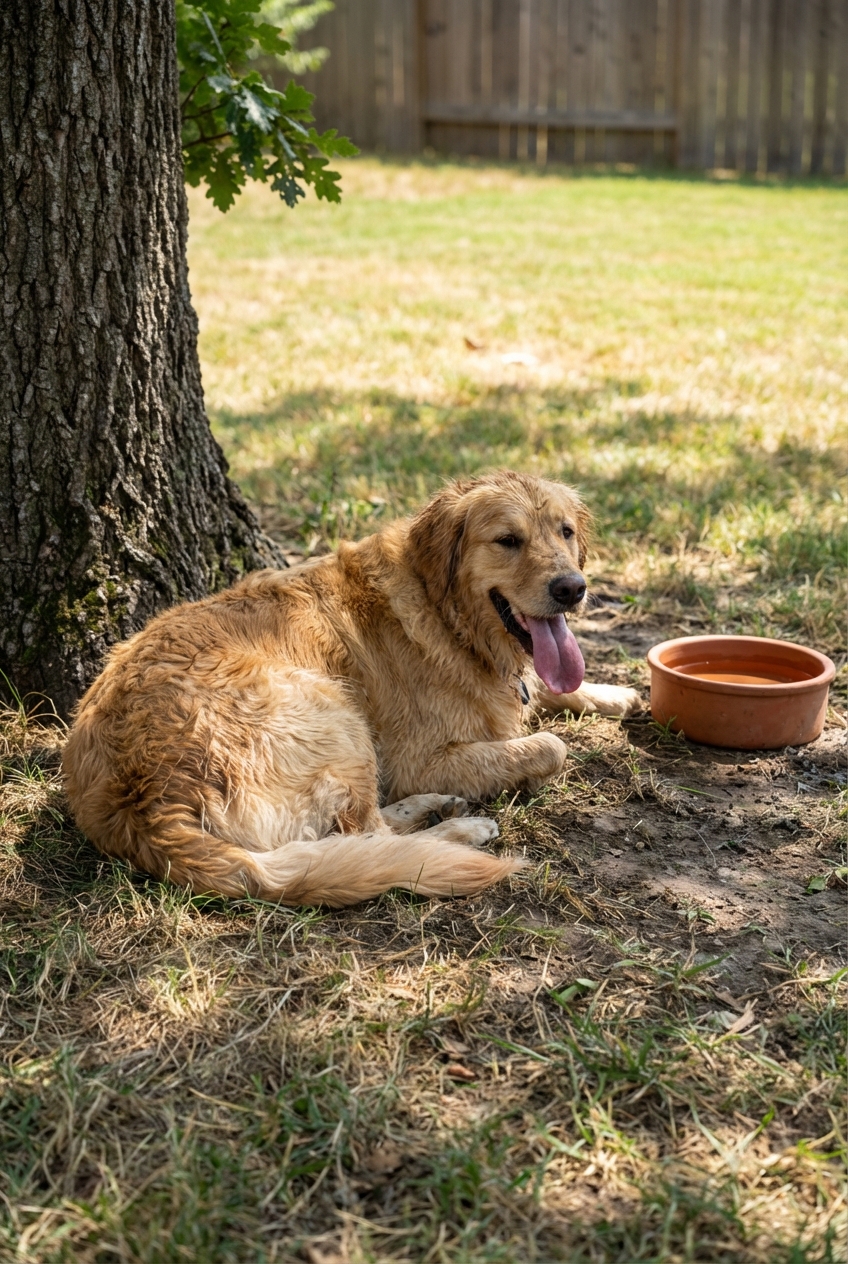
If you suspect heatstroke (recent heat exposure or heavy exercise), start gentle cooling and go to the ER right away.
4) Offer a small, bland meal if interested
Appetite is often low with fever. If your dog wants to eat and is not vomiting, offer a small, bland meal such as boiled chicken and plain rice. If your dog is not eating, call your veterinarian for advice. Call sooner for puppies, toy breeds, seniors, or dogs with other health conditions.
My rule of thumb: supportive care is fine, but it should never delay getting medical help if your dog is getting worse or the temperature is climbing.
What not to do
This part is important, because some well-meant home treatments can be dangerous.
- Do not give human fever reducers. Acetaminophen (Tylenol) and ibuprofen (Advil, Motrin) can be toxic to dogs. While some of these may be used by veterinarians in very specific situations and doses, they are not safe to give at home without direct veterinary instruction. Aspirin can also cause serious side effects and should only be used if your veterinarian tells you to.
- Do not “wait it out” with high temperatures. If your dog is at 104°F or higher, it is time for urgent veterinary care.
- Do not force food or water. Forcing can lead to aspiration, choking, or vomiting.
- Do not overwrap in blankets. If your dog is feverish, heavy blankets can trap heat.
When to call the vet
Call your veterinarian the same day for any confirmed fever, especially if it lasts more than 24 hours. Go to urgent care or the ER immediately if any of the following apply:
- Temperature 104°F or higher
- Puppy, senior dog, pregnant dog, or immunocompromised dog
- Trouble breathing, persistent panting at rest, blue or very pale gums
- Repeated vomiting, bloody diarrhea, black tarry stool, or severe dehydration
- Collapse, extreme weakness, seizures, or inability to stand
- Suspected toxin exposure (including human medications)
- Recent surgery, bite wound, or a known foreign body risk
- Heat exposure (parked car, hot walk, heavy exercise in high heat)
If you are unsure, it is always okay to call. In clinics around Frisco, we would much rather triage early than treat a crisis later.
What to write down for your vet
- Temperature and the time you took it (and how you took it)
- Other symptoms (vomiting, diarrhea, coughing, pain, limping)
- Appetite and water intake
- Urination and bowel movement changes
- Recent tick exposure, travel, dog park or boarding visits
- Recent vaccines
- Any new medications or supplements
- Possible toxin or foreign body exposure
What your vet may do
Fever treatment is about addressing the underlying cause. Depending on your dog’s symptoms and exam, your veterinarian may recommend:
- Diagnostics: bloodwork, urine testing, fecal testing, tick-borne disease testing, X-rays, ultrasound
- Fluids: to correct dehydration and support circulation
- Targeted medications: antibiotics (for bacterial infection), anti-nausea meds, pain relief that is safe for dogs, or other therapies
- Hospital monitoring: if temperature is high or your dog is unstable
It can be tempting to want a “one size fits all” fever fix, but in real life, the best outcomes come from finding the cause early.
Fever vs. heatstroke
These can look similar, but heatstroke is an emergency that can cause organ damage fast.
- Fever is typically the body responding to illness or inflammation.
- Heatstroke happens when the body cannot cool itself, often after heat exposure or exercise. Dogs may drool heavily, seem frantic, vomit, stumble, or collapse. Gums can become bright red or pale.
If you suspect heatstroke, start gentle cooling with cool water and a fan and go to the ER immediately.
How to help prevent fevers
You cannot prevent every illness, but you can lower risk.
- Keep vaccines current based on your veterinarian’s guidance and your dog’s lifestyle.
- Use year-round parasite prevention, especially for ticks and fleas.
- Check for ticks after walks, hikes, and tall grass playtime.
- Address wounds early. Even small punctures can get infected under the skin.
- Support overall health with balanced nutrition, steady exercise, and regular checkups.
Action plan
- Confirm with a thermometer.
- About 103°F: call your vet for advice, encourage fluids, rest, monitor closely.
- 104°F or higher: urgent vet care.
- No human meds unless your veterinarian directs you.
- Write down the temperature, time taken, and symptoms to share with your clinic.
You know your dog best. If something feels truly wrong, trust that instinct and call your veterinarian.
Disclaimer: This article is for general education and is not a substitute for veterinary diagnosis or treatment. If your dog has repeated fevers, a fever with no clear cause, or any worsening symptoms, contact your veterinarian promptly.