From sneezing and congestion to low appetite, learn practical home care that helps cats with URIs feel better—plus red flags, antibiotics guidance, and pre...
Article
•
Designer Mixes
How to Treat a Cat With a Cold

Shari Shidate
Designer Mixes contributor
First, take a breath
If your cat is sneezing, has a runny nose, watery eyes, or sounds a little congested, you may be dealing with an upper respiratory infection (URI), what many of us call a “cat cold.” As a veterinary assistant, I want you to know two things can be true at once. Many mild URIs improve with supportive care. Some cats can get sick quickly if they stop eating or struggle to breathe.
This guide will help you understand what may be going on, what you can safely do at home, what not to do, and when it is time to call your veterinarian.
Quick note: This article is not a substitute for veterinary care. If your cat looks like they are having trouble breathing or cannot keep food down, seek help right away.
What a cat cold usually is
A “cat cold” is most often a viral URI. The most common viruses are feline herpesvirus (FHV-1) and feline calicivirus (FCV). These are common in multi-cat settings (like shelters) and can spread between cats through droplets, grooming, shared bowls, and shared litter areas.
Bacteria can join in later (secondary infection), and sometimes bacteria may be involved earlier. These infections are contagious to other cats, but they are not the same as human cold viruses. The zoonotic risk to people is considered very low, but good hygiene is still smart, especially if someone in the home is immunocompromised.
Typical symptoms
- Sneezing and nasal congestion
- Clear nasal discharge that may become thicker
- Watery or goopy eyes
- Coughing is less common, but some cats cough or gag from post-nasal drip
- Low appetite, less energy
- Mouth ulcers can occur with calicivirus
When it might not be a simple cold
Not every sniffle is a straightforward URI. If symptoms do not fit the usual pattern, keep different possibilities in mind and call your vet. Problems that can look similar include allergies, asthma, dental disease, a nasal foreign body (like a grass awn), pneumonia, and sometimes heart disease. Wheezing, persistent coughing, or heavy breathing deserves extra caution.
Why appetite matters so much
Cats rely heavily on their sense of smell to eat. When the nose is clogged, many cats stop eating or eat far less than normal. Going too long without food can be dangerous, especially for overweight cats, because it increases the risk of hepatic lipidosis (fatty liver disease). If your cat is not eating for more than 24 hours (or is eating dramatically less than usual), call your veterinarian. Kittens, seniors, and cats with other health issues can deteriorate faster, so use a 12-hour rule for those groups.
At-home care that helps
Supportive care is the foundation for mild cat colds. Your goals are simple: keep your cat hydrated, comfortable, able to breathe through the nose as much as possible, and interested in food.
1) Set up a calm recovery space
- Keep your cat indoors and away from drafts.
- Provide a quiet room with soft bedding and easy access to food, water, and the litter box.
- Minimize stress, especially for cats with herpesvirus, since stress can trigger flare-ups.
2) Add humidity for congestion
Humidity can help thin mucus and make breathing easier.
- Humidifier: Run a cool-mist humidifier near your cat’s resting area.
- Bathroom steam: Sit with your cat in a closed bathroom while a hot shower runs for 10 to 15 minutes, 1 to 2 times daily.
Keep your cat safely away from hot water, and never force them to stay if they are panicking.
3) Gently clean the nose and eyes
Crusty discharge can block breathing and irritate the skin.
- Use a soft cotton pad or cloth dampened with warm water or sterile saline.
- Wipe from the inner corner outward on the eyes.
- For a sore nose, a tiny amount of pet-safe balm can protect skin, but avoid products with strong scents.
4) Encourage fluids
- Offer fresh water in multiple bowls.
- Try a pet water fountain if your cat prefers running water.
- Feed wet food to increase moisture intake.
- Ask your vet if adding unseasoned broth is appropriate. Avoid onion and garlic in broths, as they can be toxic to cats.
If your cat is drinking much less than usual, seems dehydrated (tacky gums, sunken eyes), or cannot keep water down, call your veterinarian.
5) Get calories in, safely
When cats feel stuffy, we often have to make food extra appealing.
- Warm the food slightly (a few seconds) to increase aroma. Stir and check temperature so it is not hot.
- Offer small meals more often.
- Try strong-smelling options like canned fish-based cat foods (as a short-term appetite bridge).
- If your veterinarian recommends it, consider a high-calorie recovery diet.
Important: Do not force-feed unless your veterinarian has taught you how and it is part of a plan. Improper syringe feeding can cause aspiration (food entering the lungs).
What not to do
When you love your cat, it is tempting to treat them like a small human. But many common human medications are dangerous for cats.
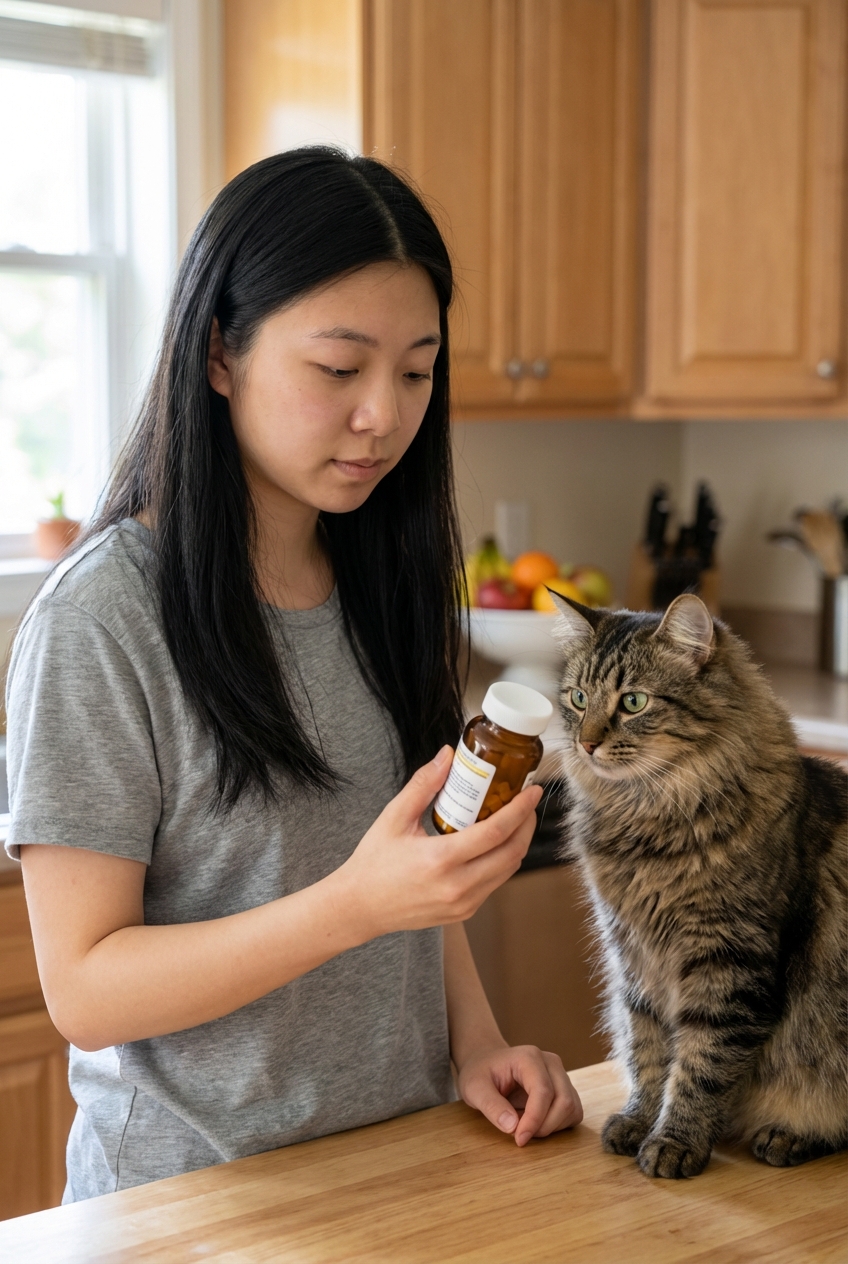
- Do not give human cold meds (decongestants, cough syrups, acetaminophen, ibuprofen). Many are toxic to cats.
- Do not use essential oils in diffusers or on your cat. Cats are especially sensitive, and many essential oils can be toxic.
- Do not use leftover antibiotics or someone else’s prescription. The wrong drug or dose can worsen illness and drive resistance.
- Do not delay care if your cat is not eating, is open-mouth breathing, or seems “off.” Cats hide illness well until they cannot.
When to call the vet now
Please call your veterinarian or an emergency clinic if you notice any of the following. These are red flags we take seriously in clinic.
- Open-mouth breathing, rapid breathing, or obvious struggle to breathe
- Blue, gray, or very pale gums
- Not eating for 24 hours (or 12 hours for kittens, seniors, or cats with other health issues), or eating significantly less than normal
- Not drinking, or signs of dehydration
- Vomiting repeatedly or severe diarrhea
- Very thick yellow or green discharge that can indicate a secondary infection, especially with fever or lethargy
- Eye swelling, squinting, cloudiness, or a closed eye
- Kittens, senior cats, pregnant cats, or cats with asthma, heart disease, kidney disease, diabetes, or immune compromise
- Symptoms lasting more than 7 to 10 days, improving then suddenly worsening, or repeated flare-ups
Breathing check at home
If your cat is resting and you notice belly heaving, flared nostrils, extended neck posture, or they cannot settle and sleep comfortably, treat that as urgent. Nasal congestion can look dramatic, but true breathing effort is not something to “wait out.”
What your vet may do
Veterinary treatment depends on severity, age, underlying conditions, and whether a secondary bacterial infection is suspected.
Common vet treatments
- Exam and temperature check: to assess dehydration, lung sounds, oral ulcers, and overall stability.
- Eye medications: especially if there is conjunctivitis or concern for corneal ulcers (a known risk with herpesvirus).
- Antibiotics: not for viruses, but sometimes used if a bacterial infection is suspected, discharge is severe, or the cat is high-risk.
- Fluids: if your cat is dehydrated.
- Appetite support: in some cases to prevent dangerous fasting.
- Antiviral or immune support strategies: sometimes considered for recurrent herpesvirus cases.
If your cat is very congested, your vet might also discuss safe nebulization options and specific home-care steps tailored to your cat’s breathing.
A note on herpes flare-ups
FHV-1 can improve and then return later, especially during stress. Some cats also develop recurring eye issues. If your cat has frequent “colds,” chronic watery eyes, squinting, or a painful-looking eye, prompt veterinary guidance matters.
Protect other cats at home
Cat colds spread through droplets, grooming, shared bowls, and shared litter areas. If you have multiple cats, basic hygiene makes a real difference.
- Separate the sick cat if possible, especially from kittens or seniors.
- Use separate food and water bowls and a separate litter box.
- Wash hands before and after handling each cat.
- Clean surfaces and bowls routinely. Follow label directions for pet-safe disinfectants, and never mix cleaning products.
Prevention basics
You cannot prevent every sniffle, but you can lower the odds and reduce severity.
- Vaccines: Keep core vaccines current. They do not always prevent infection entirely, but they can reduce severity and complications.
- Good nutrition and hydration: A balanced diet supports immune function.
- Lower stress: Consistent routine, enrichment, safe hiding spots, and gentle introductions for new pets.
- Air quality: Avoid smoke, strong fragrances, and dusty litter if your cat is sensitive.
- Regular checkups: Especially for seniors and cats with chronic respiratory issues.
Many mild cat colds often improve within about 7 to 10 days with good supportive care. Herpesvirus cases can linger or recur. Any cat that stops eating or struggles to breathe needs help sooner.
Quick home checklist
- Warm, quiet room and rest
- Humidity 10 to 15 minutes daily or cool-mist humidifier
- Wipe eyes and nose with warm water or saline
- Warm wet food and offer small frequent meals
- Monitor breathing, appetite, water intake, and energy daily
- Call the vet if not eating within 24 hours (12 for high-risk cats) or any breathing distress