Stop cat biting by matching the bite to the cause—play, overstimulation, fear, pain, or redirected aggression. Get in-the-moment steps, training tips, and ...
Article
•
Designer Mixes
How to Train Your Cat Not to Bite

Shari Shidate
Designer Mixes contributor
Cat bites can feel like they come out of nowhere, but in most homes there is a pattern behind them. As a veterinary assistant, I see this all the time: a cat is not “being mean” so much as communicating stress, overstimulation, fear, pain, or playful hunting behavior. The good news is that with a few targeted changes, many cats improve quickly, although timelines vary depending on the cause and how long the habit has been in place.

This guide walks you through what bites mean, how to prevent them, and what to do in the moment so you can build trust while keeping everyone safe.
Why cats bite
Cats usually bite for one of these reasons. Pinpointing the “why” is the fastest way to fix the “what.”
- Play aggression: Your cat is practicing hunting. Hands, ankles, and moving toes become “prey,” especially with kittens and young cats.
- Overstimulation (petting aggression): Petting feels good until it suddenly does not. Some cats have a shorter “touch tolerance.”
- Fear or defensive biting: A cat may bite if they feel cornered, restrained, startled, or overwhelmed.
- Territorial stress: New pets, visitors, a move, or even outdoor cats visible through a window can raise tension.
- Pain or illness: Dental disease, arthritis, skin irritation, or other pain can turn handling into a bite trigger.
Need-to-know: If biting is new, escalating, or happening when you touch a specific body area, schedule a veterinary visit. In clinic, we often find that “sudden behavior problems” have a medical root cause, and behavior work is much harder when a cat is hurting.
Early warning signs
Cats often give a “yellow light” before a bite. Catching that moment lets you stop before the bite happens, which protects your relationship and prevents your cat from rehearsing the behavior.

- Tail swishing or thumping
- Skin rippling along the back
- Ears rotating sideways or flattening
- Sudden stillness or tense posture
- Dilated pupils, wide eyes
- Quick head turns toward your hand
- Low growl, yowl, or a sharp meow
When you see any of these, pause petting or play immediately and give your cat space. Think of it as honoring their “no thanks” before it has to get louder.
What to do in the moment
If your cat is about to bite or has just bitten, your response matters. The goal is to de-escalate, not punish.
If you see the bite coming
- For play bites, freeze first: Pulling away quickly can trigger a chase-and-bite reflex. Freezing your hand for a moment often helps, then redirect.
- For fear or defensive bites, create distance: If your cat looks panicked or cornered, your safest move is to stop reaching and give them a clear exit route.
- Quietly redirect: Slide a toy between you and the cat or toss a toy away from your body.
- End the interaction calmly: Stand up or turn slightly away and give space.
If the bite already happened
- Do not yell, hit, or scruff: This often increases fear and can escalate biting over time.
- Gently disengage: If your cat is latched on, do not yank away. If it is safe to do so, you can push slightly toward the bite to reduce tearing, then ease free. If your cat is highly aroused, use a barrier like a pillow, folded towel, or thick blanket to separate safely and create distance.
- Take a reset break: Leave the room for 30 to 90 seconds so the “fun ends” without drama. If your cat follows and continues to escalate, step behind a door or baby gate, or redirect from a distance with a tossed toy.
Safety note: Cat bites can become infected quickly, especially punctures to hands and fingers. If skin is punctured, wash thoroughly with soap and running water for several minutes, apply an antiseptic, and contact a healthcare provider the same day for guidance. Watch closely for the next 24 to 48 hours for redness, swelling, warmth, increasing pain, pus, red streaks, or fever, and seek urgent care if any of these occur. Tetanus and rabies recommendations depend on your location and the cat’s vaccine status, so ask your clinician and follow local public health guidance.
Train “no bite” gently
Training works best when you teach your cat what to do instead of focusing only on what not to do.
1) Set gentle play rules
- No hands as toys: Even “cute kitten nibbles” can grow into adult bites. If you have a kitten, start now and keep play focused on toys so they learn bite inhibition and appropriate outlets early.
- Use interactive toys: Wand toys, kicker toys, and balls give a safe outlet.
- Reward calm behavior: If your cat sits, blinks slowly, or engages gently, offer a treat or praise.
2) Use the “bite ends the game” rule
The moment teeth touch skin, end play for a short time. You are teaching cause and effect: gentle play continues, biting makes the fun stop.
- Play with a toy (not your hands).
- If biting happens, freeze briefly, then calmly end play.
- Restart after a short break and reward gentle interaction.
3) Build a predictable routine
Many cats bite more when they are bored, under-stimulated, or over-aroused. A routine helps regulate energy.
- Two to three play sessions daily (5 to 15 minutes each).
- “Hunt, eat, groom, sleep” flow: Play first, then feed a meal or small snack to satisfy the hunting sequence.
- Puzzle feeders to keep the brain busy.
Stop petting bites
Some cats love affection but get overwhelmed quickly. This is common and it is workable.
Petting tips
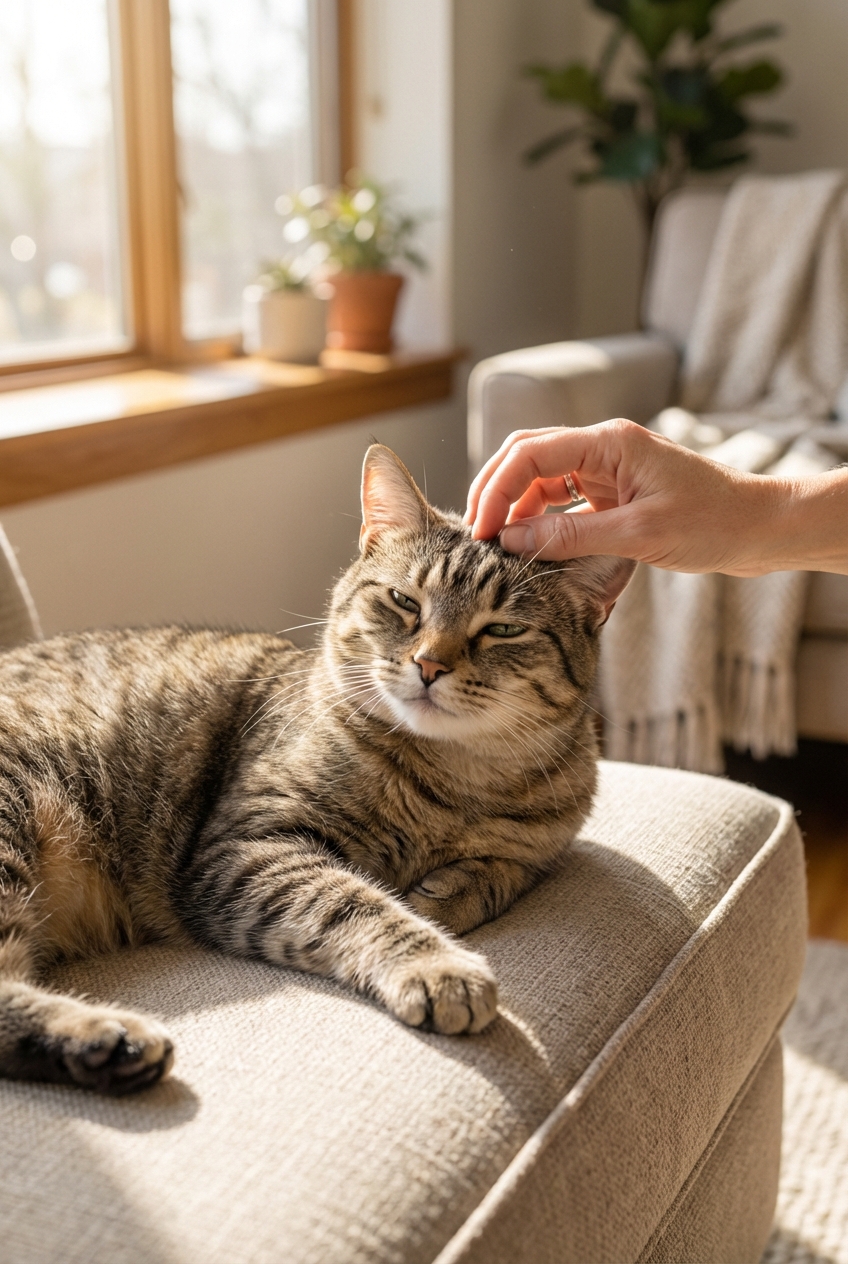
- Keep petting short: Aim for 3 to 5 seconds, then pause and see if your cat asks for more.
- Choose safer zones: Many cats prefer cheeks, chin, and the base of the ears. Some dislike belly, lower back, and feet.
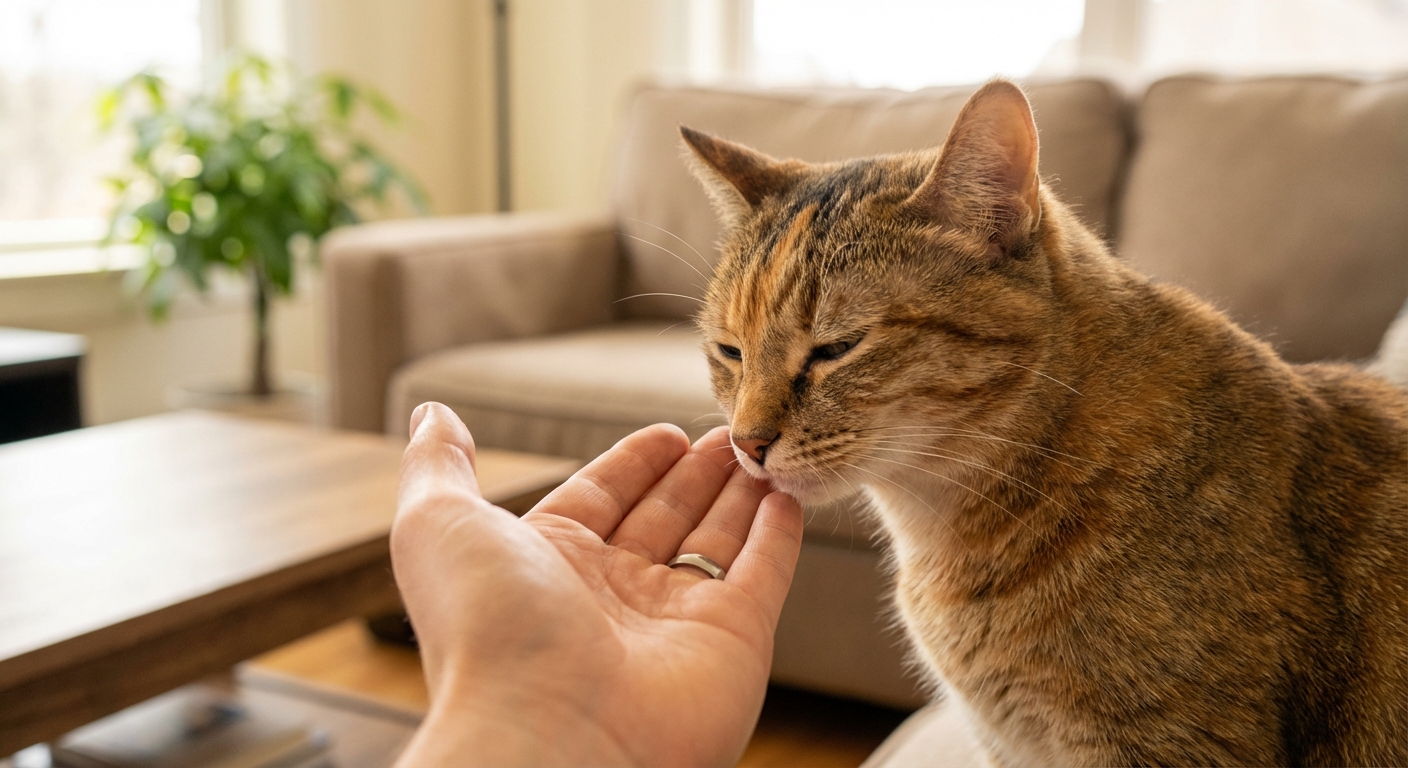
- Let the cat “vote”: If your cat leans in, headbutts, or follows your hand, continue. If they tense, flick their tail, or turn their head, stop.
- Reward calm cuddles: A tiny treat after gentle petting helps create a positive association.

If petting aggression is frequent, consider using a wand toy to burn off energy before cuddles.
Make your home bite-friendly
Environment matters. Stress and lack of outlets can show up as biting, especially in indoor cats.
- Vertical space: Cat trees, shelves, or window perches help cats feel secure.
- Safe hiding spots: Covered beds or quiet rooms where kids and dogs do not follow.
- Scratch options: Offer both vertical and horizontal scratching posts.
- Predictable handling: Ask guests to let the cat approach first.
- Multi-cat households: Provide enough resources: one litter box per cat plus one extra, multiple feeding stations, and separate resting spots.
If your cat bites when looking out a window, they may be reacting to outdoor cats. Try closing blinds during peak times, adding frosted window film, or using a perch in a calmer window.
Kids and cat bites
Many bite incidents happen when cats and children misunderstand each other. A few ground rules protect everyone.
- Supervise all interactions: Especially with toddlers and young kids.
- No chasing or grabbing: Teach kids to invite the cat over, not to pursue.
- Hands stay gentle: No face-to-face play, no hugging, and no picking up unless the cat is clearly comfortable.
- Teach the “yellow light” signs: Tail thumps, ears back, and a tense body mean “stop.”
Common mistakes
- Using fingers to wrestle: This teaches your cat that skin is fair game.
- Punishing bites: It can increase fear and damage trust, leading to more defensive biting.
- Ignoring warning signs: Cats learn that subtle signals do not work, so they may skip straight to biting.
- Not meeting play needs: Under-exercised cats often create their own fun, usually with teeth.
- Forcing interaction: Especially with shy cats, forced contact can backfire.
When to get help
Please reach out for help if any of the following apply:
- Biting started suddenly or is getting worse
- Your cat bites when touched in one specific area
- There is drooling, bad breath, pawing at the mouth, or trouble eating (possible dental pain)
- There are signs of arthritis: stiffness, trouble jumping, or irritability when picked up
- Bites are severe, frequent, or feel unpredictable
- There is conflict between cats in the home
A veterinarian can rule out pain and discuss behavior support. A qualified cat behavior consultant can also create a step-by-step plan customized to your home setup and your cat’s triggers.
Quick plan for today
- Stop hand play completely and switch to wand and kicker toys.
- Schedule two play sessions daily and feed after play.
- Practice short petting with frequent pauses and watch body language.
- Reward gentle choices with tiny treats and calm praise.
- Book a vet visit if biting is new, intense, linked to touch or handling, or you suspect pain.
With consistency, many cats learn that people are safe, predictable, and worth trusting. That is when the biting fades and the sweet, relaxed companionship can shine through.