Apartment-friendly pee pad training made simple: set up the right station, build a schedule, add a cue, reward fast, troubleshoot accidents, and transition t...
Article
•
Designer Mixes
How to Train a Puppy to Use a Potty Pad

Shari Shidate
Designer Mixes contributor
Potty pads can be a true lifesaver when you live in an apartment, work long hours, have limited yard access, or are bringing home a tiny puppy who may not be able to safely potty outdoors yet in some areas. Parvo risk varies a lot by region and lifestyle, so follow your veterinarian’s guidance on what is safe for your puppy and when.
The key is to treat pad training like any other skill: make it predictable, reward it generously, and set your puppy up to succeed.
Are potty pads a good idea?
Potty pads are neither “good” nor “bad.” They are a tool. For some families, they are the safest and most realistic option. For others, they create confusion because the puppy learns that indoor potty is allowed.
Potty pads can help if
- Your puppy is not fully vaccinated yet and your vet recommends an indoor option for now.
- You live in a high-rise or have mobility limitations.
- Your schedule makes frequent outdoor trips hard at first.
- Your puppy is very small and struggles to “hold it” for long.
Consider skipping pads if
- You want your puppy to learn outdoor potty only and you can take them out often.
- You have a dog who loves shredding or eating pads.
If you start with pads and plan to transition outdoors later, you absolutely can. You just want to train in clear steps so your puppy does not get mixed messages.
What you need
Success is mostly about your setup. Puppies repeat what is easy and rewarding.
- Potty pads with a consistent texture and size. Try not to switch brands constantly.
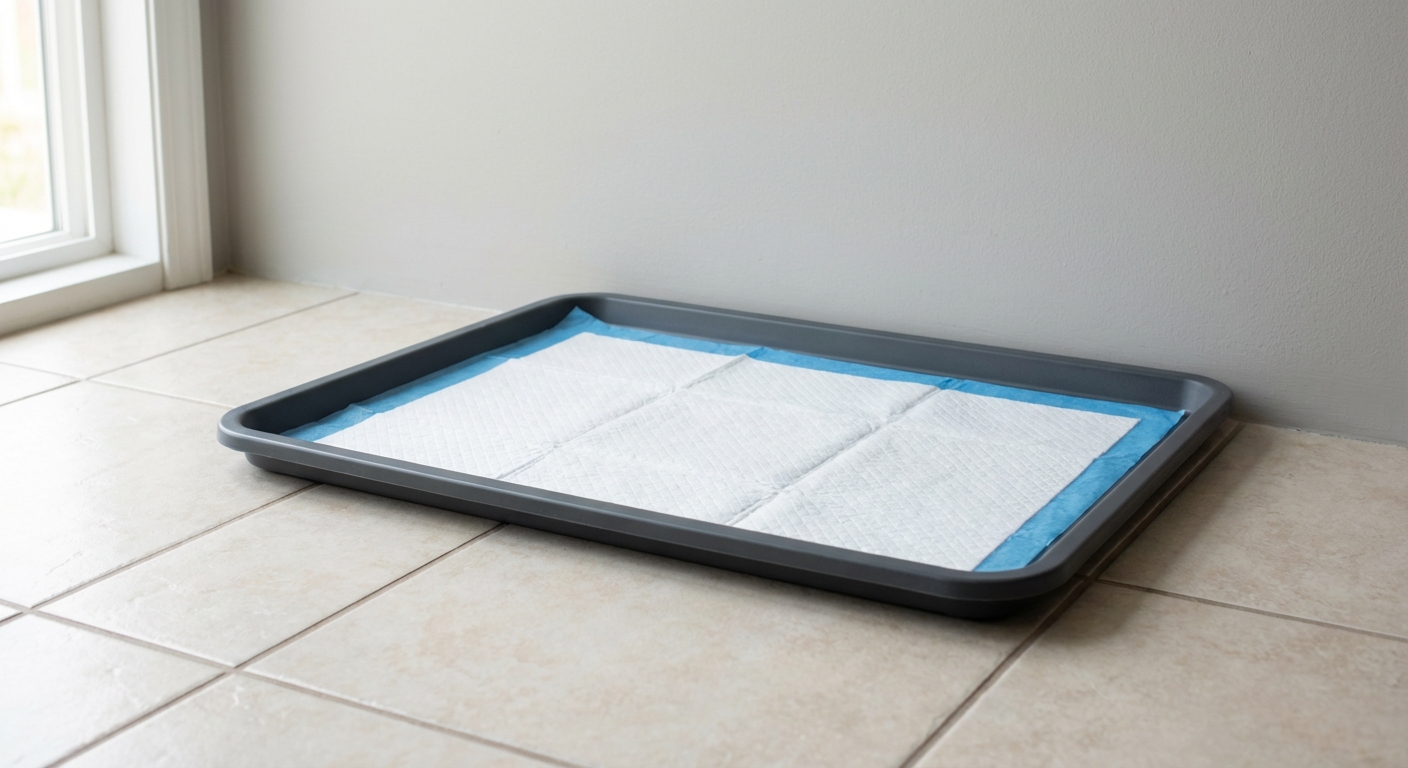
- A pad holder or tray to reduce sliding and discourage shredding.
- Enzyme cleaner made for pet urine and stool. Regular cleaners often leave scent behind.
- Tiny, high-value treats like soft training bits or small pieces of cooked chicken.
- A crate or playpen to prevent roaming accidents.
- A simple schedule posted on your fridge, especially in the first 2 weeks.
Pad location
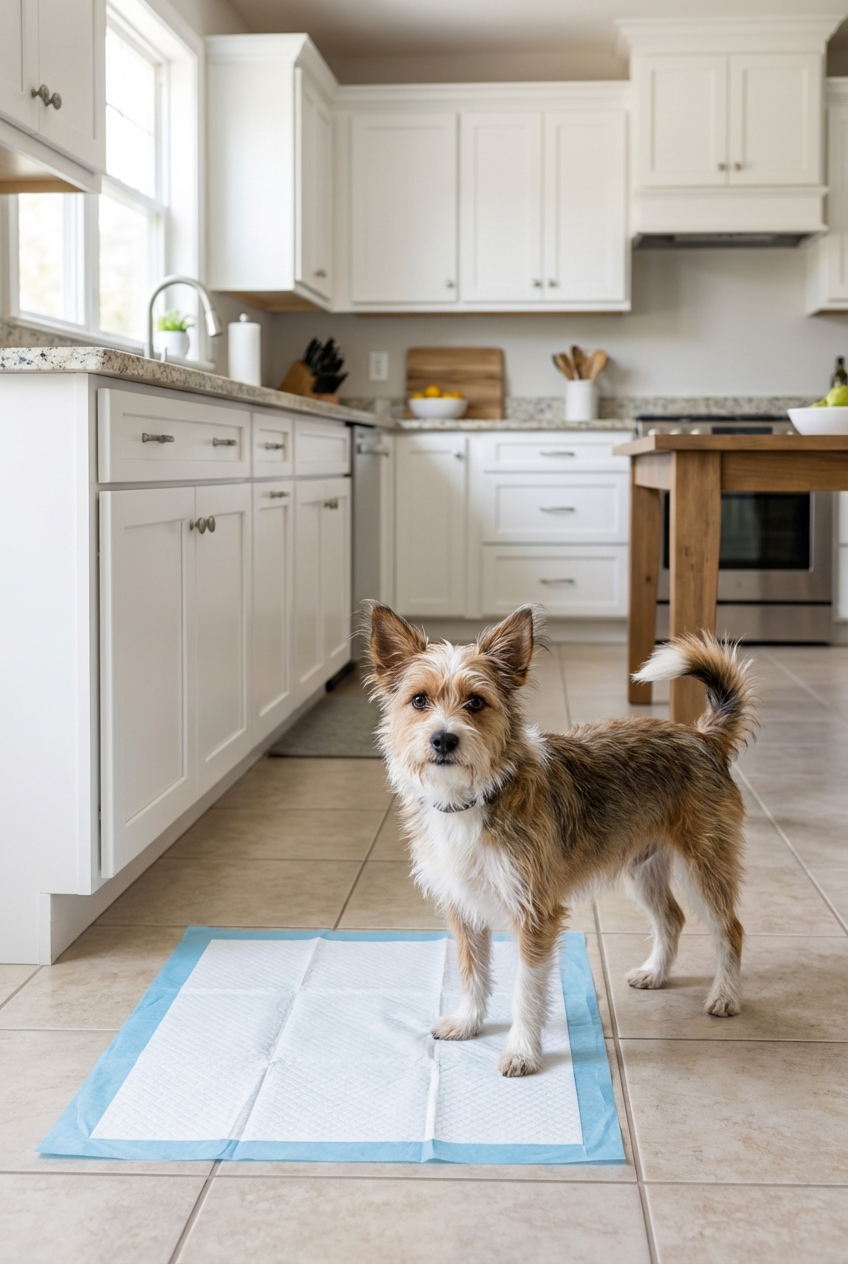
Pick one spot and commit to it. Puppies learn location very quickly, and moving the pad around can slow training.
- Choose a low-traffic area that is easy to clean, like a laundry room, bathroom, or kitchen corner.
- Keep it away from food and water bowls.
- Make it easy to reach from the puppy’s play area.
- If your puppy is confined in a playpen, the pad should be inside the pen (usually in one consistent corner) so they can reach it. If your puppy has supervised freedom outside the pen, the pad can be immediately adjacent to the pen entrance for quick access.
One more tip: avoid rugs nearby. Many puppies think rugs and pads feel similar.
Step-by-step training
Step 1: Supervise and keep a routine
In the beginning, your puppy earns freedom. Until then, use a crate, playpen, or leash tether so they cannot sneak off to potty behind furniture.
Take your puppy to the pad:
- Right after waking up
- After eating or drinking (especially after big drinks)
- After playtime, excitement, or zoomies
- After training sessions
- Before bedtime
- Any time you see sniffing, circling, or suddenly wandering away
Step 2: Add a cue and reward right away
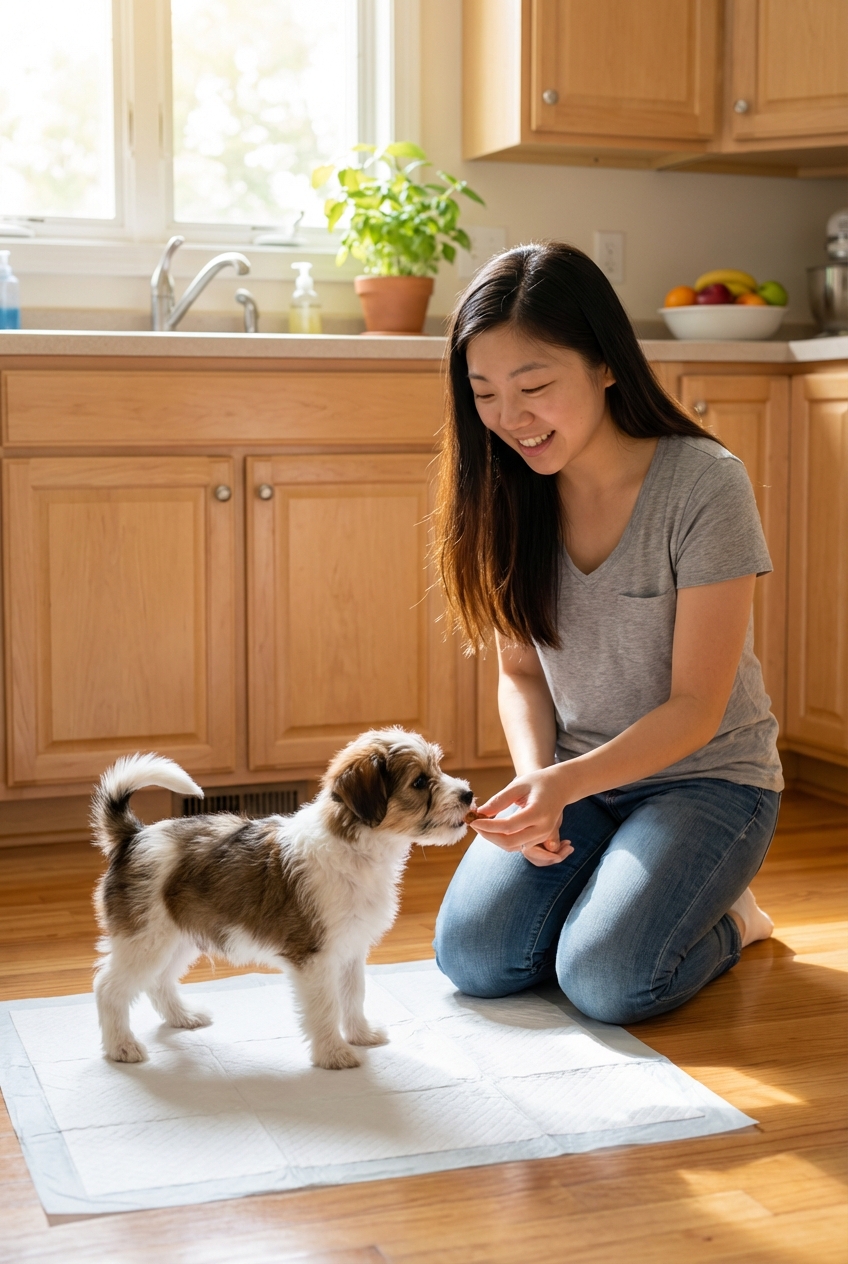
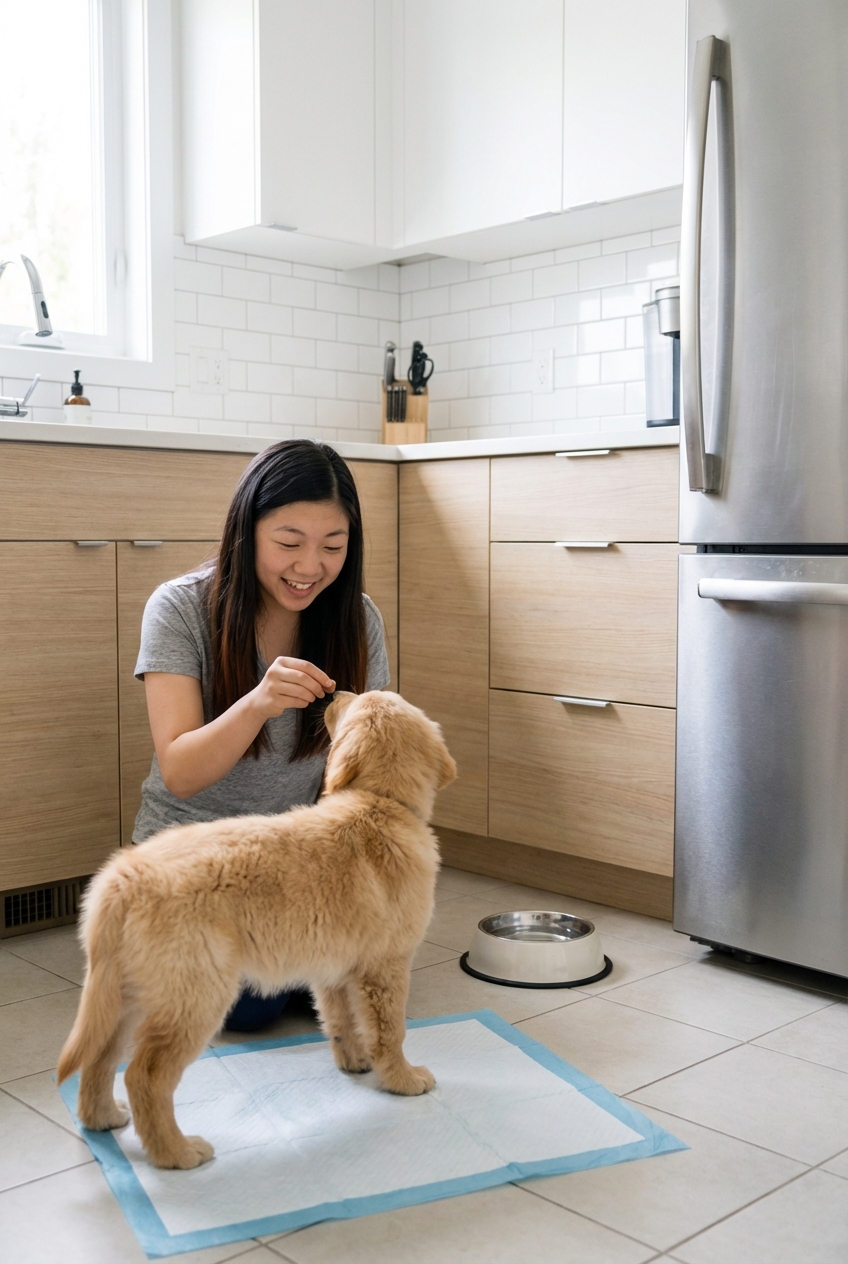
Bring your puppy to the pad and say a simple cue like “go potty”. Stand still and stay boring (no talking, no play, just wait). The moment they finish, reward immediately (ideally within a second or two) so your puppy connects the treat to the potty behavior.
Then praise warmly and release them from the pad area. This matters because some puppies learn that potty makes play stop, and they start holding it to avoid losing fun.
Step 3: Use scent guidance safely
Puppies rely heavily on scent. For the first few days, you can use a little scent guidance without creating a mess or exposing absorbent gel:
- If your puppy has an accident, dab a small piece of paper towel in the urine and place that paper towel on top of the clean pad, then remove it once your puppy goes.
- If you use a holder with a grate, you can place a small piece of soiled pad under the grate so your puppy cannot shred or ingest it.
Keep it sanitary, replace often, and skip this step entirely if your puppy is a shredder or an eater.
Step 4: Increase freedom slowly
Once your puppy is using the pad reliably, you can expand their access to more of the home. Do it slowly. If accidents return, you expanded too fast. Tighten the space again for a few days.
A helpful milestone: aim for 3 days accident-free in a confined area before you give more freedom.
If an accident happens
Accidents are part of the process. What you do next matters more than the accident itself.
- Interrupt calmly if you catch them mid-accident (a gentle “oops” is plenty).
- Guide or carry your puppy to the pad right away.
- If they finish on the pad, reward like they did it perfectly.
- Do not punish, scold, or rub their nose in it. It usually creates fear and sneaky potty habits.
Schedule by age
Every puppy is unique, but these ranges are common. Use them as a starting point, then adjust based on your puppy’s signals, water intake, and activity level.
- 8 to 10 weeks: every 30 to 60 minutes when awake, plus after every nap and meal
- 10 to 12 weeks: every 60 to 90 minutes when awake
- 12 to 16 weeks: every 90 to 120 minutes when awake
At night, many puppies can go longer, but do not assume. If your puppy wakes and fusses, carry them straight to the pad and then right back to bed.
Common problems
“My puppy pees next to the pad.”
- Use a larger pad or place two pads touching to create a bigger target temporarily.
- Try a tray holder so the edges are clear and the pad stays flat.
- Make sure the pad is not too far away. Puppies need quick access.
- Clean accidents with an enzyme cleaner so your puppy is not drawn back to that spot.
“My puppy shreds or eats the pad.”
- Use a pad holder with a cover or grate-style top.
- Supervise pad access and remove it between potty trips if needed.
- Provide appropriate chew toys and rotate them to reduce boredom.
If your puppy eats pad material, speak with your veterinarian. Ingestion can cause GI upset or obstruction.
“My puppy only uses the pad when I am watching.”
- That is normal at first. Independence comes after repetition.
- Increase consistency and reduce freedom until it becomes a habit.
- Reward heavily for pad use. Make it more valuable than the carpet.
“Accidents keep happening after a good week.”
- Look for a routine change: new food, new schedule, visitors, loud storms, more freedom.
- Rule out medical issues. Frequent urination, straining, blood-tinged urine, or sudden accidents can signal a urinary issue or intestinal parasites.
Clean-up that prevents repeats
The cleaner you choose makes a big difference. Use an enzyme-based cleaner specifically labeled for pet urine and stool. These cleaners can help break down odor residues that your puppy’s nose may still detect even when you cannot.
- Blot first, do not rub.
- Saturate the area according to the product instructions.
- Let it sit for the full contact time.
- Air dry.
If you use a grate-style pad holder, wash and dry the tray regularly so smells do not build up over time.
Transition to outdoors
If your end goal is outdoor potty, transition in small steps so your puppy stays confident.
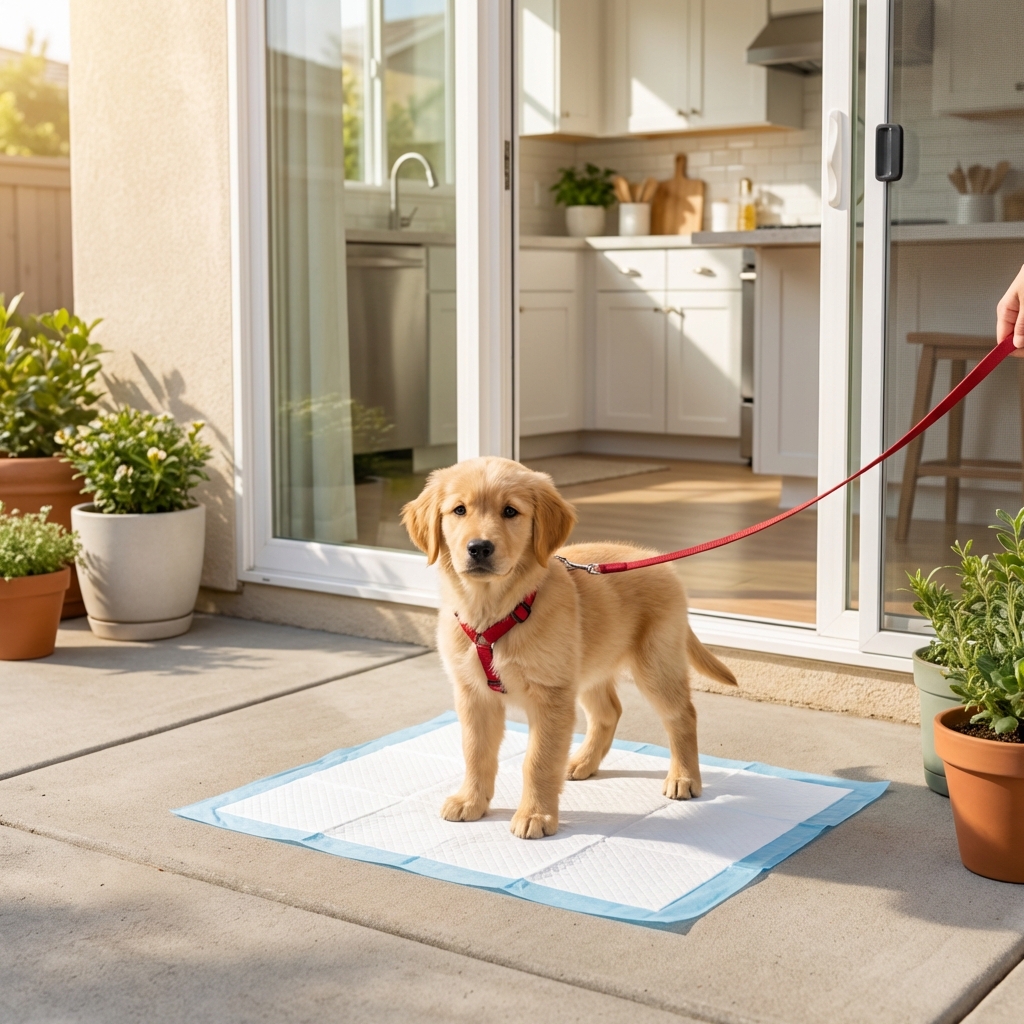
- Move the pad closer to the door over several days.
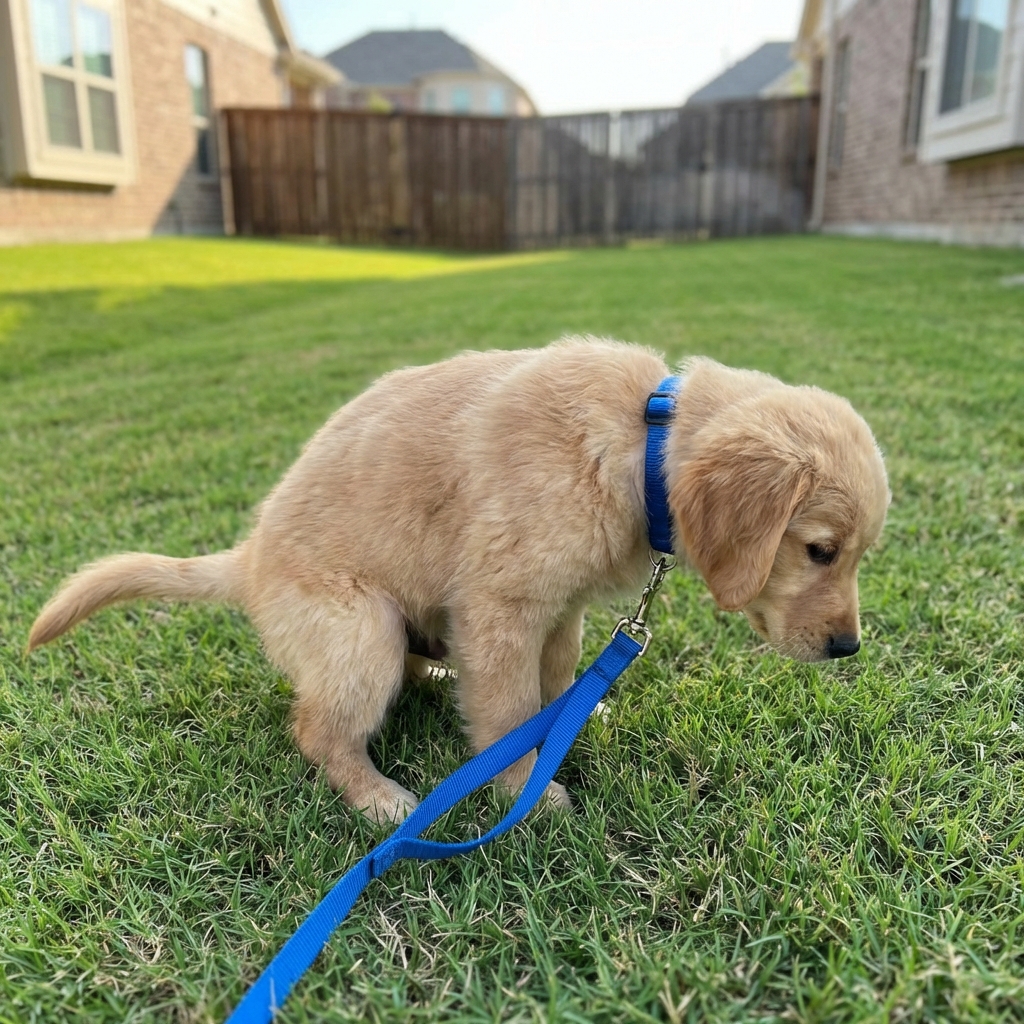
- Then place the pad just outside on a patio or near your outdoor potty spot (only if your veterinarian says that area is safe for your puppy).
- Shrink the pad size gradually (or fold it smaller), keeping the same cue and reward.
- Fade the pad completely once your puppy is consistently choosing the outdoor spot.
When to call your vet
Training takes time, but certain signs are not just “training issues.” Contact your veterinarian if you notice:
- Very frequent urination or accidents with small amounts
- Crying, straining, or licking the genital area
- Blood in urine or stool
- Vomiting, diarrhea, or sudden appetite changes
- Accidents that start suddenly after your puppy was doing well
Potty training is not about perfection. It is about building a habit through consistency, calm guidance, and lots of rewards.
A simple daily plan
- Confine your puppy to a safe area when you cannot supervise (crate or playpen) and never use it as punishment.
- Take them to the pad after waking, eating, drinking, playing, excitement, and before bed.
- Use one cue phrase every time.
- Reward right after they finish.
- Clean accidents with an enzyme cleaner.
- Increase freedom slowly, only after several days of consistent success.
If you want, I can help you tailor a potty schedule based on your puppy’s age, breed mix, and your workday. Small tweaks make a big difference.