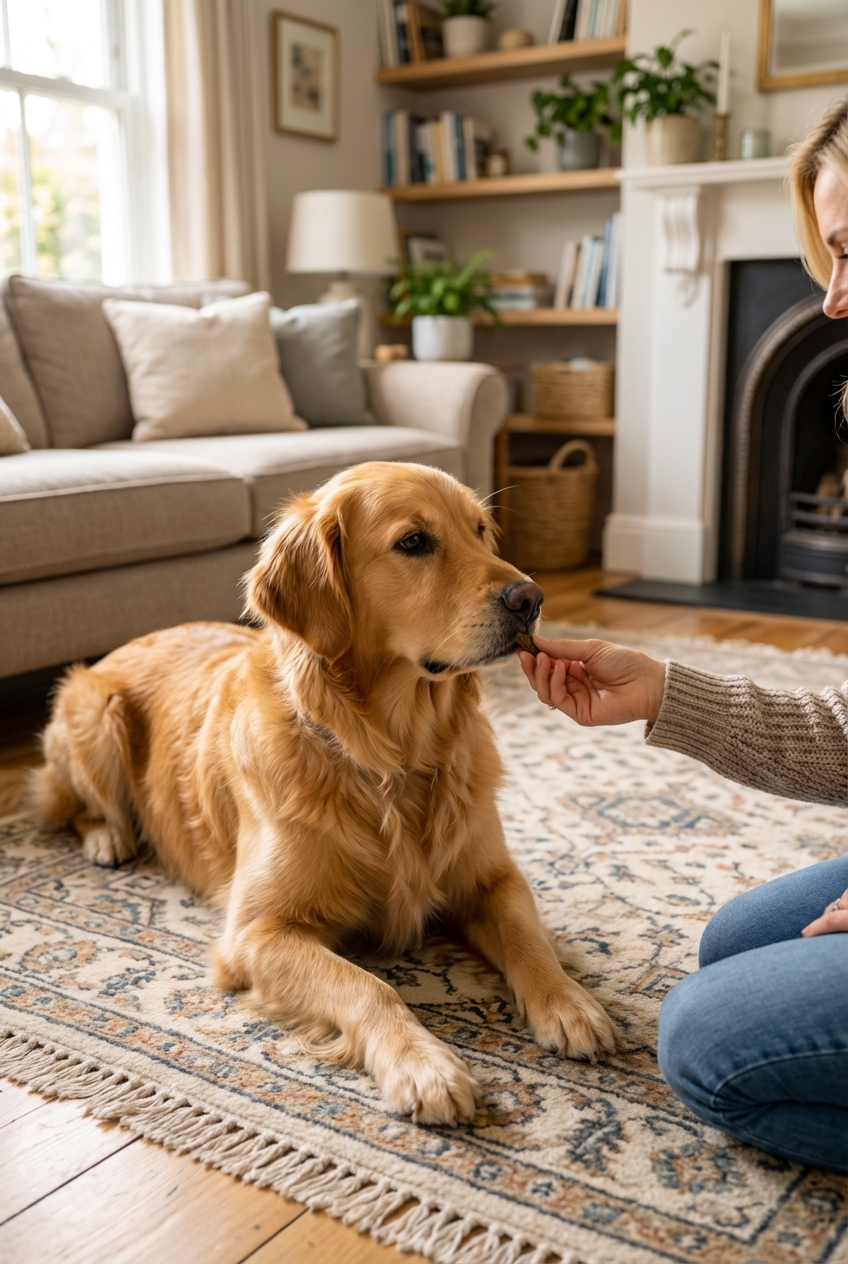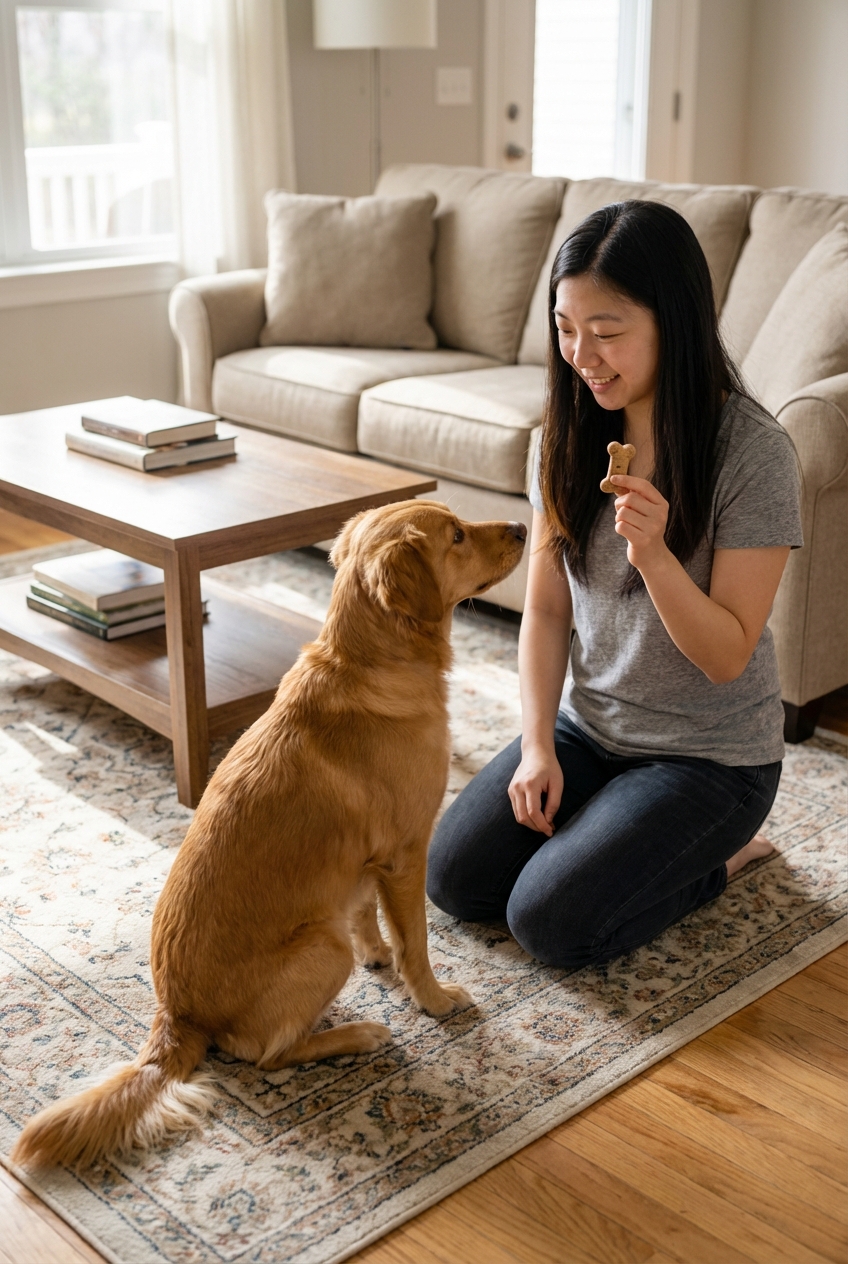
Teach a reliable “sit” with kind, vet-informed steps. Learn lure and capture methods, add the cue and hand signal, build duration, fade treats, and fix c...
Article
•
Designer Mixes
How To Train a Puppy to Sit

Shari Shidate
Designer Mixes contributor
Teaching “sit” is one of the most proven, puppy-friendly skills you can start today. It is simple, it builds your puppy’s confidence, and it gives you a polite behavior you can use before meals, at the door, when greeting people, and during vet visits.
As a veterinary assistant, I love this cue because it is easy on growing joints and it helps prevent jumping and darting. The best part is that you do not need harsh corrections. You will use timing, tiny treats, and short sessions that feel like a game.
Why “sit” works so well
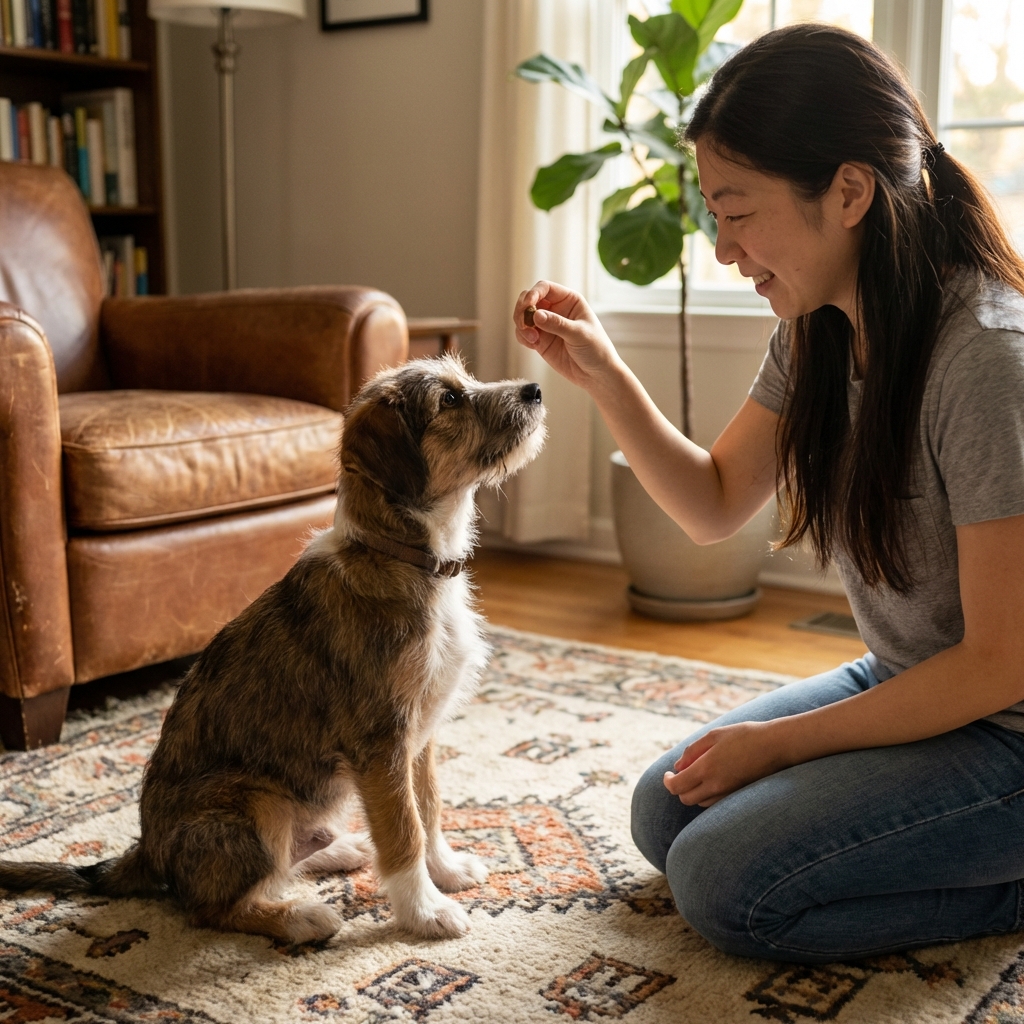
“Sit” is often the first cue trainers teach because it naturally fits how puppies learn. When you reward a behavior right as it happens, your puppy starts offering it more often. That is the core of positive reinforcement training.
- It is clear and repeatable: A sit looks the same most times, so it is easy to reward consistently.
- It is a foundation skill: Once your puppy can sit, you can build “wait,” “stay,” and polite greetings.
- It helps with impulse control: Sitting becomes a default “good choice” when your puppy is excited.
What you need before you start
Keep it simple and set your puppy up for success.
- Treats: Use pea-sized soft treats. Many puppies work great for tiny bits of cooked chicken, turkey, or a high-value training treat.
- A quiet space: Start indoors with minimal distractions.
- A marker: A clicker is wonderful, but a cheerful “Yes!” works just as well.
- Short sessions: 1 to 3 minutes, a few times a day.
Safety note: If your puppy is very young or on a limited diet, ask your veterinarian what treats are best. For puppies with tummy troubles, bland, single-ingredient treats can be easier.
The proven method: Lure, mark, reward
This is the most reliable way to teach sit quickly and kindly.
Step 1: Get your puppy’s attention
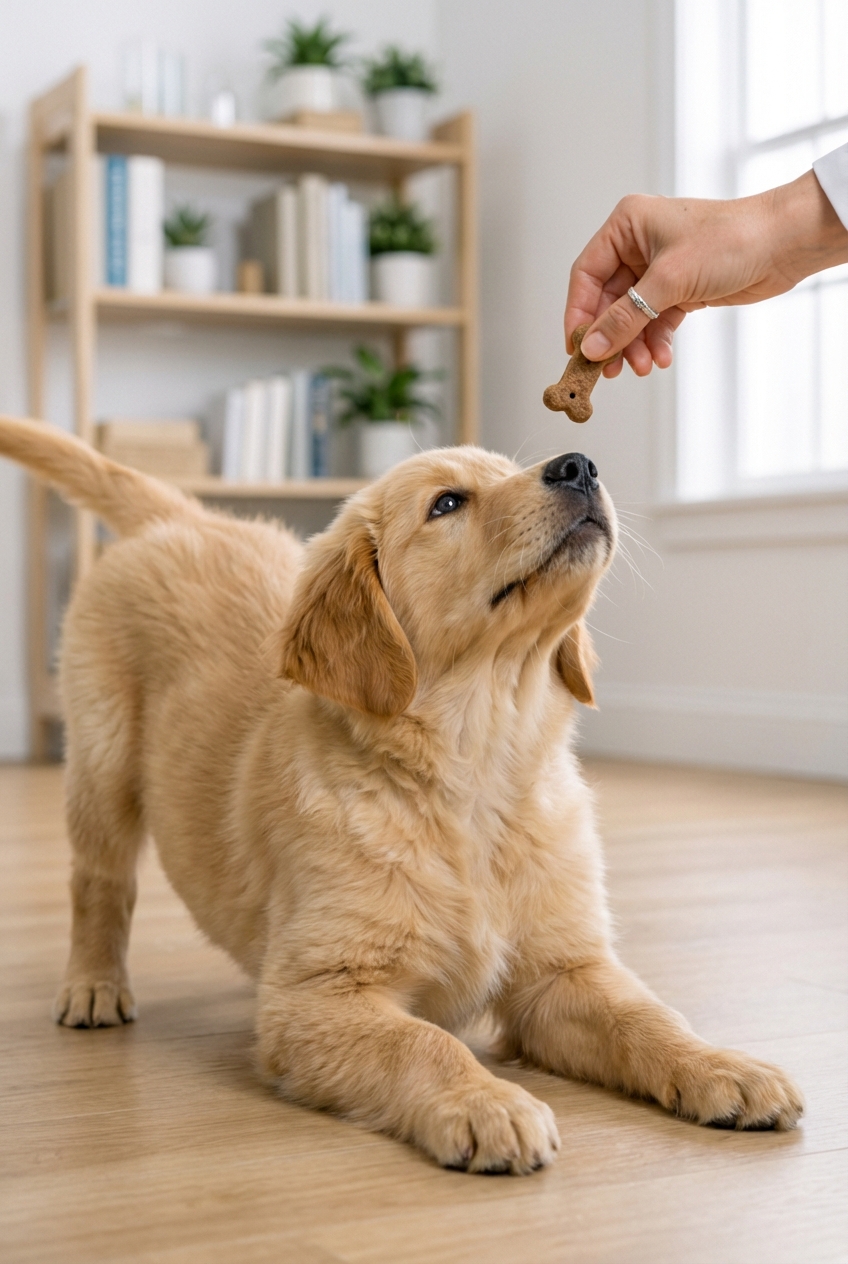
Hold a treat right at your puppy’s nose level. Let them sniff it. Do not say “sit” yet.
Step 2: Lure into position
Slowly move the treat from your puppy’s nose up and slightly back toward the top of their head. As their head follows the treat, their rear will usually lower into a sit.
Step 3: Mark the moment
The instant your puppy’s bottom touches the floor, mark with a click or a clear “Yes!” Timing matters more than anything here.
Step 4: Reward
After the marker, give the treat. Then reset by tossing a second treat a few feet away so your puppy stands up and can try again.
How many reps?
Aim for 5 to 10 successful sits per session. Quit while your puppy still wants more. That keeps motivation high.
When to add the word “sit”
Add the cue after your puppy is reliably following the lure. A good rule: once your puppy sits correctly about 8 out of 10 times with the lure, you are ready.
- Say “Sit” once, in a calm tone.
- Immediately do the same lure motion.
- Mark and reward when the sit happens.
Over time, make the lure smaller until you can simply use a hand signal, then reward. The cue comes first, the puppy responds, then the reward.
Troubleshooting common problems
My puppy backs up instead of sitting
This usually happens if the treat moves too far forward or too fast. Slow down and bring the treat closer to the puppy’s nose before lifting it. You can also practice next to a wall to reduce backing up.
My puppy jumps for the treat
Keep the treat closer to the nose and move it in a smooth, slow arc. If jumping continues, reward calm behavior and lower excitement by using lower-value treats for a few reps.
My puppy “folds” into a down
Some puppies slide into a down if the lure goes too far back. Keep the treat just above the nose and lift slightly upward instead of pulling back. Reward partial progress, like a quick hip tuck, then build duration later.
My puppy sits, but pops up right away
That is normal. First, reward quickly. Once sitting is easy, you can add a tiny pause before marking, like one second, then two seconds. Keep it gradual.
My puppy seems confused
Reduce difficulty: fewer distractions, shorter sessions, better treats, and slower lures. Puppies learn in layers, not in one perfect moment.
Proofing: getting a reliable sit in real life
Puppies do not automatically generalize cues. A sit in the kitchen does not always mean a sit at the park. Proofing means practicing in new places, with gentle increases in distraction.
- Change locations: living room, hallway, backyard, driveway.
- Add distractions slowly: a toy on the floor, a family member walking by, the doorbell sound at low volume.
- Vary rewards: sometimes a treat, sometimes praise, sometimes a quick toy toss.
If your puppy struggles, do not repeat the cue over and over. Instead, step closer, reduce distractions, and help them succeed.
Make “sit” useful: everyday routines
You will get faster results when sit becomes part of life, not just a training session.
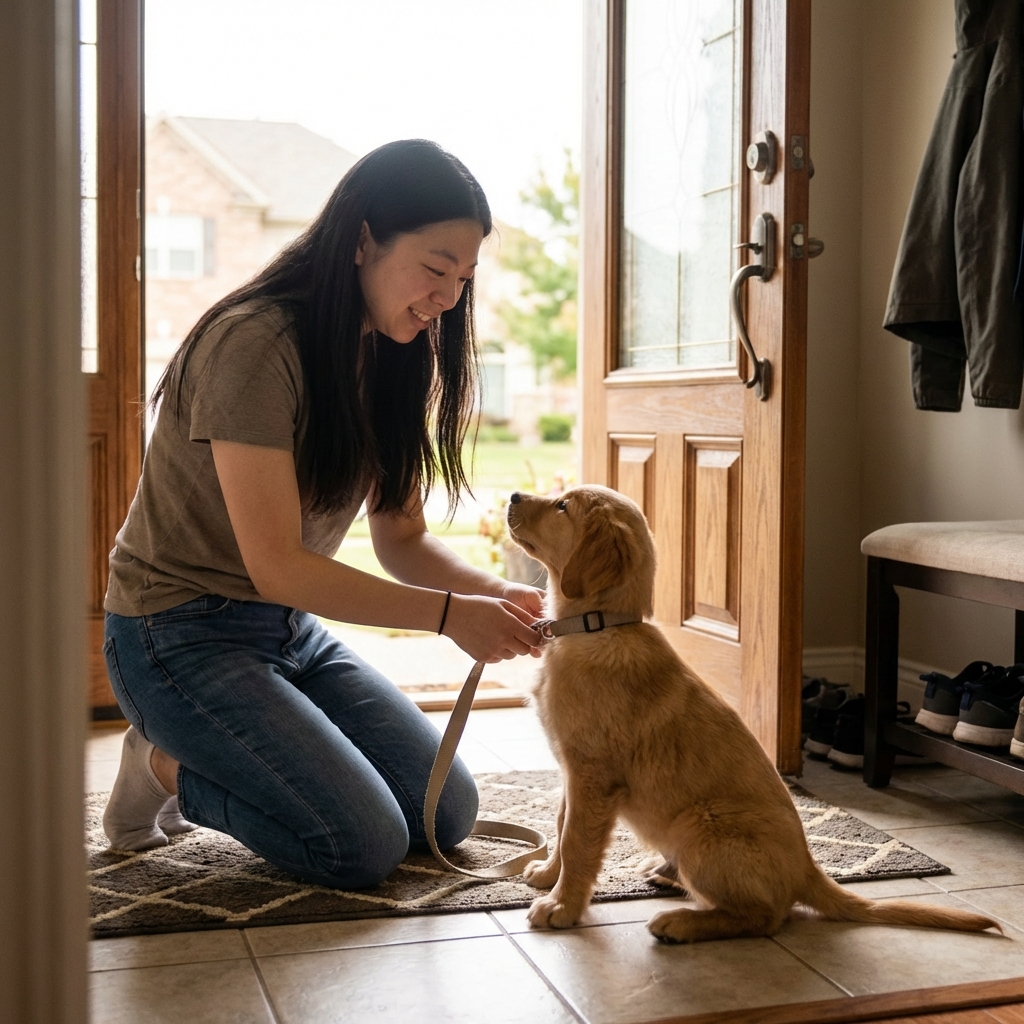
- Before meals: Ask for a sit, then put the bowl down.
- At doorways: Sit, then you open the door. This helps prevent dashing.
- Before leash clipping: Sit, clip, then go outside.
- Greeting people: Sit earns attention. Jumping earns no attention.
What not to do
Good training is not just what you do, it is what you avoid.
- Do not push your puppy’s rear down: This can create stress and avoidance.
- Do not scold for getting it wrong: If your puppy is wrong, the lesson is unclear, not “bad.”
- Do not overtrain: Long sessions lead to frustration, nipping, and zoomies.
How long does it take?
Many puppies learn the basic motion in a day or two, but reliability takes practice over weeks. Think of it like building a habit. You are teaching your puppy that sitting is a great way to earn good things.
If you remember one thing: reward the sit the instant it happens, and keep sessions short enough that your puppy ends happy.
When to get extra help
If your puppy growls, freezes, or seems very uncomfortable during training, pause and consider reaching out to a certified positive reinforcement trainer. If you notice limping, stiffness, or reluctance to sit, check with your veterinarian to rule out pain. Training should feel safe and upbeat for both of you.