Learn a proven, kind puppy house-training plan with a simple schedule, crate and supervision tips, a repeatable potty routine, cleaning methods, and nighttim...
Article
•
Designer Mixes
How to Train a Puppy to Pee and Poop Outside

Shari Shidate
Designer Mixes contributor
Bringing home a puppy is pure joy, and also a lot of tiny bladders and surprise poops. The good news is that house training is very doable when you use a simple routine, good timing, and rewards your puppy actually cares about. I have seen the same truth play out again and again: puppies do best when we make the right behavior easy and the wrong behavior boring.
Quick health note: If something feels “off” like diarrhea, straining, urinating very frequently, accidents after being reliably trained, or your puppy seems to be in pain or unusually tired, loop in your veterinarian. (There is a full red-flag checklist near the bottom.)
How puppies learn potty training
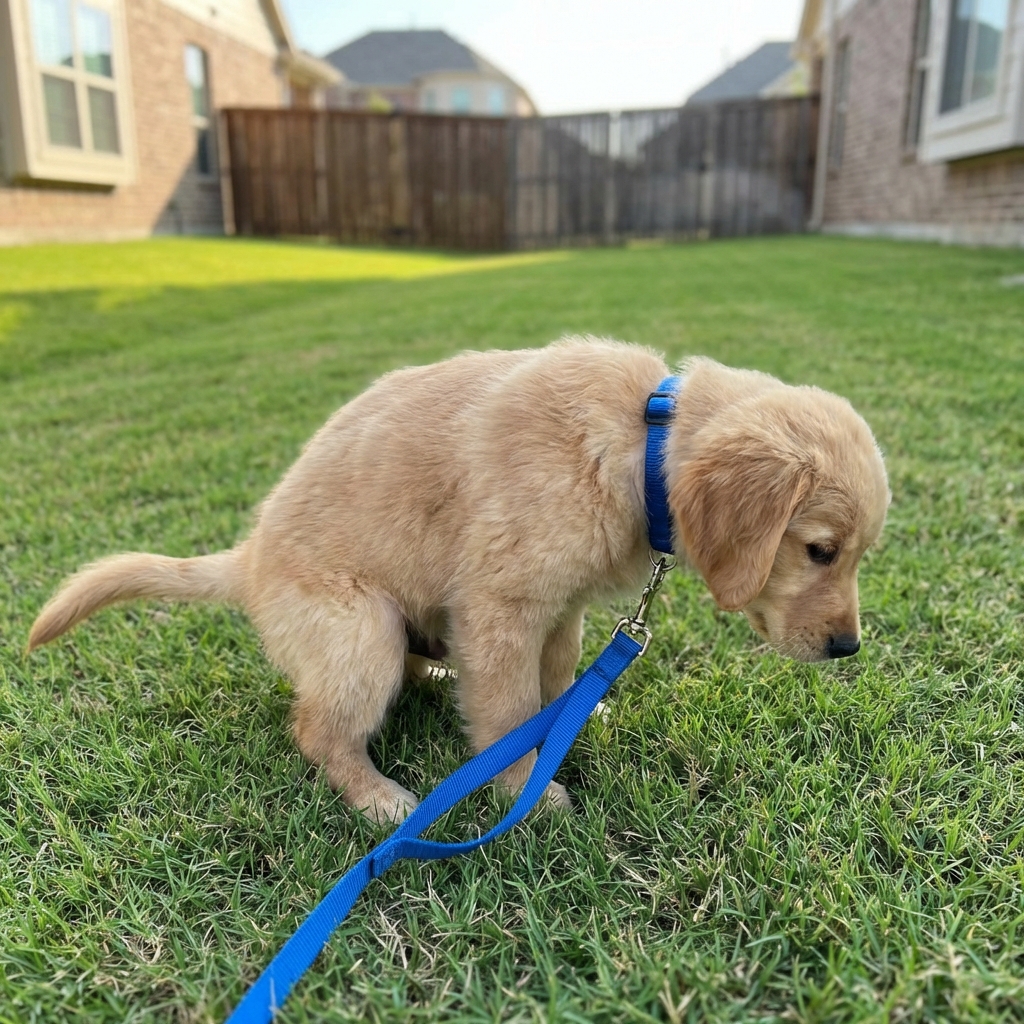
Potty training is really three skills working together:
- Where: Learning that grass, gravel, or a specific outdoor spot is the bathroom.
- When: Learning a schedule that matches their developing bladder and bowel control.
- How to tell you: Learning a clear signal, like going to the door, ringing a bell, or sitting by you.
Puppies repeat what gets rewarded. If peeing outside leads to praise and a treat every time, while indoor accidents are calmly cleaned with no drama, the outdoor habit wins.
Before you start: set them up to win
Pick a potty spot
Choose one outdoor location that is easy to reach, well lit, and safe. Going to the same area helps your puppy connect scent plus location with “bathroom time.”
Use the right tools
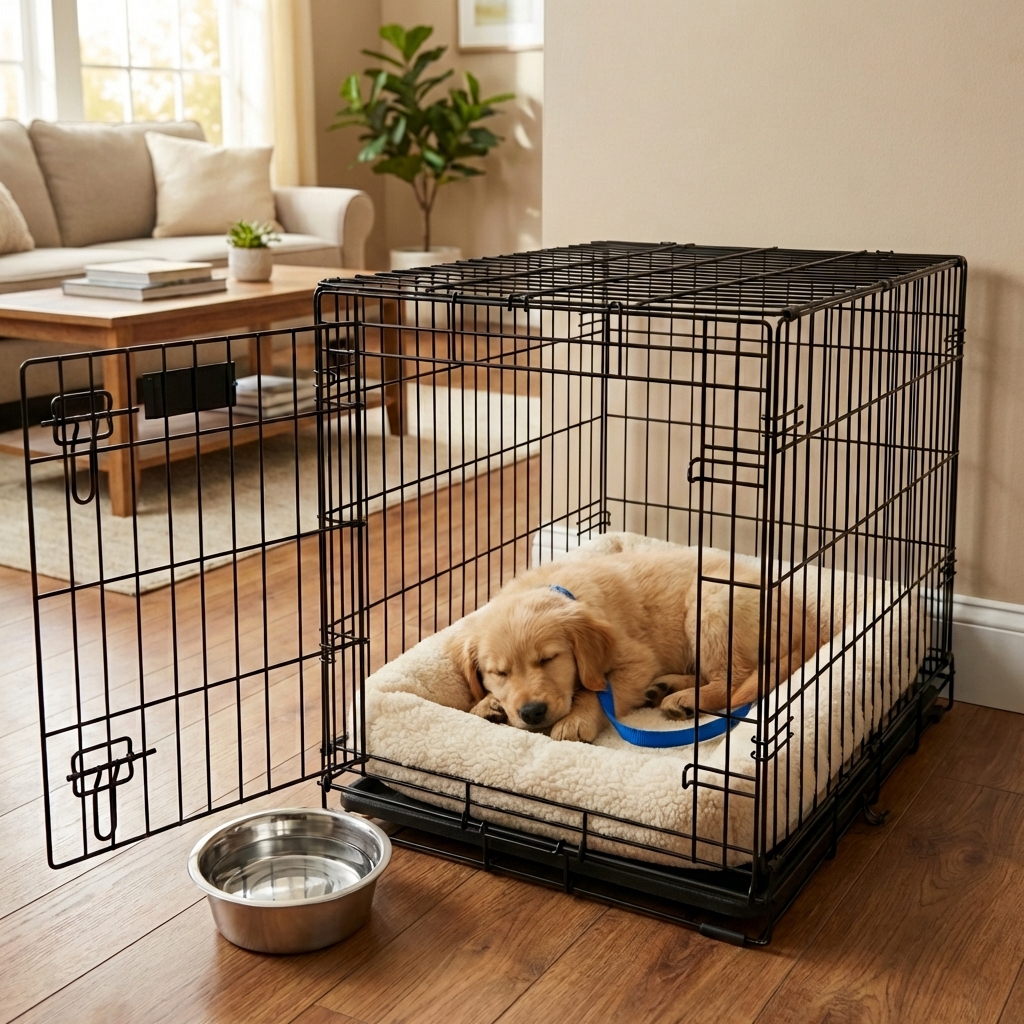
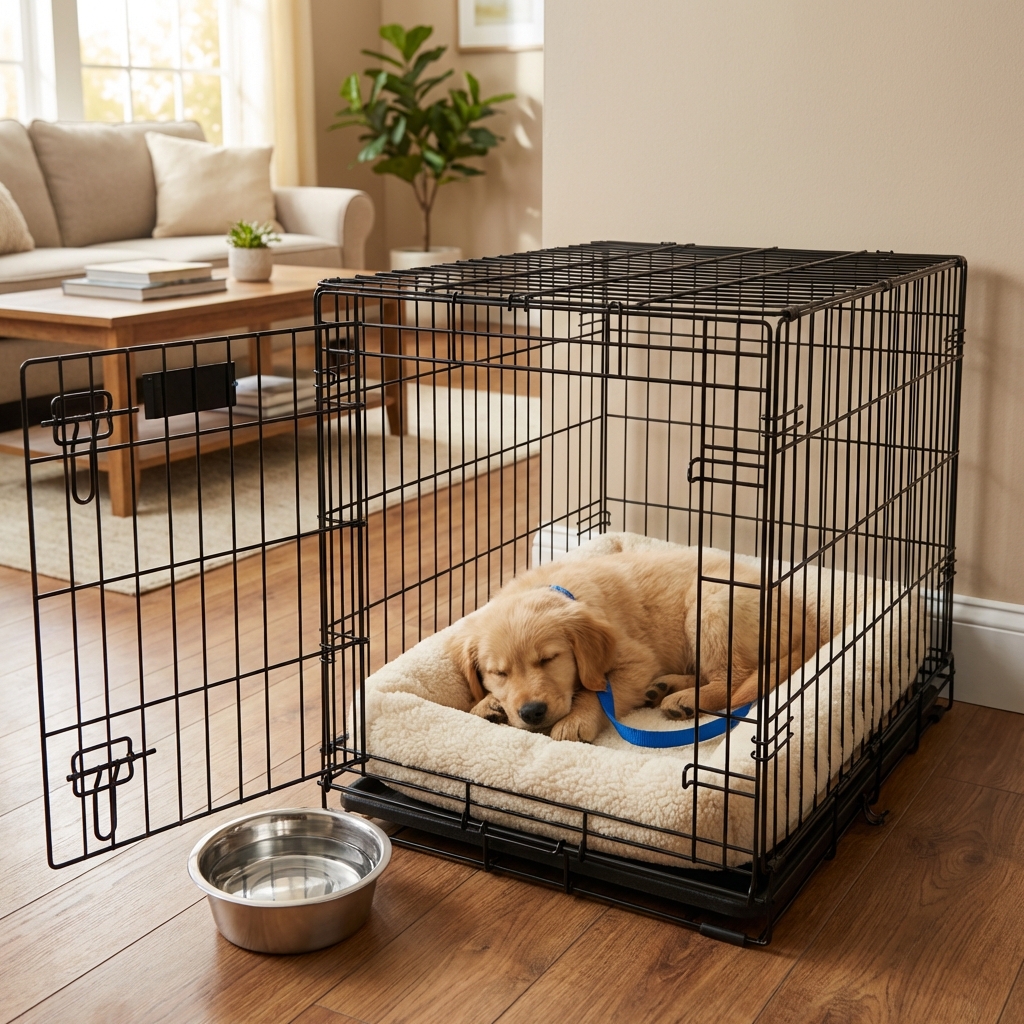
- Crate: Appropriately sized, just big enough to stand up, turn around, and lie down.
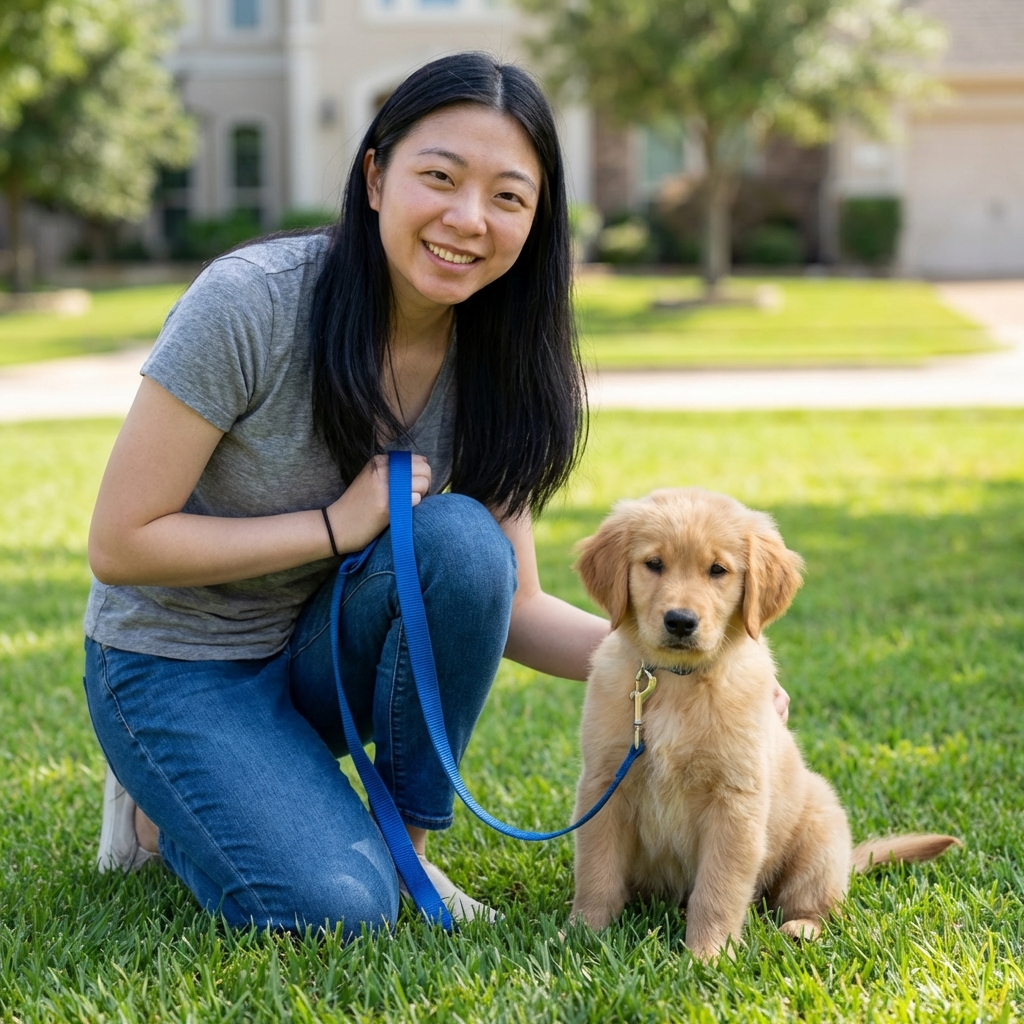
- Leash: A simple 4 to 6 foot leash for potty trips. Off-leash play comes after they go.
- Enzyme cleaner: Regular cleaners often leave trace odors. Enzymatic cleaners help break down odor-causing components so your puppy is less likely to return to the same spot. Avoid ammonia-based cleaners, since the smell can resemble urine.
- Treats: Small, soft, high-value rewards you can deliver immediately. “High-value” usually means something your puppy thinks is amazing, like tiny bits of chicken, cheese, or a favorite soft training treat. Keep portions small, and if rich treats cause loose stool, switch to something gentler.
The schedule that prevents accidents
Your puppy’s body is still developing. Most accidents happen because the puppy simply waited too long. Use this checklist of common “must go” times:
- Immediately after waking up
- Often within 5 to 30 minutes after eating (track your puppy’s pattern)
- After a big drink
- After playtime or zoomies
- After training sessions
- Before naps and bedtime
- Any time you see sniffing, circling, or suddenly wandering away
How often should you take them out?
A practical starting point for many puppies is every 30 to 60 minutes when they are awake, plus all the “must go” moments above. Younger puppies need more frequent trips.
Overnight is different. Many puppies can sleep longer if they are crated and the last potty break is right before bed. Expect nighttime potty trips at first, then gradually fewer as they mature.
The potty routine (the whole trick)
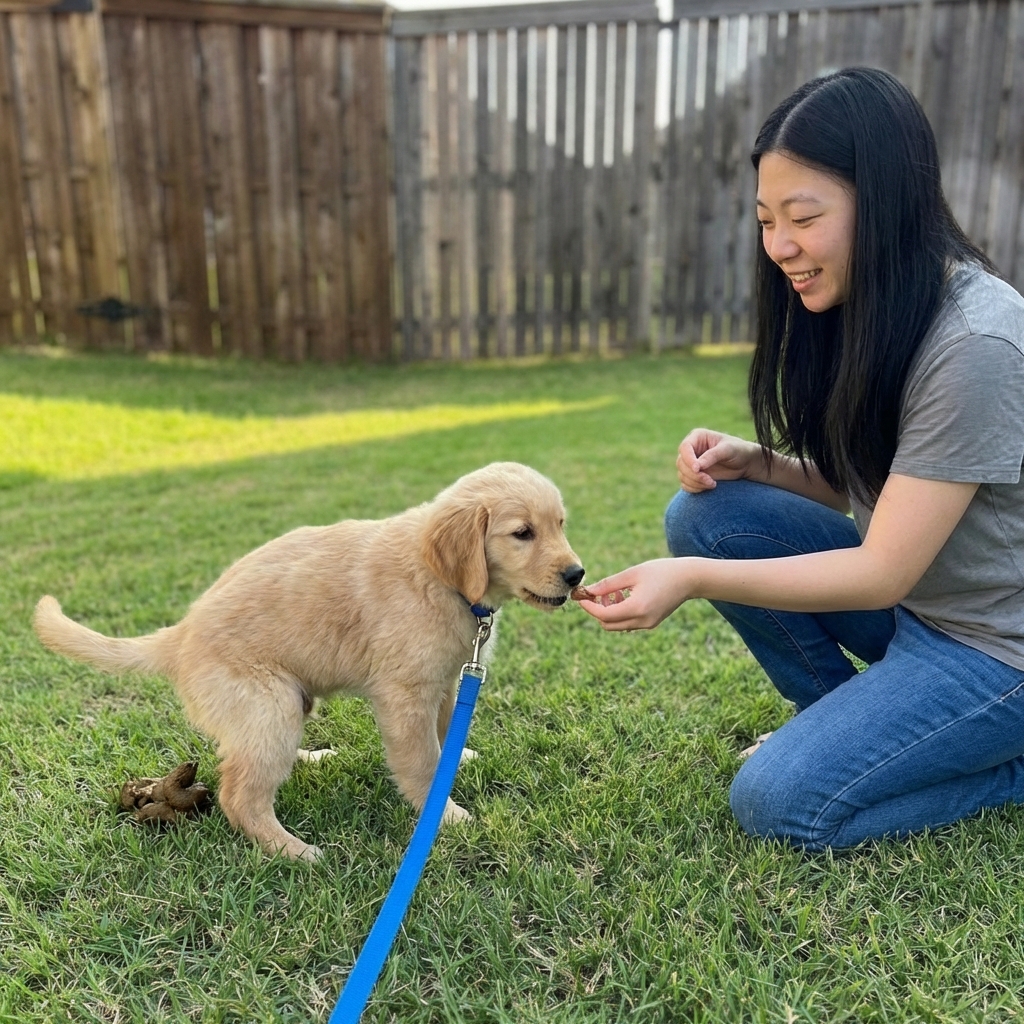
- Leash up and go to the potty spot. Keep it calm and boring.
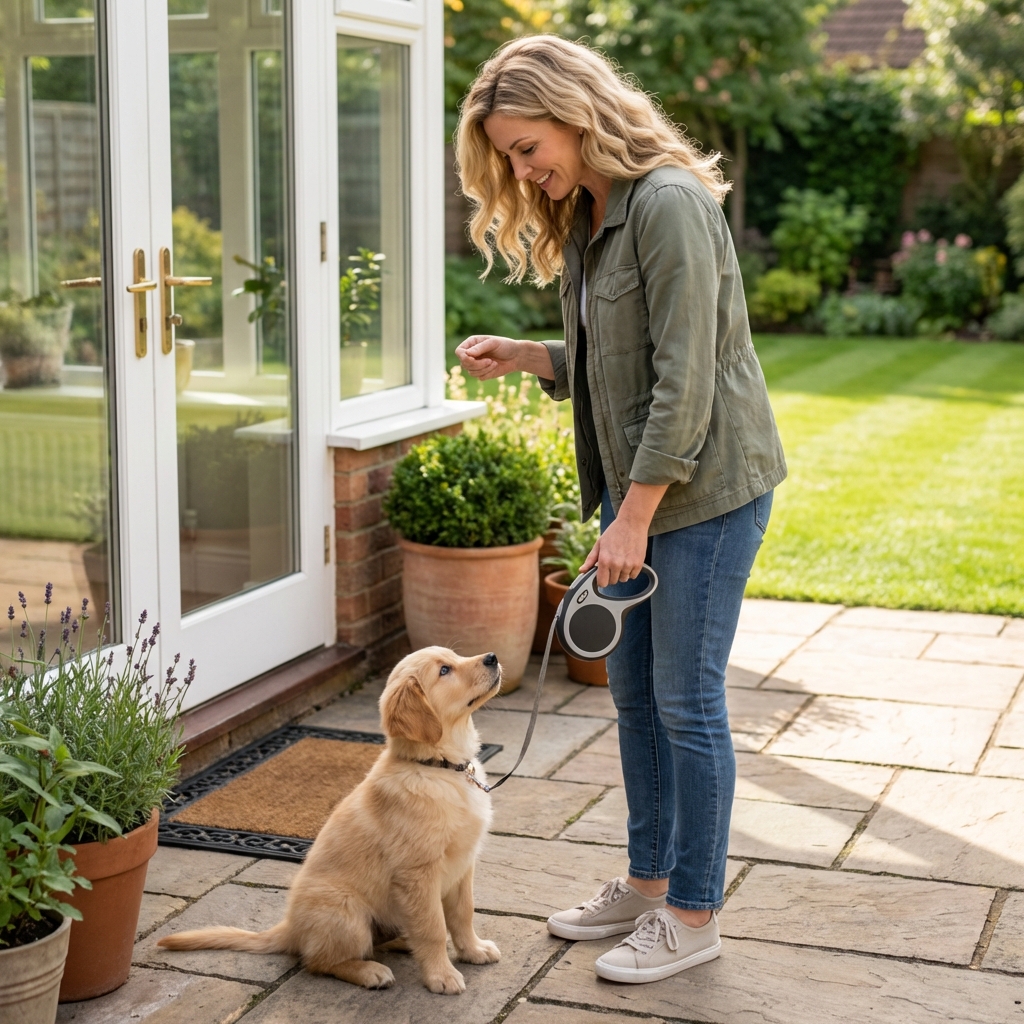
- Stand still and give a cue. Say something like “Go potty” once, in a friendly voice.
- Wait quietly for 3 to 5 minutes. Let them sniff. Avoid play or chatter.
- The moment they finish, reward. Within a couple seconds, say “Yes!” and give a treat. Then add praise and a short walk or play as a bonus.
- If they do not go, bring them in and supervise. Try again in 10 to 15 minutes, or sooner if they start sniffing.
This routine teaches your puppy that potty first unlocks everything fun.
Crate and confinement
Many puppies naturally avoid soiling where they sleep, but it is not universal. Very young pups, illness, stress, or puppies with a rough start may need extra patience and a tighter schedule. A crate is not a punishment. It is a safe, cozy management tool that helps prevent rehearsing accidents.
Crate basics
- Take your puppy out immediately after they come out of the crate.
- If your puppy cries, first confirm they have recently pottied, are not too hot, and are not in distress. Then keep responses calm and consistent.
- If the crate is too large, use a divider so your puppy cannot choose one corner as a bathroom.
When you cannot watch them
If you are cooking, on a work call, or distracted, use one of these options:
- Crate (great for building control)
- A small puppy-proof pen area with a bed and safe chew
- Leash tethered to you so you notice sniffing and circling early
Accidents (without slowing progress)
Accidents are information. They mean your puppy needed to go out sooner, had too much freedom, or you missed a signal. Here is the approach that keeps learning moving forward:
- If you catch them in the act: Calmly interrupt with a gentle “Oops,” pick them up or quickly leash them, and go outside to the potty spot. Reward if they finish outside.
- If you find it later: Do not scold. Puppies cannot connect your reaction to something that happened minutes ago. Clean thoroughly with an enzyme cleaner.
One more thing that matters: punishment can create sneaky potty behavior and anxiety. Calm, consistent management and rewards get you a faster, more confident learner.
Cleaning tip that matters
Soak the area per the enzyme cleaner directions and let it sit the full recommended time. Rushing this step is a common reason puppies keep revisiting the same indoor spot.
Teach a clear signal
Many puppies do not naturally “ask” to go out at first. You can teach a signal on purpose.
Option 1: Door sit
- Before every potty trip, walk to the door and ask for a sit.
- Clip the leash on, then open the door and go straight to the potty spot.
- Over time, your puppy starts offering the sit to make the door open.
Option 2: Potty bells
Bells can work beautifully, but they can also become a “ring for fun outside” button. To teach them:
- Hang bells by the door at nose level.
- Tap the bells with your hand and immediately open the door for a potty trip.
- When your puppy nudges the bells, reward with the door opening, not with treats at the door. Save treats for after they potty outside.
Safety note: Bells can increase door excitement. Help prevent door-dashing by leashing up before opening the door and teaching a simple “wait” at thresholds.
If bell ringing turns into constant requests to go outside just to play, keep trips short and boring. If they go, reward. If not, back inside.
Special situations
Apartment living and potty pads
If you must use pads, place them in one consistent location and treat pad training as a temporary step. The key is to avoid teaching “soft surfaces are toilets.” Keep pads away from rugs and blankets. When transitioning outdoors, move the pad closer to the door gradually, then outdoors if possible.
Bad weather days
Some puppies hate rain, wind, or cold. Keep potty trips short and calm. Consider a covered area, a small patch of turf, or a cleared spot in the yard. Reward extra generously when they succeed in tough conditions.
Small breeds
Tiny puppies have tiny bladders. They often need more frequent breaks and more management. This is not stubbornness. It is biology.
Multi-dog households
Take the puppy out alone for potty breaks at first. Older dogs can distract them from the goal.
Troubleshooting
“My puppy goes outside, then comes in and goes again.”
- Stay out a bit longer and give a second chance.
- Reward only after they finish. Sometimes puppies pause mid-stream if they get excited.
- Limit play until after they go.
“My puppy only goes when I look away.”
- Some puppies feel vulnerable. Turn slightly sideways, soften your posture, and stay quiet.
- Use a longer leash so they have a little space while you still supervise.
“We were doing great, then we regressed.”
- Check for changes in routine, schedule, or freedom in the house.
- Revisit management: more frequent breaks, more crate or pen time.
- Consider a vet check if there is increased urgency, accidents during sleep, blood in urine, or discomfort.
“My puppy eats poop.”
As unglamorous as it is, this is common. Pick up promptly, keep the yard clean, and ask your veterinarian about diet balance, parasites, and whether a supplement is appropriate. Management is your best friend here.
A simple 14-day plan
This 14-day plan builds a strong foundation. Some puppies are reliable quickly, but full maturity and consistency often take weeks to months depending on age, size, and history.
Days 1 to 3: Reset
- Potty trips every 30 to 60 minutes while awake
- Potty immediately after sleep, meals, water, play
- Crate or pen when you cannot supervise
- Reward every outdoor potty like it is the best thing ever
Days 4 to 7: Add the signal
- Teach door sit or bells before every potty trip
- Begin noting your puppy’s natural poop times and plan around them
- Continue close supervision indoors
Days 8 to 14: Add freedom slowly
- If you have 3 to 5 accident-free days, allow one small additional area of the house
- Keep the schedule consistent
- If an accident happens, reduce freedom again for a few days
Progress is rarely a straight line. Consistency beats intensity. A calm routine, repeated daily, is what creates a reliably house-trained dog.
When to call your veterinarian
House training should steadily improve. Contact your veterinarian promptly if you notice:
- Straining to urinate or defecate
- Blood in urine or stool
- Vomiting, diarrhea lasting more than 24 hours, or dehydration
- Increased thirst, increased urination, or accidents after being reliably trained
- Signs your puppy is in pain, significant discomfort, or has a major energy or appetite change
Sometimes the kindest, fastest “training fix” is treating an underlying medical issue.
Fridge checklist
- Same potty spot every time
- Leash on, boring trip, one cue
- Reward immediately after they finish
- Supervise or confine indoors
- Clean accidents with enzyme cleaner
- Increase freedom only after several accident-free days