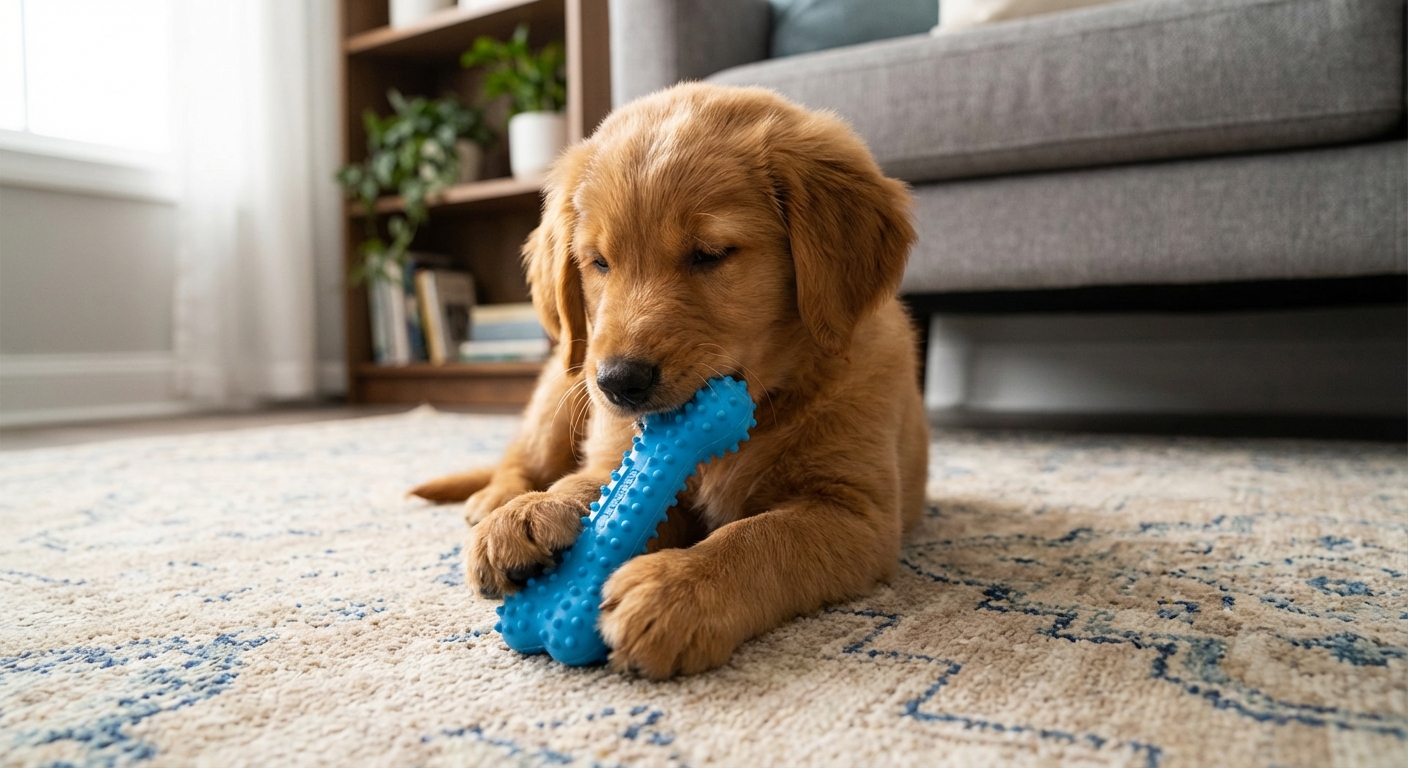
Puppy biting is usually normal. Learn why it happens and how to reduce it fast with redirects, reverse time-outs, calm breaks, naps, enrichment, and teething...
Article
•
Designer Mixes
How to Train a Puppy Not to Bite

Shari Shidate
Designer Mixes contributor
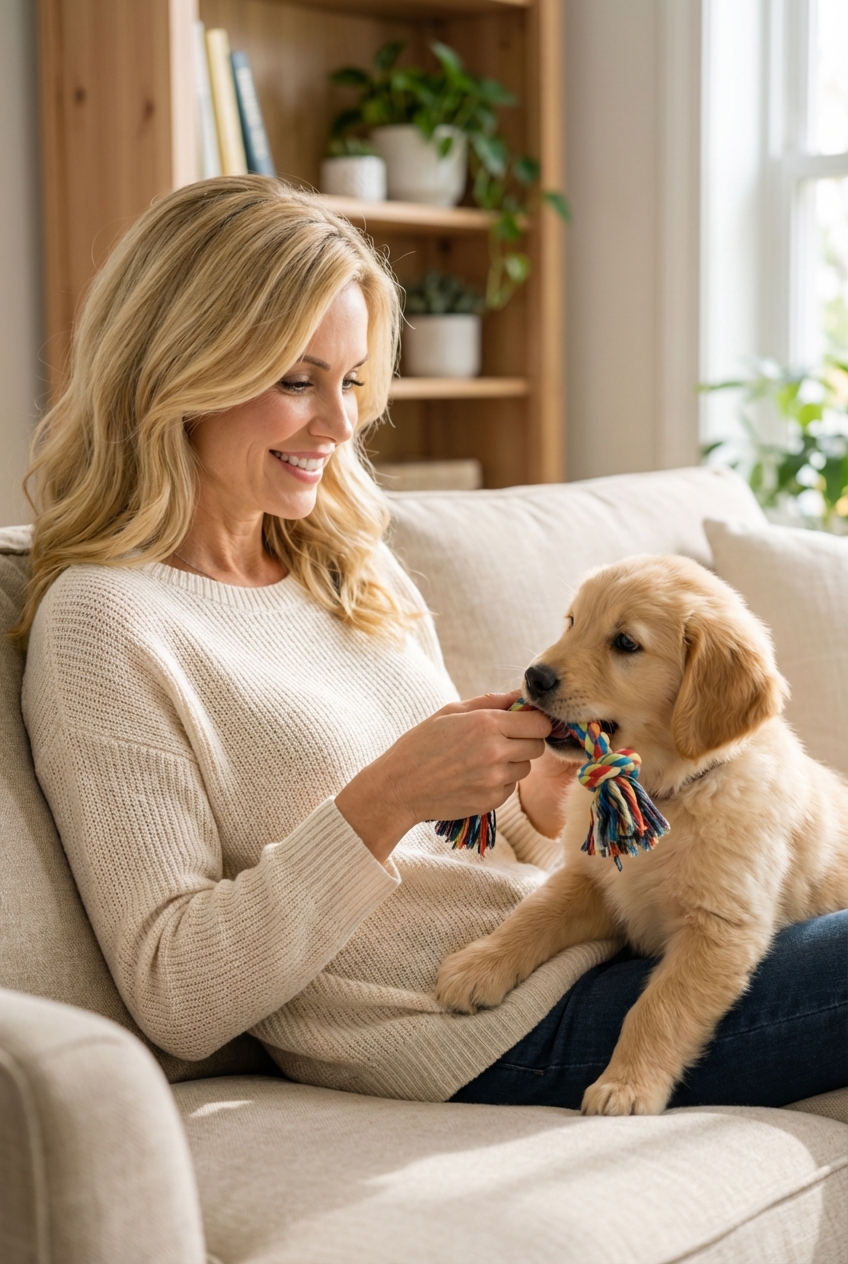
Puppy biting can feel personal, especially when those tiny teeth find your ankles, sleeves, and hands all day long. But in most cases, it is completely normal puppy behavior. Puppies explore with their mouths; they play by grabbing, and they are learning bite pressure the same way human toddlers learn how to use their hands.
As a veterinary assistant here in Frisco, Texas, I see families worry that biting means aggression. Usually it does not. What it means is: your puppy needs a clear plan, consistent practice, and enough rest and healthy outlets.
Why puppies bite
When we know the “why,” the training steps make a lot more sense.
- Teething and gum discomfort: Chewing often ramps up early (many puppies start around 8 to 12 weeks). Adult teeth typically erupt between about 12 to 24 weeks, and most puppies are done by around 6 months.
- Play behavior: Puppies wrestle and mouth each other constantly. Humans are slower, softer, and we often accidentally reward biting by squealing or moving fast.
- Overtired and overstimulated: Many bitey episodes happen when a puppy needs a nap, not more play.
- Attention seeking: If biting makes you talk, chase, wave hands, or give eye contact, some puppies learn it works.
- Herding breed ancestry: Dogs with herding breeds in their background may be more likely to nip at heels and moving legs.
What progress looks like
Your goal is not a puppy who never mouths. Your goal is a puppy who learns:
- Human skin ends play.
- Toys are always available and more rewarding.
- Calm behavior earns attention.
- Bites get softer and less frequent as weeks go by.
Most families notice improvement within 1 to 2 weeks of consistent practice, with major progress by adolescence if they stick with it.
The golden rule
Puppy bite training works best when you do two things every time:
- Redirect to an appropriate item.
- End the fun if teeth touch skin.
This is basic learning theory in plain language: behaviors that earn good outcomes repeat. Behaviors that make the good stuff stop fade over time.
Bite to toy routine
1) Stock “legal chewing” options
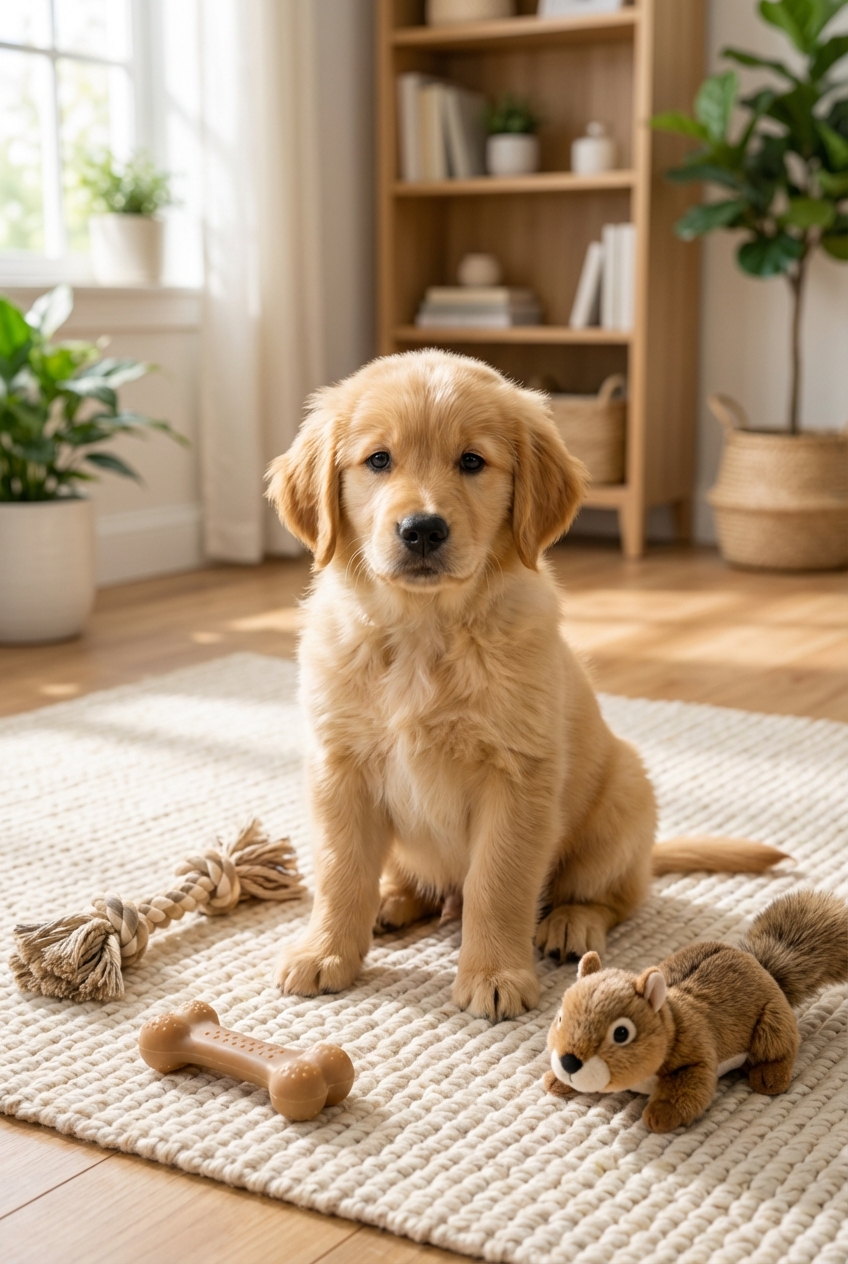
Keep toys in every room so you can redirect fast. Great options for many puppies include:
- Rubber chew toys (stuffable)
- Soft tug toys (for supervised play)
- Vet-recommended chew sticks or edible chews (size-appropriate, supervised)
- Frozen wet washcloth twisted and knotted (supervised)
Quick chew safety note: Skip cooked bones and very hard chews like antlers for many puppies because they can crack teeth. Choose options that are puppy-safe, the right size to prevent choking, and always supervise anything edible.
2) When teeth touch skin, get boring and still
Freeze your hands and stop movement for 1 to 2 seconds, then breathe and stay calm. Fast movement often triggers more grabbing.
3) If they grab clothing, do not tug back
Hold still like a statue, avoid pulling your sleeve or pant leg away, and calmly present a toy right at their mouth. The goal is to remove the chase game and make the toy the easy win.
4) Calmly redirect to a toy
Place the toy right in front of your puppy’s mouth and praise when they bite the toy instead.
5) If your puppy continues biting skin, end play for 20 to 60 seconds
Stand up, step behind a baby gate, or quietly leave the room. No scolding. No chase game. Just: fun stops.
6) Try again with a toy
Repeat. Puppies learn through repetition, not lectures.
Bite inhibition
In the real world, puppies usually learn in two phases:
- Phase 1: “Do not bite hard.”
- Phase 2: “Do not put teeth on people at all.”
With many puppies, it helps to reward gentler mouths early on instead of expecting perfect behavior overnight. If your puppy’s bites are already gentle, you can move straight to “teeth never touch skin.”
How to mark “too hard”
If the bite hurts, calmly use a brief, neutral marker like “Too bad” or “Oops” and end play for 20 to 60 seconds. Some puppies also respond to a quiet “ouch,” while others get more excited by higher-pitched sounds. Keep it low-key and consistent.
Use naps
One of the most overlooked reasons puppies bite is pure exhaustion. Many young puppies sleep a lot, often around 16 to 20 hours a day depending on age and the individual.
If biting ramps up in the evening or after a busy play session, try a calm nap routine:
- Potty break
- Short chew (stuffed toy) in a safe area
- Crate or pen nap for 60 to 120 minutes
When a puppy is rested, training works faster.
Common mistakes
- Waving hands away: movement triggers chasing and grabbing.
- High-pitched squealing: some puppies get more excited, not more gentle.
- Rough wrestling with hands: teaches that hands are toys.
- Physical punishment or “alpha” methods: can increase fear, anxiety, and defensive behavior.
- Inconsistent rules: if biting is sometimes allowed, it becomes harder to stop.
Puppies and kids
Kids move quickly and squeal, which can be extra exciting for a puppy. Safety and management matter here.
- Active supervision: an adult should be close enough to intervene immediately.
- Teach kids “be a tree”: stand still, arms crossed, look away.
- Use barriers: baby gates and pens prevent rehearsing the behavior.
- Give kids a job: tossing treats for calm sits, or gently rolling a ball, instead of hand play.

Teething support
You cannot train away gum discomfort, but you can meet it with healthy outlets.
- Chilled chews: cold can soothe inflamed gums.
- Short training games: mental work tires puppies without over-arousing them.
- Rotate toys: novelty keeps them interested in chewing the right things.
If your puppy is chewing everything, check your environment. Prevention is kindness. Keep shoes, remotes, and kids’ toys out of reach.
Quick games that help
Touch
Teach your puppy to boop your hand with their nose for a treat. This gives them a non-biting way to interact with hands.
Drop it
Tug is fine when it is structured. Teach “drop it,” reward the release, then restart the game. This builds impulse control.
Settle
Reward calm behavior on a bed or mat. A puppy who can relax is less likely to go into bitey overdrive.
Calm greetings
When your puppy chooses to sit, sniff, or lick instead of mouth, quietly reward that choice. The behaviors you pay for are the ones you get more of.
When biting is not normal
Most puppy biting is playful. But please reach out to your veterinarian or a qualified trainer if you notice:
- Growling or stiff body language around handling or being approached
- Biting that breaks skin frequently, leaves punctures, or escalates quickly
- Face bites, or bites directed at children
- Guarding behavior around food, toys, or resting spots
- Fearful reactions, hiding, or snapping when touched
- Sudden behavior change, especially with signs of pain (limping, yelping, not wanting to be picked up)
Pain, fear, and poor socialization can change the plan. Early help is truly the kindest choice.
Daily plan
If you want a clear routine, here is a realistic framework:
- Morning: potty, breakfast, 5 minutes of training, chew toy, nap
- Midday: potty, gentle play with toys, short walk or sniff time, nap
- Evening: potty, training game, calm enrichment (stuffed toy), nap or quiet time
Each bite incident becomes the same calm lesson: toy yes, skin no, then reset.
If you need extra support, a well-run puppy class can be a game changer for social skills, bite inhibition practice, and impulse control.
Bottom line
Your puppy is not “bad.” They are learning. With consistent redirection, short time-outs, good sleep, and safe chewing options, most puppies dramatically reduce biting as they mature.
Go slow, be patient, and keep it simple. A few clear rules practiced daily will get you there.