A practical, reward-based puppy training guide: week-one routine, house and crate training, nipping help, loose-leash basics, socialization, and the 5 cues t...
Article
•
Designer Mixes
How to Train a Puppy: Care Tips That Work

Shari Shidate
Designer Mixes contributor
Bringing home a puppy is equal parts joy and chaos. As a veterinary assistant here in Frisco, Texas, I see the same pattern over and over: the families who succeed are not the ones with “perfect” puppies. They are the ones with a simple plan, consistent routines, and training that feels kind and clear.
This guide will walk you through puppy training basics and daily care tips that support healthy development. I will keep it evidence-based, realistic, and doable for real life.
Start with the right mindset
Puppies are not being stubborn. Most “bad behavior” is normal puppy behavior: exploring with their mouths, learning bladder control, and figuring out how to live in a human home. Your goal is to teach skills, prevent mistakes, and reward what you like.
Training works best when it is short, frequent, and positive. Aim for 3 to 6 mini sessions a day that last 1 to 3 minutes each.
What to reward
- Choosing a chew toy instead of your hands
- All four paws on the floor
- Looking at you when you say their name
- Relaxing in a crate or pen
- Going potty outside
Puppy proofing
Management prevents rehearsing unwanted behavior. If a puppy practices something (like grabbing socks), they get better at it.
Quick home setup
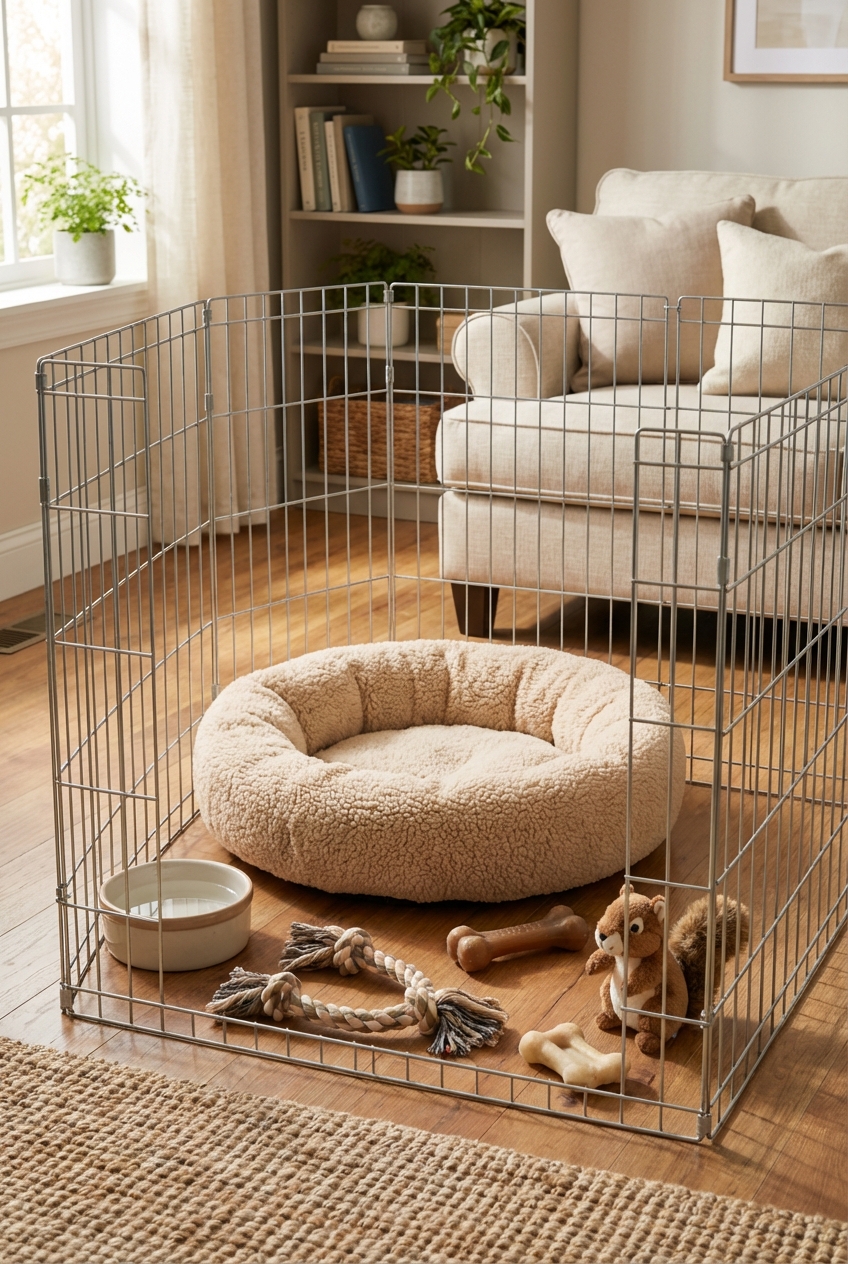
- Use baby gates to create a safe puppy zone.
- Keep trash, cords, shoes, kids’ toys, and laundry out of reach.
- Offer a mix of chew textures (rubber, nylon, soft plush) and rotate daily.
- Plan a confinement option: crate, playpen, or puppy-proof room.
House training that sticks
House training is mostly about timing, supervision, and rewards. Puppies do not generalize well, so consistency matters more than any single trick.
A simple potty schedule
- Immediately after waking
- After eating or drinking
- After playtime
- After training
- Before and after crating
- Every 1 to 2 hours for young puppies (adjust as they mature)
How to reward potty outside
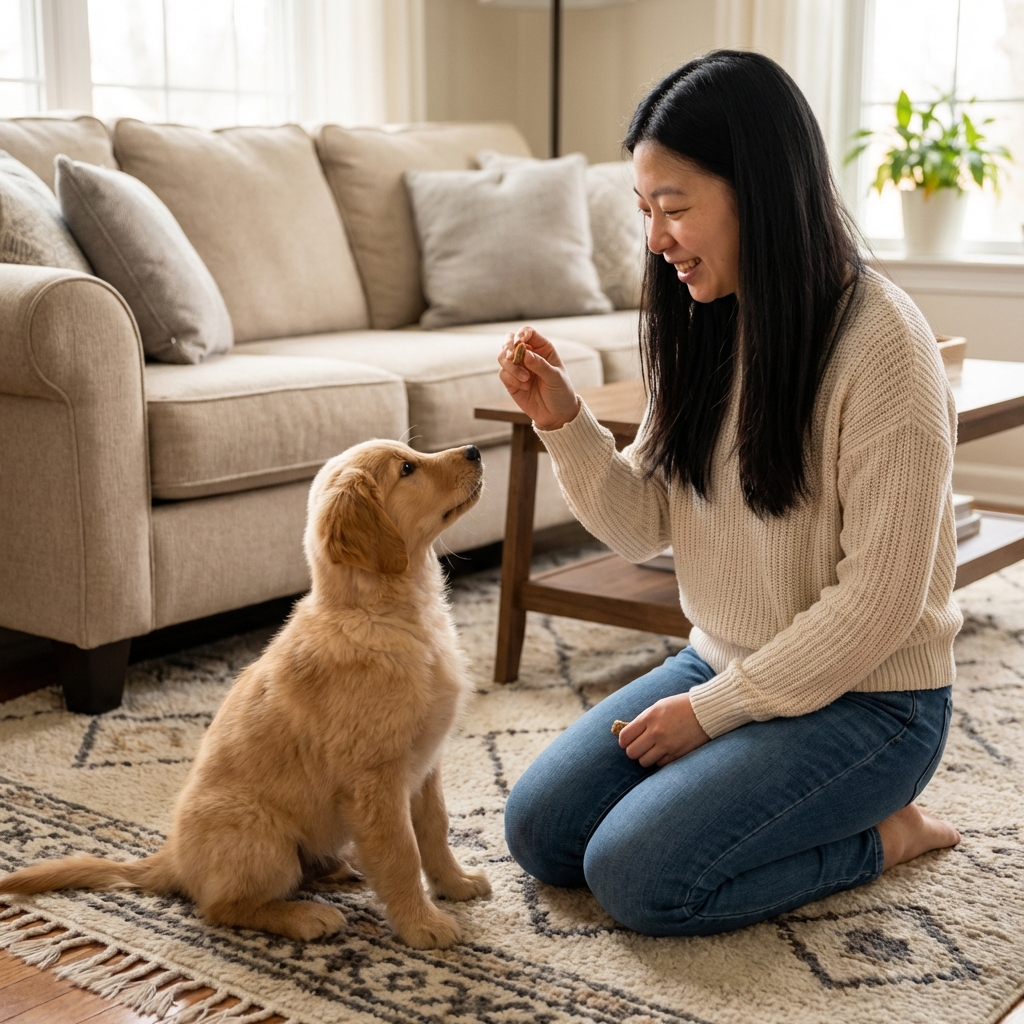
Bring treats with you. Immediately when they finish, say a happy marker like Yes (a short word that means “that’s it”) and give 2 to 3 tiny treats. Then allow a minute or two of sniffing or walking as a bonus. That “life reward” helps too.
If accidents happen
- Do not punish. It can create fear and sneaky potty behavior.
- Clean with an enzymatic cleaner, not just soap and water.
- Increase supervision and take them out more often for a few days.
Crate training and alone time
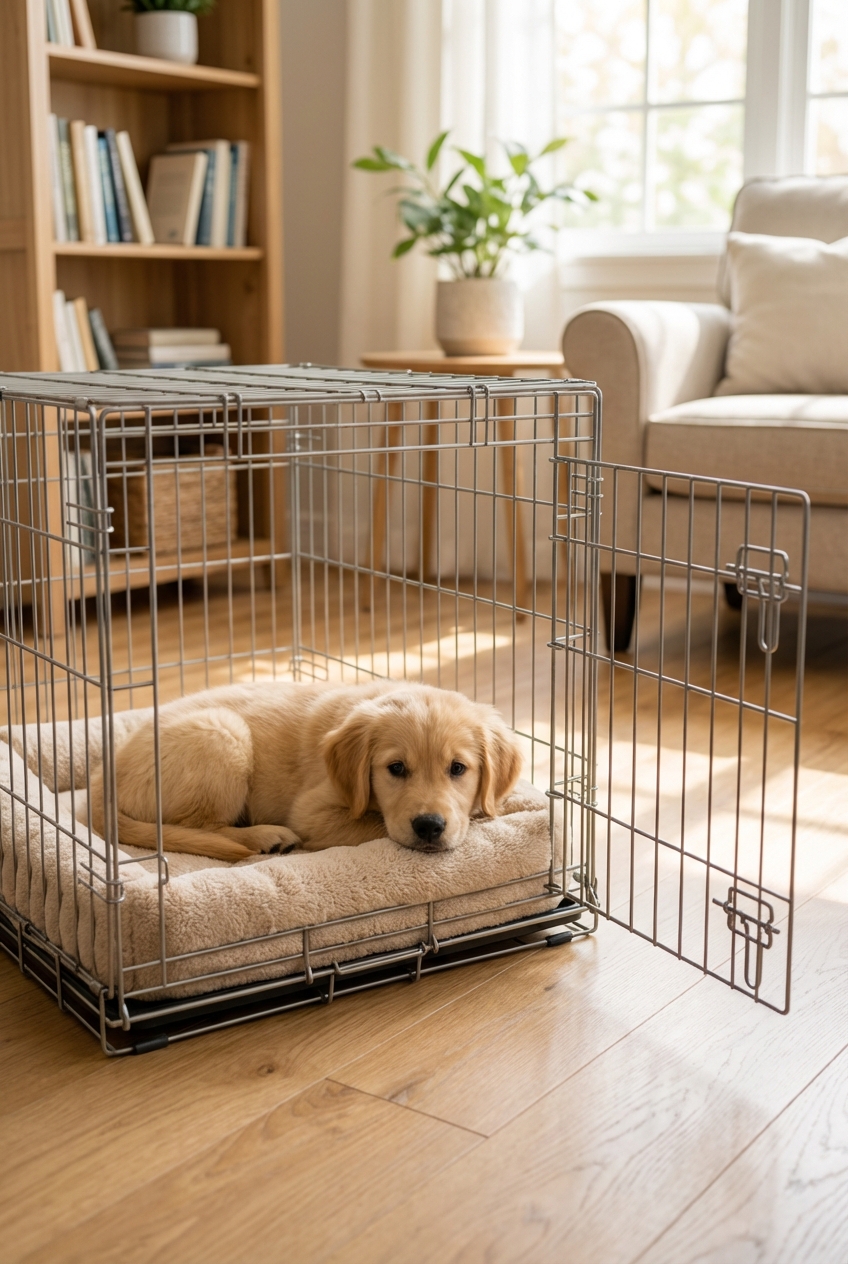
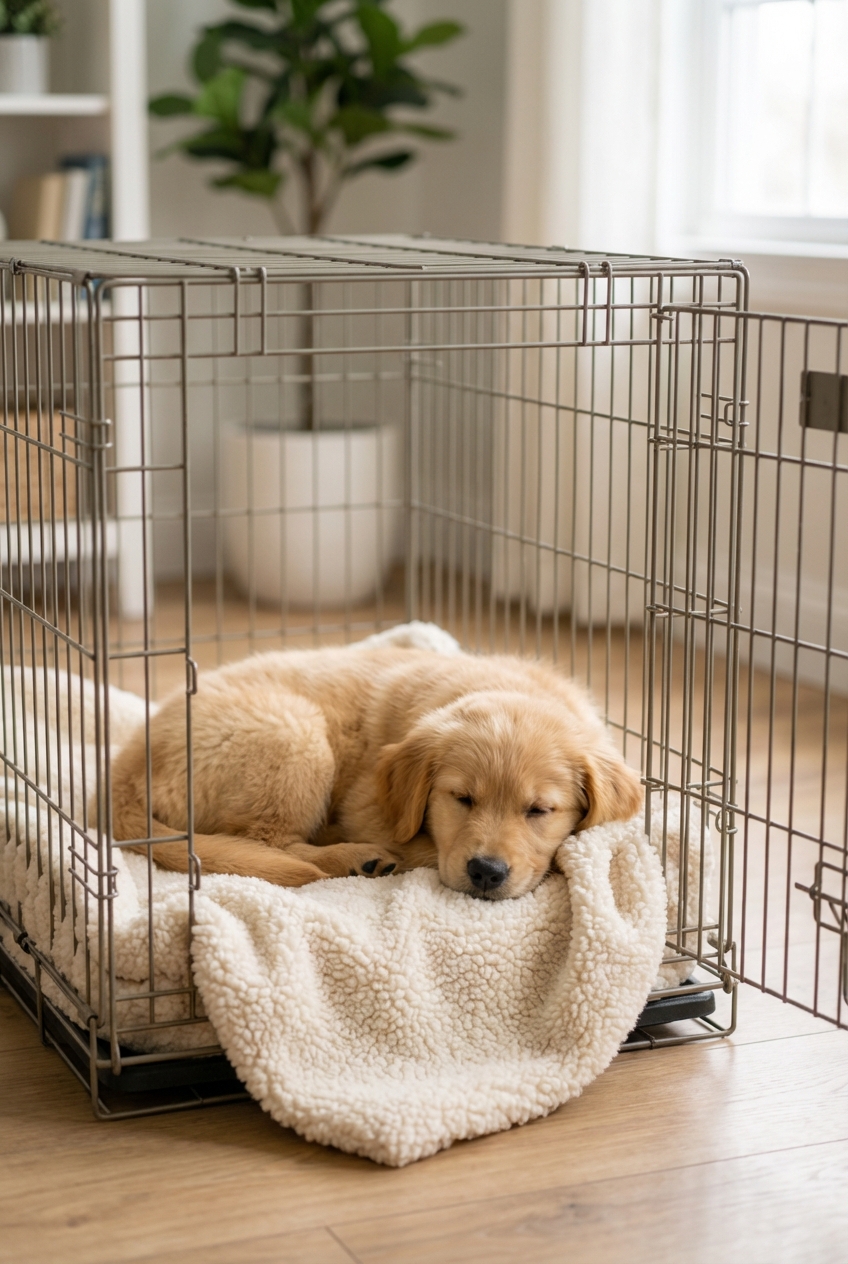
A crate can support house training, travel safety, and recovery after spay or neuter. The key is to build positive associations and avoid using it as a punishment.
Make the crate feel safe
- Feed meals in or near the crate.
- Toss treats in and let your puppy enter on their own.
- Offer a safe chew or food toy when you close the door.
- Start with short sessions while you are nearby.
How long is too long?
Every puppy is different. A common rule of thumb is one hour per month of age, plus one, but it is only a rough estimate. Many puppies need more frequent breaks, especially when awake, excited, or still learning the routine. Overnight can be longer for some, but daytime is usually tougher. If your schedule is tight, plan for a midday potty break, a pet sitter, or a trusted neighbor.
Bite inhibition
Mouthing is normal. Your job is to teach gentle mouths and redirect to appropriate chews.
What to do in the moment
- Keep a toy within reach. If teeth touch skin, calmly redirect to the toy.
- If the biting escalates, pause the fun: stand up, fold arms, and be boring for 5 to 10 seconds.
- If they are overtired, offer a nap in the crate or pen with a chew.
What not to do
- Avoid rough wrestling or hand games that encourage harder biting.
- Avoid yelling or physical corrections. They often increase arousal.
Teach key life skills
Basic cues are helpful, but life skills are what make a puppy easy to live with. Focus on these early.
Name game
Say your puppy’s name once. When they look at you, mark with Yes and treat. Repeat in different rooms. This builds attention fast.
Recall basics (come when called)
Start indoors. Crouch, clap softly, and say Come. When they arrive, reward with several treats in a row. Do not use recall for unpleasant things at first (like nail trims). Build trust.
Loose leash basics
Reward your puppy for being near you. In the beginning, it is not about distance. It is about position. If they pull, stop and wait for slack, then continue.
Settle on a mat
Place a small blanket on the floor. When your puppy steps on it, reward. Over time, reward calm behaviors on the mat like sitting and lying down. This becomes your “calm spot” during meals, movie nights, and guests.

Socialization and safety
Socialization is not just meeting dogs. It is gentle exposure to the world, paired with positive experiences. The goal is a confident, resilient adult dog.
What to include
- Different people: hats, beards, kids at a distance, people using walkers or wheelchairs
- Sounds: vacuum, doorbell, traffic, storms (low volume recordings can help)
- Surfaces: grass, tile, gravel, wet pavement
- Handling: paws, ears, mouth, brushing, gentle restraint
Health and vaccine safety
Ask your veterinarian about safe socialization options based on your puppy’s vaccine schedule and local risk (parvo risk can vary by area). Many clinics recommend controlled exposure: clean homes of healthy dogs, puppy classes that require vaccines, and avoiding high-traffic dog areas until fully vaccinated.
If you want one rule to remember: positive and optional. If your puppy is scared, increase distance and reward calm observation.
Chew safety
Chewing is a need, especially during teething. The goal is to make “legal chewing” easy and “dangerous chewing” hard.
- Supervise chews, especially new ones.
- Choose size-appropriate chews to lower choking risk.
- Avoid cooked bones and brittle chews that can splinter.
- If a chew is hard enough that you cannot dent it with a fingernail, it may be too hard for many puppies’ teeth.
Enrichment and exercise
Puppies need movement and mental work, but more is not always better. Overdoing it can create an overtired, bitey puppy and can be tough on growing bodies.
Good daily options
- Short “sniff walks” and exploration in safe areas
- Food puzzles, scatter feeding, and lick mats (supervised)
- Mini training sessions that teach simple skills and calm behaviors
- Play with you that includes breaks and cooldowns
If you have questions about safe exercise for your puppy’s breed and age, your veterinarian is a great place to start.
Nutrition and sleep
Training is harder when a puppy is hungry, overstimulated, or overtired.
Feeding tips that support learning
- Use part of meals as training rewards.
- Choose tiny treats to avoid tummy upset.
- Introduce new foods slowly, especially rich treats.
Sleep needs
Many puppies often sleep around 18 to 20 hours per day, but it varies by age and individual. If your puppy gets wild in the evening, it is often exhaustion, not attitude. A calm crate nap can be the kindest solution.
Common puppy problems
Jumping
Reward paws on the floor. Ask for a sit before greetings. If jumping happens, turn away and remove attention, then reward calm.
Chewing furniture
Manage access, offer legal chews, and rotate toys. If chewing increases, your puppy may need more naps, more enrichment, or a vet check for teething discomfort.
Barking in the crate
Confirm needs first (potty, water, comfort). Once needs are met, avoid “paying” for barking with attention. Instead, wait for a brief quiet moment, then calmly reward and release if appropriate. Build duration slowly, and aim to return before your puppy panics. Consider covering part of the crate and using white noise if outside sounds trigger barking.
Resource guarding (growling over food or toys)
Do not punish growling. Growling is communication. Avoid taking items by force. Trade up with high-value treats and contact a qualified professional early. Look for credentials like IAABC or CCPDT, or ask your veterinarian for a referral to a board-certified veterinary behaviorist if needed. This is very fixable when addressed promptly.
Vet care basics
Your puppy’s training plan works best when health care is on track. Follow your veterinarian’s guidance on vaccines and deworming, and ask about flea, tick, and heartworm prevention that fits your puppy and your area (in Texas, this matters year-round).
When to call your veterinarian
Training and health are connected. Please contact your vet if you notice:
- Vomiting or diarrhea that is persistent, bloody, or paired with lethargy
- Refusing to eat for more than 12 hours (or missing more than two meals), especially in young or small breed puppies
- Frequent straining to urinate, accidents that worsen suddenly, or signs of pain
- Coughing, nasal discharge, or breathing changes
- Itching, ear odor, hair loss, or recurrent skin infections
If something feels off, trust that instinct. It is always okay to ask.
A gentle 7-day starter plan
If you want structure, here is a simple week that builds momentum without overwhelm.
- Day 1: Set up puppy zone, start potty schedule, introduce crate with treats.
- Day 2: Name game, 3 mini training sessions, start chew toy rotation.
- Day 3: Begin “come” indoors, practice handling paws and ears with treats.
- Day 4: Leash practice in the yard, reward calm behavior, add a mat.
- Day 5: Low-risk socialization outing (carry if needed), new sounds at low volume.
- Day 6: Short alone-time practice, build crate duration with a food toy.
- Day 7: Review wins, adjust schedule, and keep what is working.
Remember, progress is not linear. Consistency beats intensity every time.