Bring home a kitten with confidence. Get vet-backed tips on kitten-proofing, nutrition, litter training, vaccines, grooming, play, stress, and safe pet intro...
Article
•
Designer Mixes
How to Train a Kitten

Shari Shidate
Designer Mixes contributor
Bringing home a kitten is pure joy, but it can also feel like you just adopted a tiny, fast athlete with opinions. The good news: kittens learn quickly when we set them up for success. From a veterinary assistant perspective, the “secret” is simple: reward the behaviors you want, prevent the ones you do not, and keep sessions short enough that your kitten stays confident.
This quick guide walks you through the highest-impact training wins: litter box skills, gentle play, scratching in the right place, carrier comfort, and a few basic cues. You do not need fancy equipment. You just need consistency, patience, and a few irresistible treats.
Before you start: basics
What motivates kittens
Kittens repeat what works for them. If pouncing on hands makes you squeal and move, that is “rewarding.” If using the scratching post gets praise and a treat, that becomes the new favorite. Your job is to make the right choice the easiest and most rewarding choice.
- Use positive reinforcement: treats, play, gentle praise, and attention.
- Avoid punishment: yelling, spraying water, and “rubbing their nose” can create fear and does not teach what to do instead.
- Keep training short: 1 to 3 minutes, 1 to 3 times a day is plenty for most kittens.
- Reward fast: deliver the treat within 1 to 2 seconds of the behavior.
One more thing that helps: think in “tiny wins.” You are building habits, not perfection in a day.
What you will need
- Small, soft treats (or tiny bits of cooked chicken)
- A wand toy (for safe, hands-free play)
- At least one sturdy scratching post and one horizontal scratcher
- A kitten-safe carrier
- Enzyme cleaner for accidents
- Optional: a clicker (helpful, not required)
Litter box first
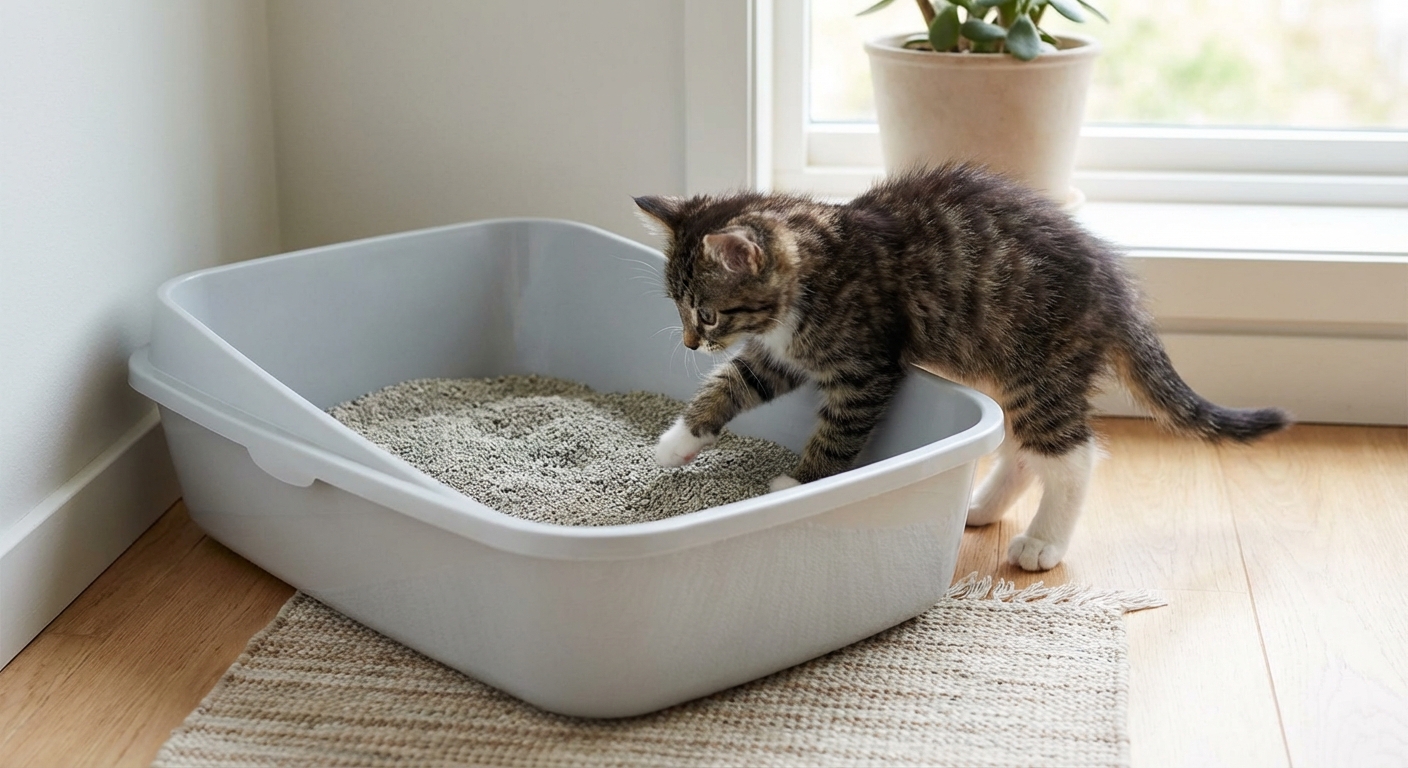
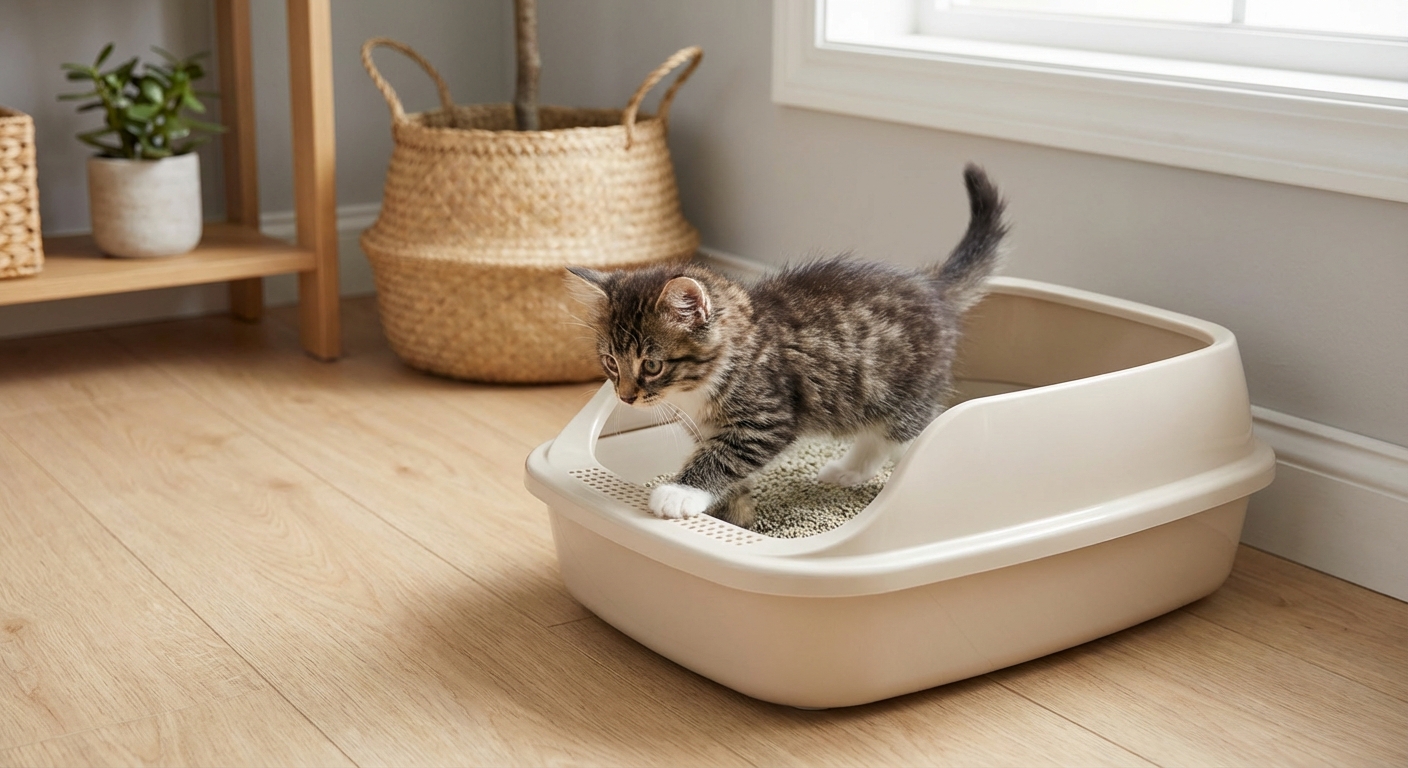
Litter box training usually happens quickly, but the environment matters. Many “accidents” are really a setup problem: the box is hard to find, not clean enough, or the kitten does not like the litter texture.
Setup that works
- Number of boxes: many behaviorists recommend one box per cat, plus one extra. In small homes, do your best and focus on easy access and cleanliness.
- Placement: quiet, easy to access, and not right next to food and water.
- Size and entry: choose a low-entry box for small kittens.
- Cleanliness: scoop at least once daily. Change litter regularly.
- Litter choice: many kittens do well with an unscented, fine-grain litter. If your kitten is very young or still mouthy and likely to taste litter, ask your vet what is safest. Some clumping litters can be a concern if eaten.
How to teach it
For the first week, make the routine predictable.
- Place your kitten in the box after meals, after naps, and after energetic play.
- If they use it, quietly praise and offer a tiny treat when they step out.
- If you see them sniffing and circling elsewhere, gently pick them up and place them in the box.
If an accident happens
Stay calm. Clean the area with an enzyme cleaner to remove odor cues. Skip ammonia-based cleaners since the smell can be similar to urine for pets, and you do not want to “suggest” that spot again. If accidents repeat, consider a vet visit to rule out medical causes, especially if you notice straining, blood in urine, frequent small pees, or crying.
Gentle play and biting
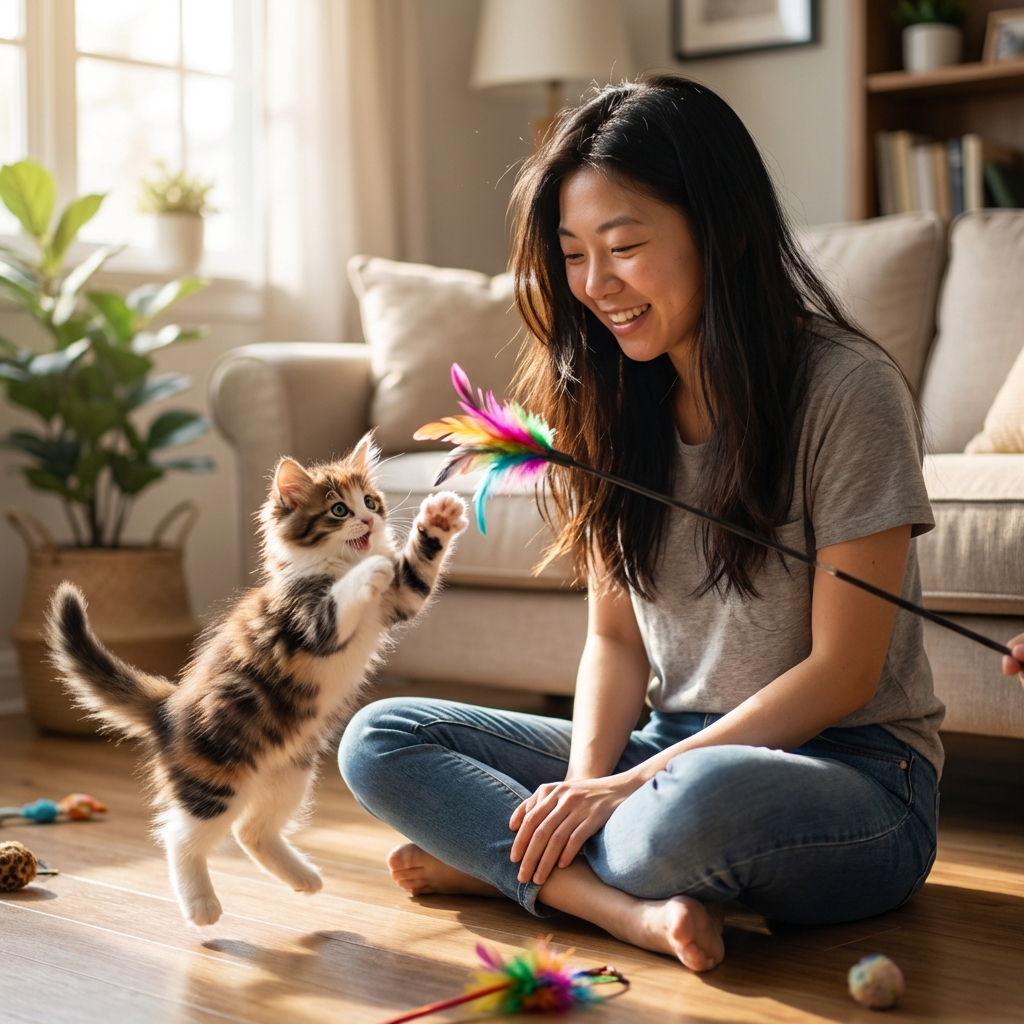
Kittens are built to stalk, chase, and grab. Biting and bunny-kicking is normal play, but we want that directed toward toys, not skin. This is one of the biggest quality-of-life trainings you will do.
Hands are not toys
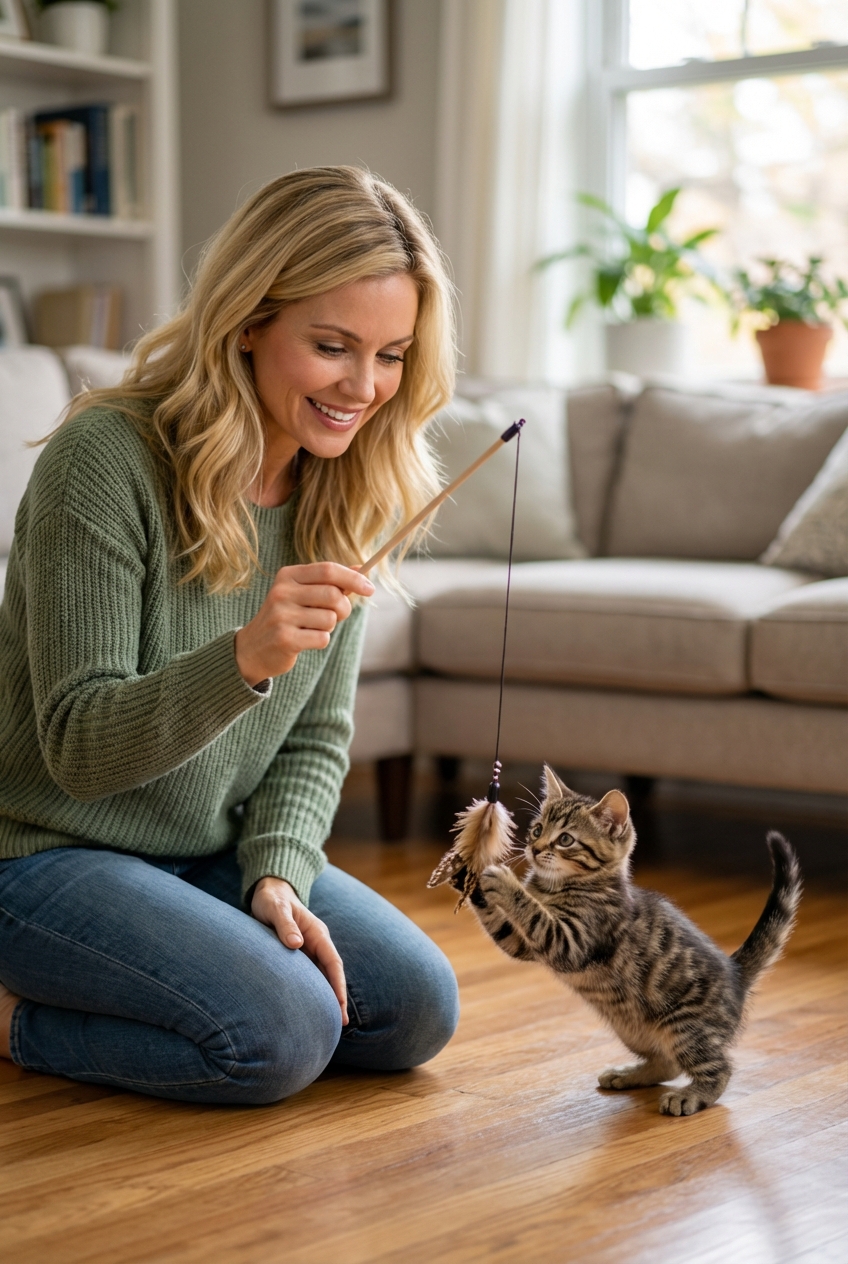
- Use wand toys, kicker toys, and balls for chasing.
- If your kitten grabs your hand, do not yank away fast. That triggers more hunting behavior.
- Instead, go still, calmly say “ouch” or “too bad,” then redirect to a toy.
- If they keep biting, end play for 30 to 60 seconds. This teaches that rough play makes the fun stop.
Kid safety note: coach children to play with wand toys and to avoid squealing, running, or using fingers under blankets. Those are classic kitten “attack” invitations.
Build a play routine
Aim for 2 to 4 play sessions daily, especially in the evening when many kittens get zoomy. A short hunt-play cycle followed by a meal is incredibly helpful because it matches natural cat behavior: hunt, catch, eat, groom, rest.
If you need more calm in the house, add enrichment, not more scolding. Puzzle feeders, a cat tree or shelves for climbing, and a predictable play schedule prevent a lot of “problem behaviors” before they start.
Scratching in the right place
Scratching is not bad behavior. It is a normal need for claw maintenance, stretching, and scent marking. The goal is to give a better scratching option than your couch.
Make scratchers irresistible
- Stability matters: if the post wobbles, many kittens will avoid it.
- Offer both styles: one tall vertical post and one horizontal scratcher.
- Location matters: place scratchers near sleeping areas and near the furniture they already target.
- Reward use: praise and treat when you see scratching on the right surface.
When they scratch furniture
- Gently interrupt (a clap or a cheerful “ah-ah” can work), then guide them to the scratcher.
- Reward immediately when they scratch the correct surface.
- Temporarily protect furniture with double-sided tape or a furniture cover while training.
Veterinary note: regular nail trims help reduce damage and keep claws comfortable. In the clinic, we see the best results when people start paw handling early and trim just a tiny bit at a time. Ask your vet team to show you how to trim safely.
Carrier training
If you only bring out the carrier for vet visits, many cats learn to hate it. Carrier training is one of the best gifts you can give your kitten because it lowers stress for travel, emergencies, and routine care.
Make it part of home
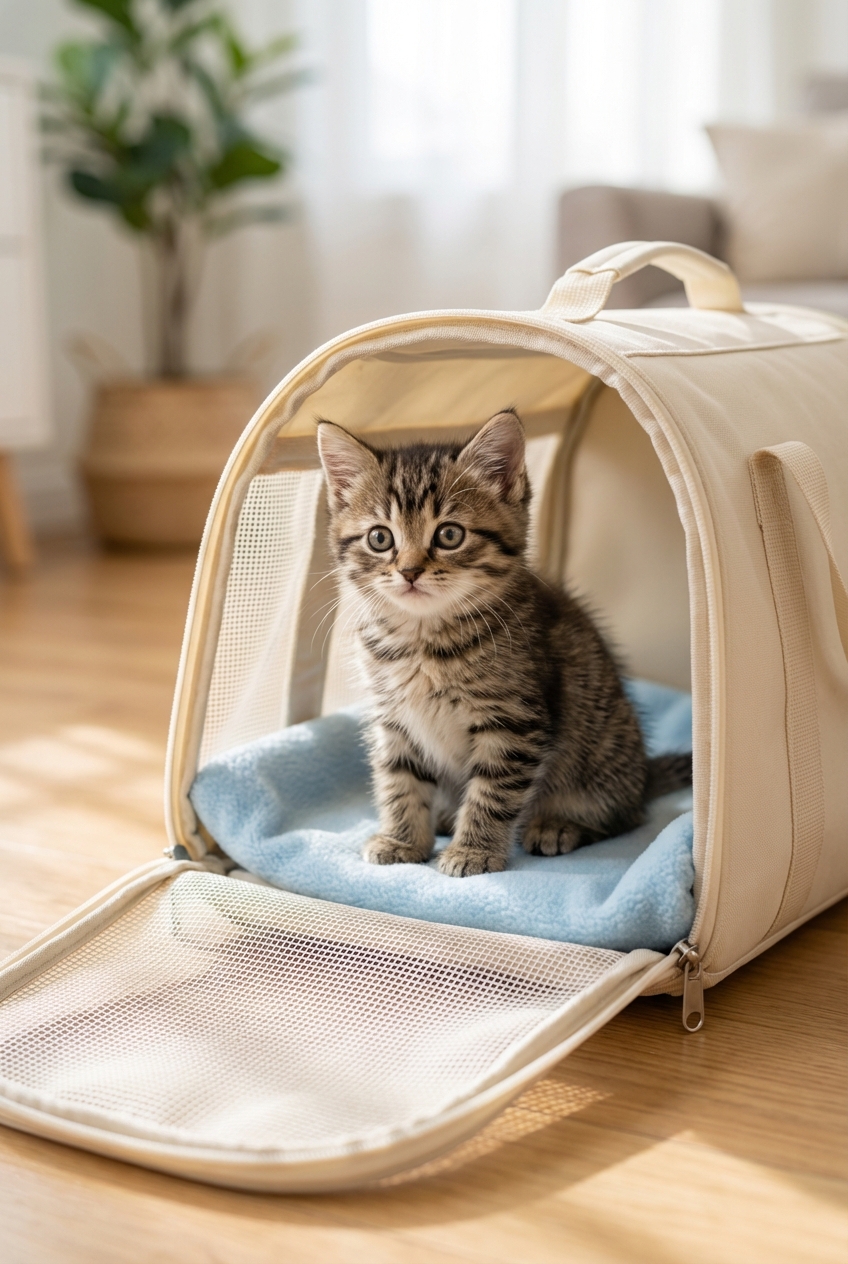
- Leave the carrier out with the door open.
- Add a soft blanket that smells like home.
- Toss treats inside daily, even when you are not going anywhere.
- Feed a few meals near the carrier, then just inside it, then deeper inside over time.
Clinic tip: the most common carrier mistake we see is only using it on “bad days.” Make it a normal hangout spot and you will thank yourself later.
Practice tiny steps
Once your kitten walks in willingly, briefly close the door, treat, then open. Later, pick up the carrier, treat, then set it down. If your kitten stays relaxed, you can work up to stepping outside, sitting in the car without driving, then a very short drive. Go at your kitten’s comfort level. If they stress, back up a step and make it easier.
Easy cues
Cats can learn cues very well, but training has to be worth their time. Keep it low-pressure and expect that kittens may generalize slowly from one room to another. That is normal.
Teach their name
- Say their name once, in a happy tone.
- When they look at you, give a treat.
- Repeat 5 times, then stop. Do this a couple times a day.
Teach “come”
- Start close by. Say “come” or use a unique sound (like a kissy noise).
- Step backward and reward when they move toward you.
- Gradually increase distance and practice in different rooms.
Teach “sit”
- Hold a treat just above your kitten’s nose and slowly move it back.
- As their head tilts up, their bottom often lowers naturally.
- The moment they sit, say “yes” and treat.
Socialization and handling
The early months matter. Gentle, positive exposure helps kittens grow into cats who tolerate nail trims, vet exams, and visitors with less stress.
Socialization window
The most sensitive socialization period is often described as roughly 2 to 7 (sometimes up to 9) weeks of age, but learning continues beyond that. If your kitten is older, do not worry. Just go slower, keep it positive, and avoid flooding them with too much at once. If they freeze, crouch low, hiss, or try to flee, that is your cue to back up a step.
Daily handling goals
- Touch paws briefly, treat.
- Lift lips for a quick look at teeth, treat.
- Rub ears gently, treat.
- Brush once or twice, treat.
New experiences, slowly
Let your kitten explore new rooms, safe visitors, and everyday sounds at their pace. Pair novelty with treats and play. Confidence is built through many small “this is safe” moments.
Common mistakes
- Inconsistent rules: if biting is “cute” sometimes, it will continue.
- Too-long sessions: end while your kitten is still engaged.
- Not enough enrichment: bored kittens create their own entertainment, often your curtains.
- Waiting to trim nails: start gentle paw handling early.
- Using punishment: it can increase fear, hiding, and even aggression.
When to call your vet
Training should be a confidence builder. If something feels off, trust your instincts.
- Repeated litter box accidents after a week of good setup
- Straining to pee or poop, crying in the box, blood in urine or stool
- Sudden behavior changes, hiding, decreased appetite, or low energy
- Biting that seems fear-based or escalates despite gentle redirection
Progress with kittens is rarely perfectly linear. Aim for small improvements, celebrate the wins, and keep the environment working in your favor.
Start this week
- Set up the litter box so it is easy to find and easy to love.
- Schedule 2 short play sessions a day and end with a snack or meal.
- Place a scratcher near the “favorite” furniture spot and reward every win.
- Leave the carrier out and toss treats inside daily.
- Do 60 seconds of gentle handling with treats.