Teach “roll over” the stress-free way with tiny steps: down, shoulder dip, side, then full roll. Includes timing tips, cue training, troubleshooting, and...
Article
•
Designer Mixes
How to Train a Dog to Roll Over

Shari Shidate
Designer Mixes contributor
Teaching “roll over” is one of those classic tricks that looks impressive, but it is really a series of small, friendly steps. If you keep sessions short, use the right rewards, and let your dog move at their own pace, most pups can learn it with confidence.
As a veterinary assistant, I also like this trick because, for some dogs, it can help them practice gentle body awareness and flexibility when taught correctly. The key is comfort, and every dog is different. If your dog seems stiff, nervous, or sore, choose an easier trick and check in with your veterinarian.
Before you start
Best dogs to teach first
Roll over is easiest for dogs who already know:
- Sit
- Down
- Hand target (touch) and comfort following a lure
Puppies can learn it too, but keep it gentle. Senior dogs, dogs with long backs (like Dachshunds or Corgis), or dogs with arthritis may find rolling uncomfortable. In those cases, consider teaching “play dead” without the full roll, or “side” (lying on one hip) as a safer option.
When to skip roll over
Choose a different trick (and ask your veterinarian if you are unsure) if your dog has:
- Recent surgery or is on exercise restriction
- Known spine disease or a history of back injury
- New limping, stiffness, or pain
- Severe obesity or limited mobility without veterinary guidance
Supplies that make training smoother
- Soft training treats (pea sized, easy to chew)
- A non-slip surface like carpet, a yoga mat, or a bath mat
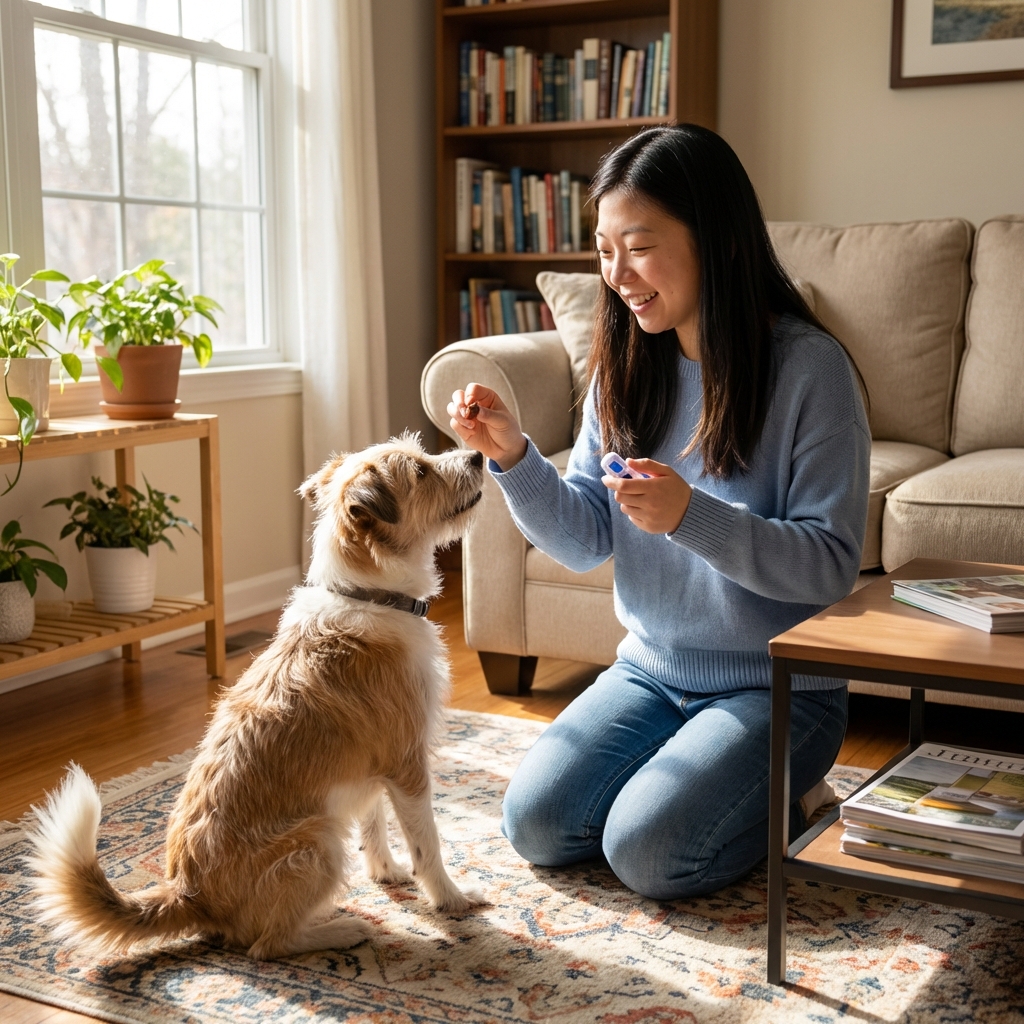
- A clicker (optional, but helpful)
- 2 to 5 minutes of quiet time with minimal distractions
If you do not use a clicker, a cheerful marker word like “Yes!” works great. Say it the instant your dog does the thing you want, then give the treat.
Step-by-step: teach roll over with a lure
This method uses a treat to guide your dog’s body into the movement. Move slowly, reward often, and stop before your dog gets frustrated.
Step 1: Start in a comfortable down
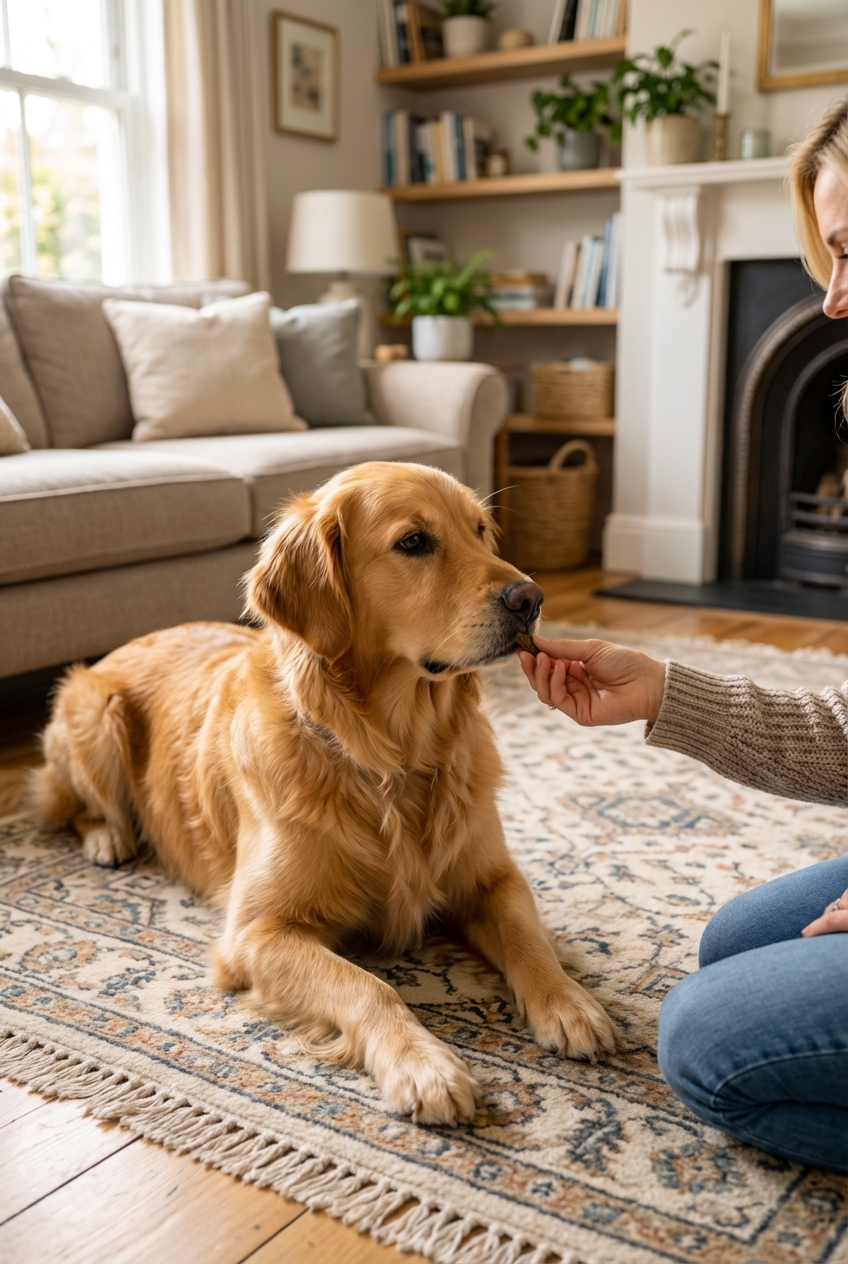
Ask for Down. Reward. Take a breath. Your dog should look relaxed, not tense.
Step 2: Lure nose to shoulder
Hold a treat at your dog’s nose, then slowly move it toward their shoulder (like you are drawing a small line from nose to shoulder). Many dogs will follow the treat and tip onto one hip.
Mark and reward the moment your dog’s shoulder begins to drop. If you are using a clicker, click as soon as the body starts to turn.
Step 3: Reward the side
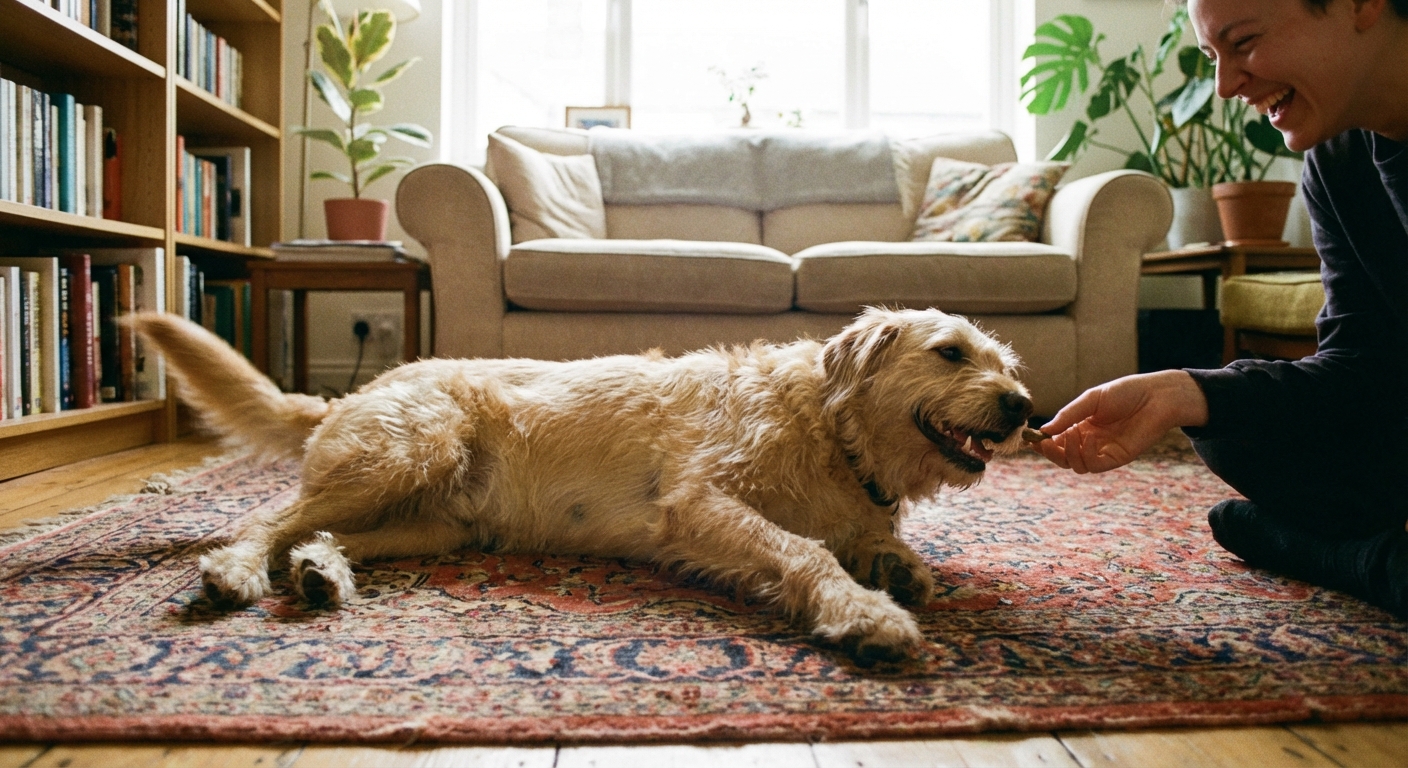
Many dogs get stuck here at first, and that is totally normal. If your dog lies fully on their side, celebrate it.
- Mark and reward for lying on the side.
- Reset gently back to Down.
- Repeat 3 to 5 times.
Tip: If your dog pops back up, you are moving too fast. Make the lure slower and reward smaller steps.
Step 4: Lure up and over
Once your dog happily lies on their side, guide their nose in a smooth arc up and over (from shoulder toward the ceiling, then slightly toward their back). Think: nose follows the treat, head tilts back, shoulders and hips follow.
Reward any extra movement in the right direction, even if it is just a tiny shoulder wiggle.
Step 5: Finish the roll
As your dog begins to complete the movement, continue the arc so they roll back onto their belly. The second they complete the roll, mark and reward.
At first, you can reward multiple times during one roll to keep your dog engaged, for example: treat for side, treat for halfway, treat for completing the roll.
If your dog will not complete the roll
Break it down even more and raise your reward rate for the smallest tries:
- Reward a head turn toward the shoulder.
- Then reward a shoulder drop.
- Then reward a hip shift or a tiny scoot of the back legs.
- Then reward a half roll (side) before asking for more.
If your dog seems stuck, try changing the surface (a mat helps), using a higher value treat, or practicing on the easier side first.
Add the cue word and hand signal
Only add the cue once your dog is rolling smoothly with the lure most of the time. Otherwise, the cue becomes background noise.
How to add “Roll over”
- Say “Roll over” one time in a cheerful voice.
- Pause briefly.
- Do your same lure motion.
- Mark and reward after the roll.
After a few short sessions, begin to fade the lure by using an empty hand that makes the same motion, then reward from your other hand or pocket.
Keep your cue consistent
Pick one cue and stick with it: “Roll over” or “Roll.” If your whole household uses different words, your dog will take longer to understand what you mean.
Optional: teach both directions
Many dogs have a preferred side. That is fine. Train the easier direction first, then teach the other direction as a separate skill. If you want, you can even use two cues like “Roll” and “Other way.”
Common problems and easy fixes
My dog will not lie on their side
- Use a softer surface like carpet or a mat.
- Try a higher value treat like small bits of chicken or freeze-dried liver.
- Reward earlier, even for a head turn or hip shift.
My dog jumps up to get the treat
- Hold the treat right at nose level.
- Slow your movement down.
- Practice “Down” and reward calm staying first.
My dog rolls the wrong direction
That is okay. Many dogs have a preferred side. Train the easier side first, then later you can teach the other side as a separate skill.
My dog seems uncomfortable
Stop and choose a different trick. If your dog is overweight, older, or has a history of back, hip, or knee issues, rolling can be physically challenging. When in doubt, check with your veterinarian, especially if you notice limping, stiffness, or sensitivity when touched.
Training tips are not a substitute for medical advice. If something looks painful, it is worth getting it checked out.
How long does it take?
Many dogs can learn the basics within a few days to two weeks, but it depends on your dog’s age, motivation, prior training, and comfort rolling on that surface.
A simple plan that works well:
- 1 to 2 sessions per day
- 2 to 5 minutes per session
- Aim for 10 to 20 tiny rewards (or more at first), so your dog gets paid often for small steps
Make it fun and keep it safe
Roll over should feel like a game, not a wrestling match. Avoid pushing your dog into position. Let them choose the movement, then pay them well for it.
- Train after a short walk when your dog is calmer.
- Use tiny treats to protect your dog’s daily calorie needs.
- End on a win, even if the win is just a great “Down.”
Once your dog has roll over mastered, you can build on it with fun variations like “roll over both ways” or “roll over then sit.” Those little challenges keep their brain busy and strengthen your bond.