Want faster potty training? Use a consistent schedule, one potty spot, crate management, and a simple 5-minute routine. Includes accident fixes, nighttime ti...
Article
•
Designer Mixes
How to Train a Dog to Pee Outside

Shari Shidate
Designer Mixes contributor
House training is one of the first big “can we do this?” moments with a new dog. I promise you can. Most potty training problems are not stubbornness. They are usually a timing issue, a communication issue, or a routine that is not consistent yet.
In my work as a veterinary assistant, I also want you to know this: if your dog is truly struggling despite good training, there may be a medical reason. We will cover the training basics first, then the health and behavior red flags to watch for.
Quick note: This guide is educational and not a substitute for veterinary care. If your dog cannot urinate, seems painful, is very lethargic, or you see a lot of blood in the urine, seek veterinary care right away.
Start with the right mindset
Potty training works best when you treat it like a simple, repeatable system. Your dog learns through consistency, prevention, and immediate rewards.
- Consistency: same door, same spot, same words.
- Prevention: fewer chances to make a mistake indoors.
- Immediate reinforcement: reward right after the pee or poop happens outside.
If you only take one thing from this article, let it be this: the more often your dog pottys outside successfully, the faster this clicks.
Set up your potty routine
How often to go out
Most dogs need more potty breaks than we expect during training. Use this schedule as a starting point:
- First thing in the morning
- After every meal (often within 5 to 30 minutes)
- After drinking a lot of water
- After playtime
- After waking up from naps
- Before bed
- Every 1 to 2 hours during the day in early training, especially for puppies
Puppy rule of thumb: many puppies can hold it about 1 hour per month of age, up to a point, but there is a lot of variation. Some puppies cannot hold it that long, especially when awake, active, or stressed. A 3-month-old may only manage about 3 hours. This is not a moral failing. It is biology.
Pick one potty spot
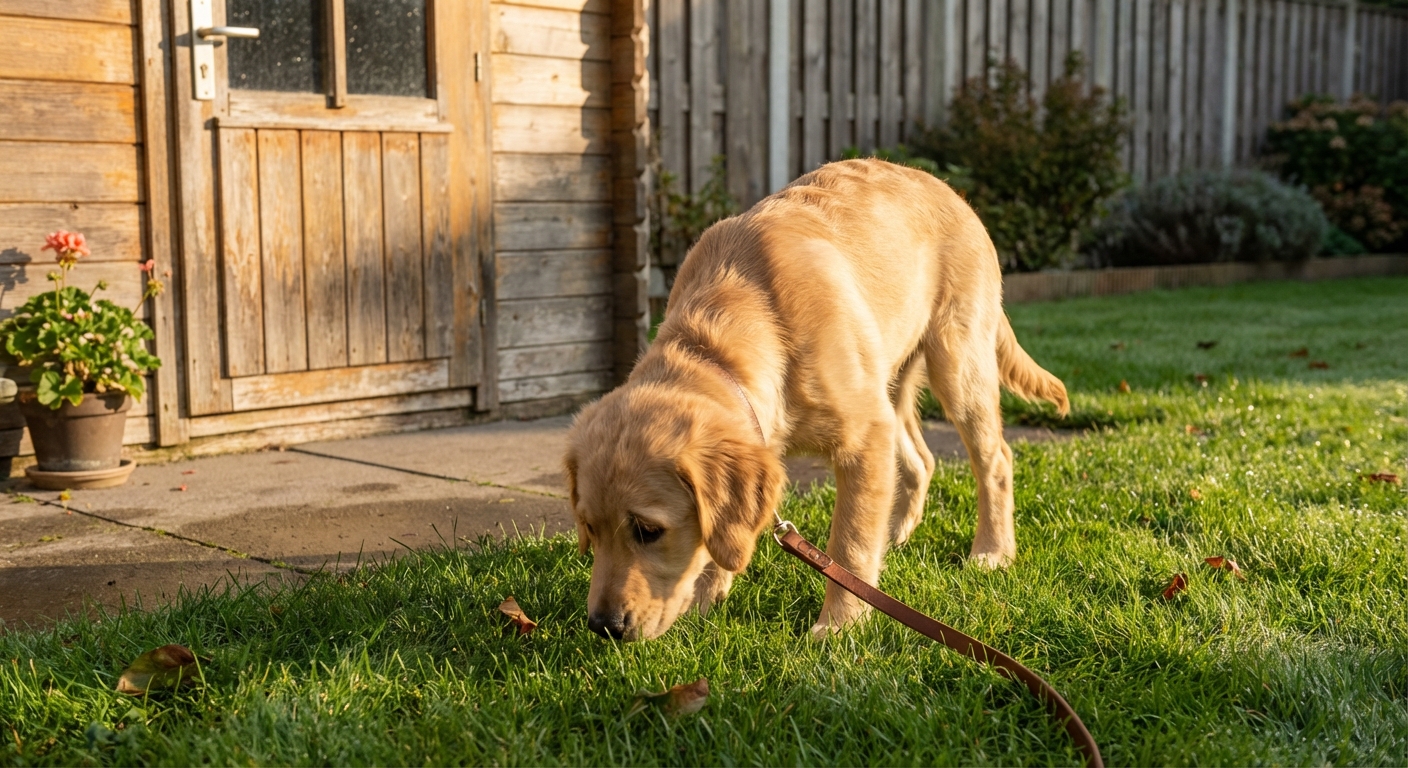
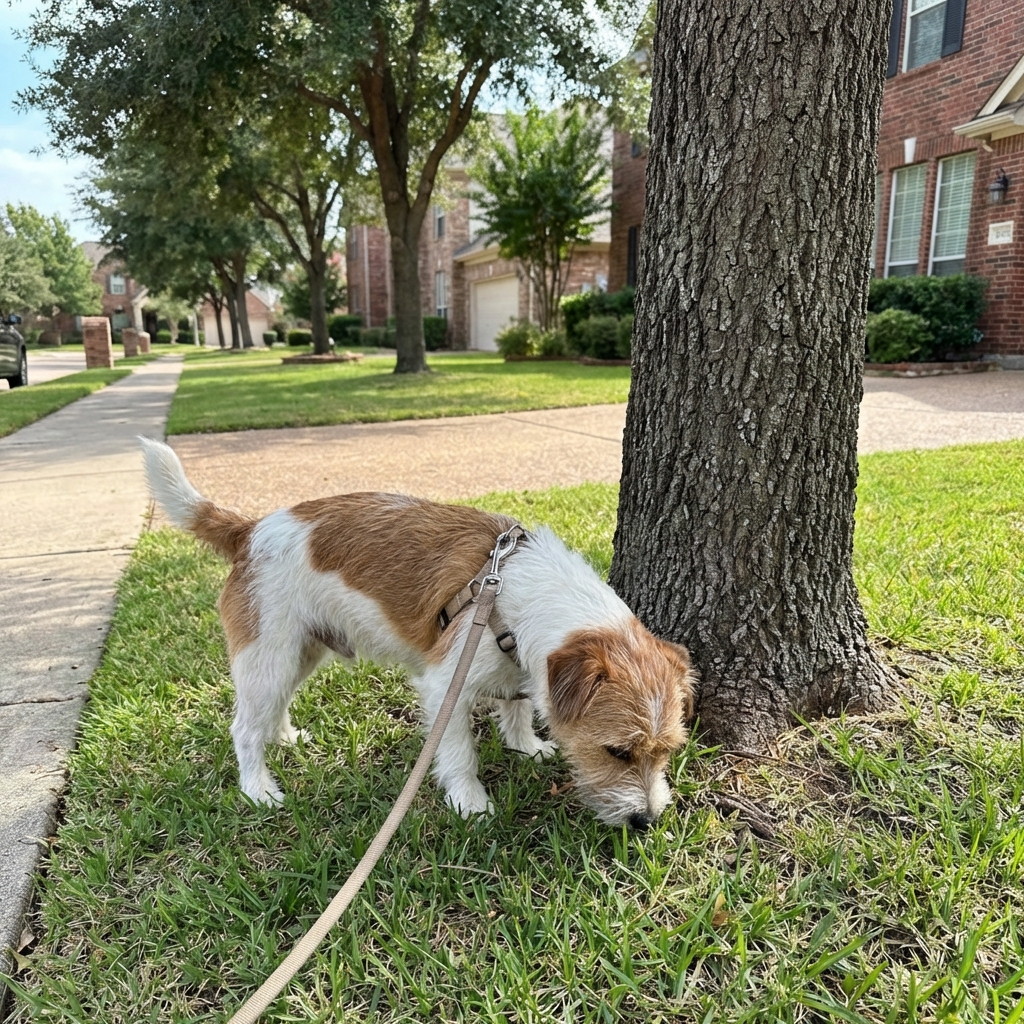
Take your dog to the same outdoor area every time. The smell helps trigger the behavior, and it reduces distractions.
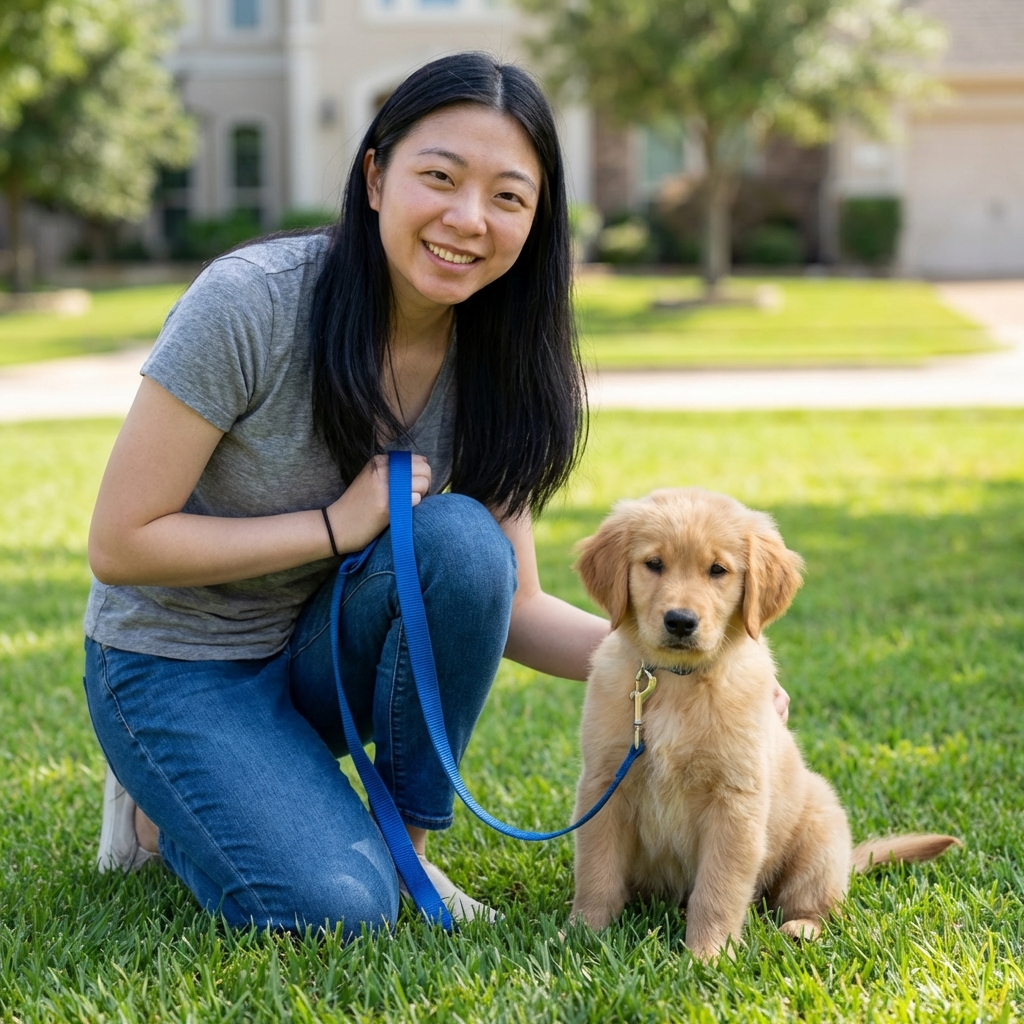
Use a leash early on
Even if you have a fenced yard, use a leash at first. The leash is not about control, it is about clarity. It keeps the trip low-key and focused, which helps your dog understand why you are outside.
Teach a cue
Once your dog starts to pee or poop, softly say a cue like “go potty”. Say it only while it is happening for now. After a few days of pairing, your dog will connect the words with the action.
When they finish:
- Reward immediately with a high-value treat
- Add warm praise in a calm, happy voice
- Then give them 2 to 5 minutes of sniffing or a short walk as a bonus
Timing matters. Reward outside, immediately, within a couple seconds after they finish. If you wait until you get indoors, your dog may think they are being rewarded for walking inside, not pottying outside.
Prevent indoor accidents
Use supervision and confinement
If your dog is loose in the house during training, accidents are simply more likely. A good plan rotates between:
- Supervised freedom: dog is in the same room as you, and you are truly watching
- Crate time: short, appropriate periods when you cannot watch
- Leash tethering: dog is clipped to you while you move around
- Exercise pen or baby gate: a small safe area when needed
A properly sized crate helps many dogs hold it because many dogs naturally avoid soiling where they rest. The crate should be large enough to stand up, turn around, and lie down, but not so large that one corner becomes a bathroom.
Important exceptions: some puppies (especially those from crowded or stressful early environments), and some anxious or medically affected dogs, may soil their crate. If that is happening, it is a sign to adjust the plan, not a reason to punish.
Crate basics
- Never use the crate as punishment.
- Keep crate periods age-appropriate. Young puppies often need potty breaks every couple of hours.
- If your dog will be crated longer, plan a mid-crate potty break or arrange a helper.
- Ask your veterinarian what is appropriate for water access for your specific dog, especially for very young puppies or dogs with medical needs.
Watch for the signs
- Suddenly sniffing the floor intensely
- Circling
- Wandering away from the family
- Heading toward a corner or another room
- Whining, pacing, or scratching at the door
If you see any of these, calmly take them outside right away.
Clean accidents correctly
If an accident happens, clean it with an enzyme cleaner made for pet urine and stool. Regular cleaners can leave microscopic odor behind, and your dog will think that area is a valid potty spot.
Important: avoid ammonia-based cleaners because they can smell similar to urine.
When an accident happens
Accidents are feedback, not failure. Here is the best response:
- If you catch them in the act, interrupt gently with a quick sound like “oops,” then take them outside immediately.
- If you find it after the fact, do not scold. Your dog will not connect your reaction to the earlier accident. Just clean it thoroughly and adjust your schedule.
Potty training improves fastest when your dog is rewarded for doing the right thing, not punished for being confused.
Poop training too
If you feel like you are nailing pee training but poop is lagging, you are not alone. The good news is the approach is the same.
- Use the same door and the same potty spot.
- Take a poop-focused break after meals and after waking, and watch for sniffing and circling.
- Reward immediately after the poop happens outside.
- If your dog tends to poop on walks, build in a short, predictable loop after the potty break.
Common situations
Apartments and high-rises
- Keep shoes, leash, and treats by the door.
- Take the same route to reduce distractions.
- If elevators slow you down, consider carrying small puppies until you reach the potty area.
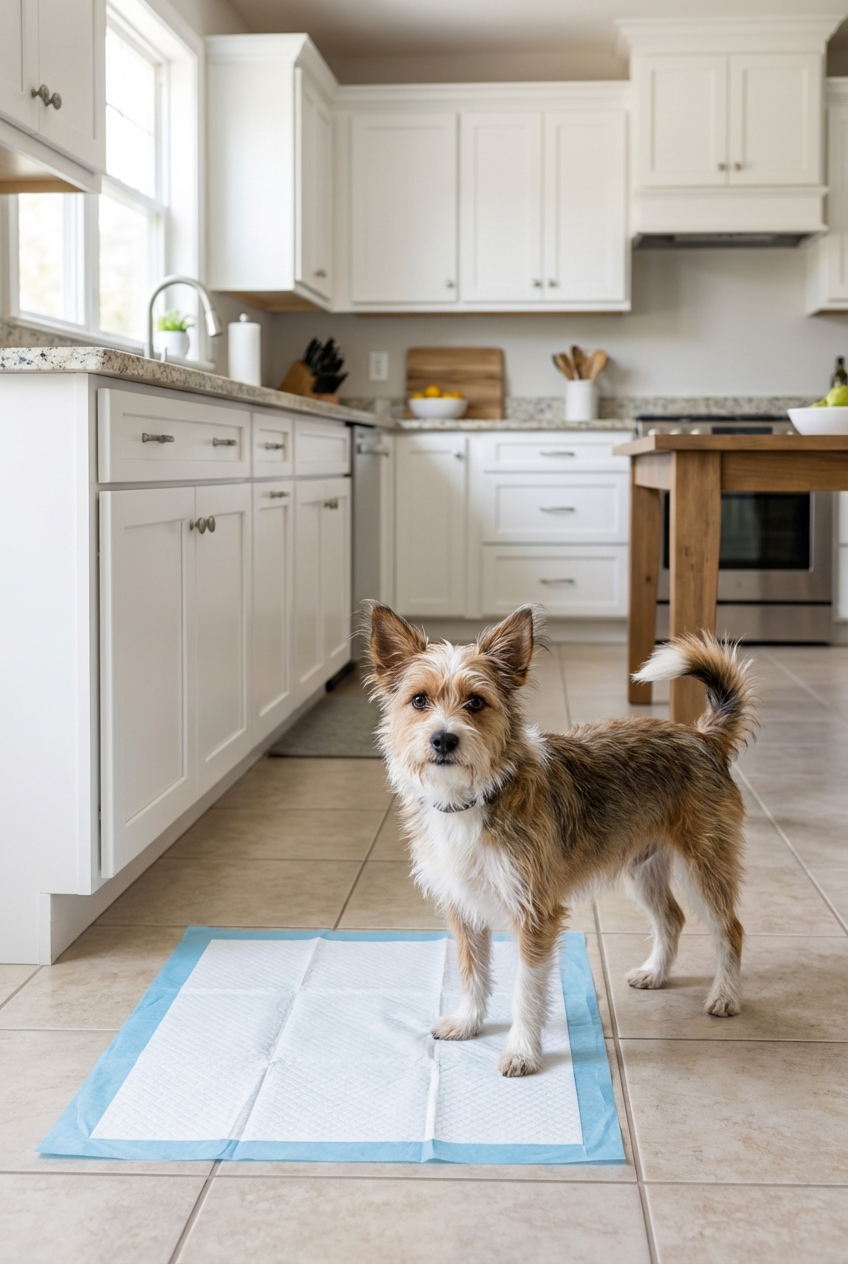
If you truly cannot get outside in time (for example, a high-rise puppy during early training), it can help to set up a temporary indoor potty station (a disposable pad in a tray, or a small patch of balcony grass) to prevent repeated hallway accidents. This is not “giving up.” It is prevention. If you use pads, keep them in one location and start transitioning outside as soon as your dog can make it outdoors more reliably.
Puppy pads and how to transition
Puppy pads can be useful short-term, but they can also teach “go on soft things,” which sometimes slows outdoor training. If you use them:
- Keep pads in one consistent spot, not scattered around the home.
- Gradually move the pad closer to the exit over several days.
- Then move it outside (or to a porch/balcony grass patch) and reward heavily for outdoor success.
Bad weather
Texas rainstorms and cold snaps happen. Dogs still need consistency.
- Use a covered area if possible.
- Keep potty trips short and businesslike until they go.
- Reward bigger than normal when they succeed in tough weather.
Too distracted outside
- Use the leash.
- Stand still and be neutral.
- Give them 3 to 5 minutes.
- If nothing happens, go back inside for 10 minutes of close supervision, then try again.
Marking vs needing to pee
Some dogs, especially adolescent males, may do frequent small pees to mark territory. Neutering may help in some cases, but it does not solve marking for every dog, and training still matters. Use structured potty trips and reward a full pee in the designated potty area.
Nighttime training
For puppies and newly adopted dogs, nighttime is often the hardest part. A few commonly recommended tips that help:
- Last potty break right before bed, in the usual spot.
- Keep the crate near your bed early on. Many puppies settle better when they can hear you.
- Set an alarm for a proactive potty trip if your puppy is very young.
- Do not turn nighttime potty breaks into playtime. Quiet out, quiet back in.
If your puppy wakes and cries, assume they may need to go. Over time, you can gradually extend the time between breaks.
How long it takes
Many puppies show real progress in 2 to 4 weeks, but reliable house training often takes several months. For rescue dogs, it depends on their history, stress level, and routine.
What speeds it up:
- More successful potty trips outside
- Fewer indoor accidents through supervision
- Consistent rewards
What slows it down:
- Free roaming too soon
- Inconsistent schedules
- Cleaning that does not remove odor
- Underlying medical issues
When to call your vet
In clinic, I always encourage families to trust their instincts. If training is solid but your dog still struggles, check for health issues. Contact your veterinarian if you notice:
- Needing to urinate very frequently
- Straining to urinate
- Blood in urine
- Accidents that start suddenly after being trained
- Excessive thirst
- Licking the genital area more than usual
- Crying or discomfort when peeing
Urinary tract infections, bladder stones, diabetes, kidney disease, and even pain or anxiety can affect potty habits. Getting answers early can save your dog a lot of discomfort.
When to get extra help
If progress is stalled, or if you suspect fear, separation anxiety, or stress-related accidents, it is worth getting support in addition to your veterinarian. Look for a qualified positive-reinforcement trainer, or a certified behavior professional, so you are not troubleshooting alone.
7-day reset plan
If you feel like you have tried everything, do a one-week reset. It is structured, predictable, and very effective for many dogs.
For 7 days
- Take your dog out on a leash every 1 to 2 hours during the day.
- Potty breaks always happen in the same spot.
- Reward every single outdoor pee and poop like it is the best thing ever.
- Indoors, your dog is either supervised, tethered, or in a crate or pen.
- Track potty times in your phone notes. Patterns appear quickly.
By day 7, most families feel calmer because the guesswork is gone. Then you can gradually give more freedom as your dog proves they can handle it.
Bottom line
Teaching a dog to potty outside is not about being strict. It is about being consistent, clear, and kind. Build a routine, prevent indoor mistakes, reward outdoor success immediately, and stay alert for medical or anxiety issues if progress is stalled.
You can do this, and your dog can too. One good potty trip at a time.