
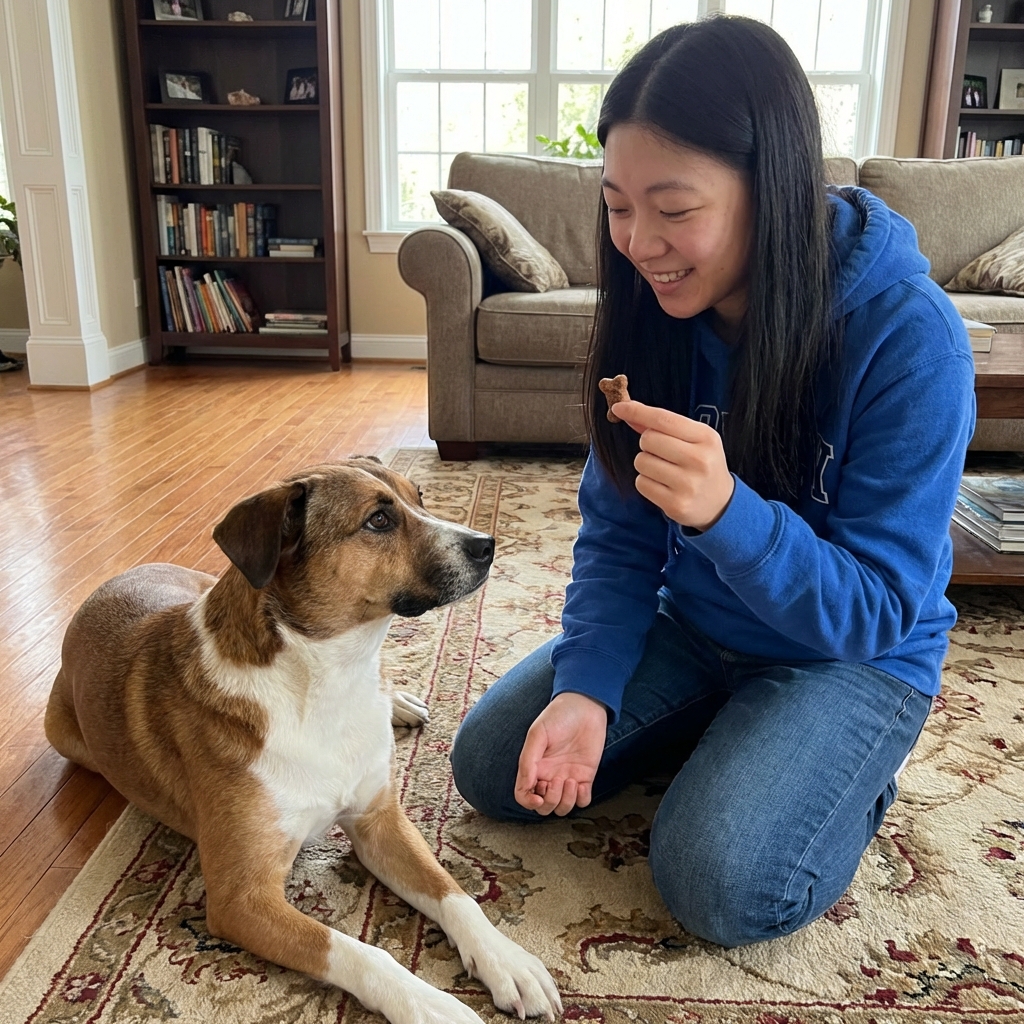
Teach a dependable “down” using positive reinforcement. Learn 3 methods (lure, bridge, capture), add the cue, build duration, handle distractions, and fi...
Article
•
Designer Mixes
How To Train a Dog to Lay Down

Shari Shidate
Designer Mixes contributor
Teaching “Down” is one of the most useful, real-life skills you can give your dog. It helps with calm greetings, impulse control, and safety in busy places. As a veterinary assistant here in Frisco, Texas, I also love it because a reliable “Down” can help support calmer nail trims, ear checks, and vet visits.
For total beginners, here is what I mean by “Down”: your dog lies on the floor with elbows down. Many dogs also rest their hips on the ground, but body shapes vary, so focus on a comfortable, relaxed position.
The best part: most dogs can learn it quickly with the right setup, tiny steps, and rewards they truly care about.
Quick note: A “Down” can be a helpful foundation, but many dogs also need cooperative care training (slow handling desensitization and consent-based cues) for truly stress-free grooming and vet handling.
Before you start
Pick the right rewards
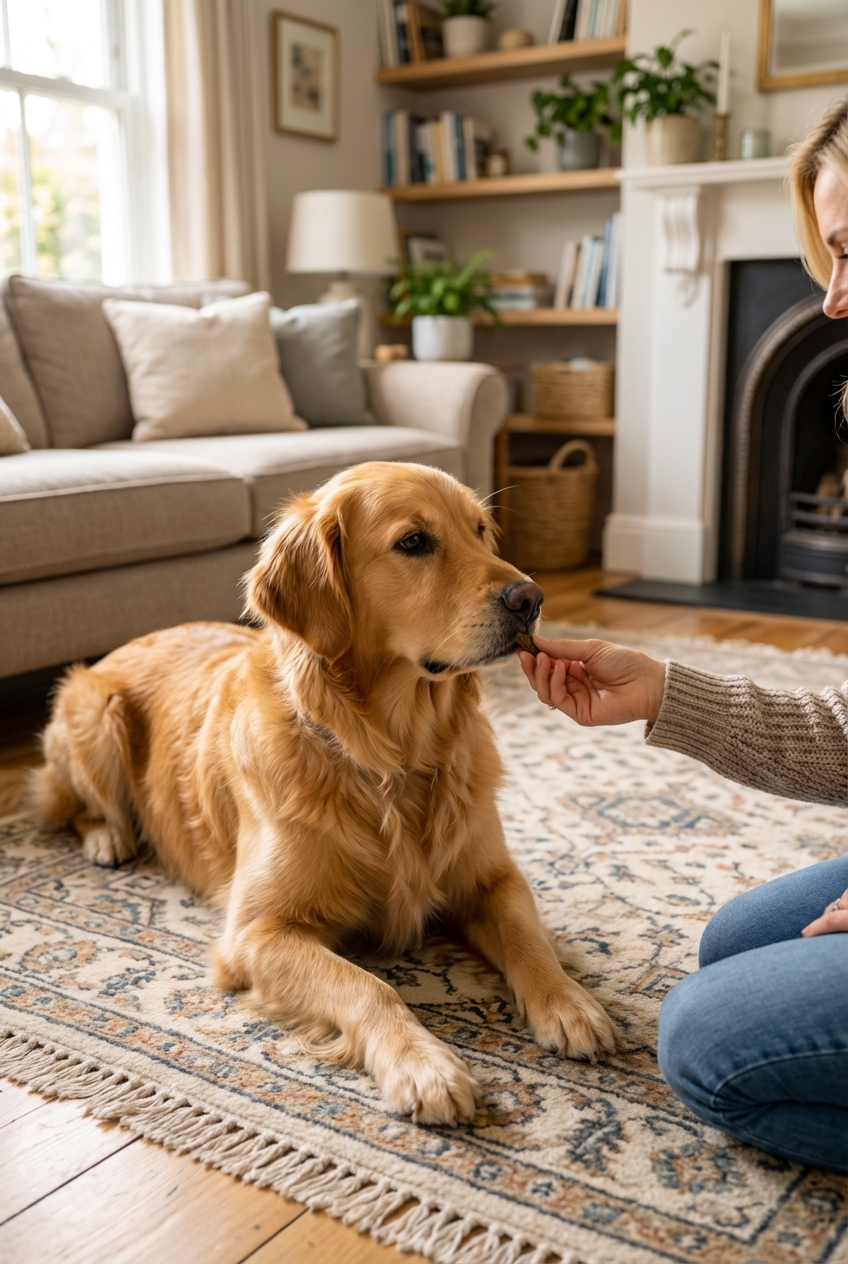
For “Down,” use rewards that keep your dog engaged without overexciting them. Soft, pea-sized treats work well. If your dog is toy-motivated, you can reward with a short tug or toss after the repetition, but food is usually easiest for the early stages.
- High-value treats (chicken, cheese, freeze-dried meat) for new or distracting environments
- Lower-value treats (kibble or training treats) once the behavior is consistent
Use a marker
A clicker or a clear “Yes” helps your dog learn faster. Your marker should happen the exact moment your dog does it right, like when the elbows touch the floor.
Choose a comfortable surface
Some dogs hesitate to lie down on slick floors. Start on carpet, a yoga mat, or a bath mat so the position feels secure and comfortable.
Keep sessions short
Aim for 1 to 3 minutes, a few times a day. Most dogs do best with about 3 to 8 reps per session. Stop while your dog is still interested so training stays fun and physically comfortable.
Do not force it
Avoid pushing your dog’s shoulders or hips down. That can create stress, and it can be uncomfortable for puppies, seniors, and dogs with orthopedic concerns. If your dog seems stuck, switch methods, adjust the surface, or break the skill into smaller steps.
Method 1: Lure from a sit
This is a gentle, step-by-step way to teach “Down” using a treat as a guide.
- Start with your dog sitting.
- Place a treat at your dog’s nose so they can smell it.
- Move the treat down to the floor and then slightly forward along the floor, away from their body. Many dogs will follow with their nose and slide into a down.
- The moment elbows hit the floor, mark “Yes” or click, then give the treat.
- Reset by tossing a treat a step away so your dog stands up and can try again.
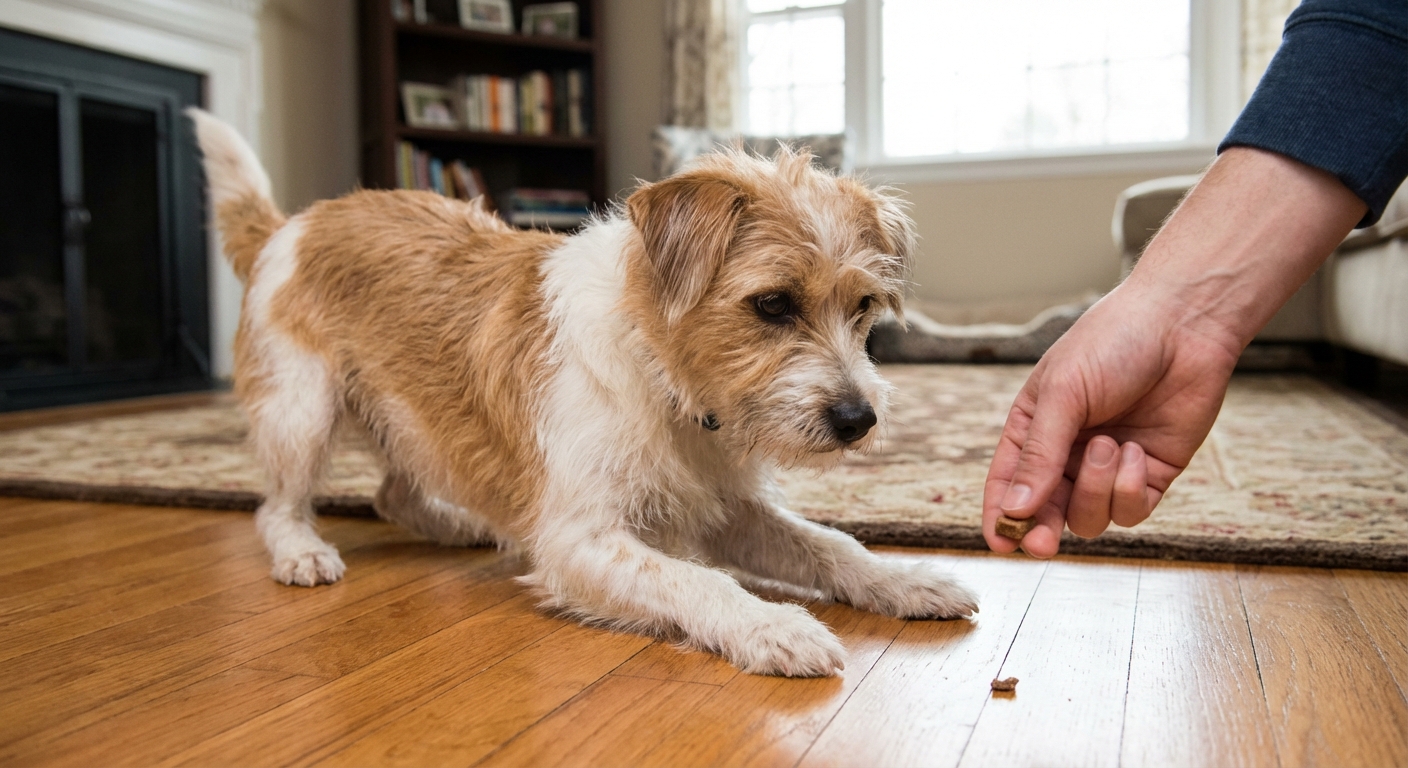
If your dog pops up or backs away, you are probably moving too fast or holding the treat too high. Slow down and keep the lure close to the floor.
Add the cue word
Once your dog is reliably following the lure into position, add the cue. Say “Down” one time, then lure. After a few sessions, start fading the lure by using an empty hand motion and rewarding from the other hand.
Method 2: Capture the down
Some dogs find lures frustrating, especially dogs who are very tall, very wiggly, or quick to paw at your hand. Capturing uses your dog’s natural behavior.
- Keep treats nearby.
- Wait for your dog to lie down on their own.
- Right when they do, mark “Yes” or click, then deliver the treat to them while they are still lying down.
- After several successful repetitions, start saying “Down” right before you think they will lie down (like when they are settling).
This method can take longer, but it can produce a very relaxed, confident “Down.”
Method 3: Shape the down
Shaping means rewarding small steps toward the final behavior. It is wonderful for dogs that enjoy problem-solving.
Examples of steps you can reward:
- Lowering the head
- Bending the elbows
- One elbow on the floor
- Both elbows on the floor
- Full down with hips comfortably settled
If your dog gets stuck, go back to the last successful step and make it easier again.
Add a release word
When you start adding duration, teach your dog when the “Down” is finished. Pick a release word like “Free” or “Okay”.
- Ask for “Down.”
- Mark and reward.
- Say “Free,” then toss a treat a step away so your dog gets up.
This prevents your dog from guessing and helps “Down” turn into a clear, confident stay behavior later.
Common problems and simple fixes
“My dog won’t lie down, they just sit and stare”
- Switch to a non-slip surface like a rug.
- Try a higher-value treat.
- Move the lure down and forward along the ground, not down and back.
- Practice when your dog is a little calmer, not right after a big play session.
“My dog crawls forward instead of lying down”
- Reward earlier, the moment elbows dip.
- Keep the lure closer to their chest and move slower.
- Optional: Practice next to a wall or couch edge so they cannot creep forward as easily. Keep it gentle and give your dog space if they seem worried.
“My dog flops down hard and gets too excited”
- Reward quickly for the “Down” at first so it stays clear and fun.
- Use lower-arousal treats if needed.
- Deliver the treat gently between the paws to encourage calm.
- Once your dog is consistently calm, add a tiny pause before the treat. Start with half a second and build slowly.
“My dog growls or seems uncomfortable lying down”
This can be a pain or mobility issue, especially in older dogs or dogs with orthopedic concerns. Pause training and check in with your veterinarian. Choose alternative behaviors like a sit-stay or a chin rest until you know your dog is comfortable.
Care tips for a safe “Down”
Protect joints and build confidence
- Warm up first with a few sits, hand targets, or easy tricks.
- Avoid repetitive “Down” reps on hard surfaces, especially for large breeds, seniors, and dogs with hip or elbow history.
- Use supportive bedding for practice if your dog is hesitant.
Make it practical: add duration and real-life rewards
Once your dog can lie down on cue, teach them to stay there calmly.
- Ask for “Down.”
- Count one second.
- Mark “Yes,” then reward.
- Say “Free,” then reset.
- Gradually increase to 2 seconds, 3 seconds, and so on.
Mix in real-life rewards to strengthen the habit: clipping on the leash, opening the door, putting down the food bowl, greeting visitors.
Generalize in new places
Dogs do not automatically understand that “Down” in your kitchen is the same as “Down” at the park. Practice in:
- Different rooms
- The backyard
- On walks (quiet spots first)
- Pet-friendly stores (only after your dog is ready)
Cue options
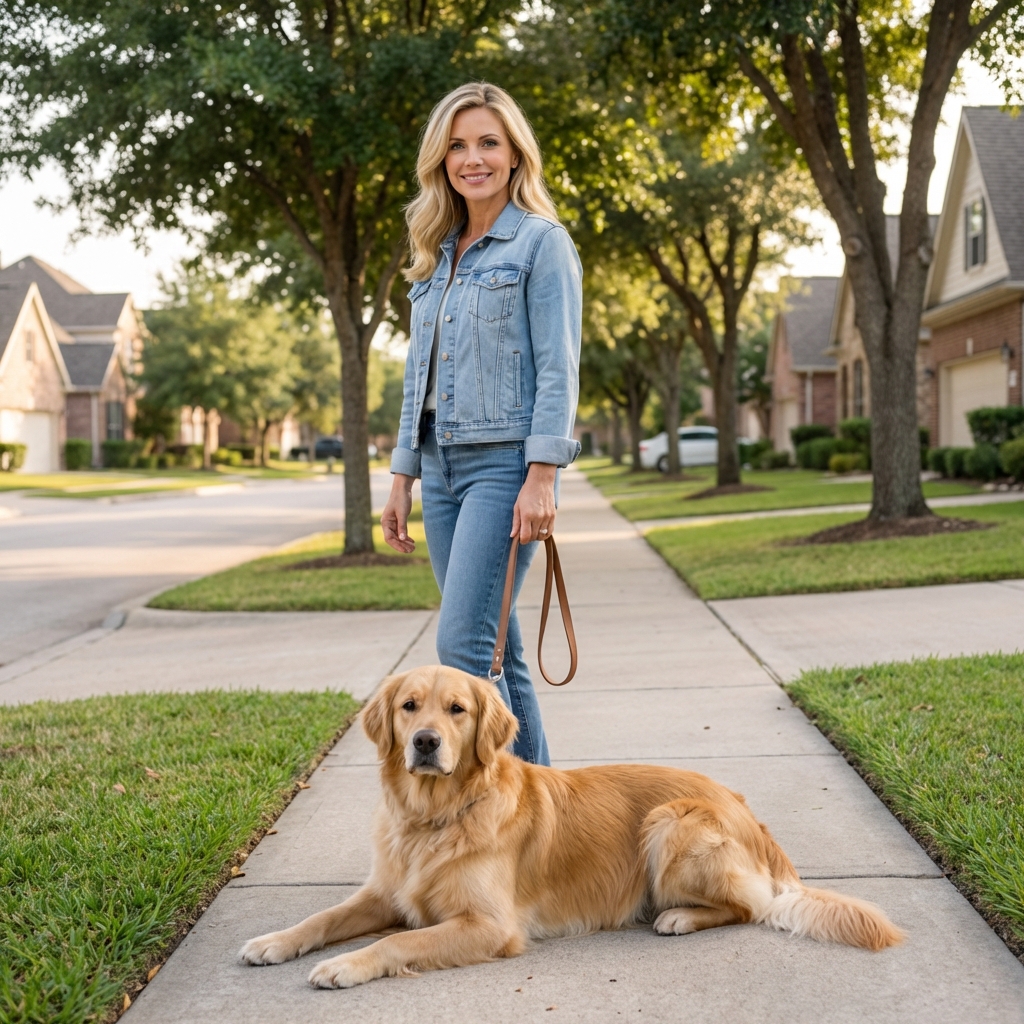
- “Down”: Standard cue for lying down.
- “Settle”: Often used for relaxing on a mat or bed for longer periods.
- “Place”: Go to a specific mat or bed and lie down there.
- “Off”: A helpful separate cue for getting off furniture or stopping jumping, so you do not accidentally use “Down” for two different jobs.
Trainers may define “Settle” and “Place” a little differently. The word you choose matters less than being consistent and teaching your dog exactly what it means.
If you want a dog who relaxes when life gets busy, teaching “Place” plus a calm “Down” on a mat is a wonderful next step.
Quick mini plan
- Day 1 to 2: 5 short sessions using the lure on a rug. Reward fast for elbows touching the floor. Teach “Free” right away.
- Day 3 to 5: Add the cue “Down” and begin fading the lure (empty-hand motion, treat from the other hand).
- Week 2: Add 3 to 10 seconds of duration and practice in 2 new locations.
If you only remember one thing, make “Down” easy and comfortable. When your dog feels safe in the position, training becomes faster and more reliable.
When to get extra help
If your dog shows signs of fear, guarding, or pain, or if you are dealing with reactivity and need a rock-solid “Down” in distracting situations, consider working with a certified positive-reinforcement trainer. And if lying down seems physically difficult, a veterinary exam is the best next step.