Stop cat biting by matching the bite to the cause—play, overstimulation, fear, pain, or redirected aggression. Get in-the-moment steps, training tips, and ...
Article
•
Designer Mixes
How to Train a Cat to Stop Biting

Shari Shidate
Designer Mixes contributor
Cat bites can feel confusing, especially for families. One minute your cat is purring, the next there is a sudden chomp. The good news is that biting is usually a form of communication, not “spite” or “meanness.” With a few simple, consistent steps, you can teach your cat gentler ways to interact while keeping kids and adults safe.
Why cats bite
In behavior terms, biting is information. Your goal is not to “punish the bite,” but to figure out what is triggering it and teach a safer replacement behavior.
Common reasons in families
- Play biting: Especially common in kittens and young cats who have lots of energy and are still learning boundaries.
- Overstimulation (petting-induced biting): Some cats love petting, but only in small doses. When the nervous system gets overwhelmed, the bite is a “stop” signal.
- Fear or feeling trapped: Kids can accidentally corner a cat by hugging, chasing, or picking them up.
- Pain or illness: Dental disease, arthritis, skin irritation, or tummy discomfort can make a normally gentle cat reactive.
- Resource or territory stress: Another pet, a new baby, loud guests, construction noise, or changes in routine can raise irritability.
- Redirected aggression: Your cat gets worked up by something they cannot reach (a cat outside, a sudden noise) and then bites the nearest person or pet.
- Rare causes: In uncommon cases, biting can be tied to predatory behavior patterns, severe anxiety, or neurologic issues. These situations need veterinary help sooner rather than later.
Family-friendly takeaway: Your cat is not being “bad.” They are either asking for space, asking for play, or trying to protect themselves.
Rule out medical causes
If biting is new, escalating, or happening when you touch a specific area, schedule a veterinary visit. Many “behavior problems” improve quickly once pain is treated. Dental pain, for example, is a commonly missed contributor to sudden biting.
- Book a vet visit soon if your cat bites when picked up, bites during brushing, suddenly dislikes being touched, or seems stiff when jumping.
- More urgent signs include not eating, hiding more than usual, limping, sudden litter box changes, yowling when moving, facial swelling, or obvious distress.
- Dental clues to check include drooling, pawing at the mouth, dropping food, and worsening bad breath (bad breath alone is usually not an emergency, but it is a good reason to schedule a dental exam).
Once health issues are addressed, training is much more effective.
Safety rules for kids and guests
Kids usually want to love a cat the way they would love a stuffed animal. Cats are different. Clear family rules prevent most bites before they start.
Simple rules
- No hugging or kissing the cat. Many cats interpret this as being trapped.
- Let the cat come to you. No chasing, cornering, or grabbing.
- One-hand petting only and keep sessions short.
- Pet the head and cheeks rather than the belly, legs, or tail.
- Use toys, not hands, for play.
- Stop at the first warning sign.
If you have very young children, set up “cat-only zones” using baby gates or closed doors so your cat can rest without being approached.
Early warning signs
Cats often warn before they bite, but the signals can be subtle, fast, or easy to miss. Families do best when they treat even small warnings with respect. When you stop before the bite, you teach your cat they do not need to escalate.
Signs your cat is done
- Tail swishing or tail thumping
- Skin twitching along the back
- Ears turning sideways or flattening
- Dilated pupils, hard staring, or sudden stillness
- Turning the head toward your hand
- Low growl, grumble, hiss, or a sharp-sounding meow
What to do: Freeze your hand, then slowly remove it. Do not yank away quickly, since sudden movement can trigger chase or rough play. Give your cat a quiet break.
In the moment of a bite
The moment matters. Sudden movement and big reactions can accidentally make the interaction more intense.
Do this
- Go still. Stop moving your hands and stop talking.
- Disengage calmly. If your cat is holding on, avoid tugging. Some people can reduce “tug” by moving the hand slightly toward the cat, but only if it is safe and your cat is not escalating. If you are unsure, use a barrier like a folded towel, a pillow, or a nearby object to create space, or calmly lure your cat away with a tossed treat or toy.
- Redirect to an outlet. Toss a soft toy away from you or offer a wand toy at distance.
- End interaction for about a minute. Brief, calm time-outs teach that biting makes attention disappear.
Avoid this
- Yelling, hitting, spraying water, or scruffing
- Shaking your hand or pulling away fast
- Continuing to pet to “prove” the cat is fine
Punishment often increases fear and can lead to more serious biting. Calm consistency is what works long-term.
Teach gentle behavior
You are teaching two things at once: what not to do (bite) and what to do instead (gentle touch, play with toys, or walk away).
Step-by-step plan
- Stock your tools: wand toys, kicker toys, small toss toys, and a treat pouch.
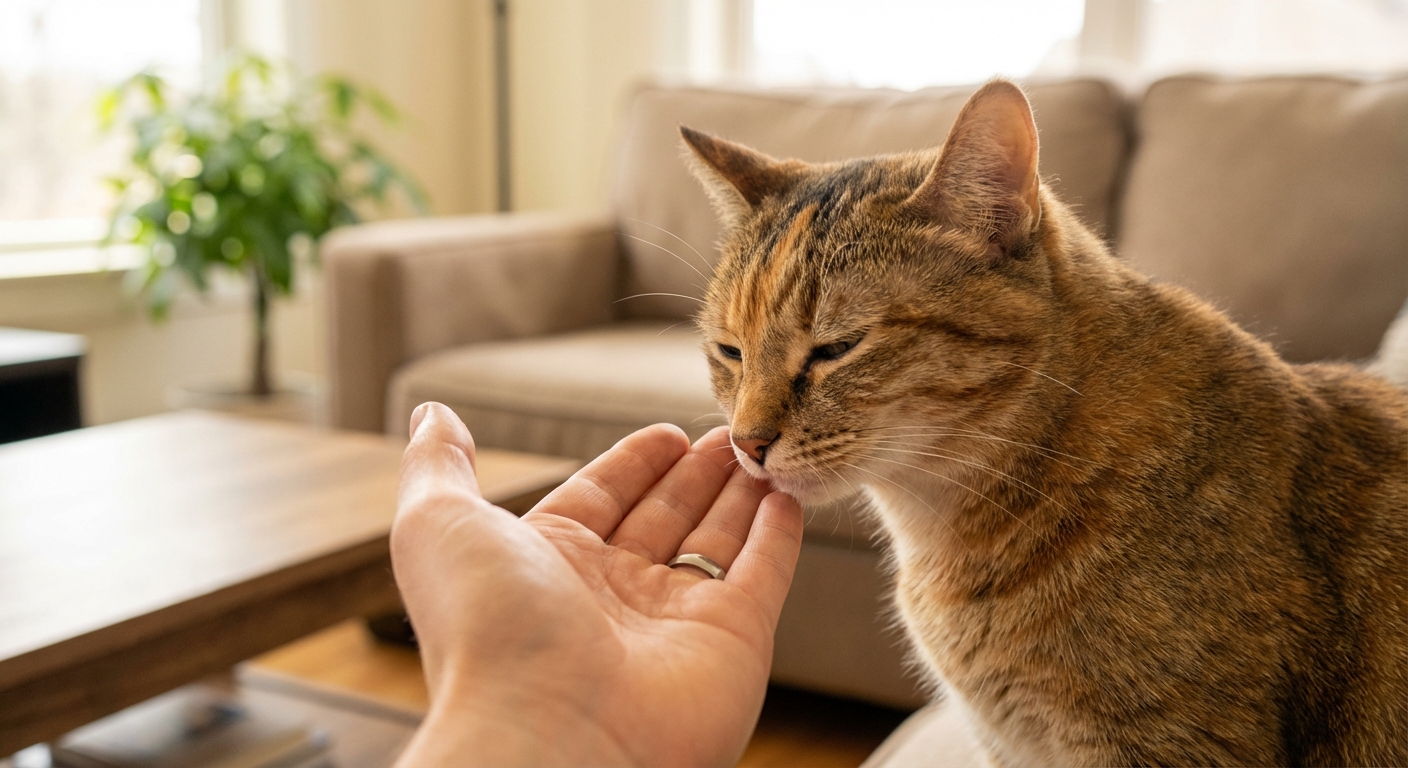
- Reward calm behavior: when your cat approaches without biting, reward with a treat or a gentle cheek rub (if they enjoy it).
- Teach “hands are boring”: if teeth touch skin, stop play instantly and become still, then redirect to a toy.
- Mark and reward toy play: reward when your cat bites the toy, not you.
- Keep sessions short: 5 to 10 minutes, 1 to 3 times daily works well for many cats.
Over time, your cat learns: gentle behavior makes good things happen, and biting makes the fun stop.
Fix play biting
Many family bite complaints come down to one issue: the cat is underplayed or played with the wrong way.
Better play habits
- Use hunt play: move a wand toy like prey and let your cat stalk, chase, pounce, and catch.
- Let them win: end with a successful catch and a small treat or meal to complete the hunt cycle.
- Keep a routine: two play sessions, morning and evening, can reduce surprise “ankle attacks.”
- No roughhousing with hands: even if it seems cute when a kitten is small, it teaches that hands are acceptable targets.
- For chronic ankle attacks: do not reward ambushes with attention. Step out of the area calmly, then schedule a play session later. Add puzzle feeders or scatter feeding to burn energy safely.
If your cat is a kitten, consider early social learning. Kittens raised without other cats often bite harder because they did not learn bite inhibition through sibling play.
Prevent petting bites
Some cats have a low tolerance for repetitive touch. This is common and not a failure. You will do better with short “micro-sessions” and consent-based handling.
Consent test
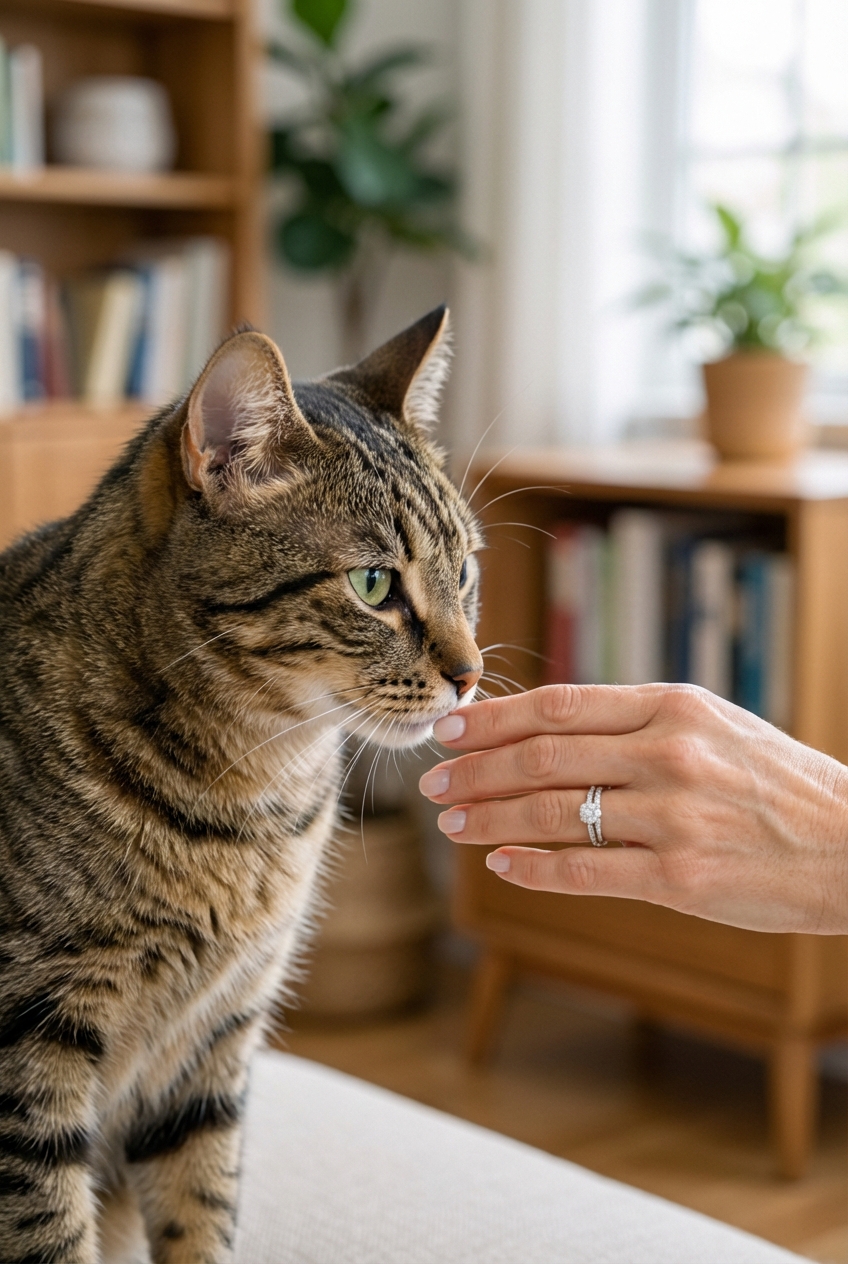
Pet your cat for 2 to 3 seconds, then stop and hold your hand still near them. If your cat leans in or bumps your hand, you can continue. If they turn away, freeze, or flick the tail, you are done.
Where to pet
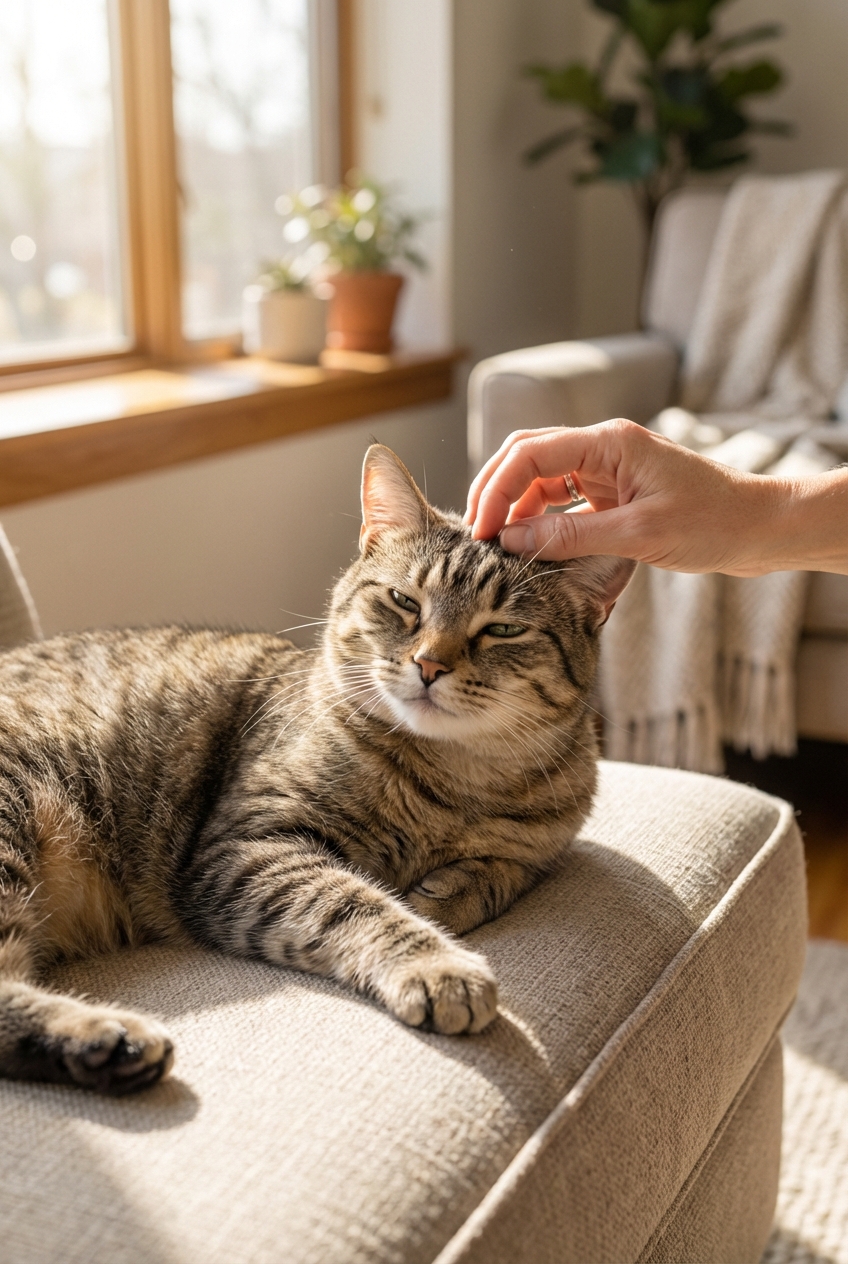
- Cheeks
- Under the chin
- Top of the head
Many cats dislike long strokes down the back, belly rubs, tail touching, and foot handling. Respecting preferences often lowers biting quickly.
Set up your home
Your environment can either lower your cat’s stress or keep them on edge. Small changes make a big difference, especially in busy households.
Helpful setup ideas
- Vertical space: a cat tree or wall shelves help cats feel secure.
- Quiet rest spots: cozy beds away from high-traffic areas.
- Predictable routine: meals and play at similar times each day.
- Separate resources in multi-pet homes: multiple litter boxes, water bowls, and feeding stations reduce conflict. A commonly recommended starting point for litter boxes is 1 per cat plus 1 extra.
- Reduce trigger stacking: if your cat reacts to outdoor cats, try window film, closing blinds at peak times, or adding a perch in a quieter room.
How long will it take?
With consistent redirection and better play routines, some families see improvement in 1 to 3 weeks, especially in mild play or petting-related cases. If biting has been reinforced for months or years, if stress is high, or if fear, pain, or redirected aggression is involved, it can take longer.
Progress often looks like:
- Fewer surprise bites
- More warning signals instead of instant biting
- Softer bites that do not break skin
- More toy-focused play
Celebrate small wins. Calm, repeatable training beats dramatic corrections every time.
After a bite
Cat bites can cause infection even when the wound looks small.
Basic wound care
- Wash right away: rinse under running water and wash with soap for several minutes.
- Do not seal punctures tightly: avoid tight bandages that trap moisture. Use light coverage if needed.
- Watch closely: increasing redness, swelling, warmth, worsening pain, pus, fever, or red streaks moving up the skin can signal infection.
- Hands and fingers are higher risk: seek medical guidance promptly for punctures to the hand, finger, or near joints.
- Ask about tetanus: your healthcare provider may recommend an update depending on your vaccination status and the wound.
If skin is punctured, contact your healthcare provider. If symptoms are worsening or you feel unwell, seek urgent care.
When to get help
If bites are severe, frequent, or unpredictable, ask your veterinarian about pain screening and behavior support. A qualified cat behavior consultant can help you identify triggers and build a plan your whole family can follow. For serious aggression cases, ask about a board-certified veterinary behaviorist.
Get help promptly if
- Your cat bites hard enough to puncture skin
- The biting is paired with stalking or repeated ambushing of household members
- You have an immunocompromised family member
- Your cat is anxious, hiding, or aggressive in multiple contexts
- Bites seem linked to outdoor cats, sudden noises, or other trigger events (possible redirected aggression)
Important health note: If your cat bite breaks skin, wash with soap and water right away and contact your healthcare provider, especially if redness, swelling, warmth, or pain increases.