Unsure how old your cat is? Use vet-backed clues like tooth eruption, tartar, eyes, coat quality, muscle tone, and behavior to estimate age and plan the righ...
Article
•
Designer Mixes
How to Tell Your Cat’s Age

Shari Shidate
Designer Mixes contributor
If you adopted your cat as an adult, approximating their age can feel like a mystery. As a veterinary assistant, I can tell you there are several clues we use every day in clinics to estimate age range. The goal is not a perfect birthday. It is getting close enough to make smart decisions about nutrition, dental care, and preventive health. Even in clinic, age is still an estimate, especially for adult rescues.
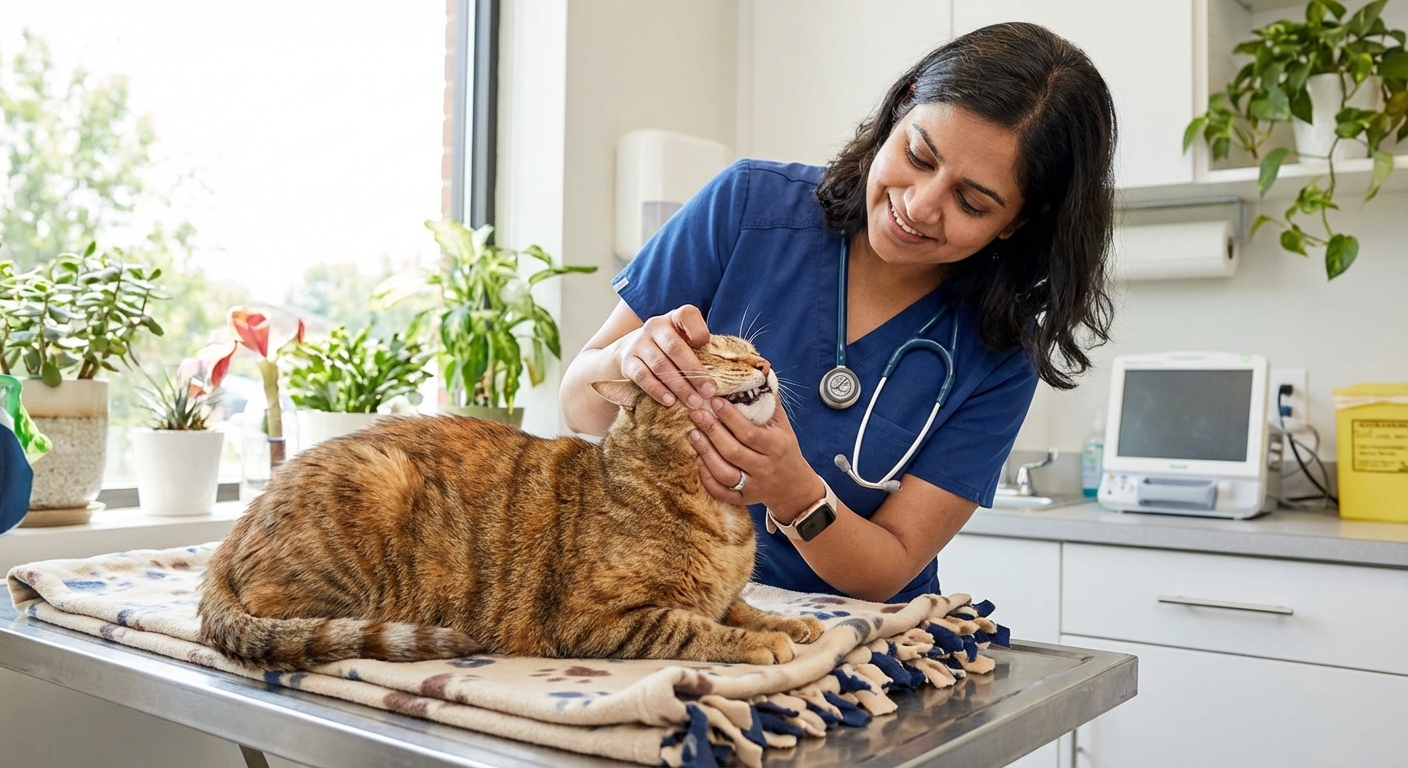
Below are the most reliable, evidence-informed ways to approximate your cat’s age at home, plus when it is worth getting a veterinary exam for a more accurate life stage estimate.
Start with the teeth (best clue in kittens)
Teeth are one of the most useful age markers, especially in kittens and young cats because tooth eruption follows a fairly consistent schedule. In adult cats, dental condition is much less like a clock. Diet, genetics, hunting habits, and dental care can make a young cat’s mouth look “old” or an older cat’s mouth look surprisingly healthy.
Kitten tooth timeline
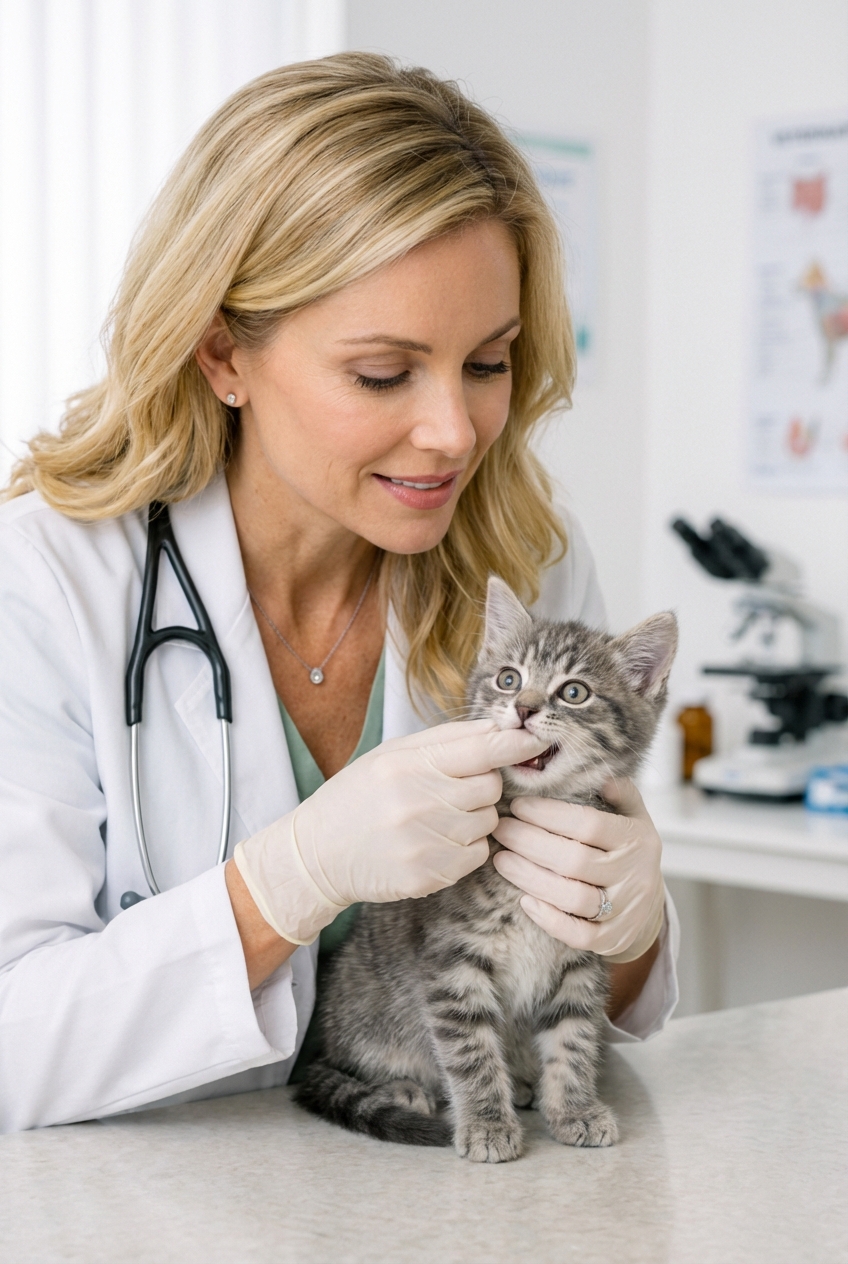
- Birth to ~2 weeks: No teeth.
- ~2 to 4 weeks: Baby teeth (deciduous) begin coming in.
- ~5 to 6 weeks: Most baby teeth are in place.
- ~11 to 16 weeks: Adult teeth start replacing baby teeth.
- ~6 months: Most cats have a full set of adult teeth.
Adult teeth: what to look for
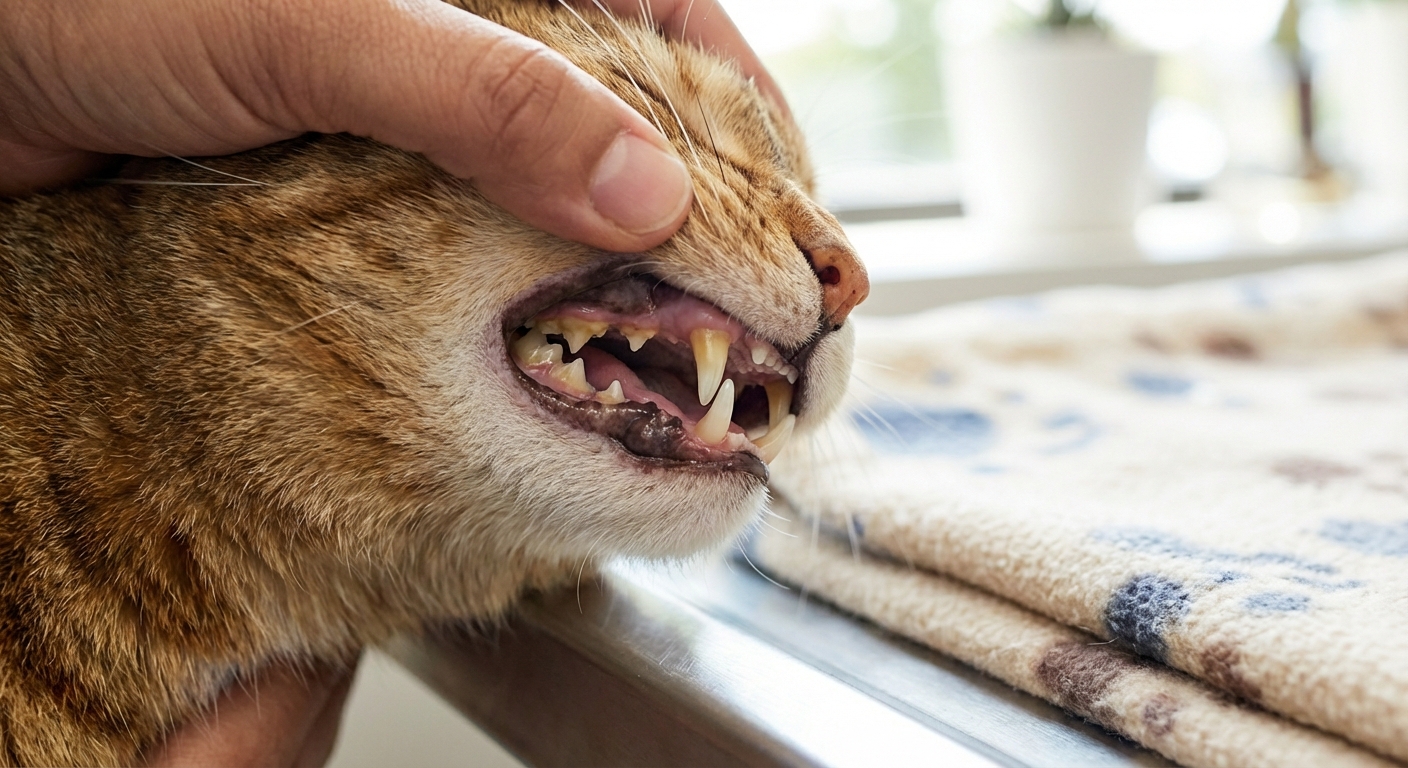
Once adult teeth are in, we rely more on tartar buildup, gum health, and tooth wear, and we interpret those findings alongside the rest of the exam. Think of dental clues in adult cats as “can suggest” rather than “can confirm.”
- 1 to 2 years: Teeth often look fairly white, with minimal tartar.
- 3 to 5 years: Mild to moderate tartar is common, especially on back teeth, and mild gum redness can appear.
- 5 to 10 years: Tartar buildup and gingivitis become more common. Some cats develop periodontal disease earlier.
- 10+ years: Dental disease is very common without routine cleanings. Missing teeth or tooth resorption may be present.
Important: Dental disease does not always equal “old.” A younger cat can have significant tartar, especially if they have never had dental care. Conversely, an older cat with regular cleanings may have healthier teeth.
Check the eyes, coat, and body
After teeth, the next best clues are what your cat looks like and how they carry themselves. These signs can be subtle, but stacking clues together improves your estimate.
Eyes
- Young cats: Clear, bright eyes are typical.
- Middle-aged to senior cats: You may notice mild, even “haze” to the lens called nuclear sclerosis. This is often age-related and different from a true cataract. Cataracts are also less common in cats than in dogs.
- Any age: Squinting, redness, discharge, or a suddenly cloudy eye is a medical issue, not an age clue.
Coat and skin
- Younger cats: Often have a sleek, glossy coat and good muscle tone.
- Older cats: May develop a coarser coat, dandruff, or mild matting if grooming decreases due to arthritis, dental pain, or weight changes.
Muscle and weight
Many senior cats lose muscle along the spine and hips, even if their weight stays the same. On the other hand, some indoor cats gain weight in middle age. This is why a hands-on body condition check is more helpful than the number on the scale alone.

Behavior and energy
Personality differences are huge in cats, so behavior is a supporting clue, not a primary one. Still, these patterns can help:
- Kittens and adolescents: High energy bursts, climbing, pouncing, playful nipping, and curiosity.
- Adult cats: More predictable routines, calmer play sessions, and longer rest periods.
- Senior cats: More sleeping, less jumping, stiffness after rest, and sometimes litter box changes due to mobility.
If your cat is slowing down quickly or suddenly, do not assume it is “just age.” Pain, dental disease, arthritis, and conditions like kidney disease or hyperthyroidism are especially common in older cats and are often treatable.
Age by life stage
When you cannot pinpoint a birthday, it helps to place your cat into a practical life stage. These are commonly used ranges in veterinary medicine.
- Kitten: 0 to 6 months
- Junior: 7 months to 2 years
- Prime adult: 3 to 6 years
- Mature: 7 to 10 years
- Senior: 11 to 14 years
- Geriatric: 15+ years
Why this matters: wellness screening, vaccine planning, dental frequency, and nutrition are often based on life stage, not an exact age.
Life stage care tips
Once you have a rough life stage, you can tailor care right away.
- Kitten to junior: Vaccines and boosters, parasite prevention, spay or neuter planning, and plenty of calorie-dense growth nutrition.
- Prime adult to mature: Weight management, dental prevention (home care plus cleanings when needed), and annual wellness exams.
- Senior to geriatric: Twice-yearly checkups are often helpful. Ask about screening such as bloodwork, urinalysis, blood pressure checks, and thyroid testing.
What not to rely on
A few common myths can send you in the wrong direction. These are not reliable ways to estimate age:
- Eye color: Most cats settle into their adult eye color as kittens, and it does not track age later.
- Whisker color: White whiskers can appear at many ages and vary by genetics.
- Coat color changes: Sun fading and coat pattern changes are not an age tool.
When to ask your vet
A vet visit cannot always give an exact number either, but it can provide the best estimate because it combines multiple findings: teeth, muscle condition, heart and lung exam, coat, and eyes. In some cases, your veterinarian may also recommend lab work to guide senior screening, or imaging like x-rays if arthritis is suspected. Those tests do not “date” your cat, but they do shape the right care plan.
Consider an exam if:
- You are adopting an adult cat and want the right nutrition and preventive plan.
- There is noticeable weight loss or muscle loss.
- Your cat has bad breath, drooling, or avoids hard food.
- You see behavior changes like vocalizing at night, increased thirst, or litter box changes.
Pro tip: If you can, bring photos of your cat’s teeth, a short video of how they walk and jump, and any adoption records. Safety note: Do not force your cat’s mouth open for photos. If they resist, stop. Bites happen fast, and a quick vet check is safer for everyone.
Quick checklist
If you want a simple way to pull this together, use this checklist and pick the closest match. The more items that point to the same life stage, the more confident you can feel in your estimate.
- Teeth: baby teeth (2 to 6 weeks), adult teeth coming in (11 to 16 weeks), full adult set (about 6 months), minimal tartar (about 1 to 2 years), mild to moderate tartar (about 3 to 5 years), heavier tartar and gum disease more common (about 5 to 10 years), missing teeth or resorption more common (often 10+ years)
- Gums: pink and calm (often younger or well-cared-for adults), mild redness (can start around 3+ years), bleeding or swelling (any age, but more common as cats get older and needs a vet check)
- Coat: glossy and sleek (often younger), dandruff or coarser texture (often middle-aged to older), matting or reduced grooming (often older or painful, needs evaluation)
- Body: muscular (often younger adult), average (varies), gaining weight (common in mature indoor cats), losing muscle along spine and hips (more common in seniors)
- Movement: jumps easily (often younger), hesitant to jump (often mature to senior, or any age with pain), stiffness after resting (often older and consistent with arthritis)
- Energy: playful bursts (often kitten to junior), moderate play (often adult), less play and more sleeping (often senior, but also can signal illness)
Bottom line
You do not need a perfect birthday to give your cat excellent care. Use teeth as your anchor in kittens, then confirm your best estimate with coat, eyes, muscle condition, and behavior. If anything seems off, especially eating changes, weight loss, increased thirst, or decreased mobility, a veterinary exam is the fastest path to answers and relief.