Track your dog’s pregnancy week by week with vet-informed milestones, common symptoms, confirmation tests, feeding guidance, whelping setup, labor signs, a...
Article
•
Designer Mixes
How to Tell If Your Dog Is Pregnant

Shari Shidate
Designer Mixes contributor
If you suspect your dog might be pregnant, you are not alone. As a veterinary assistant here in Frisco, Texas, I have talked with many families who notice a few subtle changes and wonder, “Is this normal, or is she expecting?” The truth is that early dog pregnancy signs can be easy to miss, and plenty of non-pregnancy issues can look similar.
This step-by-step guide will help you understand what to watch for, what is normal, what is not, and when it is time to call your veterinarian.
Quick note: This article is general education and is not a substitute for veterinary care. When in doubt, call your vet.
First, know the timeline
A dog’s pregnancy (gestation) is typically around 63 days from ovulation. The reason timing gets confusing is that most people track mating, not ovulation. Because sperm can survive for days and ovulation timing varies, pregnancy length is often described as about 57 to 72 days from breeding.
For everyday planning, it helps to think in weeks after mating and use vet testing to narrow the dates.
- Weeks 1 to 3: signs are often mild or absent
- Weeks 3 to 5: physical changes may start, and some tests become useful
- Weeks 6 to 9: belly growth, nesting, and mammary changes become more noticeable
Tip: Write down the first day you believe mating happened, plus any second mating dates. Bring this info to your vet visit.
Step-by-step: Is she pregnant?
Step 1: Could she be pregnant?
Start with the basics. Pregnancy requires that your female was in heat and had access to an intact male. Dogs can breed quickly, even during a short unsupervised moment in the yard.
- Was she in heat within the last 1 to 3 months?
- Did she have contact with a male dog, even briefly?
- Did you observe a tie (dogs physically locked together)? A tie increases the odds, but pregnancy can occur without you witnessing it.
Step 2: Early subtle changes (weeks 1 to 3)
Early signs are not always dramatic. Some dogs act totally normal. Others show a few gentle hints:
- Slight appetite changes: she may eat less for a few days
- Mild tiredness: more naps, less interest in intense play
- Behavior changes: extra cuddly or a bit more sensitive
- Occasional vomiting: some dogs have mild, short-lived “morning sickness”
Important: These signs can also happen with stress, parasites, a diet change, uterine infection, or other illnesses. If vomiting is frequent, there is diarrhea, or she seems painful, weak, or dehydrated, call your veterinarian promptly.

Step 3: Nipples and shape (weeks 3 to 5)
From about week 3 onward, you may notice more physical clues:
- Nipple changes: nipples may become slightly larger and pinker (often called “pinking up”)
- Subtle weight gain: especially around the ribs and waist
- Less tucked waist: some dogs start looking a bit more rounded later in this window
Try not to poke and press on her abdomen at home. Belly palpation is easy to misread and can be uncomfortable. If you want an abdominal check, let your veterinary team do it safely.
Step 4: Confirm with the right vet test
Signs are helpful, but they are not proof. Pregnancy confirmation is where your veterinarian can give you real answers.
Home pregnancy tests for dogs are not reliable in the way human tests are. If you want a clear answer, your veterinarian can recommend the best option based on timing and your dog’s health.
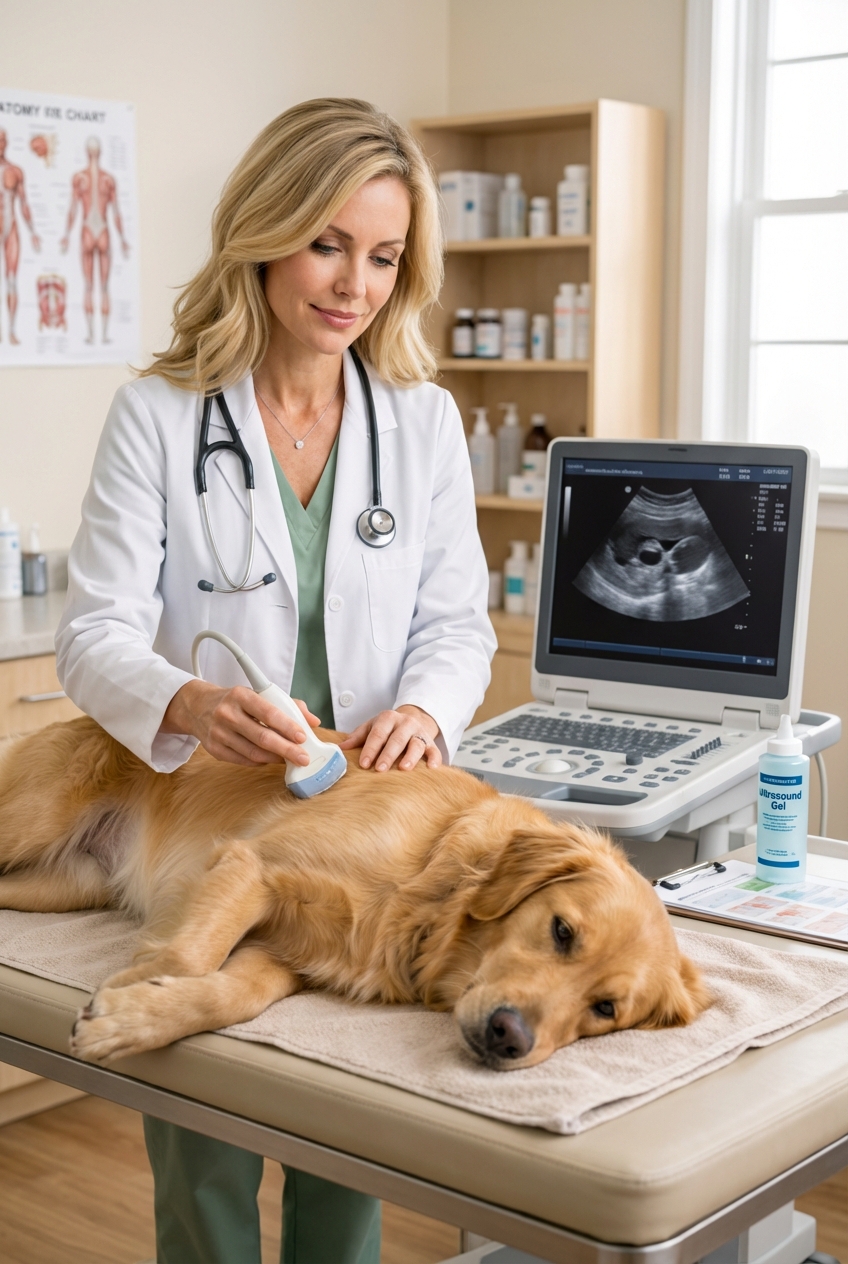
- Ultrasound: commonly used around day 25 to 35 after breeding to confirm pregnancy and check fetal viability (heartbeats). Heartbeats can sometimes be detected a bit earlier (often around the low-to-mid 20s), but dating varies. Counting puppies is difficult with ultrasound.
- Relaxin blood test: relaxin is a hormone produced during pregnancy. Testing can be helpful after day 25, with many clinics preferring around day 28+ to reduce false negatives.
- X-rays: best for estimating puppy count later in pregnancy. Skeletons become visible earlier, but counting is usually most reliable around day 55 to 60. This is helpful for whelping prep so you know how many puppies to expect.
If you are unsure when breeding occurred, tell your vet that too. They can help choose the best confirmation method.
Step 5: Late pregnancy signs (weeks 6 to 9)
In the last few weeks, pregnancy becomes much more obvious in most dogs:
- Noticeable belly enlargement: especially in large litters
- Increased appetite: many moms-to-be get hungrier as puppies grow
- Mammary development: mammary glands enlarge and may produce a small amount of milk closer to delivery
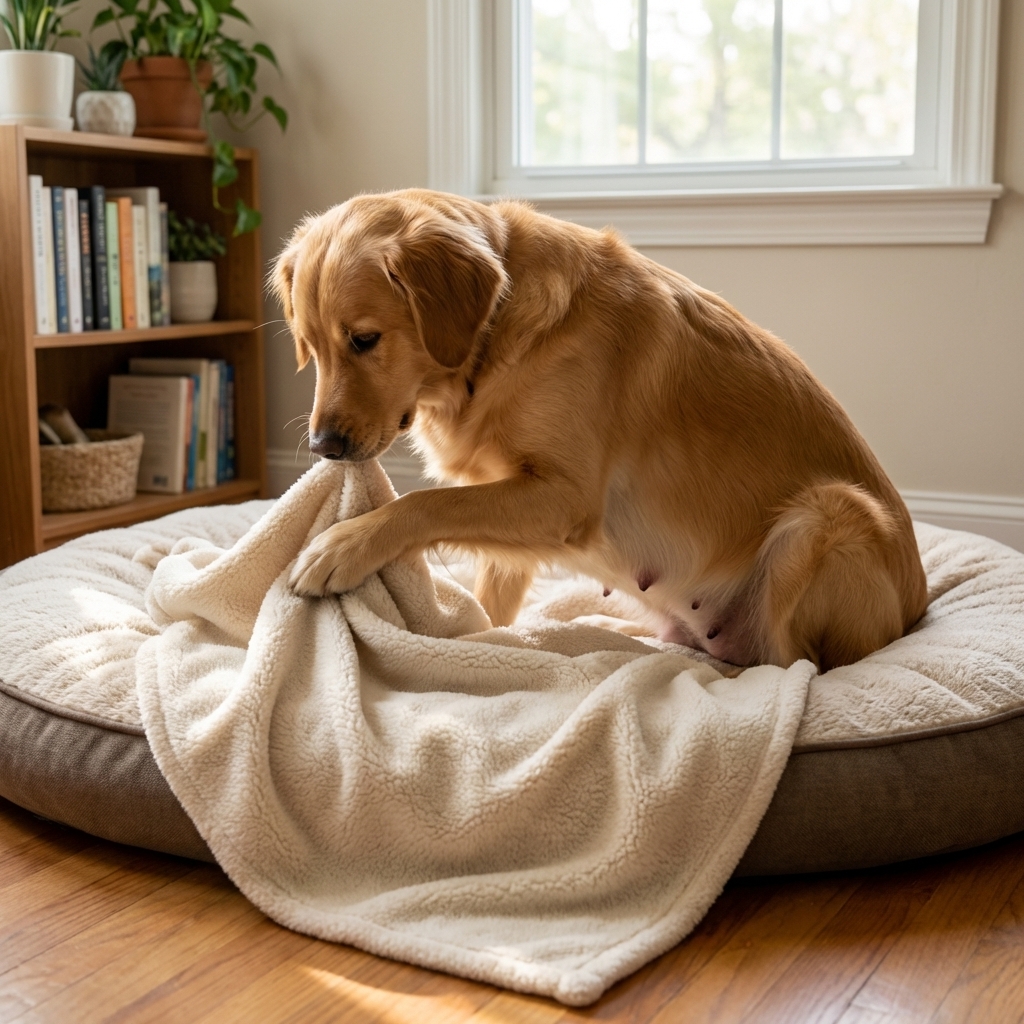
- Nesting behaviors: shredding bedding, seeking quiet spaces, “den” building
- Puppy movement: in some dogs you can see or feel movement late in pregnancy when she is relaxed
False pregnancy is common
One of the biggest reasons families feel confused is false pregnancy (also called pseudopregnancy). After a heat cycle, some dogs develop hormone-driven changes that mimic pregnancy.
Signs can include:
- Enlarged mammary glands, milk production
- Nesting
- Mothering toys
- Appetite and mood changes
If you see these signs but have no confirmed breeding, schedule a vet visit anyway. Your vet can help rule out pregnancy and also rule out conditions like mastitis or uterine problems.
Red flags: call your vet now
Pregnancy should not make your dog seriously sick. Seek veterinary care urgently if you notice:
- Any vaginal bleeding during pregnancy
- Foul-smelling discharge
- Green, black, or dark discharge before the first puppy (urgent)
- Fever, shaking, or extreme lethargy
- Repeated vomiting, signs of dehydration, or refusing food for more than 24 hours (especially in mid to late pregnancy, or anytime with other symptoms)
- Swollen, painful mammary glands or abnormal milk (bloody, foul odor)
- Obvious abdominal pain
These symptoms can indicate infections or pregnancy complications and should never be “wait and see” situations.
What not to do
When you are worried, it is tempting to try a quick fix at home. These are a few common mistakes I see, and they are worth avoiding:
- Do not give human medications unless your vet specifically tells you to.
- Do not start or stop flea, tick, or deworming products without asking your veterinarian what is safe in pregnancy.
- Avoid rough play and big routine changes if she seems uncomfortable.
- Do not squeeze the belly to “feel puppies.”
If pregnancy is confirmed
Once you know she is pregnant, you can make a few simple changes that protect both mom and puppies.
Nutrition and weight
- Keep her on a high-quality, balanced diet. Many vets recommend transitioning to a growth or puppy formula during late pregnancy and nursing, but this is individual.
- Avoid sudden diet switches. If you change food, do it gradually over 7 to 10 days.
- Do not overfeed early. Excess weight gain can make delivery harder.
Parasites, vaccines, and meds
- Ask your vet what parasite prevention is appropriate. Some products are safe and commonly used, others are not.
- If she is due for vaccines or has other medical needs, let your vet guide the timing. This is not a DIY area.
Exercise and comfort
- Keep exercise gentle and consistent unless your vet advises otherwise.
- Provide a quiet resting area away from household chaos.
Whelping prep
- Set up a whelping box in a calm room about 1 to 2 weeks before her due window.
- Ask your veterinarian what “normal labor” looks like for your dog’s breed and size.
- Consider an X-ray near day 55 to 60 to estimate puppy count so you know when she is finished delivering.
Labor red flags
If your dog is close to her due window, these are a few whelping situations that deserve an urgent call to your veterinarian or an emergency clinic:
- Strong contractions for 30 minutes with no puppy
- More than 2 hours between puppies if she seems distressed, weak, or is straining
- A puppy appears stuck at the vulva
- Green or black discharge before the first puppy, or foul-smelling discharge at any time
- Mom collapses, has pale gums, or shows severe weakness
Unplanned pregnancy
If the pregnancy is unplanned, you still have options. The kindest first step is to talk to your veterinarian early about what is safest for your dog, including medical and surgical options depending on timing, health, and your situation.
Quick checklist: next step
If you only do one thing after reading this, do this: schedule a vet appointment based on timing.
- About 28 to 35 days after breeding: ask about ultrasound or a relaxin test
- About 55 to 60 days after breeding: ask about an X-ray for puppy count and delivery planning
- Anytime you see red flags: seek care right away
Peace of mind matters. The sooner you confirm pregnancy, the sooner you can support mom with the right nutrition, monitoring, and a safe plan for delivery.