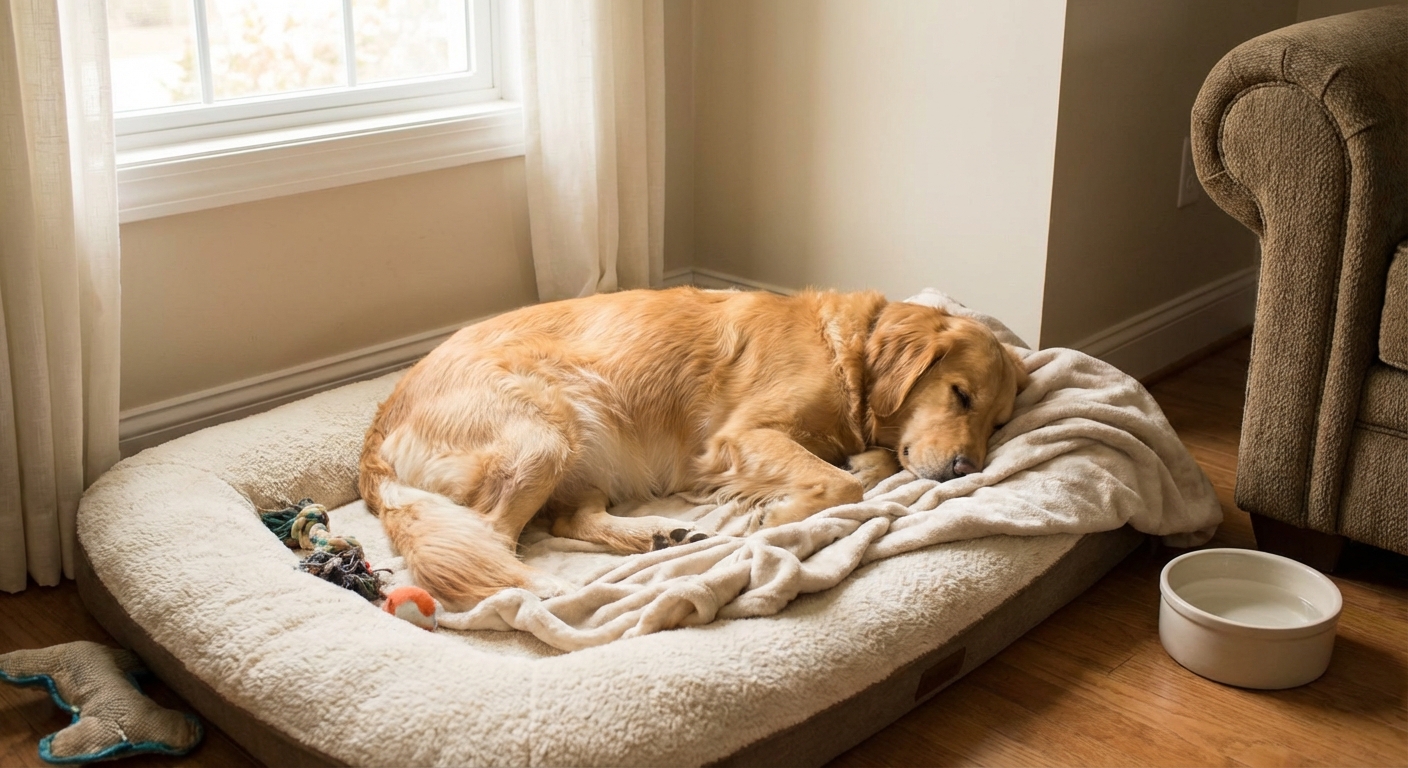
Track your dog’s pregnancy week by week with vet-informed milestones, common symptoms, confirmation tests, feeding guidance, whelping setup, labor signs, a...
Article
•
Designer Mixes
How to Tell If Your Dog Is Pregnant

Shari Shidate
Designer Mixes contributor
If you suspect your dog might be pregnant, you are not alone. As a veterinary assistant, I have seen how confusing this can feel, especially in the early weeks when the signs are subtle. The good news is that there are reliable ways to tell, and you do not have to guess. In this article, I will walk you through what to watch for at home, when to call your veterinarian, and what tests can confirm pregnancy.
First things first: pregnancy is not the only explanation
Many signs that look like pregnancy can also happen with other conditions, including a false pregnancy (pseudopregnancy), uterine infection (pyometra), intestinal parasites, weight gain, or hormonal changes. Because some of these issues can be serious, it is always worth checking in with your veterinarian if something feels off.
Safety note: If your unspayed dog seems lethargic, has a swollen belly, is drinking a lot, vomits, or has vaginal discharge, treat it as urgent and contact your veterinarian right away. Pyometra can become life-threatening quickly. It often happens weeks after a heat cycle and can occur with or without visible discharge (closed pyometra).
Dog pregnancy timeline at a glance
A typical canine pregnancy lasts about 63 days from ovulation. Because breeding can happen before or after ovulation, the timeline can also look like about 57 to 72 days from breeding. If you do not know the ovulation date, your veterinarian can help you estimate timing based on history and testing.
In the outline below, the “weeks” are counted as general pregnancy weeks after breeding or ovulation. Exact timing varies from dog to dog.
- Weeks 1 to 3: Few visible changes, mild behavior shifts
- Weeks 3 to 5: Appetite changes, nipple changes, possible mild weight gain
- Weeks 5 to 7: Belly enlargement becomes more noticeable
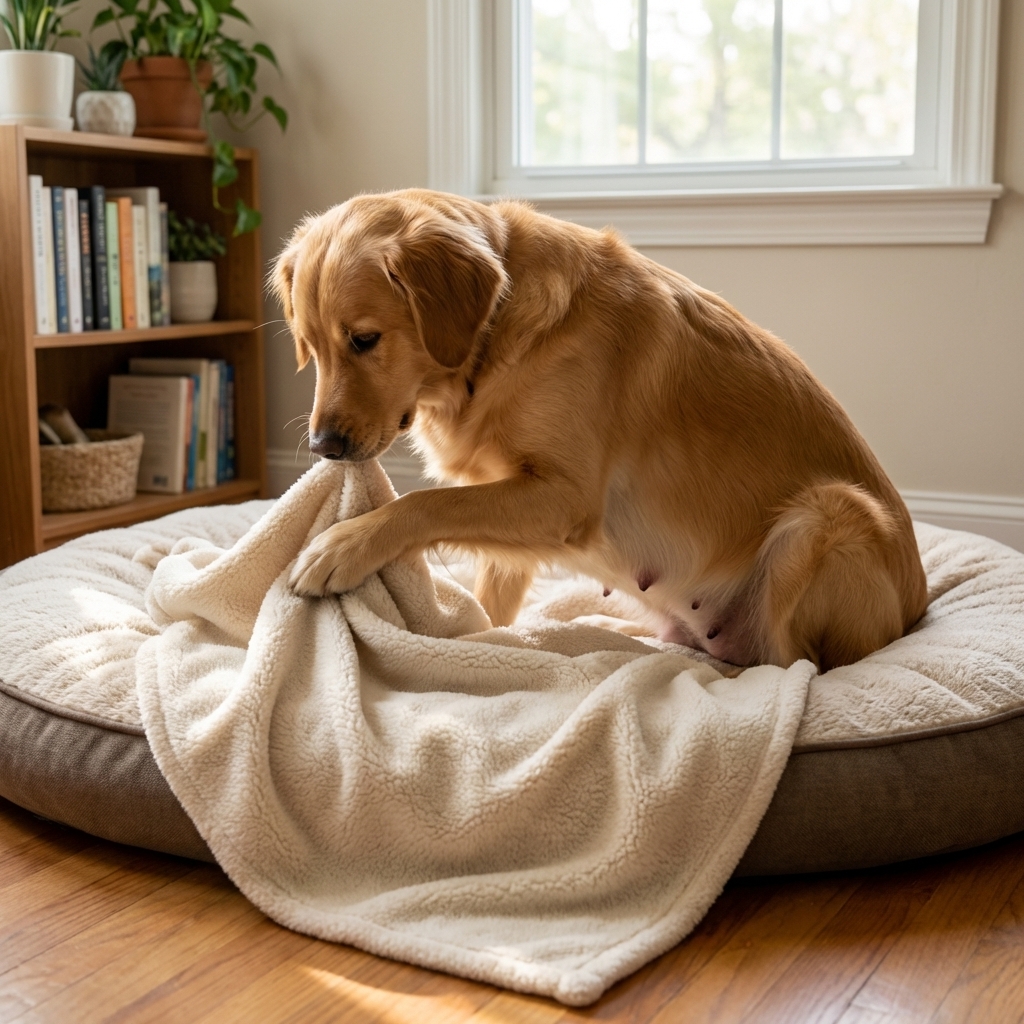
- Weeks 7 to 9: Nesting, milk production, and signs of impending labor
At-home signs your dog may be pregnant
Home clues are helpful, but none are 100 percent proof. Think of these as reasons to schedule a vet visit, not a final answer. Some dogs show almost nothing until the second half of pregnancy.
1) Changes in appetite
Some dogs eat less in the first few weeks, similar to morning sickness in humans. Others get hungrier later in pregnancy. Watch for changes that last more than a couple of days.
2) Behavior changes
You might notice your dog becoming more affectionate, more clingy, or occasionally more tired. Some dogs also become more sensitive about being picked up or having their belly touched.
3) Nipple and mammary gland changes
Nipples may look more prominent, and the area around them can become slightly enlarged or pinker. Later in pregnancy, the mammary glands may fill out more noticeably.
4) Weight gain and belly enlargement
True pregnancy weight gain usually becomes more obvious in the second half. Keep in mind that a round belly can also come from overeating, fluid, parasites, or other medical issues, so this one should never be your only clue.
5) Mild vaginal discharge
Some pregnant dogs have a small amount of clear or slightly cloudy discharge. Discharge can also happen with vaginitis or other issues. If discharge is persistent, foul-smelling, green, bloody, or paired with lethargy, call your veterinarian promptly.
How veterinarians confirm pregnancy (and when)
If you want a confident answer, veterinary testing is the way to go. Your veterinarian will choose the best method based on timing and your dog’s health. When you call to schedule, mention the estimated breeding date (or heat dates) because some clinics book ultrasounds in advance.
Ultrasound (often around day 25 to 30)
Ultrasound can confirm pregnancy relatively early and can sometimes detect fetal heartbeats. It is a great tool for confirmation, but it is not always the best for counting exact puppy numbers.
Relaxin blood test (often day 28 or later)
Relaxin is a hormone produced during pregnancy in dogs. A blood test can confirm pregnancy after enough time has passed, but testing too early can lead to a false negative. Your veterinarian can advise whether the timing is based on breeding date or a more precise ovulation estimate.
Abdominal palpation (around day 28 to 35)
Some veterinarians can feel the developing uterine swellings during a specific window. This is technique-dependent and not always appropriate for every dog.
X-rays (best for counts around day 55)
Fetal skeletons start to mineralize around day 45, but it is often difficult to get an accurate puppy count until about day 50 to 55. Many clinics prefer x-rays closer to day 55 for the most reliable head count, and even then, undercounting can happen depending on positioning.
False pregnancy: surprisingly common
False pregnancy can happen in unspayed females, usually several weeks after a heat cycle. Dogs may show many pregnancy-like signs, including mammary enlargement, milk production, nesting behaviors, and even “mothering” toys.
If your dog seems pregnant but you are not sure she was bred, a vet exam is important. False pregnancy is often manageable, but it can sometimes lead to mastitis (infection in the mammary tissue) or distress.
What to do if you think your dog is pregnant
Here are practical next steps you can take right now.
1) Schedule a veterinary visit
Ask your clinic which confirmation method makes sense based on when breeding might have occurred. If the pregnancy was unplanned, ask early. Options and next steps depend heavily on timing and your dog’s health.
2) Do not change food too early
In early pregnancy, most dogs should stay on their normal balanced diet. Overfeeding early can lead to unnecessary weight gain. Nutritional needs rise more significantly in the last third of pregnancy and during nursing. Many veterinarians recommend transitioning to a high-quality growth or puppy diet in that final third, but your veterinarian should tailor this to your dog.
3) Avoid unnecessary medications and supplements
Some flea, tick, worm, and supplement products are not recommended during pregnancy. Only give what your veterinarian approves. Do not start calcium supplements unless your veterinarian specifically directs it, because it can increase the risk of eclampsia around whelping and nursing in some dogs.
4) Keep activity steady, not intense
Regular walks and gentle play are great. Avoid high-impact jumping or rough play as her belly grows.
5) Start planning for whelping
As you get closer to the final third of pregnancy, ask your veterinarian about whelping supplies, warning signs of trouble, and what an emergency plan looks like for nights or weekends.
Signs labor is approaching
As the due date nears, you may notice:
- Nesting behavior, pacing, or restlessness
- Appetite drop 12 to 24 hours before labor in some dogs
- Milk present in the mammary glands
- A rectal temperature drop (often below about 99°F) within roughly 24 hours of labor, though not always perfectly predictable
If you are tracking temperature, ask your veterinarian how to do it safely and what number matters for your specific dog.
When to call the vet urgently
Please call your veterinarian or an emergency clinic if you notice any of the following in a possibly pregnant dog:
- Weakness, collapse, or extreme lethargy
- Heavy bleeding or foul-smelling discharge
- Green discharge before a puppy is delivered
- Hard straining for more than 20 to 30 minutes with no puppy (general emergency guideline; your veterinarian may advise different timing for your dog)
- More than 2 hours between puppies when you know more remain (general emergency guideline; your veterinarian may advise differently)
- Severe vomiting, swollen painful abdomen, or signs of significant pain
Quick FAQ
Can I tell if my dog is pregnant at 1 week?
Usually no. At one week, most dogs show no reliable physical signs. Confirmation testing is also typically too early.
Will my dog’s belly always get big if she is pregnant?
Not always. Large dogs, first-time moms, and dogs with small litters may show less belly enlargement. On the other hand, belly enlargement can happen for reasons unrelated to pregnancy.
Can I use a human pregnancy test on a dog?
No. Human tests detect human-specific hormones. Dogs produce different pregnancy markers, and the timing is different.
Should I spay if my dog is already pregnant?
That is a veterinary and personal decision that depends on timing, health, and circumstances. Your veterinarian can explain options clearly and compassionately.
The bottom line
If your dog might be pregnant, trust your instincts and get confirmation from your veterinarian. Early signs can be subtle, and look-alikes are common. With the right testing, a sensible plan for nutrition and care, and an emergency strategy in place, you can support your dog safely through pregnancy and delivery.
If you are unsure about timing, your veterinarian can help you estimate where your dog is in pregnancy and which confirmation test makes the most sense right now.