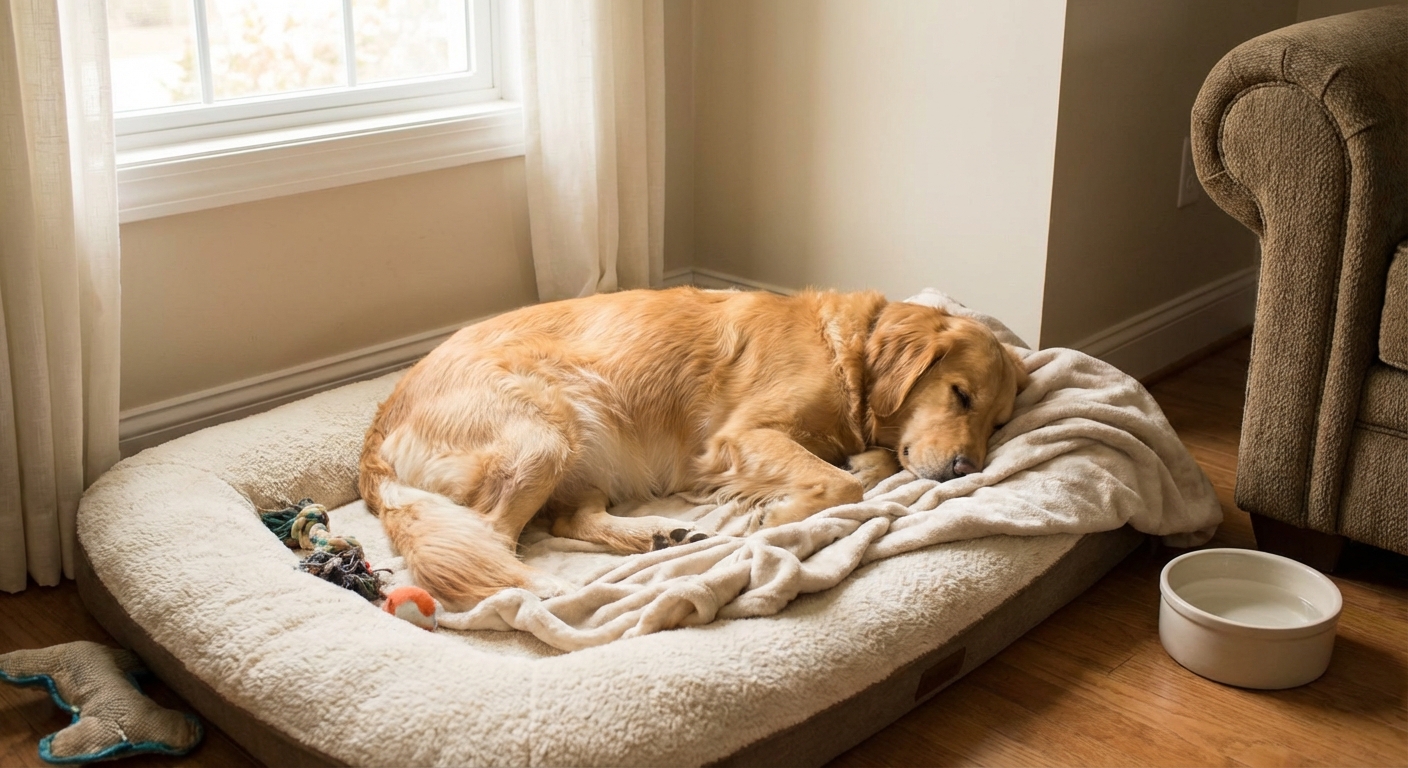
Most dogs are pregnant about 63 days from ovulation (58–68 days total). Get a clear week-by-week pregnancy timeline, labor stages, vet test timing, and red...
Article
•
Designer Mixes
How to Tell If Your Dog Is Pregnant

Shari Shidate
Designer Mixes contributor
If you think your dog might be pregnant, you are not alone. As a veterinary assistant here in Frisco, Texas, I have seen how confusing those first few weeks can be. The good news is there are several reliable clues you can watch for at home, plus a few simple veterinary tests that can confirm pregnancy and estimate how far along she is.
This guide walks you through what to look for by week, when to call your vet, and how to support your dog through a healthy pregnancy.

Quick facts first
- Average pregnancy length (from ovulation): about 63 days (usually within about 24 hours).
- Why the calendar can vary: If you count from the breeding date, timing often looks wider, commonly around 58 to 68 days, because sperm can survive for several days and fertilization may not happen the same day breeding occurs.
- Most home signs are not definitive early on. The most accurate confirmation comes from your veterinarian.
- False pregnancy (pseudopregnancy) can mimic real pregnancy, especially in unspayed dogs after a heat cycle.
At-home signs of pregnancy (and what they really mean)
1) Appetite changes
Some dogs eat less in the first few weeks, similar to morning sickness. Later in pregnancy, many dogs become hungrier as the puppies grow. Appetite changes alone are not proof, but they are a common early clue.
2) Mild lethargy
It is normal for pregnant dogs to nap more or seem less interested in long play sessions. That said, extreme lethargy, weakness, or collapse is never normal and needs urgent care.
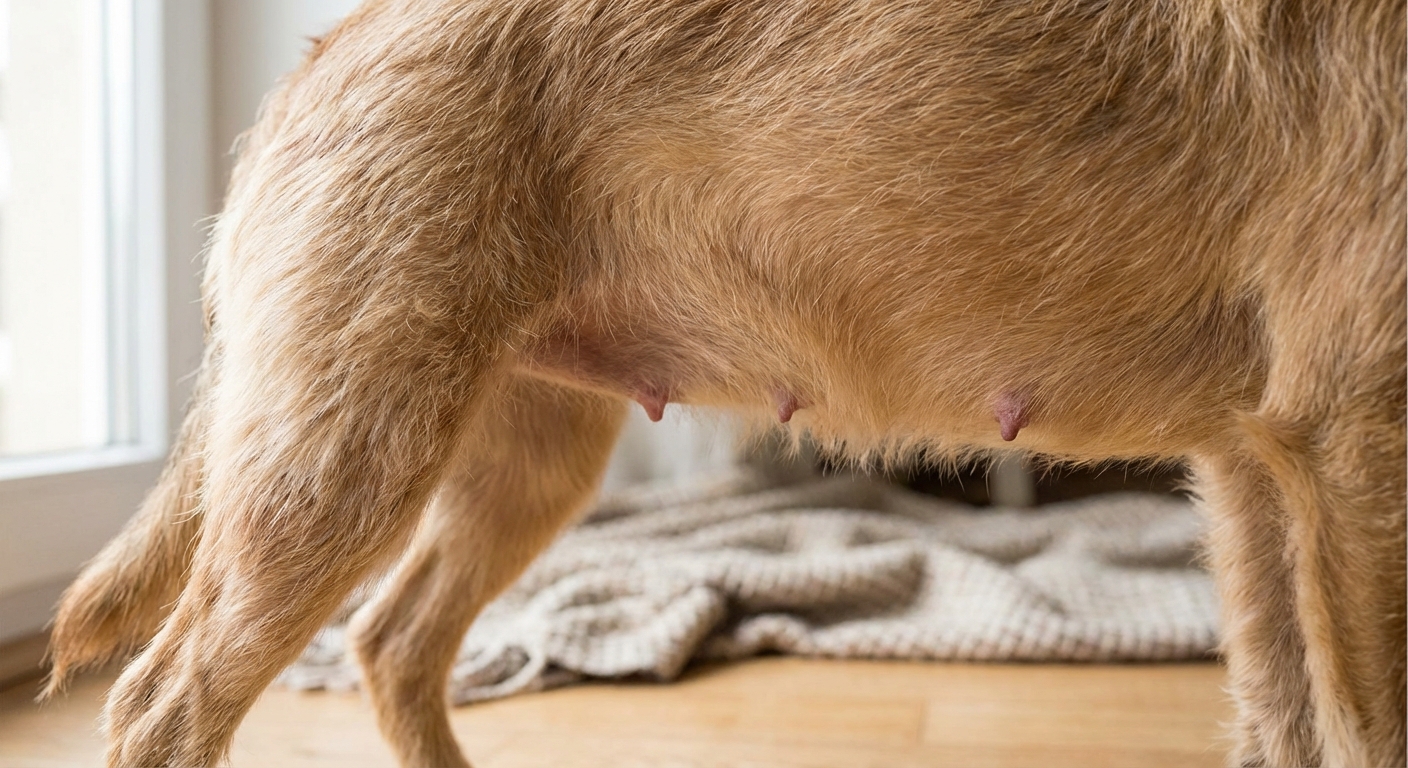
3) Nipple changes and mammary development
Nipples may look slightly larger or more prominent, and the area around them can appear a bit fuller. Some dogs develop a thin, clear discharge later on. These changes can also occur with false pregnancy.
4) Weight gain and a growing abdomen
Visible belly changes usually show up in the second half of pregnancy, and they vary by breed, litter size, and the dog’s body shape. A dog with a small litter may not look very round at all.
5) Behavior changes
You may notice extra affection, clinginess, restlessness, or a desire to be alone. In late pregnancy, nesting behavior is common.
6) Vomiting (sometimes)
Occasional mild vomiting can happen early, but frequent vomiting, inability to keep water down, or signs of dehydration should be checked by a vet promptly.
Week-by-week: what to expect
Weeks 1 to 2
- Often no obvious signs.
- Some dogs are a bit sleepier.
- Appetite may dip slightly.
What to do: Keep routines steady. Avoid starting new supplements or medications unless your veterinarian okays them.
Weeks 3 to 4
- Possible mild nausea or vomiting.
- Nipples may become more noticeable.
- Behavior changes can start.
Vet check: This is a great window to call your vet and discuss timing for confirmation testing. A veterinarian may be able to palpate the abdomen around this time in some dogs, but it is not always reliable and should only be done by a professional.
Weeks 5 to 6
- Appetite often increases.
- Abdomen begins to expand more noticeably.
- Mammary glands may develop further.
Vet check: Ultrasound is often used earlier, but this mid-pregnancy period is still a common time to confirm pregnancy and assess fetal viability.
Weeks 7 to 9
- Clear nesting behavior can appear.
- Energy may drop again as delivery approaches.
- You may see milk production closer to whelping.
Optional at-home tip: Some breeders and vets use a rectal temperature log to help predict labor. A dog’s temperature often drops below about 100°F roughly 12 to 24 hours before labor starts. Ask your vet to show you the safest way to do this and what number they want you to watch for.
Vet check: X-rays are typically most helpful later in pregnancy to see skeletons and estimate puppy count, which can be important during labor.
The most accurate ways to confirm pregnancy
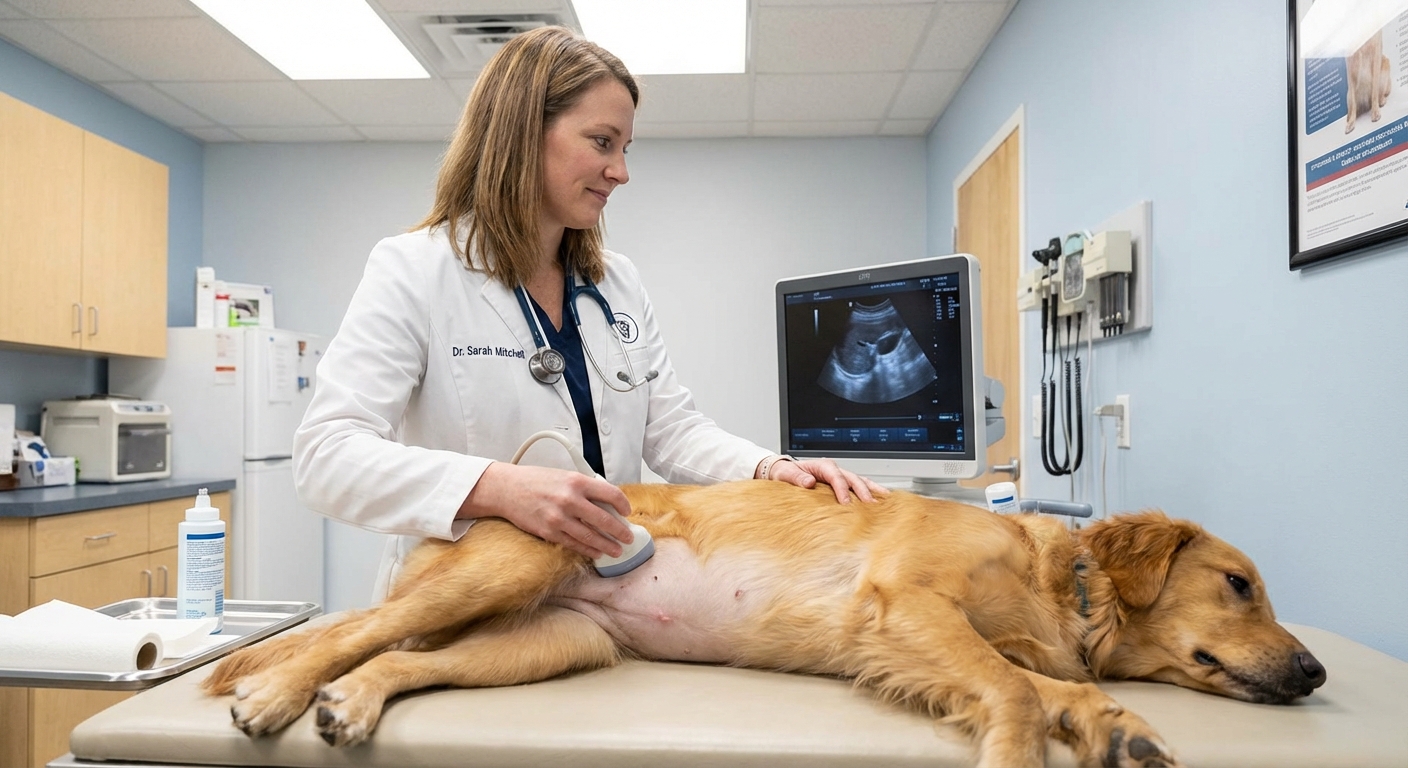
Veterinary ultrasound
Ultrasound can often detect pregnancy early and helps assess fetal heartbeats and viability. In many clinics, it is typically done around day 25 to 30 after breeding (sometimes a bit earlier or later depending on your dog and your vet’s preference).
Relaxin blood test
This test looks for the hormone relaxin, which is produced during pregnancy. It is usually most reliable after about day 28 following breeding. Testing too early can lead to a false negative, so your vet will guide the best timing.
X-ray (radiographs) later in pregnancy
X-rays do not confirm early pregnancy well, but later on they help estimate how many puppies to expect. They are typically most useful after about day 55, when fetal skeletons are calcified enough to count. Knowing the puppy count helps you and your veterinarian monitor labor and reduce the risk of a puppy being retained.
False pregnancy: a common reason people get fooled
False pregnancy can happen after a heat cycle, whether or not your dog was bred. Dogs may develop enlarged mammary glands, nesting behavior, appetite changes, and even milk production.
What to do: If your dog is acting pregnant but you are unsure, schedule a vet visit. It is also smart to avoid encouraging “mom” behaviors like excessive nursing of toys, because that can stimulate more milk production.
When to call the vet right away
Pregnancy is not an illness, but complications can happen. Contact your veterinarian or an emergency clinic if you notice any of the following:
- Heavy bleeding from the vulva at any time
- Green discharge before the first puppy is delivered
- Foul-smelling discharge
- Severe vomiting, refusing water, or signs of dehydration
- Fever, severe weakness, collapse, or pale gums
- Obvious abdominal pain
- Strong contractions for 20 to 30 minutes with no puppy produced
- More than about 2 hours between puppies when you know there are more to come
Simple at-home care if your dog is pregnant
Feed for steady, healthy weight gain
In early pregnancy, most dogs do not need a big calorie increase. In later pregnancy and nursing, calorie needs rise. Your veterinarian may recommend a high-quality growth or puppy formulation in late pregnancy, especially for dogs carrying multiple puppies.
Tip: Avoid sudden diet switches. If you change foods, transition slowly over several days to protect her gut.
Keep exercise gentle and consistent
Regular walks are great. Skip intense jumping, rough play, and high-impact activity, especially in the final weeks.
Create a whelping space early
Set up a quiet, warm, easy-to-clean area where she can feel safe. Introduce it before labor so she accepts it as her space.
Be careful with medications and supplements
Some flea, tick, deworming, and pain medications are not recommended during pregnancy. Always confirm with your veterinarian before giving anything new.

How to tell if a young dog or senior dog is pregnant
Young dogs
It is possible for a very young female to become pregnant after her first heat cycle. Because she is still growing herself, pregnancy can be harder on her body. Early veterinary support is especially important, including nutrition planning and discussing safe timing for X-rays and prenatal checks.
Senior dogs
Older dogs have a higher risk of pregnancy complications. If your dog is older and you suspect pregnancy, do not wait to confirm it. Your veterinarian may recommend closer monitoring, especially as delivery approaches.
What not to do
- Do not press on your dog’s abdomen trying to “feel puppies.” You can cause pain or injury.
- Do not guess based on belly size alone. Weight gain can also be due to worms, fluid buildup, uterine infection, or simple overeating.
- Do not delay veterinary care if you see red-flag symptoms. Pregnancy emergencies can move quickly.
Pregnancy confirmation checklist
If you want a simple next step, here is what I recommend to many families:
- Write down the first possible breeding date and any other dates she may have been exposed.
- Track appetite, vomiting, energy, and any discharge for 7 to 10 days.
- Book a vet visit to discuss ultrasound (often around day 25 to 30) or a relaxin test (often after day 28) based on timing.
- If pregnancy is confirmed, ask about a plan for late-pregnancy X-rays (often after day 55) to estimate puppy count.
When you replace guessing with a clear timeline and a vet-confirmed plan, you can relax and focus on supporting a safe pregnancy and delivery.