
Dogs often hide pain. Use this daily guide to spot subtle signs in movement, mood, appetite, and touch, plus common causes, red flags, and a quick 2-minute h...
Article
•
Designer Mixes
How to Tell If Your Dog Is in Pain

Shari Shidate
Designer Mixes contributor
Dogs are often very good at hiding pain. It is a survival instinct, and it is one reason caring owners can miss early warning signs. At the same time, some dogs are naturally more expressive depending on temperament, breed, and the type of pain. As a veterinary assistant here in Frisco, Texas, I have seen many dogs come in “acting a little off” and we end up finding a painful ear infection, arthritis flare, dental disease, or even an emergency like bloat.
The good news is that you can learn to spot pain early by watching for small changes in movement, mood, appetite, and daily habits. This guide will walk you through what to look for, what to do at home, and when it is time to call your veterinarian.
Quick note: This article is for education and is not a substitute for a veterinary exam, diagnosis, or treatment. If you are worried, it is always okay to call your vet or an emergency clinic.

First, know your dog’s normal
Pain is easier to recognize when you have a baseline. Every dog has their own normal energy level, gait, appetite, and personality. A subtle change is often the biggest clue.
- Take a quick daily snapshot: eating, drinking, bathroom habits, energy, and willingness to be touched.
- Notice routines: how they get up, do stairs, jump in the car, and settle down at night.
- Track favorite touch spots: do they enjoy being petted in the same places as always?
Common signs of pain
Dogs do not always cry or limp. Many show pain through behavior and body language. Below are the most common signs we see in veterinary clinics.
1) Movement changes
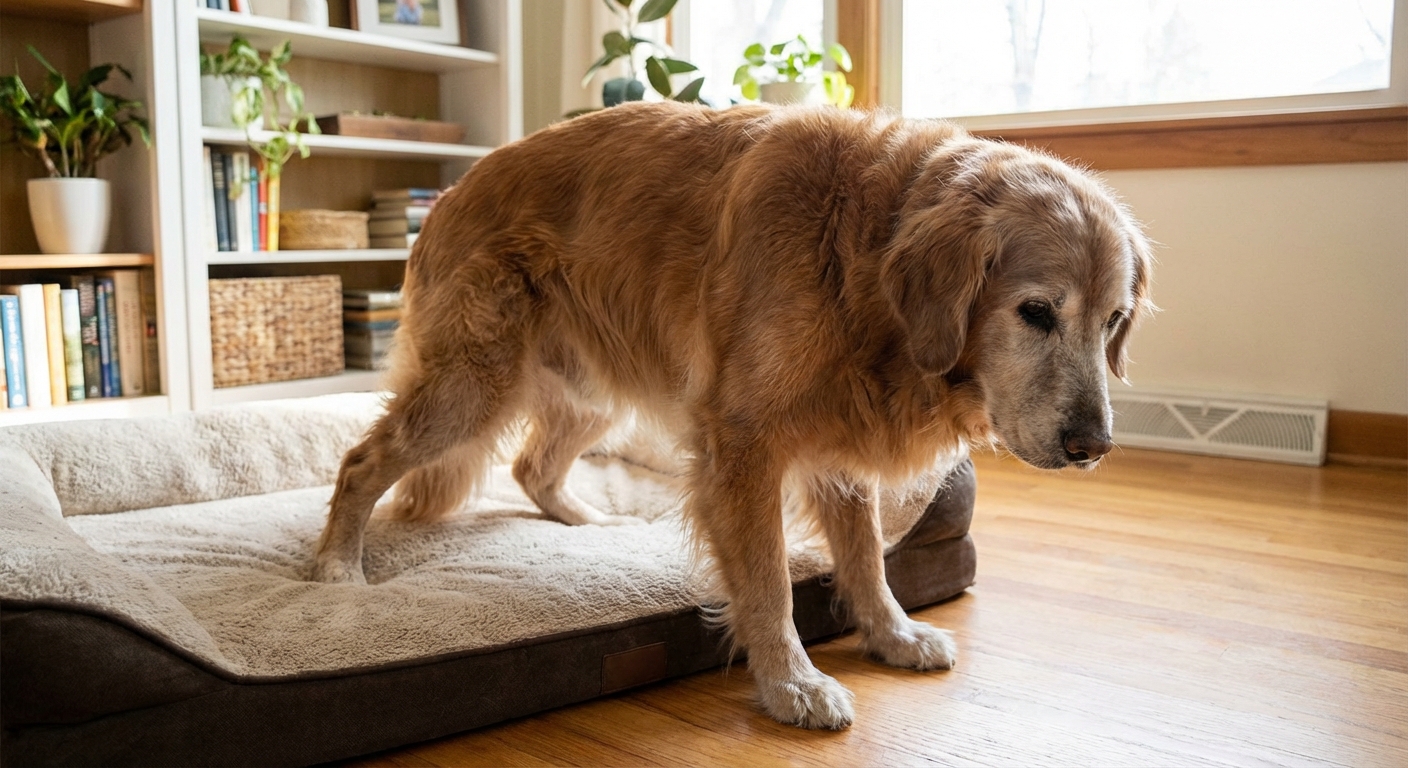
- Stiffness when getting up, especially after resting
- Limping, favoring a leg, or “bunny hopping” in the back end
- Slower on walks, stopping more often, lagging behind
- Reluctance to jump onto furniture or into the car
- Trouble with stairs, slipping, or missteps
- Head held lower than usual or a hunched back
2) Mood and behavior changes
- More withdrawn, hiding, or less social
- Irritability or growling when touched in a certain area
- Restlessness, pacing, difficulty getting comfortable
- Clinginess that is new for them
- Less interest in play or family activities
3) Eating, drinking, and grooming changes
- Decreased appetite or suddenly eating very slowly
- Dropping food, chewing on one side, pawing at the mouth
- More drinking or less drinking than usual
- Less grooming, or excessive licking of one spot
4) Facial cues and body language
Some dogs show facial and posture changes when they hurt, similar to what is described in canine “grimace scale” tools. Facial cues are just one piece of the picture, and they can overlap with fear, anxiety, nausea, or stress. Still, once you start watching for them, they can be a helpful clue.
- Squinting or a furrowed brow
- Ears pinned back or held differently
- Tense jaw, lip licking, yawning when not tired
- Whale eye, showing more whites of the eyes
- Tail tucked or held low, or a tail that stops wagging normally
5) Breathing and heart rate changes
- Panting when the room is cool and your dog has not been exercising
- Faster breathing at rest
- A faster heartbeat than usual (especially when paired with restlessness or a tense body)
Important: panting and a wide-eyed “worried” look can also be caused by heat, stress, or fear. Context matters. If your dog might be overheating, treat that as urgent.
6) Vocalizing (or going very quiet)
- Whining, whimpering, growling, yelping
- Barking when moving or being lifted
- Some dogs go quiet and “shut down,” which can be just as concerning
Common pain sources and clues
You do not need a diagnosis at home, but noticing patterns helps your veterinarian find the source faster.
Mouth and dental pain
- Bad breath, drooling, reluctance to eat kibble
- Pawing at the mouth, bleeding gums, chewing on one side
- “Grumpy” behavior when the face is touched
Ear pain
- Head shaking, scratching at one ear
- Head tilt, sensitivity when you touch the ear
- Odor or discharge
Joint pain and soft tissue injuries
- Stiffness after naps, difficulty on stairs
- Limping that improves then returns
- Reluctance to jump, shortened stride
Back or neck pain
- Crying when picked up, trembling
- Hunched posture, tight belly, reluctance to lower the head to eat
- Weakness, wobbliness, or dragging nails on the ground
Stomach pain
- Restlessness, frequent repositioning
- Praying position (front end down, rear up)
- Vomiting, diarrhea, loss of appetite
- Bloated belly or unproductive retching (an emergency sign)
Urinary or reproductive pain
- Straining to urinate, frequent small attempts
- Accidents in a previously house-trained dog
- Blood in urine, licking the genital area
Safe at-home checks
Think of these as gentle observations, not a full exam. If your dog is fearful or may bite, stop and call your veterinarian. Pain can make even a sweet dog react defensively.
Safety first: avoid putting your face close to your dog’s face, and do not force handling. If your dog is already trained to wear a basket muzzle, it can be a helpful tool for safe transport and gentle checks. If they are not muzzle-trained, do not try to “figure it out” in a stressful moment. Call your vet for guidance.
Step 1: Watch before you touch
- How do they rise from lying down?
- Are they weight-bearing evenly?
- Do they stretch normally?
- Do they sit squarely or kick one leg out?
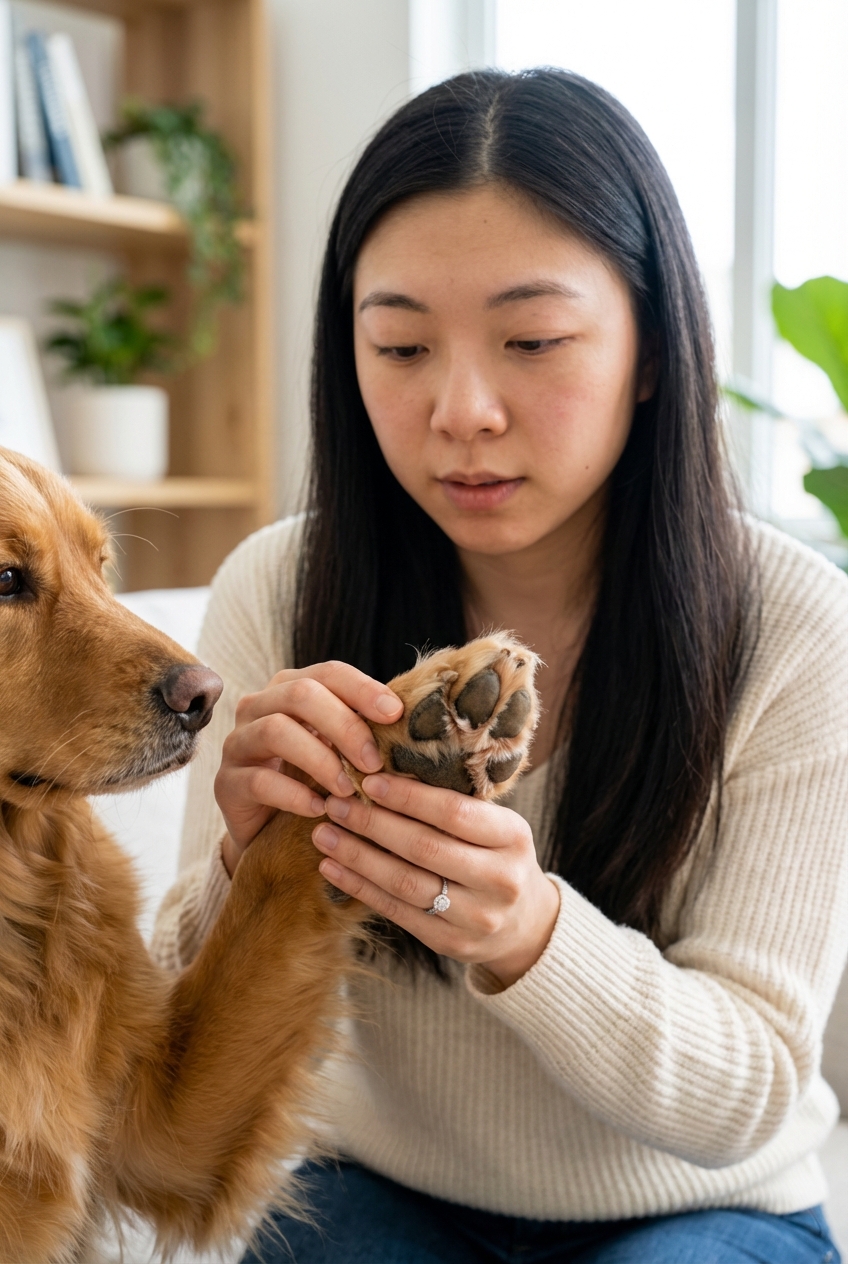
Step 2: Do a slow hands-on scan
Start in a spot they usually like, such as the chest or shoulders. Use light pressure and look for flinching, tensing, turning the head back, lip licking, freezing, or trying to move away.
- Check legs and paws for swelling, heat, or a foreign object between toes
- Gently feel along the spine and hips for sensitivity
- Watch for sudden licking at a specific area after you touch it
Step 3: Check eating and bathroom patterns
- Is your dog eating less, chewing differently, or avoiding hard treats?
- Any change in stool consistency, frequency, or accidents?
- Any straining, crying, or urgency?
Use a quick pain journal
When you get to the vet, clear details make a big difference. A simple log for 24 to 72 hours can help your veterinary team decide what tests are needed and whether pain control is urgent.
What to write down
- Start time: sudden vs gradual
- Triggers: stairs, jumping, eating, being touched, mornings
- Severity: mild, moderate, severe, and whether it is getting worse
- Video: a short clip of limping or unusual posture can be incredibly helpful
If you can capture a 10-second video of your dog walking toward you and away from you on a flat surface, bring it to your appointment. It often shows more than what we see in an exam room.
When pain is an emergency
Trust your instincts. If something feels wrong, it is okay to seek urgent care. In veterinary medicine we would rather rule out a serious problem than have you wait too long.
Go to an emergency vet now if you notice
- Difficulty breathing, pale gums, collapse, or extreme weakness
- Unproductive retching, swollen belly, sudden distress (possible bloat)
- Seizures, severe disorientation, or sudden inability to walk
- Open wounds, heavy bleeding, or suspected broken bone
- Inability to urinate, or repeated straining with little to no urine
- Persistent vomiting, vomiting blood, or black tarry stool
- Severe pain with a hard, tense abdomen
- Suspected toxin ingestion (for example, xylitol, rodent bait, grapes, chocolate, medications)
- Heatstroke signs (heavy panting, bright red or very pale gums, vomiting, collapse, acting “drunk”)
What not to do at home
This is so important. Many over-the-counter human pain relievers are dangerous for dogs.
- Do not give human NSAIDs like ibuprofen or naproxen. They can cause life-threatening ulcers and kidney injury.
- Do not give acetaminophen unless your veterinarian tells you the exact dose and confirms it is appropriate for your dog. It can be toxic if mis-dosed, and it is not the right choice for every situation or every dog.
- Do not use leftover pet prescriptions without guidance. The wrong drug or dose can mask symptoms or create serious side effects.
- Do not force exercise “to loosen them up” if they are limping or reluctant to move.
If your dog seems painful and you are not sure what is safe, call your veterinarian and ask. They can advise you based on your dog’s weight, medical history, and symptoms.
What your vet may do
Knowing what to expect can make the visit less stressful.
- History and exam: gait evaluation, joint range of motion, abdominal palpation, oral and ear exam
- Diagnostics when needed: X-rays, bloodwork, urinalysis, fecal test, ultrasound
- Pain plan: prescription pain control for dogs, other analgesics when appropriate, joint supplements, physical therapy, weight management, dental treatment, or surgery depending on the cause
Comfort steps while you wait
These are supportive steps that can help without risking toxicity.
- Rest: keep activity calm, leash walks only for bathroom breaks
- Soft bedding: add extra cushioning, especially for seniors
- Traction: place rugs or yoga mats on slippery floors
- Easy access: block stairs, use a ramp for cars or furniture if needed
- Heat, used carefully: gentle warmth can be soothing for chronic stiffness (like arthritis). For sudden injuries, swelling, or pain that started after rough play or a fall, skip the heat and call your veterinarian for guidance.

Pain can be subtle
If your dog is not acting like themselves, it is worth investigating. Early pain control is not just about comfort. It can protect mobility, appetite, sleep, and overall quality of life.
When in doubt, take a short video, start a simple pain journal, and call your veterinarian. You know your dog best, and your observations are valuable.
References
- American Animal Hospital Association (AAHA). AAHA Pain Management Guidelines for Dogs and Cats (2022).
- International Veterinary Academy of Pain Management (IVAPM). Owner resources on recognizing and treating pain in animals.
- WSAVA Global Pain Council. Educational resources on pain recognition and management.
- American Veterinary Medical Association (AVMA). Pet emergency guidance and owner education resources.