
Know the difference between choking and coughing, what to check first, how to remove visible objects safely, when to use abdominal thrusts or back blows, and...
Article
•
Designer Mixes
How to Tell If Your Dog Is Choking

Shari Shidate
Designer Mixes contributor
As a veterinary assistant here in Frisco, Texas, I can tell you this: choking can look dramatic, but it can also look surprisingly quiet. The key is knowing the difference between a dog who is coughing or gagging and a dog who is truly unable to breathe. When you can spot those signs quickly, you can act quickly.
Below are practical, evidence-based signs to watch for, what to do in the moment, and how to lower the risk in the future.
Choking vs coughing: why it matters
Dogs cough and gag for lots of reasons, including kennel cough, allergies, collapsing trachea, heart disease, reverse sneezing, or simply pulling too hard on a collar. True choking means something is blocking airflow through the throat or windpipe.
Think of it like this: if air can still move, you will often hear coughing, gagging, or retching. If air cannot move, you may see panic and distress with very little sound.
- Possible choking: sudden distress during eating or chewing on a toy, pawing at the mouth, gagging or retching, drooling, and breathing that looks harder than normal.
- Emergency choking (no airflow): silent or weak cough, inability to inhale, blue or gray gums, collapse, or loss of consciousness.
If you are unsure, treat it like an emergency and call your veterinarian or an emergency vet while you assess your dog.
Clear signs your dog may be choking
Look for a sudden cluster of symptoms, especially if they start while your dog is eating, playing with a chew, or grabbing something off the floor.
Common signs (air may still be moving)
- Sudden gagging, retching, or repetitive coughing
- Persistent or worsening coughing, especially if it started during eating or chewing
- Pawing at the mouth or rubbing the face on the floor
- Excess drooling or foamy saliva
- Wide eyes, anxious body language, pacing
- Stretching the neck forward as if trying to swallow
Danger signs (airflow may be blocked)
- Struggling to breathe, belly heaving, or open-mouth breathing with distress
- Little to no sound coming out despite obvious effort
- Blue, gray, or very pale gums and tongue
- Weakness, staggering, or collapse
- Loss of consciousness
If you see danger signs: you are in an emergency window. Start first aid while someone else calls an emergency vet and prepares to leave.
What to do right now (step-by-step)
Safety first: a frightened dog in distress may bite even the sweetest family pet. If you can, use a calm voice and keep your movements controlled.
Step 1: If your dog can cough, let them cough
If your dog is coughing forcefully and can still pull in air, coughing is their best tool to clear the object. Avoid sweeping your fingers deep into the mouth, which can push an object farther back.
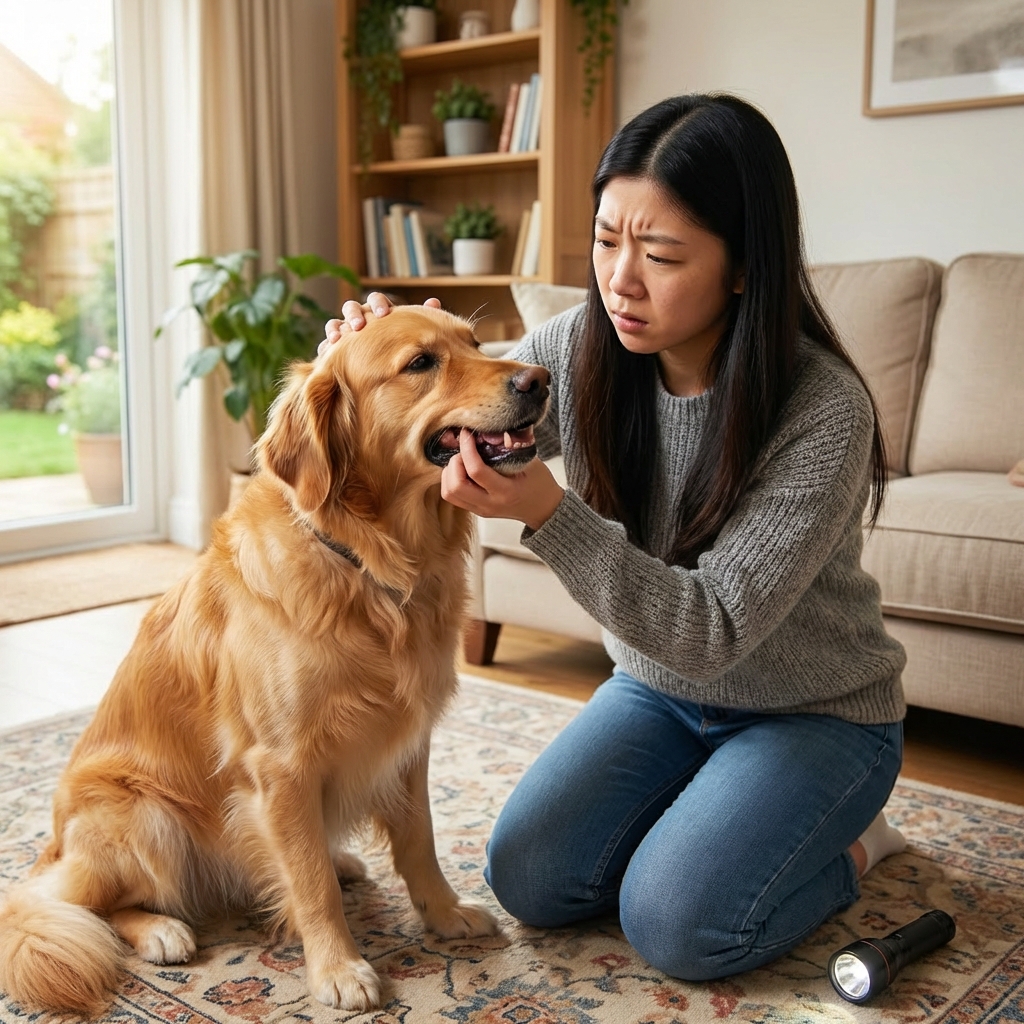
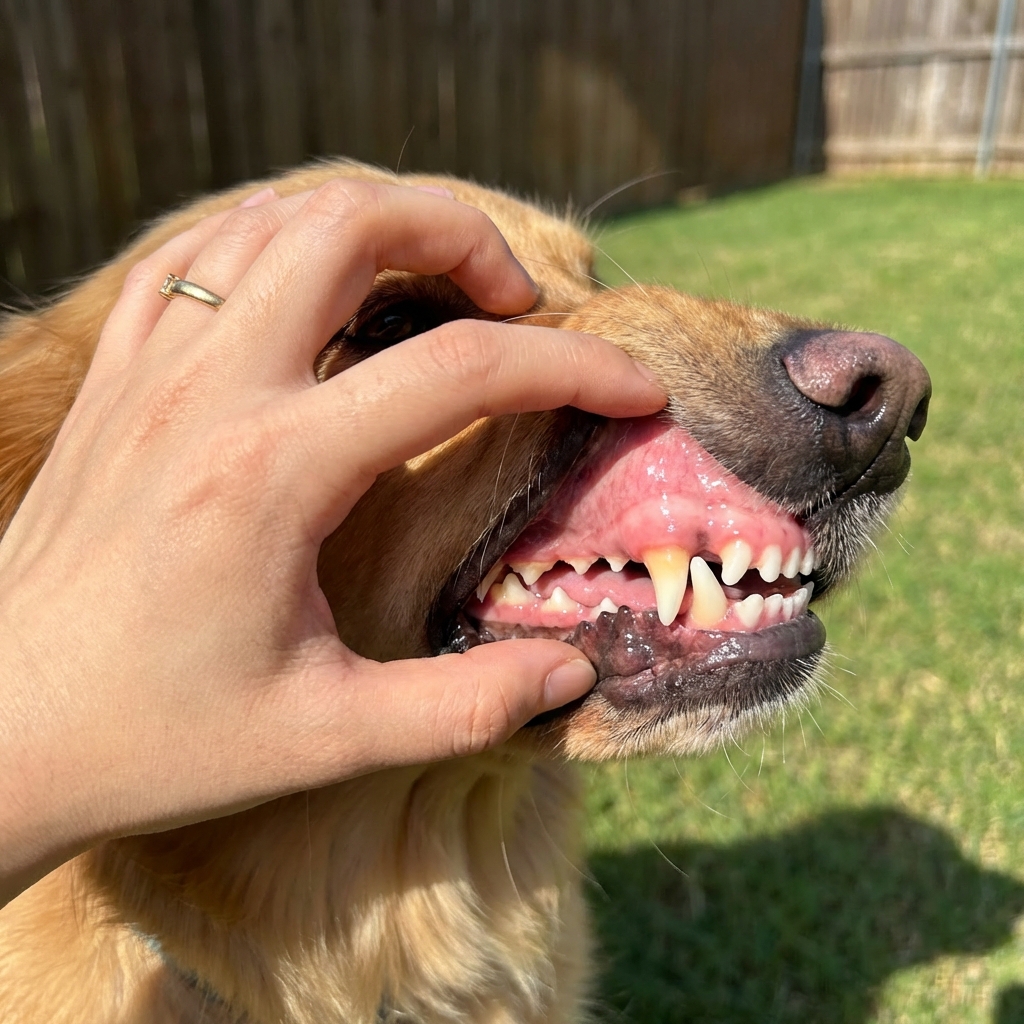
Step 2: Look in the mouth only if it is safe
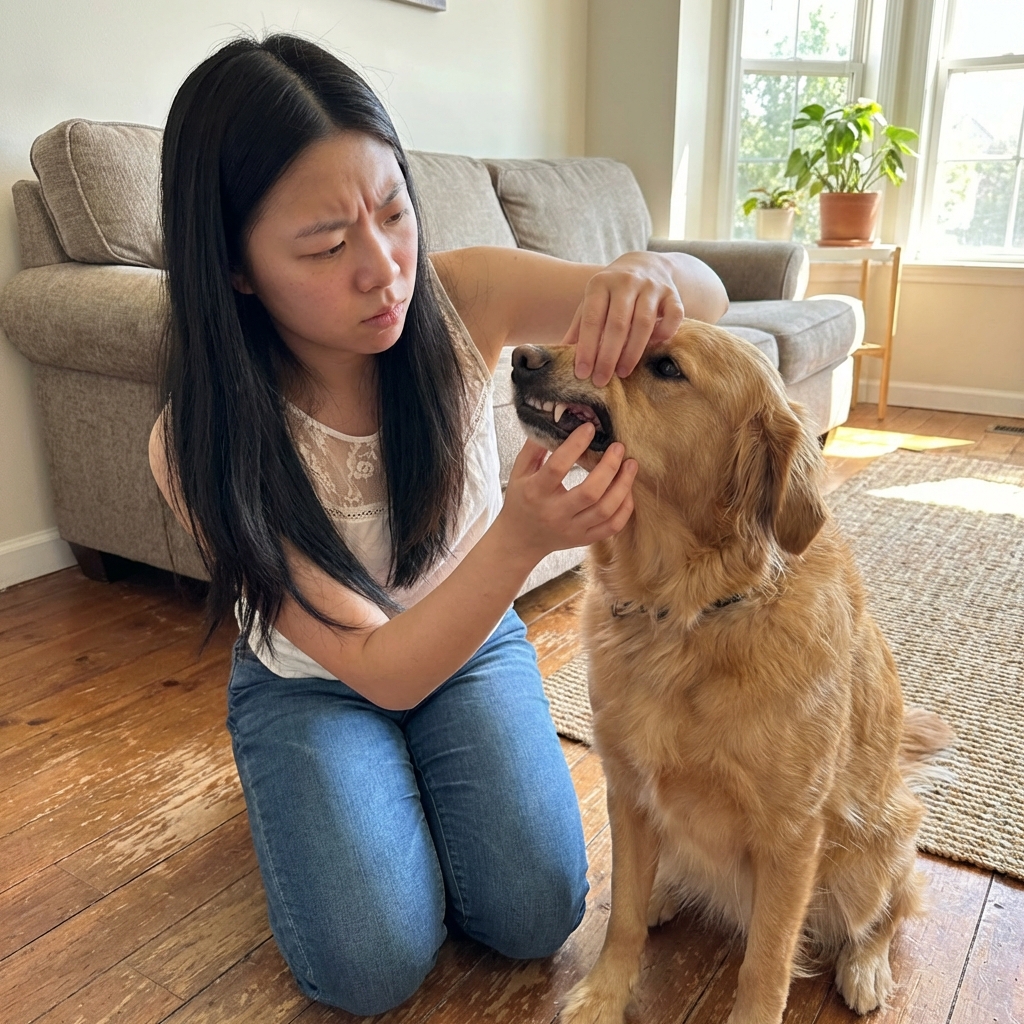
- If your dog will allow it, gently open the mouth and look for an obvious object near the front.
- Remove it only if you can clearly see and grasp it.
- Do not do blind finger sweeps.
Step 3: If your dog cannot breathe, dislodge the object
Use these maneuvers only if your dog cannot breathe. Improper technique can cause injury, so get hands-on instruction or training from your veterinary team when possible. In the moment, your goal is to restore airflow quickly and get to an emergency vet.
The right maneuver depends on your dog’s size and body shape.
- Small dogs: hold your dog with their back against your chest if possible and give firm thrusts upward and inward in the soft area just behind the last rib, or give several firm back blows between the shoulder blades.
- Medium to large dogs: standing or lying on their side, give quick thrusts inward and upward in the soft area just behind the last rib (similar in concept to the Heimlich maneuver).
After a few thrusts, check the mouth again for a visible object and remove it if you can grasp it.
Step 4: Go to the vet even if the object comes out
A cleared obstruction can still leave throat trauma, swelling, aspiration (inhaling saliva or food into the lungs), or small fragments behind. If your dog had blue gums, fainted, or seems exhausted, go in immediately.
Do not offer food or water right away after a choking scare unless your veterinarian tells you to. Swallowing may be painful or uncoordinated, and there is a risk of re-choking or aspiration.
If your dog stops responding, begin CPR and head to the nearest emergency vet. If you do not know canine CPR, call an emergency vet and ask them to coach you. If you are driving, have a passenger call, or pull over safely to make the call.
When it is not choking (but still needs help)
Some problems look like choking and can still be serious.
Reverse sneezing
This can look scary, but many dogs recover quickly. They stand still, extend the neck, and make a loud snorting sound. Episodes often last seconds to a minute.
Call your vet if episodes are frequent, prolonged, or your dog seems distressed, especially if they have nasal discharge or weakness.
Collapsing trachea
Common in small breeds and mixes, it can cause a “goose-honk” cough, often triggered by excitement or pulling on a collar.
Tip: switch to a harness and schedule a veterinary exam for a long-term plan.
Something stuck, but not blocking air
Dogs can wedge a stick fragment, bone shard, or piece of toy in the roof of the mouth, between teeth, or across the back molars. They may paw frantically and drool, but still breathe.
If you cannot safely remove it quickly, go to the vet. Mouth injuries can worsen fast.
High-risk items that commonly cause choking
In clinics, we see the same culprits over and over. The safest choice is always the one your dog cannot break into chunks, swallow whole, or lodge in the throat.
- Balls that are too small for your dog’s mouth
- Rawhide and large chunks of chews that soften and slide back
- Bones (cooked bones are especially risky due to splintering)
- Corn cobs (rigid and easy to swallow, plus high risk for dangerous intestinal blockage)
- Stringy items like rope toys and fabric scraps
- Hard chews that fracture (risk of tooth damage plus chunks breaking off)
- Table foods that are round and slippery (hot dog chunks, large pieces of meat, grapes which are also toxic)
If your dog is a “gulp and go” type, supervised chew time and size-appropriate items can make a big difference.
How to prevent choking at home
Prevention is not about being perfect. It is about stacking the odds in your dog’s favor with a few simple habits.
- Choose the right size toys: toys and balls should be large enough that they cannot slide to the back of the throat.
- Supervise chew time: if you cannot watch, pick up the chew.
- Slow down fast eaters: use a slow feeder bowl, spread food on a lick mat, or feed smaller portions more frequently.
- Cut round foods: slice hot dogs and cherry tomatoes lengthwise before offering any dog-safe bites. For safer crunchy options, consider carrot sticks or green beans (in moderation).
- Keep floors “dog-proof”: socks, kids’ toys, and trash are classic emergency visits.
- Use a harness for throat-sensitive dogs: reduces pressure on the neck and can decrease coughing fits that mimic choking.
And one gentle reminder from the vet med side: if your dog is a frequent scavenger, a properly fitted basket muzzle on walks can be a lifesaver in specific situations. Your vet can help you choose one that allows panting and drinking.
When to call the vet or go in now
Call your veterinarian or an emergency vet right away if you notice any of the following:
- Blue, gray, or very pale gums
- Collapse, fainting, or extreme weakness
- Labored breathing or ongoing distress
- A choking episode followed by coughing, wheezing, or lethargy
- Repeated gagging with no improvement
- You suspect a sharp object (bone shard, stick) or toxin was swallowed
Even if your dog seems okay afterward, it is worth checking in. Aspiration pneumonia can develop after an episode and may not show up immediately. Over the next 24 to 72 hours, watch for coughing, rapid or effortful breathing, fever, low appetite, or unusual tiredness, and contact your vet promptly if you notice any of these.
A calm plan you can prepare today
Emergencies feel less overwhelming when you have a plan.
- Save the number and address of your nearest 24/7 emergency vet in your phone.
- Learn canine CPR and choking first aid from a trusted course (ask your vet clinic for local recommendations).
- Keep a pet first aid kit accessible.
- Do a quick “toy audit” monthly and toss anything that is cracking, shredding, or shrinking.
Your dog does not need perfection from you. They just need you to notice, respond, and get help fast when it counts.