Learn what heartworms are, early vs. advanced symptoms, when it’s an emergency, how dogs get infected, and how vets test and treat. Plus practical steps yo...
Article
•
Designer Mixes
How to Tell If Your Dog Has Heartworms

Shari Shidate
Designer Mixes contributor
Heartworm disease is one of those scary topics because the earliest stages can be quiet, and by the time symptoms show up, a dog may already have significant heart and lung damage. The good news is that heartworm disease is preventable, and it is detectable with a simple test at your veterinary clinic.
As a veterinary assistant here in Frisco, Texas, I have seen how much easier this disease is to prevent than to treat. If you are wondering, “How do I know if my dog has heartworms?”, this guide will walk you through the signs to watch for, what testing looks like, and what to do next.
Quick note: This article is for education and is not a diagnosis. If your dog is coughing, tiring easily, or just seems “off,” your veterinarian is the best next step.

What heartworms are (and how dogs get them)
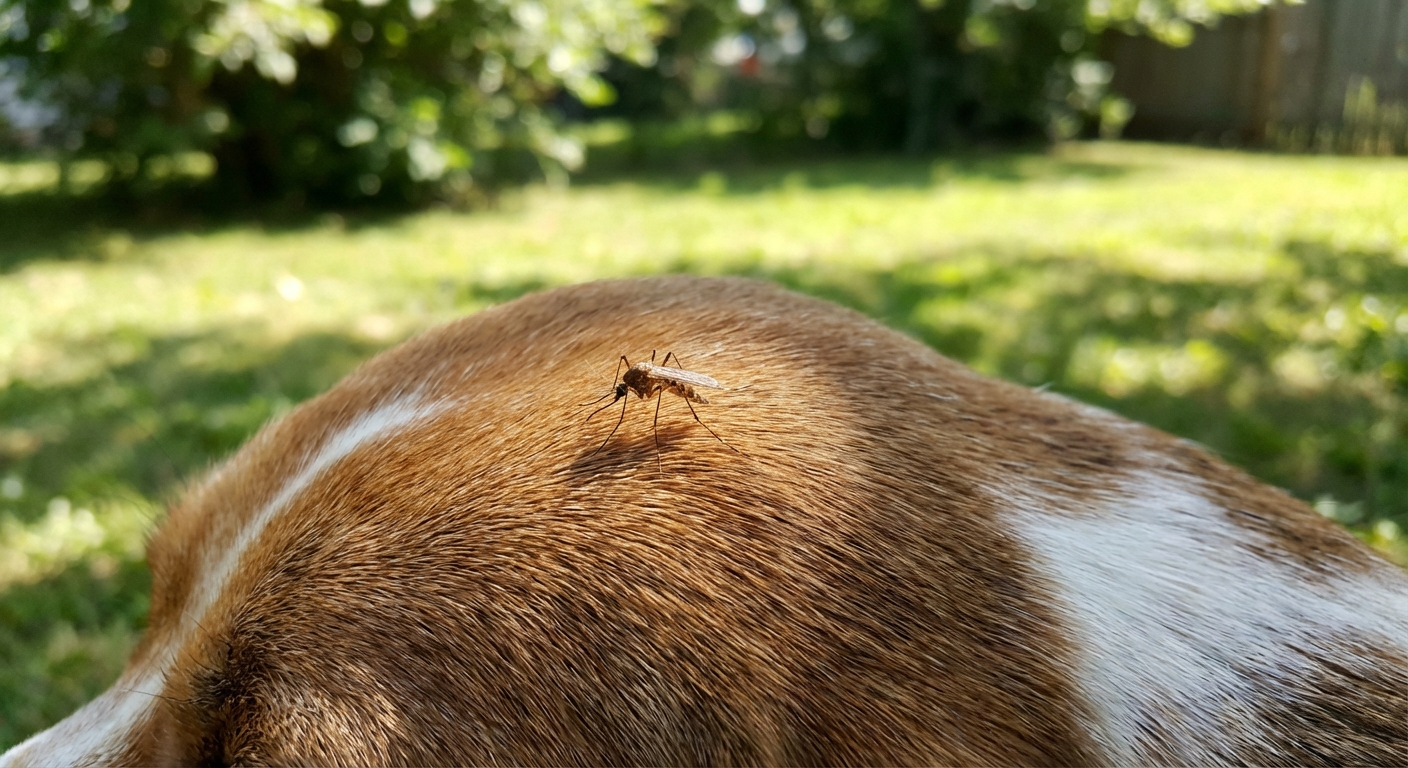
Heartworms (Dirofilaria immitis) are parasites that live primarily in the blood vessels of the lungs and can extend into the heart. Dogs get heartworms from the bite of an infected mosquito. This matters because it means:
- A single bite can be enough.
- Indoor dogs are still at risk because mosquitoes get indoors.
- Texas is high-risk in many areas due to long mosquito seasons and warm weather patterns.
After infection, heartworms mature over several months. During that time, many dogs look totally normal. Testing and prevention matter so much because the disease can be present before you see obvious symptoms.
Timeline: why tests can be negative early
One detail that surprises a lot of pet owners is that heartworm disease has a built-in delay. After a mosquito bite, it typically takes about 6 to 7 months for heartworms to mature to the point where common screening tests are likely to turn positive.
That means a dog with a recent exposure could still test negative today and need a follow-up test later, depending on your veterinarian’s guidance and your dog’s prevention history.
Common signs of heartworms in dogs
Symptoms can vary depending on how many worms are present, how long the dog has been infected, and the dog’s activity level. Some dogs show subtle signs that are easy to brush off as “just getting older” or “out of shape.”
Early or mild signs
- Soft, dry cough that does not fully go away
- Getting tired faster on walks or during play
- Less interest in exercise or seeming “lazy” when that is not typical
- Mild weight loss or a slower appetite over time
Moderate to severe signs
- Persistent cough and clear exercise intolerance
- Heavy or fast breathing after mild activity
- Fatigue that seems out of proportion to activity
- Weight loss and poor body condition
- Swollen belly (fluid buildup can happen in advanced cases)
- Fainting or collapse, especially after exertion
Emergency warning: caval syndrome
A life-threatening complication called caval syndrome can occur when a large number of worms obstruct blood flow through the heart. This is an emergency. Watch for:
- Sudden weakness or collapse
- Pale gums
- Labored breathing
- Dark or reddish-brown urine
- Distended abdomen
- Sudden severe lethargy and, in some dogs, a new loud heart murmur or yellow-tinged gums (jaundice)
If you see these signs, go to an emergency veterinary hospital immediately.

Can you tell at home?
You can suspect heartworms at home, but you cannot confirm them without veterinary testing. Many of the signs above can also be caused by other conditions like allergies, infectious cough (kennel cough), pneumonia, chronic bronchitis (chronic tracheobronchitis), or other heart and lung disease.
If your dog has a lingering cough, reduced stamina, or they are not on consistent heartworm prevention, it is worth scheduling a test.
How vets test for heartworms
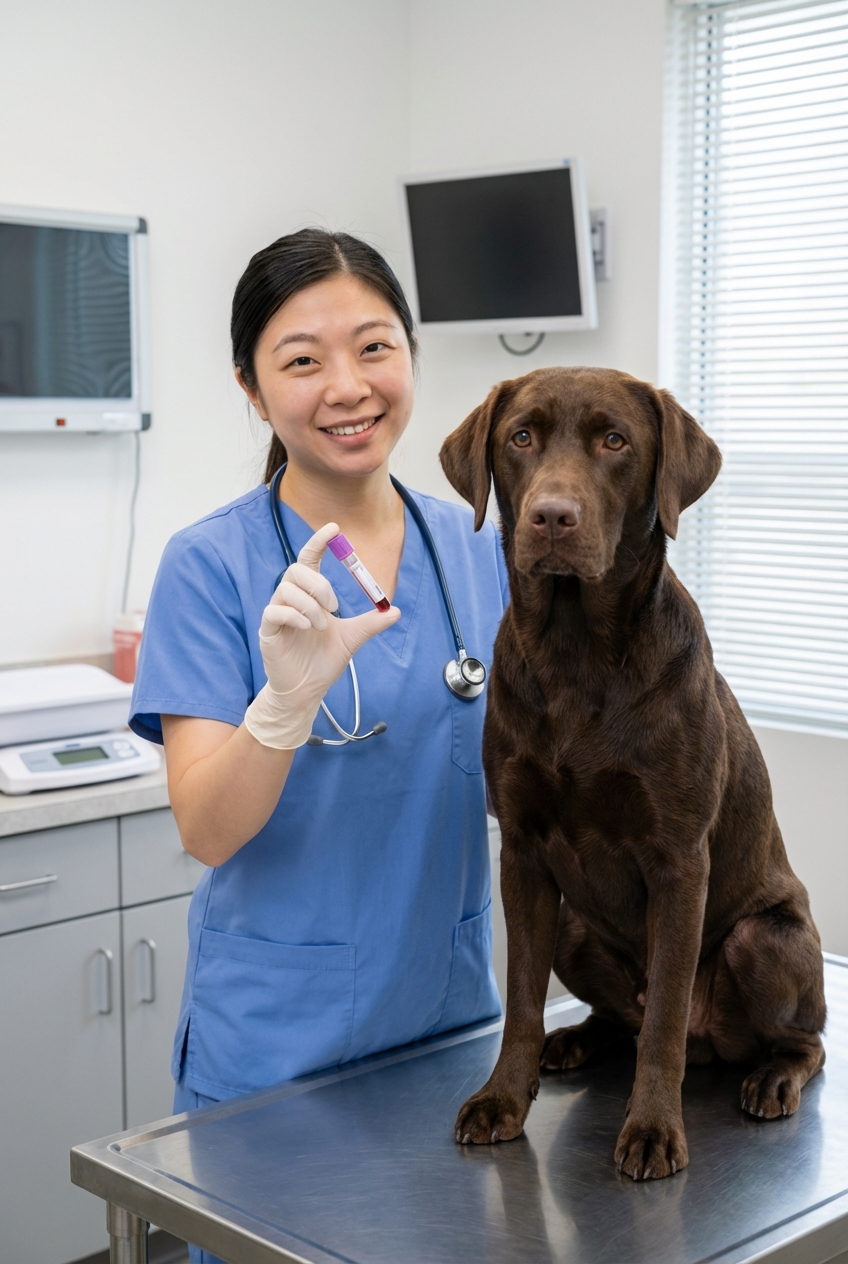
Heartworm testing is usually fast and straightforward. Most clinics do a small blood sample and can often have results the same day.
1) Antigen test
This checks for proteins associated with adult female heartworms. It is the most common screening test for dogs.
Important timing note: in very early infections, a dog can test negative because the worms are not mature yet. This is one reason your vet may recommend retesting if exposure or missed prevention is a concern.
2) Microfilaria test
This looks for baby heartworms (microfilariae) circulating in the blood. A dog can be antigen-positive and microfilaria-negative, so your vet may run one or both depending on the situation.
Why a positive test may be confirmed
In some cases, your veterinarian may recommend confirmatory steps such as repeating an antigen test, adding a microfilaria test, or using imaging. This helps sort out occasional false negatives (early infection, low worm burden) and less common false positives, and it supports a safer treatment plan.
When additional diagnostics are recommended
If a dog tests positive, your veterinarian may recommend:
- Chest X-rays to evaluate lungs and heart size
- Bloodwork to check organ function before treatment
- Ultrasound (echo) in select cases, especially if symptoms are significant
Why symptoms can show up late
Heartworms do damage over time. As the worms mature and increase in number, they trigger inflammation and change blood flow in the lungs. A dog might look fine until the body can no longer compensate.
This is why heartworm testing is often recommended even for dogs on prevention, especially in higher-risk areas. The American Heartworm Society provides guidance that many clinics use when recommending testing schedules.
No preventive is 100% foolproof if doses are missed, given late, spit out, or absorbed poorly due to vomiting or diarrhea soon after dosing. For topical preventives, bathing, swimming, or applying too close to a bath can also reduce effectiveness depending on the product, so always follow label directions and your vet’s instructions.
What to do if you think your dog might have heartworms
Here is a calm, step-by-step plan you can follow.
Step 1: Schedule a heartworm test
Call your vet and let them know what symptoms you are seeing and whether your dog has been on prevention consistently. If prevention has been inconsistent, mention when the last dose was given.
Step 2: Keep activity gentle for now
If heartworms are a possibility, heavy exercise can increase strain on the heart and lungs. Stick to calm leash walks for potty breaks and light movement unless your vet advises otherwise.
Step 3: Do not restart prevention without veterinary guidance
This surprises people, but it matters. If a dog is heartworm-positive, your veterinarian will want a safe plan for preventives and treatment. Some dogs can have reactions when microfilariae die off, so timing and monitoring are important.
Step 4: If positive, follow the treatment plan closely
Heartworm treatment is very effective, but it is not casual. The biggest risk during treatment is usually related to activity restriction. When worms die, they can cause inflammation and clots in the lungs. Keeping your dog calm is a key part of safe recovery.
What treatment usually includes
If your dog tests positive, your veterinarian will tailor a plan to your dog’s health and disease stage. While every clinic’s protocol can vary, treatment often includes a combination of:
- Exercise restriction for an extended period
- An antibiotic (often doxycycline) to target a bacterium that lives with heartworms
- A heartworm preventive (a macrocyclic lactone) used on a schedule your vet sets
- Melarsomine injections to kill adult heartworms
- Supportive medications as needed (your vet may prescribe anti-inflammatory meds or other therapies based on your dog’s case)
Your vet will also tell you when to come back for rechecks and follow-up testing.
Heartworm prevention
If you take away one message, let it be this: preventing heartworms is safer, easier, and far less expensive than treating them.
Here in North Texas, many veterinarians recommend year-round prevention because mosquitoes can be active for a large part of the year.
Common prevention options
- Monthly chewables (given by mouth)
- Monthly topicals (applied to the skin)
- Long-acting injections (given by your veterinarian, often lasting 6 or 12 months depending on product)
Tips that help busy households
- Pick a “heartworm day” each month and set a phone reminder.
- Give prevention with a meal if the product allows it, which helps reduce upset stomach for some dogs.
- For topicals, follow label directions about bathing and swimming before and after application.
- If you miss a dose, call your vet for guidance instead of guessing.

Frequently asked questions
Can my dog have heartworms with no cough?
Yes. Some dogs have no cough early on, or the cough is so mild it is easy to overlook.
My dog is on prevention. Do we still need testing?
Often, yes. Many clinics recommend routine testing to catch missed doses, timing issues, or uncommon product failures. Your veterinarian will recommend a schedule based on local risk and your dog’s history.
Are puppies at risk?
Yes. Talk with your vet about the right age to start prevention and when to do the first test. Puppies can be infected, and prevention is still important.
Do cats get heartworms?
They can, although it is different than in dogs and testing can be trickier. If you have a cat, ask your veterinarian about feline heartworm prevention too, especially in mosquito-heavy areas.
When to seek urgent care
Please contact your veterinarian promptly or go to an emergency clinic if your dog has:
- Collapse or fainting
- Severe trouble breathing
- Pale gums
- A suddenly swollen belly
- Weakness that comes on fast
You know your dog best. If something feels “off,” trust that instinct and get help.
Warm reminder: Heartworm disease can be silent at first, but it is not invisible. A quick test and consistent prevention can save your dog from months of treatment and lifelong heart strain.