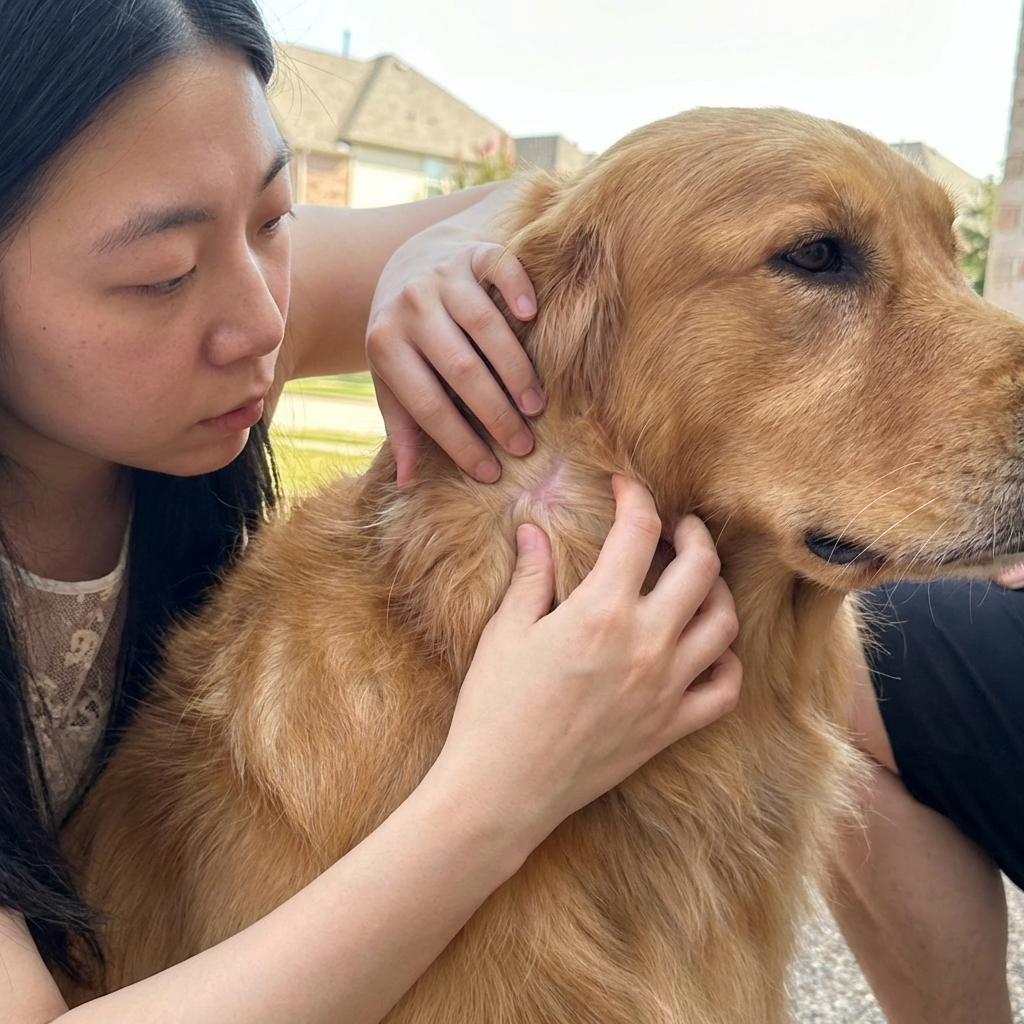
Stop fleas fast with an evidence-based plan: confirm fleas, start vet-recommended medication, bathe or comb for relief, and treat your home to break the life...
Article
•
Designer Mixes
How to Tell If Your Dog Has Fleas

Shari Shidate
Designer Mixes contributor
As a veterinary assistant here in Frisco, Texas, I can tell you fleas are one of the most common reasons pet parents call in a panic. The good news is that in most cases, you can spot the signs at home quickly and take smart steps before a small problem turns into a full-blown infestation.
Quick note: This guide is for education and is not a substitute for veterinary care. If your dog is very uncomfortable, has open sores, seems weak, or you are not sure what you are seeing, call your vet.
In this guide, I will walk you through the must-know symptoms, how to check your dog correctly, what flea dirt looks like, what can look similar, and when it is time to call your vet.
Common signs your dog may have fleas
Some dogs react dramatically to flea bites, while others show only subtle changes. Keep an eye out for these common clues:
- Frequent scratching or chewing, especially near the rump, tail base, belly, and inner thighs
- Excessive licking of the feet, legs, or groin
- Restlessness or trouble settling down
- Hair loss (often along the back end)
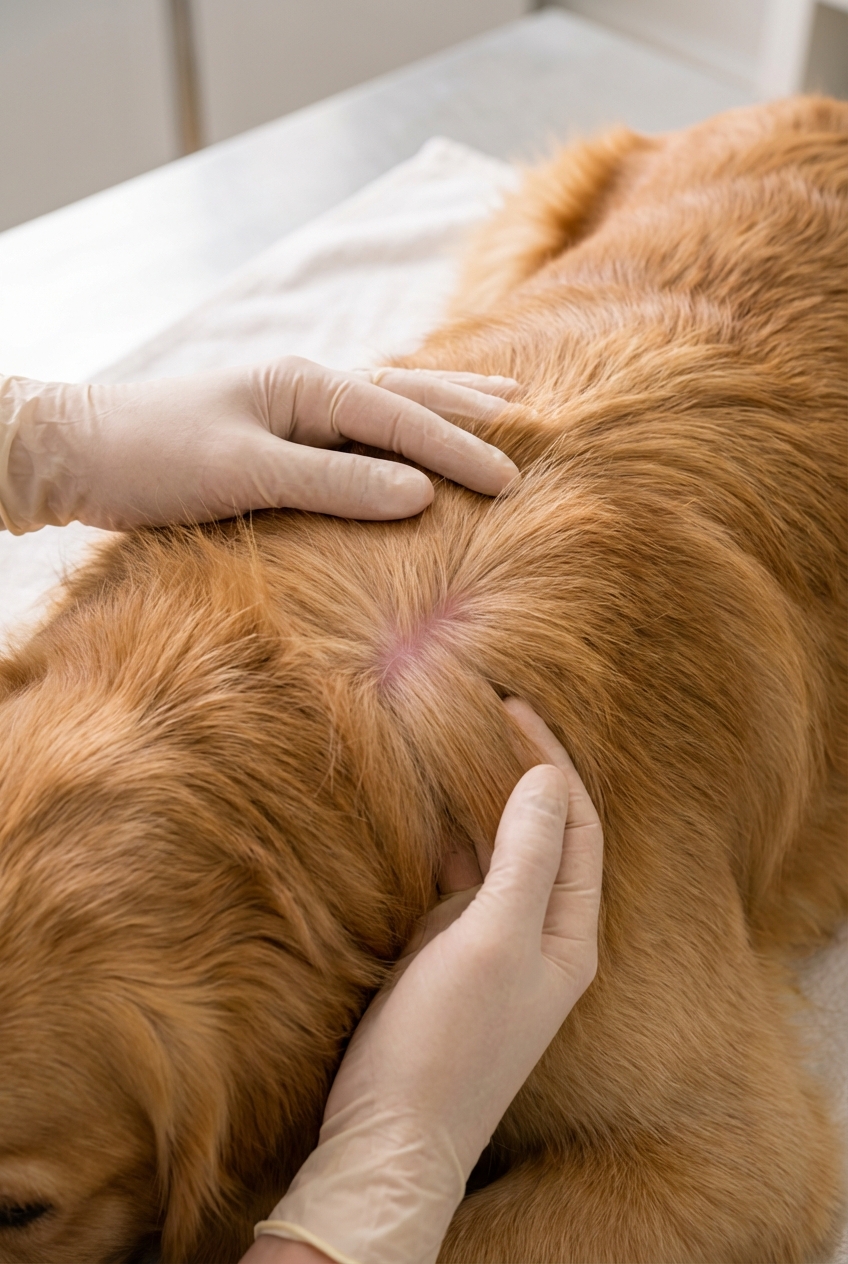
- Red bumps, scabs, or hot spots from irritation and self-trauma
- “Peppery” debris in the coat (often flea dirt). This is usually easiest to spot near the skin, and it may stand out more on light-colored fur.
- Pale gums or low energy in severe infestations, especially in small dogs or puppies
If your dog is itching but you cannot find fleas, do not assume it is “just allergies.” Fleas are tiny and fast, and many pets groom them off before you ever see one.
How to do a quick flea check at home
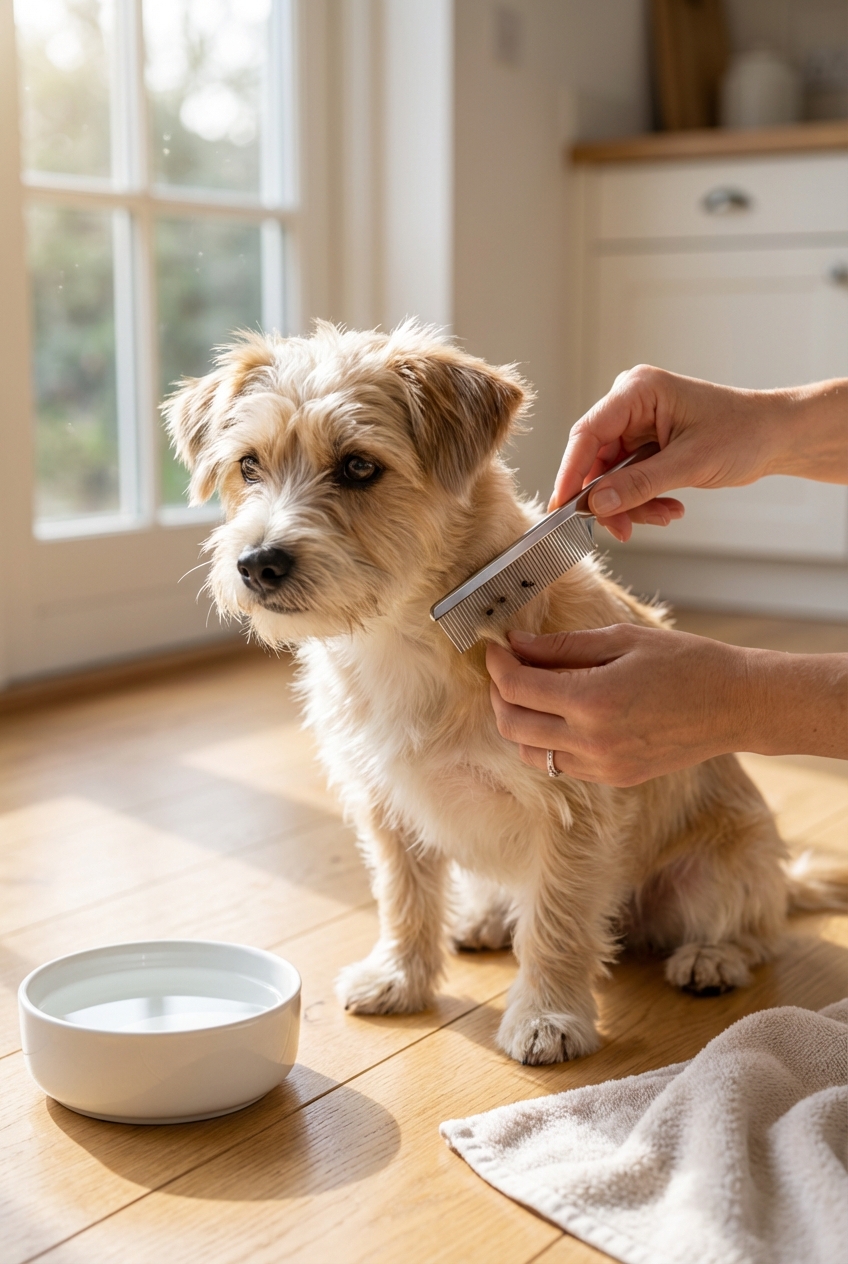
You do not need special tools, but a bright light helps. If your dog has a thick coat, a flea comb makes the job much easier.
Safety tip: Keep the experience calm and gentle. Wash your hands afterward. If your dog is painful, very stressed, or may bite, stop and call your vet for help checking safely.
Step 1: Check the high-probability zones
Part the fur and look closely at the skin in these areas:
- Base of the tail and lower back
- Belly and groin
- Armpits
- Neck and behind the ears
You are looking for adult fleas (small, dark brown insects that move quickly) and for signs of flea dirt.
Step 2: Use a flea comb if you have one
Comb slowly from the neck down toward the tail, focusing on the rump and belly. After every few passes, wipe what you collect onto a white paper towel.
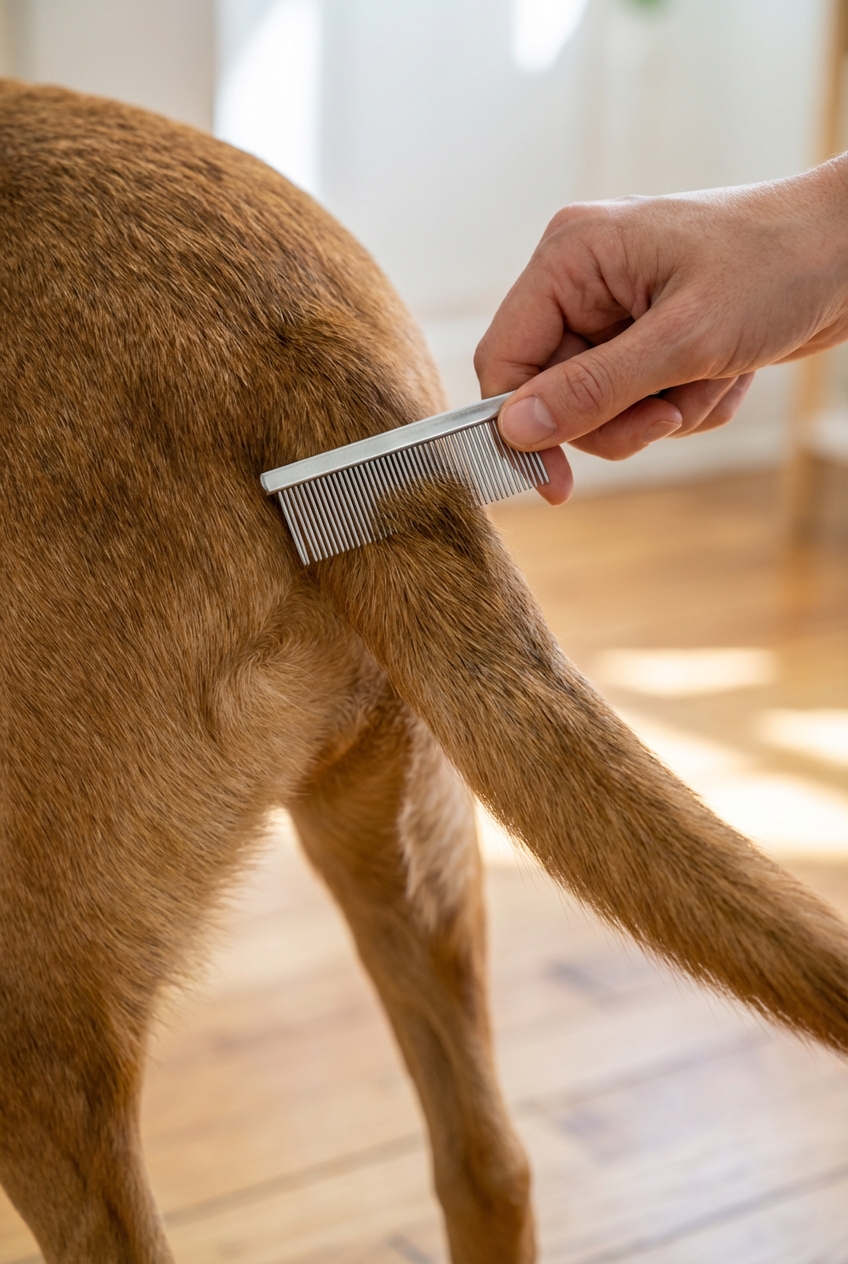
Step 3: Do the “flea dirt” water test
Flea dirt is flea feces and it is basically digested blood. It often looks like black specks, like ground pepper, scattered near the skin.
Here is a simple test:
- Put the black specks on a damp white paper towel or cotton pad.
- Wait 30 to 60 seconds.
- If it turns reddish-brown, that strongly suggests flea dirt.
Regular dirt will not “bleed” red on the towel. (Other dried blood can sometimes do this too, so use the result as a strong clue, not the only proof.)
Why some dogs itch more than others
Some dogs develop flea allergy dermatitis, which is an allergic reaction to proteins in flea saliva. These dogs can itch intensely and develop scabs and hair loss from even a small number of bites, sometimes before you find many fleas at all.
If your dog seems disproportionately itchy compared to what you are finding, that allergy component is a big reason why.
Fleas or something else?
Itching is not always fleas. Common look-alikes include environmental allergies, food sensitivities, mites (like sarcoptic mange), yeast infections, and dry skin. A few differences that can help you narrow it down:
- Fleas: rump and tail base itching is classic, and flea dirt may be present
- Allergies: often includes ear issues, paw licking, face rubbing, seasonal flare-ups
- Mites: can cause intense itching with crusting, ear edge irritation, or hair loss in patches
- Yeast: may smell musty, look greasy, and cause redness between toes or in skin folds
Fleas vs ticks: pet parents mix these up all the time. Fleas are small and fast and move through the coat. Ticks are usually larger, tend to latch on and stay attached, and feel like a bump on the skin.
If you are unsure, your vet can do quick in-clinic tests like skin cytology or a skin scrape to confirm what is going on.
When fleas are an urgent problem
Most flea situations are not emergencies, but some absolutely need prompt veterinary help. Call your vet quickly if:
- Your dog is a puppy or very small breed with suspected fleas
- You notice pale gums, weakness, or collapse (possible flea-related anemia)
- There are open, oozing hot spots or signs of severe skin infection
- Your dog is scratching so much they cannot sleep or are breaking the skin
Fleas can also transmit tapeworms. If you see “rice-like” segments around your dog’s rear end or in stool, let your vet know, because deworming is usually needed along with flea control.
What to do if you find fleas
The best approach is to treat the pet and the environment. Adult fleas live on your pet, but eggs, larvae, and pupae are usually in your home or yard. That is why it can feel like fleas “keep coming back” even after you treat your dog.
1) Get your dog on effective flea prevention
Ask your veterinarian which product is best for your dog’s age, weight, and health history. Many modern preventives are very effective when used consistently.
A few important safety reminders:
- Do not use multiple flea products at once unless your vet instructs you. Stacking treatments can increase the risk of side effects.
- Follow age and weight limits closely, especially for puppies.
- Never use dog flea medication on a cat. Some dog-only products (including permethrin-containing products) can be dangerous for cats.
2) Clean your home
- Wash bedding (pet beds, blankets, your bedding if your dog sleeps with you) in hot water
- Vacuum carpets, rugs, furniture, and baseboards, then dispose of the vacuum contents right away
- Repeat vacuuming frequently for a couple of weeks to help remove developing fleas

Set expectations: pupae can sit quietly in the environment and then emerge later. Because of that life stage, you may see fleas for a few weeks even when you are doing everything right. Consistent prevention and consistent cleaning are what get you over the hump.
If you are dealing with heavy fleas (or you keep seeing them despite treating all pets), ask your vet about pet-safe home products, or consider professional pest control. Always follow label directions carefully, and keep pets away until everything is fully dry and safe.
3) Treat all pets in the household
If one pet has fleas, assume all pets are exposed. Cats especially need cat-safe products, so never apply dog flea medication to a cat.
Prevention tips that work
In Texas, fleas can be persistent. Prevention is often easier and cheaper than playing catch-up after an outbreak.
- Use vet-recommended prevention year-round, especially in warm climates
- Check after outings, especially after time around other animals, wildlife-prone areas, dog parks, boarding facilities, or groomers
- Keep up with grooming, including routine brushing and coat checks
- Stay consistent with dosing schedules, because missed doses invite reinfestation
If you remember one thing: if you find flea dirt, treat it like fleas. It is one of the most reliable clues pet parents can spot at home.
Quick FAQ
Can I see fleas with my eyes?
Sometimes, yes. Adult fleas are visible, but they move fast and can hide deep in the coat. Many owners never see a live flea but do find flea dirt.
My dog has fleas. Do I need to treat my house?
In most cases, yes. Flea eggs and larvae drop off into the environment. Treating only the dog often leads to recurring fleas.
How soon will my dog stop itching after treatment?
It varies. Some dogs feel relief within days, but irritated skin can take longer to calm down, especially if there is an allergy component or secondary infection. If your dog is still miserable after starting treatment, contact your vet.