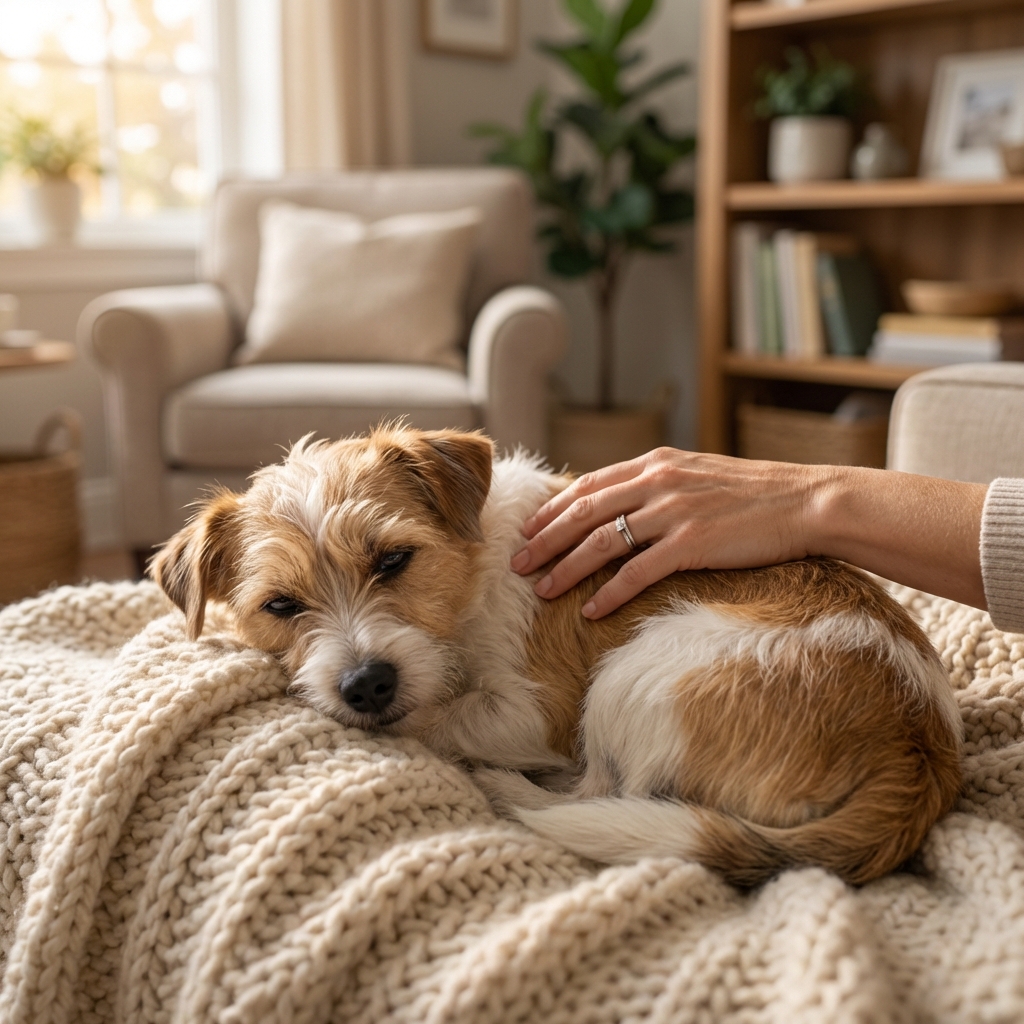
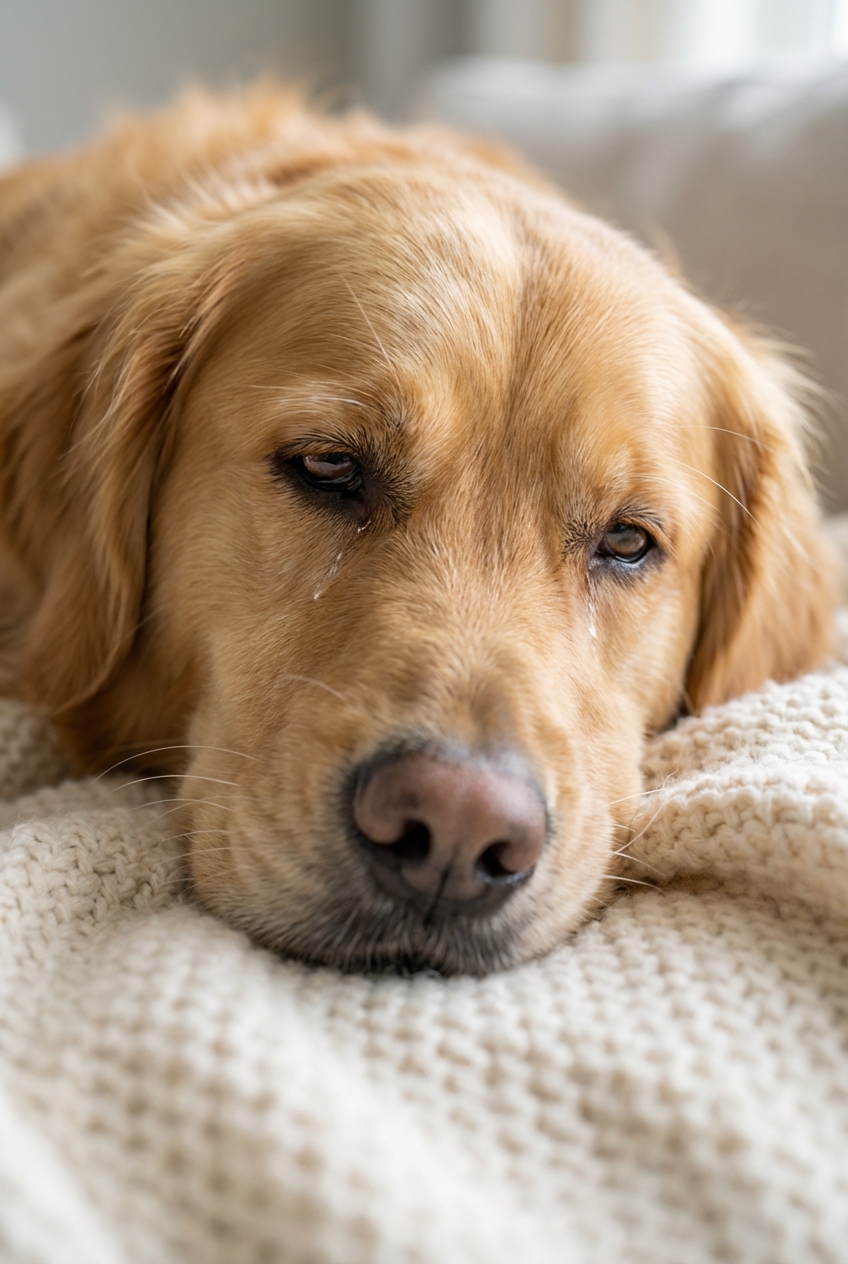
Not sure if your dog has a cold? Learn common symptoms, what it could be instead (allergies, kennel cough, flu), safe home care, and clear vet red flags.
Article
•
Designer Mixes
How to Tell If Your Dog Has a Cold

Shari Shidate
Designer Mixes contributor
As a veterinary assistant here in Frisco, Texas, I hear this question all the time: “Is my dog getting a cold, or is it something more serious?” The good news is that mild “cold-like” symptoms are often manageable at home with rest and supportive care. The important part is knowing what’s normal, what’s not, and when to call your vet.
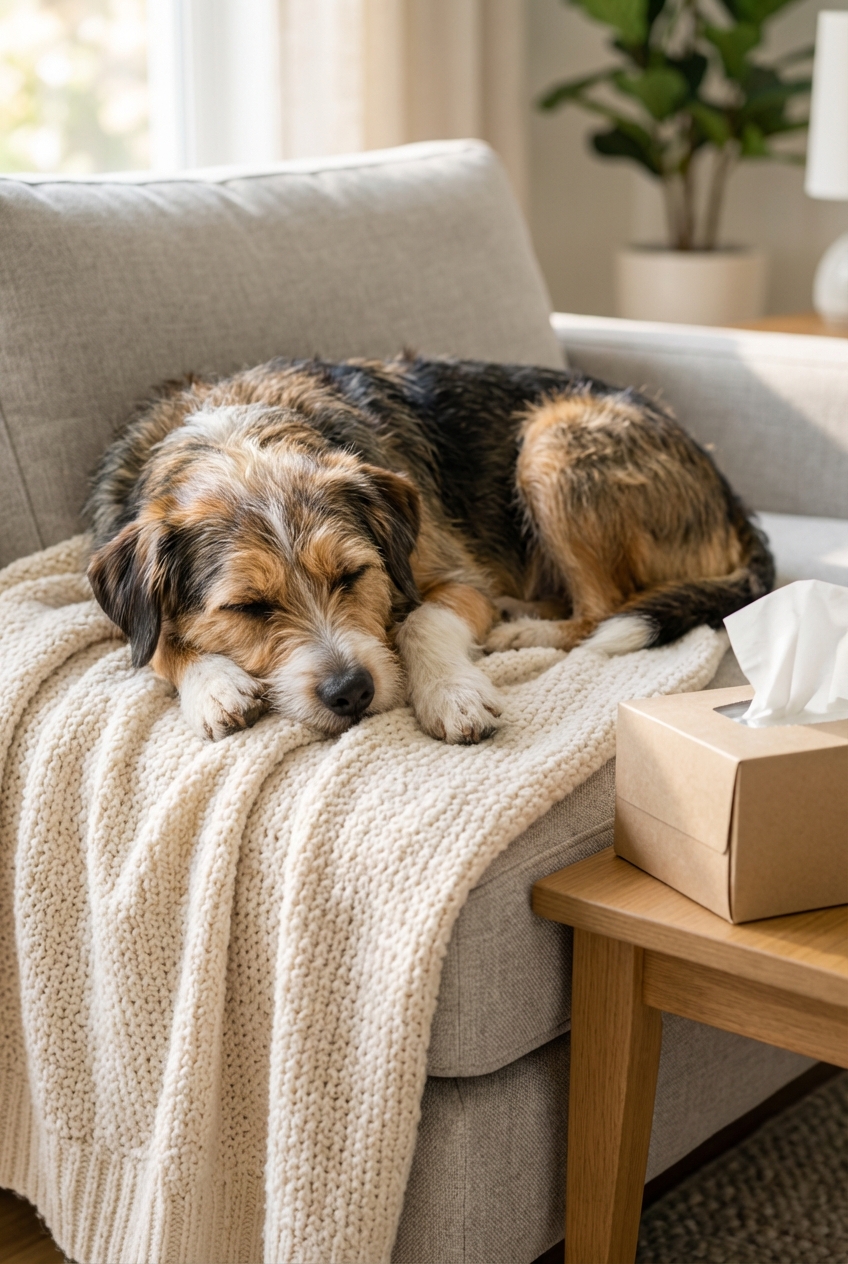
Dogs generally do not catch the exact same cold viruses that people do, but they can pick up a variety of respiratory infections that look similar. Some are mild. Some are contagious. And a few can become dangerous quickly, especially for puppies, seniors, flat-faced breeds (like Frenchies, Bulldogs, and Pugs), and dogs with heart or lung disease.
What “a cold” looks like in dogs
Most pet parents notice changes in breathing or energy. Typical cold-like signs in dogs include:
- Sneezing
- Runny nose (clear or slightly cloudy)
- Watery eyes
- Mild cough or throat clearing
- Lower energy and extra sleep
- Decreased appetite (often because smell is reduced)
If your dog is still bright-eyed, drinking water, and interested in gentle activity, you are often dealing with a mild upper respiratory issue. Still, it’s smart to keep a close eye on symptoms because early respiratory infections can look identical at the start. Also, not every cough is “a cold.” Heart disease, airway irritation, and other issues can cause similar signs, which is one reason trends matter.
Quick at-home check: mild vs urgent
Use this simple checklist to decide what to do next.
Usually mild (monitor at home)
- Sneezing and a clear runny nose
- Mild cough that is occasional
- Normal breathing at rest (no open-mouth breathing, no obvious belly effort, no wheezing or noisy struggle)
- Good hydration, still willing to eat something tasty
- Symptoms are stable or starting to improve over the next few days
Call your vet today
- Difficulty breathing, open-mouth breathing, or breathing that looks effortful
- Gums that look pale, gray, or blue-tinged
- Persistent coughing, coughing fits, or gagging
- Thick yellow, green, or bloody discharge from nose or eyes
- Suspected fever plus lethargy and shivering (hot ears or paws can happen, but it is not a reliable way to confirm fever)
- Not eating for more than 24 hours, or not drinking
- Puppy, senior, pregnant, immunocompromised, or flat-faced dog with any respiratory signs
Trust your instincts. If your dog looks uncomfortable or is working to breathe, call.
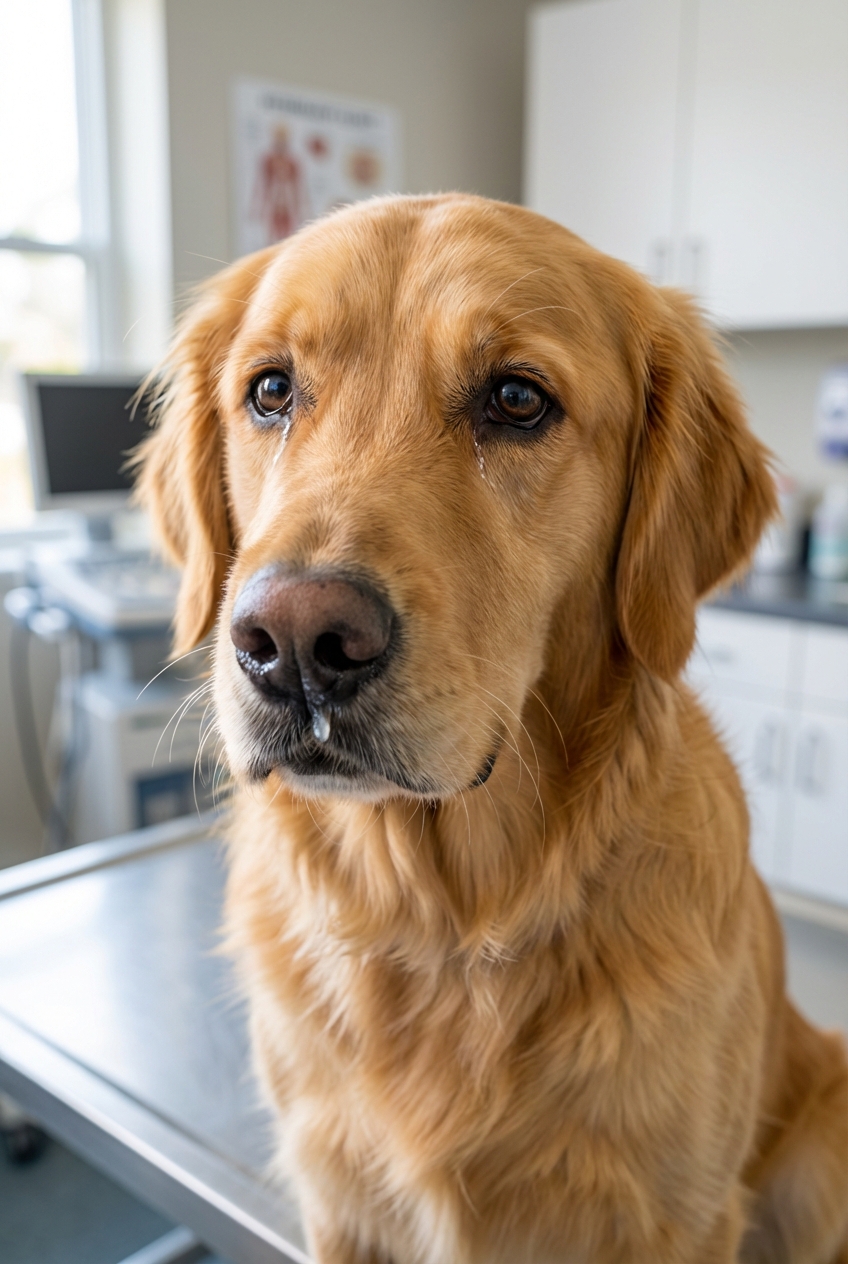
Common causes of cold-like symptoms
Several different problems can look like a cold. Here are the most common ones we see:
1) Kennel cough complex (infectious tracheobronchitis)
This is a contagious respiratory illness caused by a mix of viruses and bacteria. The classic sign is a dry, honking cough, especially after excitement or pulling on the leash. Dogs can catch it anywhere dogs mix closely, like daycare, grooming, boarding, and parks. It spreads mainly through close contact and respiratory droplets, and shared items (like bowls or toys) can contribute.
2) Canine influenza
Dog flu can cause cough, nasal discharge, fever, and low energy. It is contagious and can move through groups of dogs quickly, and some cases can take longer to fully resolve.
3) Allergies or irritants
Pollen, dust, smoke, strong fragrances, and cleaning products can lead to sneezing, watery eyes, and a runny nose. Usually there is not a fever, and appetite is often normal.
4) Foreign material in the nose
Foxtails and grass awns are common culprits in Texas and can cause sudden, intense sneezing, pawing at the nose, or discharge from one nostril.
5) Dental disease or oral infections
Infections in the mouth can sometimes drain into the nasal area, causing bad breath plus nasal discharge.
6) Pneumonia (more serious)
Pneumonia can start like a mild cough and then worsen. If your dog has rapid breathing, lethargy, fever, or loss of appetite, do not wait.
How long does a dog cold last?
In many uncomplicated upper respiratory infections, you’ll see gradual improvement over about 7 to 14 days. A cough can linger longer, sometimes up to 2 to 3 weeks, even after the dog feels better overall.
That said, timelines vary by cause. If symptoms are getting worse after the first couple of days, if your dog is acting very sick, or if things are not clearly improving within about a week, it is time for a veterinary exam. Secondary bacterial infections can develop and may require prescription medication.
How to care for a dog with cold-like symptoms at home
Supportive care can make your dog much more comfortable while their immune system does the work.
Keep them warm, rested, and calm
- Skip vigorous exercise for a few days.
- Offer a cozy, draft-free resting spot.
- Use a harness instead of a collar if coughing is present.
Encourage hydration
- Offer fresh water in multiple locations.
- Try warm (not hot) low-sodium broth to entice drinking.
- If your dog eats wet food, adding a little warm water can increase fluid intake.
Make eating easier
When the nose is stuffy, smell is reduced, and appetite often follows. You can help by:
- Warming food slightly to boost aroma.
- Offering bland, vet-approved options like plain cooked chicken and rice for a short time if your dog’s stomach tolerates it.
- Keeping meals small and frequent.
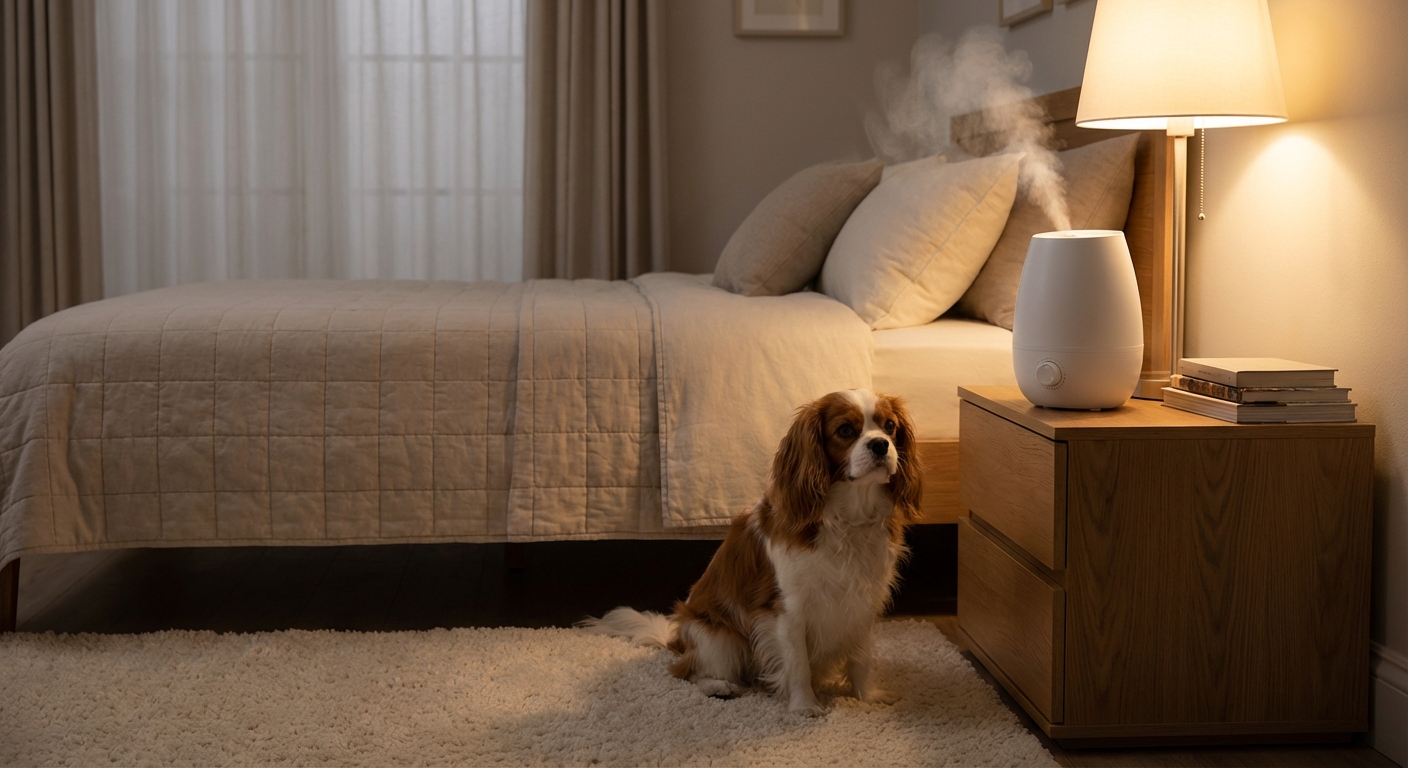
Use gentle humidity
- Run a cool-mist humidifier near their resting area.
- Or sit with your dog in a steamy bathroom for 10 to 15 minutes (no direct hot water exposure), which can loosen congestion.
Wipe eyes and nose
Use a soft, damp cloth to gently clean discharge. This helps prevent skin irritation around the nose and eyes.
What not to do
- Do not give human cold medications. Many are toxic to dogs.
- Do not use essential oils for “decongestion”, especially in diffusers. Many oils can irritate a dog’s airways, and some can be harmful if inhaled or licked.
- Do not force exercise if coughing or breathing is abnormal.
- Do not use cough medicine unless your vet prescribes it. In some situations (like pneumonia or certain heart conditions), suppressing a cough can be unsafe.
How to take your dog’s temperature safely
A true fever can help separate “mild sniffles” from something that needs treatment. A dog’s normal temperature is generally about 101 to 102.5°F.
- The most accurate method is a rectal digital thermometer with lubricant.
- Hot ears and paws are not a dependable way to diagnose fever. A thermometer is the only way to know.
- If your dog is wiggly or stressed, do not fight it. Stress can escalate quickly and you can get bitten.
- If you suspect fever plus lethargy, coughing, or not eating, call your vet for guidance.
When to isolate your dog
If your dog has a new cough, sneezing, or nasal discharge and has recently been around other dogs, assume it could be contagious until proven otherwise.
- Avoid daycare, parks, grooming, and boarding.
- Do not share bowls or toys with other dogs.
- Wash hands after handling, especially if you have multiple dogs at home.
As a conservative rule, isolate until symptoms have fully resolved, and follow your veterinarian’s guidance for timing since contagious periods vary by the specific germ.
Vet visit: what to expect
If your veterinarian recommends an exam, they may:
- Listen to the heart and lungs
- Check temperature and hydration
- Examine the throat and nose
- Recommend a respiratory PCR panel if contagious illness is suspected
- Suggest chest X-rays if pneumonia is a concern
Treatment depends on the cause. Some dogs only need rest and monitoring. Others may need prescription cough suppressants, anti-inflammatories, or antibiotics if a bacterial component is likely.
Prevention tips that help
- Vaccination: Ask your vet about Bordetella, canine influenza, and other vaccines based on your dog’s lifestyle.
- Good ventilation: Crowded indoor dog spaces increase spread of respiratory bugs.
- Nutrition and weight: A healthy body supports a healthy immune system. If you are adding fresh foods, start slowly and keep it balanced.
- Reduce irritants: Avoid smoke, heavy fragrances, and harsh cleaners where your dog sleeps.
Small choices add up. When we support the immune system and reduce exposure, dogs tend to bounce back faster and get sick less often.
Bottom line
If your dog has mild sneezing, a little runny nose, and slightly lower energy, you can usually provide supportive care at home while monitoring closely. But if breathing looks hard, the cough is persistent, discharge turns thick or colored, or your dog stops eating and drinking, it is time to call your veterinarian. Early care is always easier than late care.