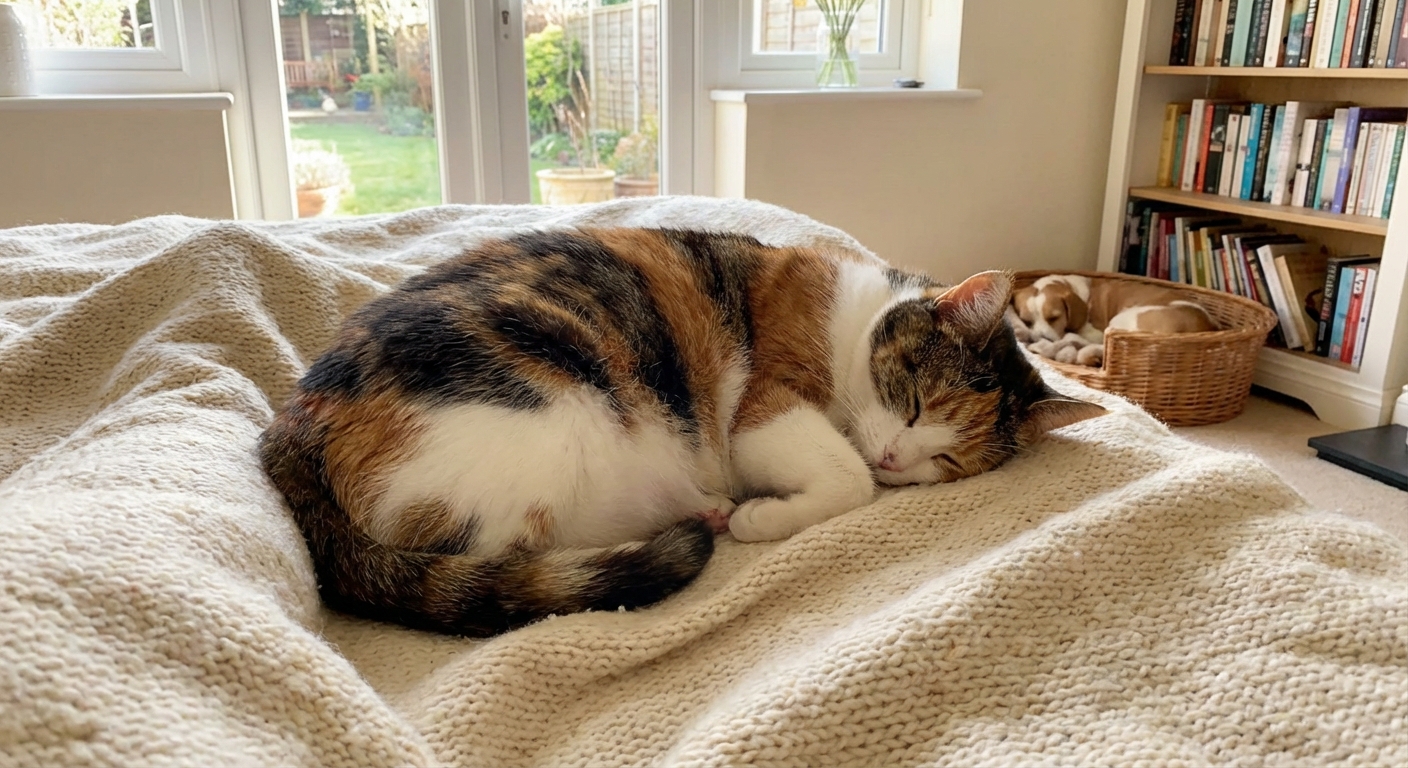
Wondering if your cat is pregnant? Learn early signs, how long pregnancy lasts, how vets confirm it, a week-by-week timeline, nutrition and nesting tips, and...
Article
•
Designer Mixes
How to Tell If Your Cat Is Pregnant

Shari Shidate
Designer Mixes contributor
If your cat is suddenly extra cuddly, sleeping more, or acting a little hungrier than usual, it is natural to wonder: is she pregnant, or is something else going on? As a veterinary assistant in Frisco, Texas, I can tell you this: there are a few classic clues you can watch for at home, but only a veterinarian can confirm pregnancy and make sure mom and kittens stay healthy.
Below is a practical, vet-informed guide to what to look for, when to schedule care, and how to support your cat if pregnancy is likely.
Quick basics: pregnancy timeline
The average feline pregnancy lasts about 63 days. A normal range is often cited as roughly 58 to 67 days, though some cats may go a bit earlier or later. Knowing the timeline helps you match symptoms to what is typical.
- Weeks 1 to 3: Subtle changes, often easy to miss.
- Weeks 3 to 5: Physical signs become more noticeable.
- Weeks 6 to 9: Belly enlarges, nesting behaviors may start, and appetite often increases.
Quick heat note: Cats can become pregnant quickly after going into heat, and they may mate multiple times during a heat cycle. That is why timing is often fuzzy unless you saw the breeding.
At-home signs of pregnancy
Many early signs overlap with other conditions, including intestinal parasites, stress, hormone changes, or illness. Use this list as a guide, not a diagnosis.
1) “Pinking up” of the nipples
One of the most common early signs is that the nipples become more prominent and pink. This may be noticeable around 2 to 3 weeks after mating, although it can be subtle in some cats (especially if you are not sure what her normal looks like).
2) Increased appetite and steady weight gain
Some cats eat a bit more early on. As pregnancy progresses, weight gain becomes more obvious, especially from the midsection. Sudden weight gain with no other signs can also point to other issues, so consider a vet check if you are unsure.
3) Mild vomiting
Some female cats (queens) have mild nausea, similar to “morning sickness,” usually early in pregnancy. Repeated vomiting, lethargy, diarrhea, or refusing food is not normal and deserves a call to your veterinarian.
4) Behavior changes
Pregnant cats may become:
- More affectionate and attention-seeking
- Quieter and sleepier
- More sensitive about being picked up or touched
5) Belly enlargement
By around week 5, you may see a rounder abdomen. Avoid pressing on her belly. Rough handling can hurt mom or kittens, and it can also be painful if she has a different medical issue.
6) Nesting behaviors
Later in pregnancy, many cats start looking for a quiet, hidden place and may paw at bedding or closets. This often ramps up in the final 1 to 2 weeks.

Confirming pregnancy at the vet
If pregnancy is possible, a vet visit is your best next step. Confirmation is not just about curiosity. It helps rule out medical problems that can look like pregnancy, and it helps you plan for safer care and delivery.
If you suspect breeding, it is reasonable to schedule an appointment as soon as you can, ideally by week 3 to 4, so your veterinarian can advise you on timing, nutrition, and safe parasite control.
How vets confirm pregnancy
- Physical exam (palpation): In some cats, an experienced veterinarian may feel pregnancy during mid-pregnancy, often around day 21 to 35. It is not always reliable and should never be attempted at home.
- Ultrasound: Often used to confirm pregnancy and check viability. Depending on equipment and the operator, it may detect pregnancy as early as about 2 to 3 weeks.
- X-rays (radiographs): Used later in pregnancy to see fetal skeletons and estimate litter size. This is typically most useful after about day 45 when fetal skeletons mineralize. When medically indicated, the exposure is brief and low, and your vet team will use the lowest dose needed.
Quick timing guide
- Weeks 2 to 3: Ultrasound may confirm pregnancy.
- Weeks 3 to 5: Palpation may be possible in some cats.
- After day 45: X-rays can help estimate litter size.
Ask your clinic what timing they recommend. The best test depends on where she is in the timeline and what information you need.
Pregnancy look-alikes
This section matters because some conditions that mimic pregnancy require prompt treatment. If something feels “off,” it is worth calling your vet rather than waiting it out.
Call your vet soon if you notice:
- Large belly with weight loss elsewhere on the body
- Diarrhea, pot-bellied appearance, or visible worms in stool (possible parasites)
- Increased thirst and urination, vomiting, or low energy
- Vaginal discharge that is foul-smelling, green, black, or pus-like
- Straining to urinate or defecate
Emergency signs
Seek urgent veterinary care if your cat has any of the following:
- Difficulty breathing
- Severe lethargy or collapse
- Continuous vomiting
- Heavy bleeding
If your cat is likely pregnant
Once pregnancy is suspected, your goal is simple: reduce stress, improve nutrition, and plan ahead for a calm birth environment.
1) Book a vet appointment
Confirm pregnancy, check overall health, and ask about parasites, vaccines, and safe flea prevention. Some medications are not safe during pregnancy, so do not treat with over-the-counter products unless your veterinarian approves.
Parasite control: Deworming and flea prevention are important, but they should be vet-guided in pregnancy. Bring a fresh stool sample if your clinic requests one, and ask what products are considered safe for your cat’s stage of pregnancy.
2) Nutrition: feed for growth and nursing
Pregnancy and nursing are energy-intensive. Many veterinarians recommend transitioning to a high-quality kitten diet (growth/lactation formula) during pregnancy and continuing through nursing because it is more calorie-dense and nutrient-rich.
- Make changes slowly over 5 to 7 days to avoid stomach upset.
- Provide fresh water at all times.
- Skip routine calcium supplements unless specifically prescribed. Extra calcium is usually unnecessary and can cause problems.
3) Set up a quiet nesting area
Set up a “queen box” in a low-traffic spot with soft, washable bedding. Keep it warm, dim, and easy for her to enter and exit.

4) Keep her safely indoors
Indoor-only is best during pregnancy. It lowers the risk of injury, infectious disease exposure, getting lost, and unplanned mating.
5) Limit stressful changes
Try not to introduce major disruptions like new pets, home renovations, or loud gatherings during the final few weeks if you can help it. Calm, predictable routines support healthy moms.
Signs labor is near
Many cats deliver without complications, but knowing what is normal can help you act quickly if something is not.
Common signs
- Restlessness and nesting
- Decreased appetite 12 to 24 hours before labor (not always)
- More vocalizing or clinginess
- Mammary glands enlarge, and milk may be present
When labor may be a problem
Call your veterinarian or an emergency clinic if you notice any of the following dystocia warning signs:
- Strong, active straining for 20 to 30 minutes with no kitten produced
- Intermittent straining for 1 to 2 hours with no kitten produced
- More than 2 hours between kittens (especially if you know there are more kittens)
- Foul-smelling discharge, heavy bleeding, or sudden severe weakness
What you can do
- Keep the space quiet.
- Have your veterinarian’s number and the nearest emergency clinic number handy.
- If you have an estimated litter size from x-rays, count kittens so you can recognize if one may be retained.
After kittens arrive
The first 24 to 48 hours matter a lot. Most moms do wonderfully on their own, and your job is to observe and support.
Healthy signs
- Mom is attentive, grooming kittens, and allowing nursing
- Kittens are warm, quiet after nursing, and gaining weight daily
Simple at-home tip: Weigh kittens daily (in grams) if possible. Steady daily gains are a great sign. Also keep the nesting area warm and draft-free. Newborns cannot regulate their body temperature well.
Red flags for mom or kittens
- Mom ignores kittens, seems disoriented, or is very weak
- Strong foul odor, fever, or heavy discharge (possible uterine infection, retained placenta, or other postpartum complication)
- Painful, hot, swollen mammary glands, or milk that looks abnormal (possible mastitis)
- Tremors, stiff walking, agitation, or seizures (possible low calcium, which can be an emergency)
- Kittens cry constantly, feel cool, cannot latch, or do not nurse within the first couple of hours
If anything feels off, trust your instincts and call your veterinarian. Early help can save lives.
Preventing surprise pregnancies
If your cat is not pregnant yet, the most reliable prevention is spaying. If she is pregnant now, talk to your veterinarian about spay timing after the kittens. Many clinics recommend spaying after weaning, often around 6 to 8 weeks postpartum, but timing can vary based on mom’s health and your household.
Spaying prevents future litters and eliminates the risk of pyometra (a serious uterine infection). It can also reduce the risk of mammary tumors, especially when done before the first heat.
If you think your cat might be pregnant, you do not have to figure it out alone. A vet visit can confirm pregnancy, rule out look-alike illnesses, and help you plan for a smoother delivery and healthier kittens.