Cats hide pain well. Learn the most common vet-recognized signs—behavior shifts, posture and movement changes, grooming and appetite issues, litter box red...
Article
•
Designer Mixes
How to Tell If Your Cat Is in Pain (Signs and What to Do)

Shari Shidate
Designer Mixes contributor
Cats often hide discomfort. As both predators and prey, they may instinctively mask pain or weakness, and that tendency can show up in our homes too. The result is that many caring cat parents notice a problem only when it has become more serious.
This guide will help you recognize common signs of pain in cats, understand what might be causing it, and know what to do next. It is meant to support good decision-making at home, but it cannot replace veterinary care.
Quick reality check: what pain can look like
Pain in cats is often subtle. Instead of obvious limping or crying, you may see small shifts in behavior, posture, grooming, or social habits. Some cats become quieter and withdrawn, while others get irritable or clingy. Both patterns can signal pain or illness.
Trust your gut. If your cat seems not quite themselves for more than a day, especially if appetite, energy, or litter box habits change, it is worth investigating.
Common signs your cat may be in pain
1) Behavior and mood changes
- Hiding more than usual, staying under beds or in closets
- Less interest in play, jumping, or exploring
- Sudden irritability, swatting, or growling when approached
- Unusual clinginess or restlessness
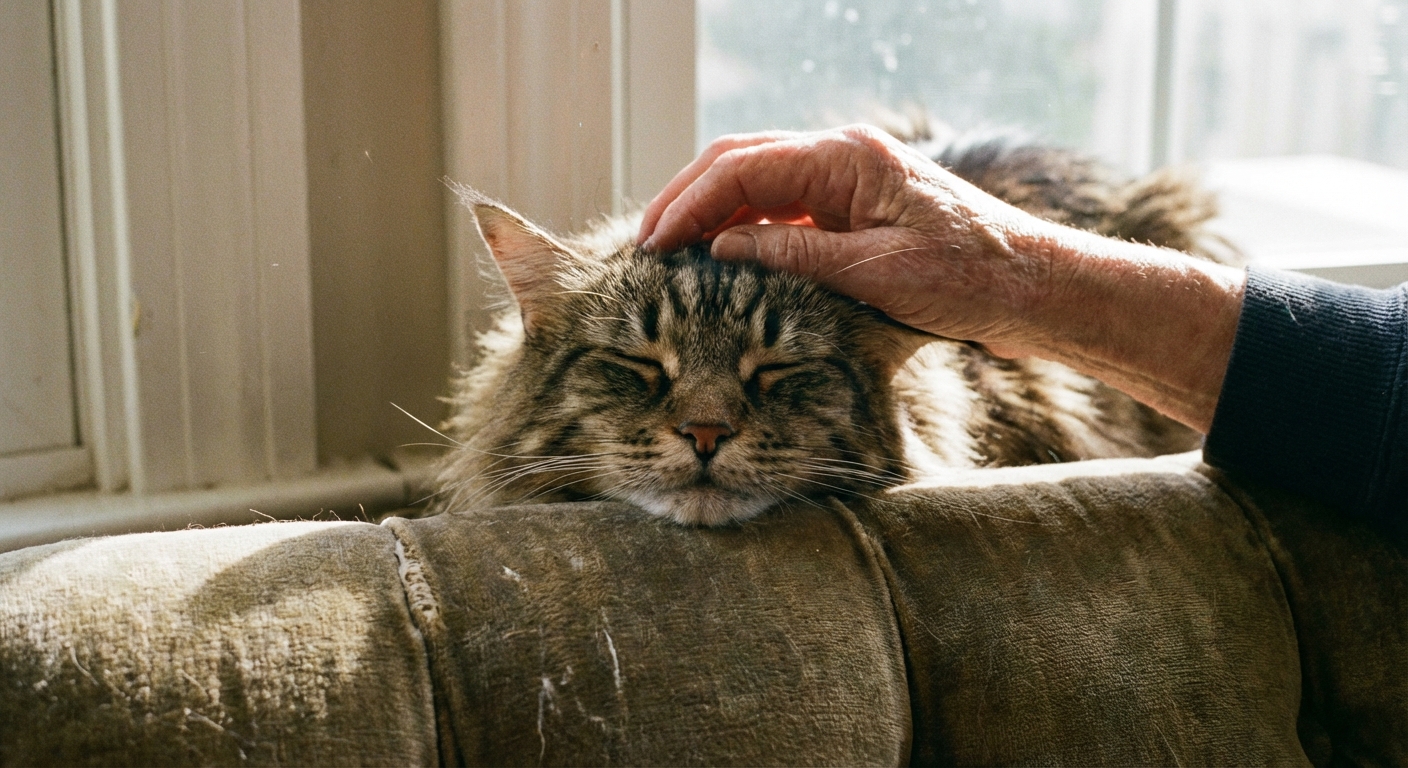
- Not wanting to be touched in a specific area
Behavior changes are one of the most frequent early clues, especially for chronic pain such as arthritis.
2) Posture and movement changes
- Stiffness, slower walking, or reluctance to climb stairs
- Hesitation or refusal to jump onto furniture or window perches
- Limping, favoring a leg, or shifting weight oddly
- Hunched posture, tucked abdomen, or tight “loafing” for long periods
- Tail held close to the body or reduced tail movement
Many people assume older cats “slow down naturally.” Sometimes that is true, but very often it is manageable pain, not just aging. Arthritis is common in middle-aged and senior cats, even if they do not limp.
3) Grooming changes
- Less grooming, a greasy or unkempt coat
- Overgrooming one area, causing thinning fur or redness
- Matting, especially in long-haired cats
- Dirty rear end from difficulty turning or squatting
Painful joints, dental disease, and skin irritation can all show up as grooming changes.
4) Eating and drinking changes
- Reduced appetite or sudden picky eating
- Dropping food, chewing on one side, or taking longer to eat
- Increased thirst or decreased drinking
- Weight loss or weight gain over time
Dental pain, nausea, kidney disease, and many other conditions can affect appetite. If your cat stops eating for 24 hours, or sooner if they are a kitten, have a known medical condition, or also seem lethargic or unwell, contact a veterinarian promptly.
5) Litter box changes
- Urinating outside the box
- Straining, frequent trips, or crying in the litter box
- Diarrhea, constipation, or small hard stools
- Not covering waste, or avoiding the box entirely
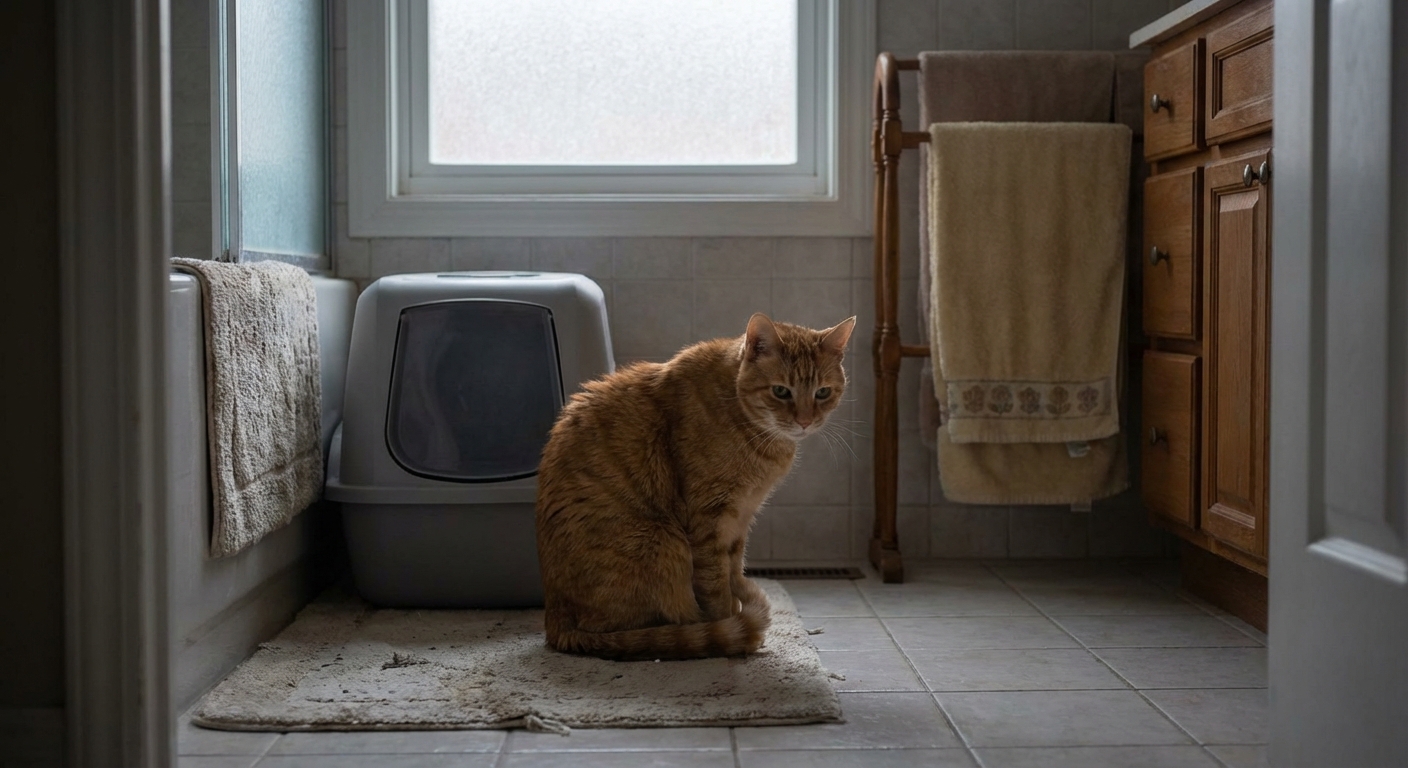
Litter box changes are a big deal. They can signal pain, urinary issues, gastrointestinal problems, or mobility trouble getting into the box.
6) Face and body signals
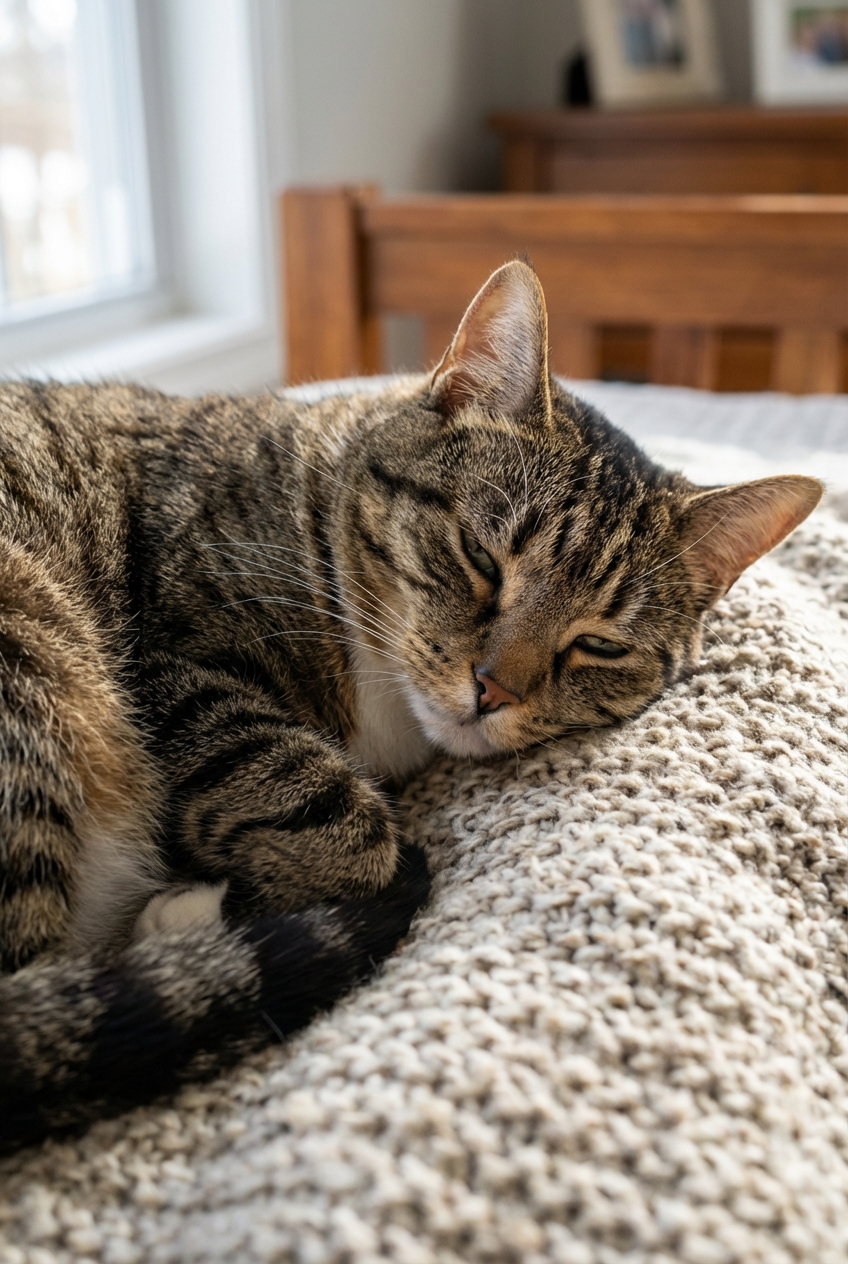
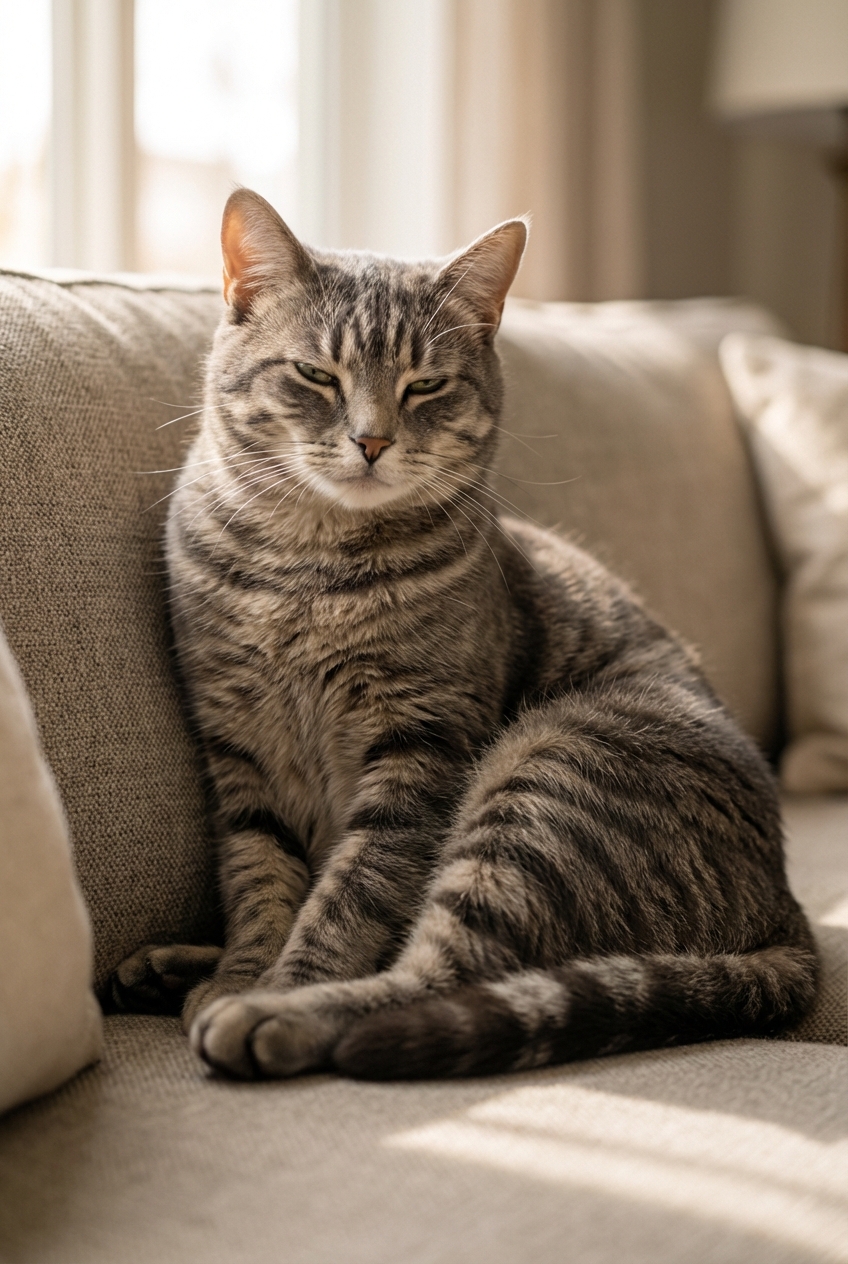
- Squinted eyes, flattened ears, tense muzzle
- Hard stare or half-closed eyes
- Whiskers pulled back or held stiffly
- Rapid breathing while resting
Veterinary teams use pain scoring tools, including the Feline Grimace Scale, because facial and body cues can be surprisingly informative.
7) Vocalization changes
- More meowing, yowling, or low growling
- Unusual silence in a typically vocal cat
- Crying when picked up or when jumping down
Vocalization alone does not diagnose pain, but when it comes with other changes, it strengthens the case. Also note that purring is not a reliable sign that a cat feels fine. Some cats purr when stressed or in pain.
Emergency signs: get help now
Some symptoms suggest severe pain or a medical emergency. Contact an emergency vet immediately if you notice any of the following:
- Straining to urinate, producing only small drops, or no urine at all
- Open-mouth breathing, severe panting, or blue or pale gums
- Sudden paralysis, dragging a limb, or inability to stand
- Severe lethargy, collapse, or unresponsiveness
- Repeated vomiting, bloated abdomen, or signs of extreme distress
- Active bleeding, suspected poisoning, or major trauma
- Crying out in pain and unable to get comfortable
Especially in male cats, urinary blockage can become life-threatening fast. It is not a wait and see situation.
Common causes of pain
Only a veterinarian can diagnose the cause, but these are common sources of pain in cats:
- Arthritis and joint disease: very common in middle-aged and senior cats and often missed
- Dental disease: inflamed gums, tooth resorption, broken teeth
- Urinary tract issues: cystitis, stones, or blockage
- Injuries: sprains, bites, falls, nail or paw pad injuries
- Gastrointestinal problems: constipation, pancreatitis, foreign material
- Skin and ear conditions: infections, allergies, abscesses
- Chronic illness: kidney disease, cancer, inflammatory conditions
One practical takeaway: pain is often the first sign you notice, not the last. Getting your cat checked early can prevent a small issue from turning into a major one.
What to do if you suspect pain
Step 1: Observe and write it down
Clear details help your veterinarian make faster, safer decisions. Take notes on:
- When the change started and whether it is getting worse
- Eating, drinking, and litter box habits
- Mobility changes, jumping hesitation, or stiffness
- Any sensitivity to touch and where
- Any new household stressors, such as visitors, moves, or new pets
If you can safely do so, take a short video of the behavior or movement you are noticing. Cats often act normal in the exam room, and video can be extremely helpful.
Step 2: Reduce stress and prevent injury
- Keep your cat indoors and in a quiet room if they are hiding or reactive
- Provide soft bedding and easy access to food, water, and a litter box
- Block high jumps and use pet steps if needed
- Separate from other pets if your cat seems irritable or fearful
These steps do not treat the cause, but they can reduce suffering and prevent accidental worsening.
Step 3: Call your veterinarian
If the signs are mild but persistent, call your primary vet and describe what you are noticing. If any emergency signs are present, go to an emergency clinic.
Ask what you should monitor at home and whether your cat should be seen the same day.
Step 4: Handle and transport safely
A painful cat may panic or lash out, even if they are normally gentle. If you need to transport your cat:
- Use a sturdy carrier and keep it level
- If possible, use a top-loading carrier or remove the top half to place your cat in with less lifting
- Use a towel to gently guide and support them, and avoid forcing painful positions
- Keep the environment quiet and dim during travel
Step 5: Do not give human pain meds
This is worth stating clearly: never give your cat over-the-counter pain relievers unless your veterinarian specifically prescribes them for your cat. Common human medications can be toxic to cats, even in small amounts.
If you have already given a medication by mistake, contact your veterinarian or a pet poison hotline immediately.

How vets assess and treat pain
Veterinarians typically combine history, physical exam, and sometimes diagnostics such as bloodwork, urinalysis, X-rays, ultrasound, or dental evaluation. Treatment depends on the cause and may include:
- Cat-safe pain relief and anti-inflammatory medications
- Dental cleaning or extractions if the mouth is the source
- Fluids, diet changes, or urinary support plans
- Wound care, antibiotics, or treatment of abscesses
- Long-term arthritis plans such as weight management, home setup changes, and targeted therapies
Many cats do very well once pain is addressed. Often, caregivers are surprised by how much more social, playful, and “younger” their cat seems when discomfort is controlled.
Comfort care at home
While you are waiting for your appointment or supporting a chronic condition, these home adjustments can make a meaningful difference:
- Make basics easy: place food, water, and litter on one level of the home
- Use a low-entry litter box: helpful for arthritis or abdominal pain
- Add traction: runners or non-slip mats on slick floors
- Warmth and softness: a cozy bed in a quiet area away from drafts
- Gentle routine: predictable feeding and play times reduce stress
- Watch weight: extra weight increases joint strain, but do not start a diet without guidance if your cat is not eating well
If your veterinarian prescribes pain medication, give it exactly as directed and report any changes in appetite, vomiting, sedation, or behavior.
Prevention and early detection
Small routines make it easier to spot subtle changes early. Veterinarians often emphasize that consistency is what helps you notice when something is off.
- Annual or twice-yearly vet visits: especially for cats over age 7
- Dental checks: bad breath is not normal and often signals disease
- Regular nail trims: overgrown nails can change posture and increase joint pain
- Daily observation: a quick check of eating, movement, and litter box habits
- Enrichment: gentle play keeps joints moving and supports mental well-being
Bottom line
When a cat is in pain, the clues are often quiet: less jumping, more hiding, changes in grooming, or subtle shifts in mood. Many of these signs can also point to illness, so it is always worth checking in with a veterinarian if changes persist.
If you are unsure, err on the side of checking in. You are not overreacting. You are paying attention, and that is one of the most loving things you can do.