Is your cat yowling, restless, and trying to escape? Learn the signs and length of heat, calming care strategies, training tips, what to avoid, and why spayi...
Article
•
Designer Mixes
How to Tell if Your Cat Is in Heat

Shari Shidate
Designer Mixes contributor
If your cat is suddenly louder, clingier, and a little extra dramatic, you are not imagining it. She may be in heat, which is the fertile phase of her reproductive cycle. For many families, the hardest part is that cats rarely bleed like dogs do, so the signs can feel confusing at first.
As a veterinary assistant, I like to reassure families that most heat behaviors are normal, but they can be intense. The goal is to recognize what is happening, keep everyone safe and sane, and prevent an unplanned litter.
The big three signs: loud yowling, rolling and rubbing, and the tail held to the side with the hind end raised when touched along the back.
What “in heat” means
A cat in heat is also called “in estrus.” This is when an unspayed female cat (a queen) is hormonally ready to mate. Cats are seasonally polyestrous, meaning they can have repeated heat cycles, especially during longer daylight months. In many indoor cats, artificial lighting can reduce seasonality and lead to cycling outside the typical breeding season, sometimes even year-round.
Most cats experience their first heat somewhere around 4 to 10 months of age, with many landing around 5 to 6 months. Smaller cats and certain lines can cycle earlier, and some cats cycle later.
Most common signs your cat is in heat
Cats show heat primarily through behavior and body posture. Here are the signs families notice most often.
1) Loud vocalizing (calling)
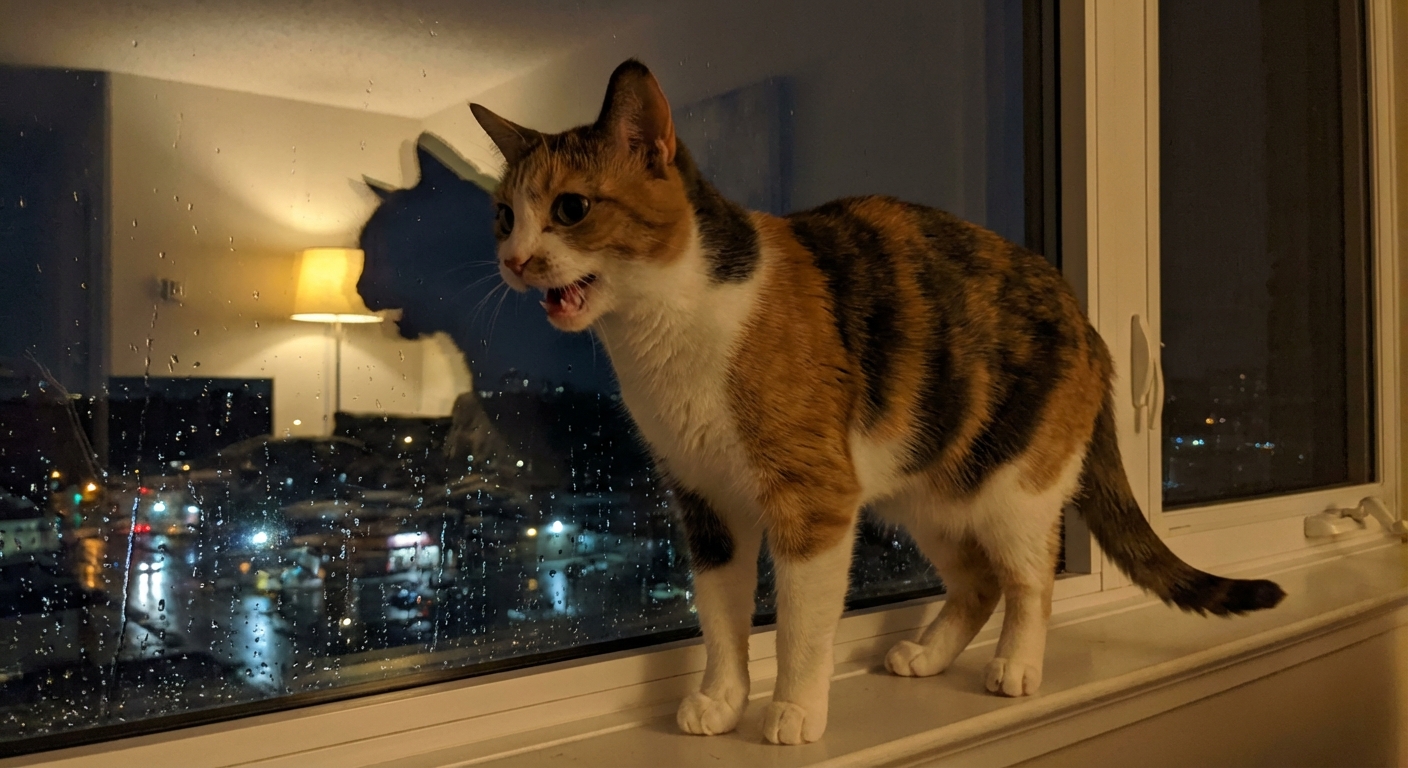
This is not a normal meow. It is a long, drawn-out yowl that can sound like pain or distress. It is your cat advertising to tomcats that she is available.
2) Extra affection and clinginess
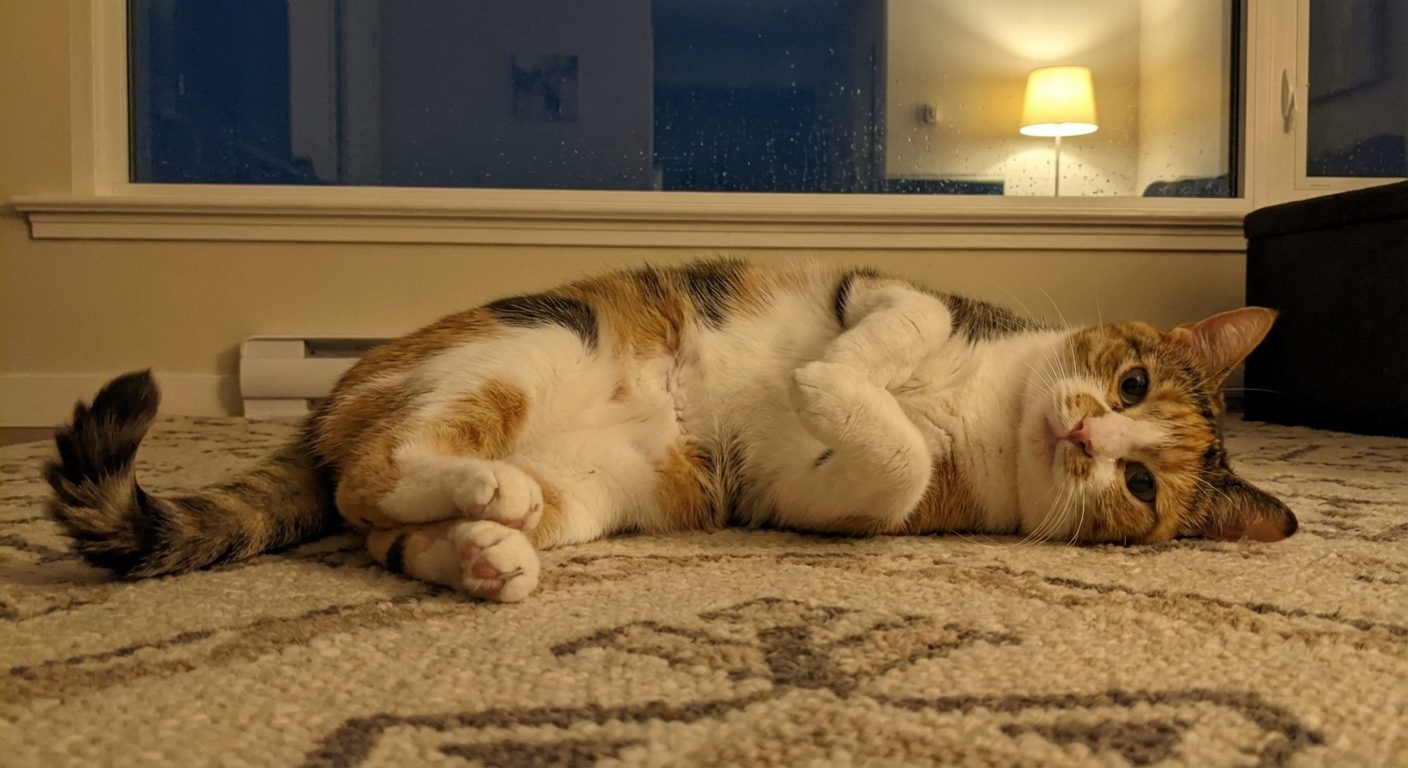
Many cats in heat rub their face and body on people, furniture, and door frames. They may roll on the floor, want constant petting, and follow you from room to room.
3) The classic heat posture
If you gently pet along her back, she may:
- Lower her front end
- Raise her hindquarters (hind end up)
- Move her tail to the side
- “Tread” with her back legs
This posture is called lordosis and is a hallmark of estrus.
4) Increased restlessness and escape attempts
Heat can make cats desperate to get outside. Door-dashing, pushing at window screens, and pacing are common. This is one of the biggest safety risks, especially for indoor-only cats.
5) Spraying or urine marking
Some females spray during heat. Others may visit the litter box more, or leave small “calling card” spots. Tip: straining to urinate, crying in the litter box, or producing very frequent tiny urinations is not typical heat behavior and should be treated like a medical concern.
6) Reduced appetite
Not all cats do this, but some eat less during the peak of heat because hormones and agitation take center stage.
Also, do not be surprised if the male cats in the home get worked up, too. Intact males are most likely to react, but even some neutered males may become more vocal, restless, or start urine marking when a female is in heat.
Does a cat bleed in heat?
Usually, no. Most cats do not have visible bleeding in heat. If you see blood, do not assume it is estrus. Consider:
- Urinary tract infection or bladder inflammation
- Vaginal injury
- Bleeding from the rectum
- Other reproductive tract issues
Any noticeable bleeding is a good reason to call your veterinarian promptly.
How long heat lasts
Heat length varies. Estrus commonly lasts about 4 to 7 days, but some cats can show signs longer, sometimes up to 10 to 14 days. What families describe as “she has been in heat forever” can also include the lead-in and in-between phases (like proestrus and the time between heats), where behavior may still seem a little off even if she is not at peak estrus.
If she does not mate, she will typically cycle again after a short break, often about every 2 to 3 weeks during active seasons. This timing can vary by the individual cat, the time of year, and indoor lighting. That repeated pattern is why heat can feel never-ending for families.
Heat or something else?
Heat behaviors can look alarming, so here is a family-friendly way to sort it out.
More likely heat
- Yowling plus rolling and rubbing
- Tail held to the side when touched near the back
- No fever, no vomiting, no obvious pain
- Normal urine output (even if she is marking)
Call a vet the same day if you notice
- Straining to urinate, crying in the litter box, or very frequent tiny urinations
- Blood in urine or on bedding
- Lethargy, hiding, loss of appetite lasting more than a day
- Foul-smelling discharge from the vulva
- Distended belly, vomiting, or signs of significant pain
One serious condition to know about is pyometra, a uterine infection that can occur in unspayed females. It is often seen in the weeks after a heat cycle rather than during the heat itself, and it can be life-threatening. Not every sick cat has pyometra, but it is one reason we do not ignore “something seems off.”
What to do at home
You cannot safely “stop” a heat cycle at home, but you can reduce stress and prevent mating.
Keep her strictly indoors
- Double-check screens, patio doors, and garage access
- Use a second barrier if needed, like a baby gate in a hallway leading to the front door
- Warn kids to open doors slowly and watch for door-dashing
Reduce stimulation and support calm
- Close blinds at night if outdoor cats are visible
- Add interactive play sessions to burn nervous energy (wand toys are great)
- Offer puzzle feeders or treat games for distraction
- Provide a quiet “reset room” with litter, water, and a cozy hiding spot
Comfort measures
- Gentle petting if she seeks it
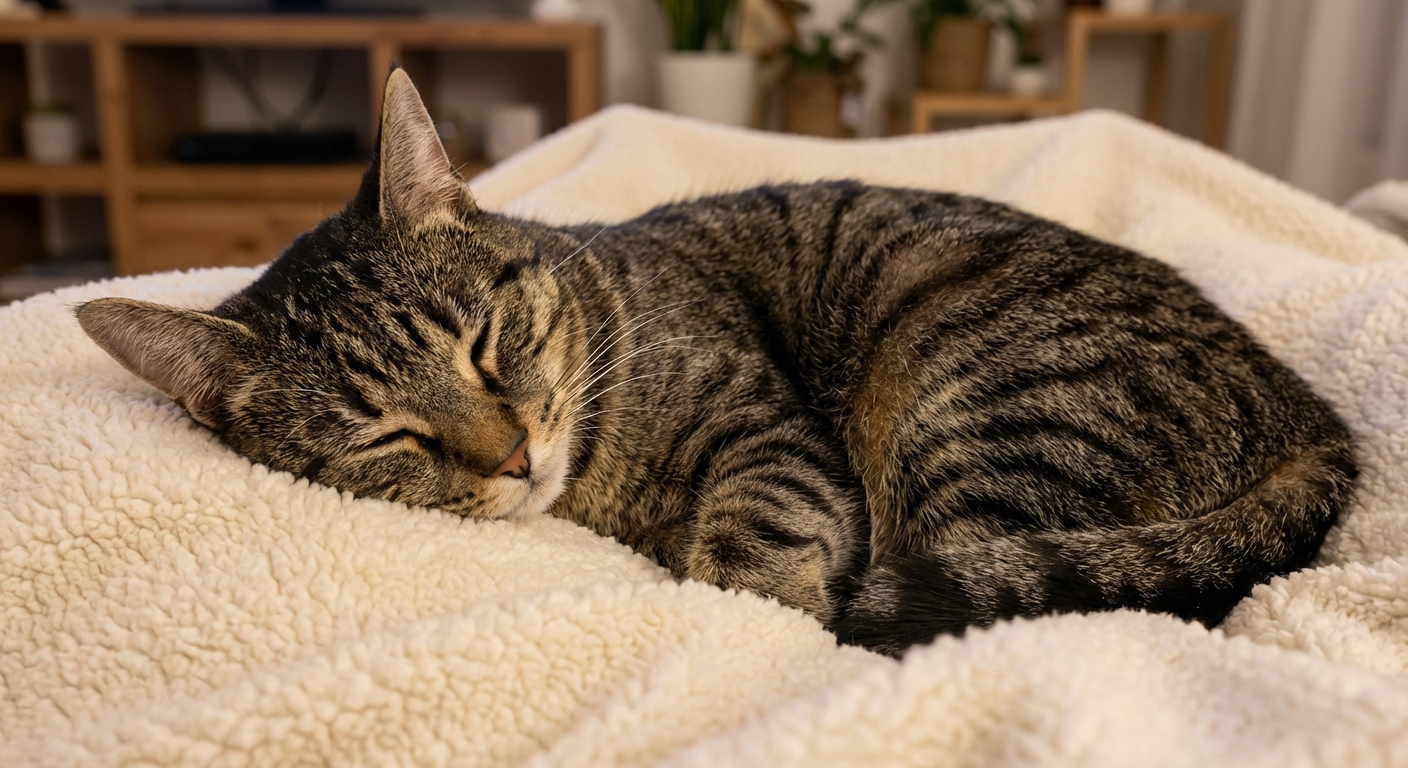
- Warm, soft bedding in a quiet area
- Keep the litter box extra clean, especially if she is marking
What not to do
- Do not give human medications or leftover pet sedatives. Many common drugs are dangerous for cats, and dosing is not a DIY situation.
- Do not let her mate “just once to calm her.” It can lead to pregnancy, and it does not solve the long-term cycle pattern.
- Avoid unapproved hormone products. Hormonal heat-suppressing drugs can have serious side effects and should only be used if your veterinarian recommends them for a specific medical reason.
Can she get pregnant?
Yes. Cats can become pregnant quickly. Cats are induced ovulators, meaning mating triggers ovulation. If she gets out and mates, pregnancy is a real possibility.
Some cats can also mate with more than one male in a single heat cycle, which can result in kittens with different fathers in the same litter. If pregnancy occurs, the typical gestation length is about 63 to 65 days (about 9 weeks).
When to spay
Spaying is the most reliable way to prevent heat cycles and unplanned litters. It also prevents pyometra and eliminates the risk of ovarian and uterine cancers.
Spaying can also reduce the risk of mammary (breast) cancer, with the strongest risk reduction seen when a cat is spayed before her first heat. The protective effect decreases after subsequent heat cycles.
Many veterinarians recommend spaying before the first heat when possible, often around 5 to 6 months. Your veterinarian will advise the best timing for your cat based on her health, size, and lifestyle.
If your cat is currently in heat, you can still call to discuss scheduling. Some clinics may prefer to wait until the heat resolves because the reproductive tract can be more vascular during estrus, but policies vary and your vet can guide you.
Quick checklist
- Unspayed female, often under a year (but could be older)
- Loud yowling, especially at night
- Rolling, rubbing, extra affection
- Hind end raised, tail to the side when petted
- Restlessness and trying to escape outdoors
- Little to no bleeding
If you are seeing the posture plus the vocalizing, odds are very high you are dealing with heat. Your next best step is prevention: keep her indoors and call your vet to discuss spay timing.