Noticing your cat hiding, sleeping more, or eating less? Learn depression-like signs in cats, medical issues to rule out, and practical home care: routine, e...
Article
•
Designer Mixes
How to Tell if Your Cat Is Depressed

Shari Shidate
Designer Mixes contributor
Cats are masters at quietly coping, so low mood and depression-like behavior can be easy to miss until it starts affecting appetite, litter box habits, grooming, or social behavior. The tricky part is that many signs people label as “depression” can also be a medical problem or pain. So the goal is twofold: notice the pattern and rule out health issues early.
In this guide, I will walk you through what depression-like behavior in cats can look like, what commonly triggers it, how to tell it apart from illness, and what you can do at home to help your cat feel like themselves again.
Can cats really get depressed?
Cats can show depression-like behavior and “low mood” states, such as low interest in normal activities, decreased social interaction, changes in sleep and appetite, and reduced play and exploration. It is not a formal psychiatric diagnosis the way it is in humans. Veterinary teams usually frame it as a behavioral change that may be linked to stress, anxiety, pain, or an underlying illness.
It helps to think of “depression” as a cluster of changes that lasts longer than you would expect for your cat’s normal ups and downs, for example more than 24 to 48 hours, or any rapid or severe change. Mild stressors can take longer to settle, but sudden shifts also deserve faster attention.
Common signs of low mood in cats
Most cats show depression-like behavior through subtle shifts in routine. Look for changes in these categories, especially if you notice more than one.
Behavior and social changes
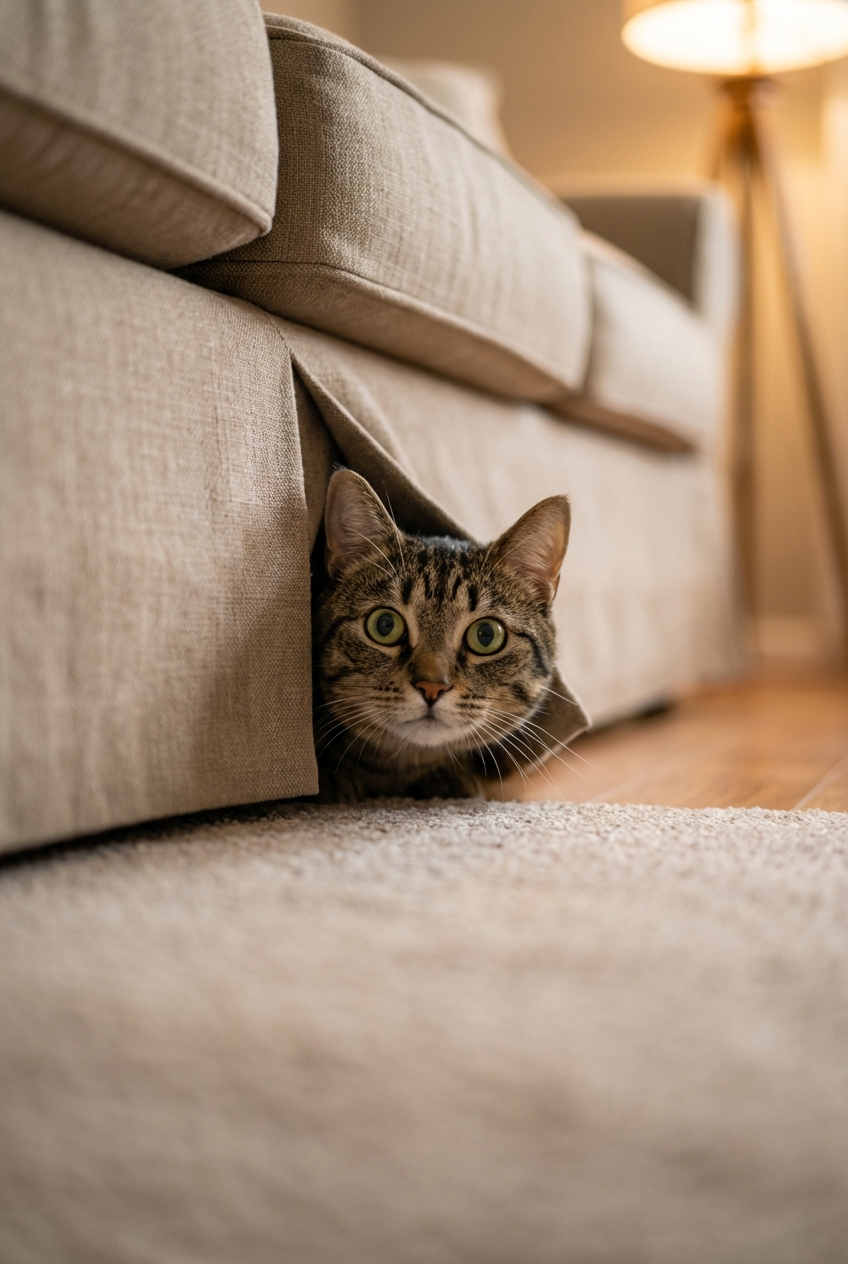
- Hiding more than usual or spending long periods under the bed or in closets
- Less interest in interaction, such as not greeting you, not seeking petting, or moving away when approached
- Clinginess in some cats, such as following you constantly or vocalizing for attention
- Reduced play or ignoring favorite toys
- Less curiosity, such as not exploring or watching windows like they used to
Appetite and drinking changes
- Eating less or acting indifferent about food
- Eating more (comfort eating can happen too)
- Changes in drinking that are new for your cat
Sleep and energy changes
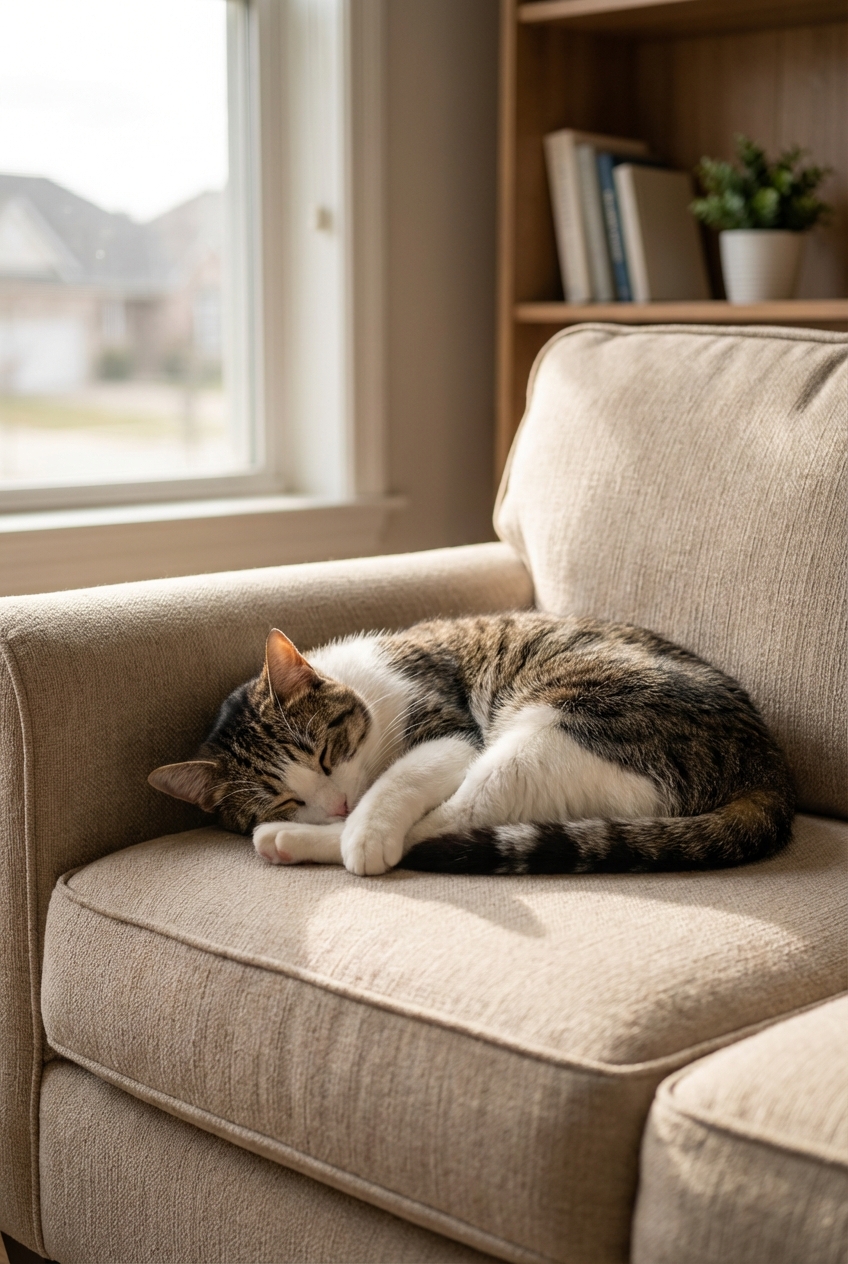
- Sleeping much more or at unusual times
- Seeming low-energy, slow to move, or generally “flat”
- Restlessness or pacing in some cats
Grooming and appearance changes
- Decreased grooming, leading to a dull coat, dandruff, or mild matting
- Overgrooming or licking and bald patches, often stress-related
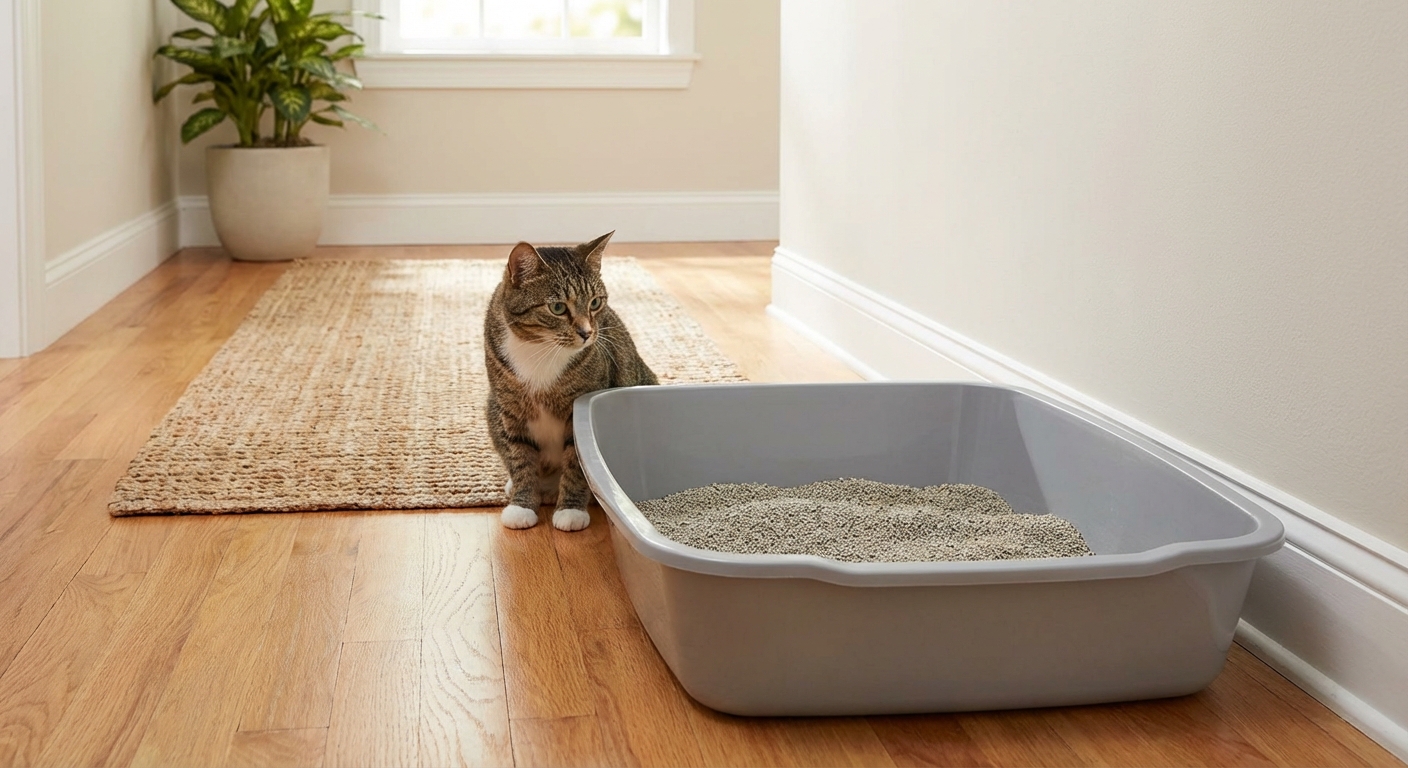
Litter box changes
- Not using the litter box or having accidents
- Going less or straining (this is urgent, especially for male cats)
- Changes in stool consistency, including diarrhea or constipation
Important: Appetite loss, hiding, and litter box changes are very often medical, not just “sadness.” If those are present, put “vet visit” near the top of your list.
If you are seeing these changes, the next question is what might be driving them: stress, boredom, pain, illness, or a mix of factors.
Common triggers
Cats are sensitive to change and to stressors that people may not notice. Depression-like behavior often follows a trigger, even if it is subtle.
Environmental changes
- Moving to a new home
- Renovations, new furniture, new flooring smells
- Schedule changes, such as a new job or travel
- New pet, new baby, or a roommate moving in or out
Loss and social shifts
- Death of a pet companion or human family member
- Separation from a bonded animal
- Reduced attention after a major life change
Boredom and low enrichment
- Not enough play or hunting-style activity
- Limited vertical space or window access
- Single-cat homes where the cat is left alone many hours a day
Medical issues and chronic pain
One of the most overlooked “causes” of depression-like behavior in cats is discomfort. Conditions like dental disease, arthritis, obesity, kidney disease, diabetes, urinary tract disease, gastrointestinal issues, or hyperthyroidism can change mood because the cat simply does not feel good. In older cats especially, a lower threshold for bloodwork and urine testing is often a good idea when behavior changes show up.
Low mood or illness?
A common evidence-based approach is to assume medical first when there is a significant behavior change, then evaluate emotional and environmental factors.
Signs that lean medical
- Not eating for 24 hours, eating dramatically less, or a sudden appetite drop (partial appetite loss can matter too)
- Weight loss, vomiting, diarrhea, or constipation
- Bad breath, drooling, pawing at the mouth
- Difficulty jumping, stiffness, reluctance to be touched
- Changes in urination: frequent trips, straining, blood, crying in the box
- Hiding combined with a “pain face” (squinted eyes, ears back, tense body)
Signs that lean stress-related
- Behavior change that clearly follows a life event (move, new pet, loud construction)
- Appetite is mostly normal, but play and social behavior drop
- More hiding or vigilance when specific triggers occur (doorbells, another cat outside)
Even when stress is the trigger, medical issues can develop alongside it. For example, stress is strongly associated with feline lower urinary tract disease, including feline idiopathic cystitis (FIC), which can worsen mood and behavior.
If your cat is acting “depressed,” the safest next step is a veterinary exam to rule out pain and illness. Cats often do not show obvious symptoms until a condition is more advanced.
When to call the vet
Book a vet appointment soon if your cat’s mood or routine changes for more than 48 hours, especially if appetite, grooming, or litter box habits change.
Urgent, same-day care
- Straining to urinate, crying in the box, or producing little to no urine (emergency, especially for male cats)
- Not eating at all for 24 hours (kittens: much sooner). This is especially concerning if your cat is overweight, already sick, or the appetite drop is sudden.
- Repeated vomiting, severe diarrhea, or signs of dehydration
- Sudden weakness, collapse, open-mouth breathing, or blue or pale gums
Helpful info to bring
- When the change started and any recent household changes
- Food intake and water intake estimates
- Litter box frequency and stool appearance
- Short videos of unusual behavior (hiding, vocalizing, pacing)
At the appointment, your vet may recommend a physical exam, dental evaluation, bloodwork, urinalysis, and sometimes imaging to look for pain sources like arthritis or bladder issues.
What you can do at home
If your vet rules out medical causes, or you are supporting your cat alongside treatment, small daily changes can make a big difference. Think comfort, predictability, and safe enrichment.
1) Rebuild routine
- Feed on a schedule.
- Keep litter boxes consistently clean.
- Create quiet rest zones away from noise and foot traffic.
2) Add enrichment
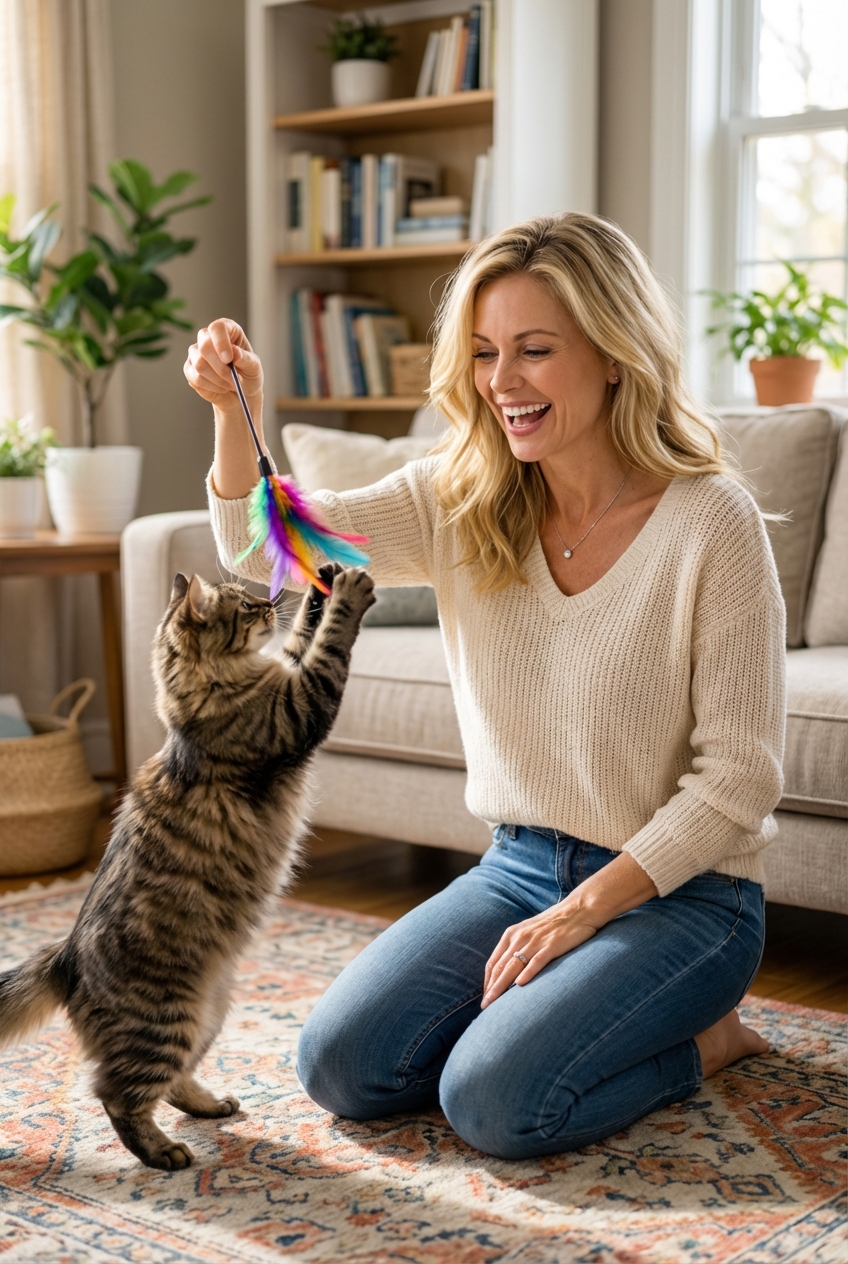
- Play daily for 5 to 10 minutes, 1 to 2 times a day using wand toys or hunt games.
- Use food puzzles or scatter small treats to encourage foraging.
- Offer a window perch for safe bird and squirrel watching.
3) Make resources easy to access
- Provide a covered bed or box in a calm area.
- Add vertical space like a cat tree or shelves.
- Reduce competition in multi-cat homes with separate food bowls, multiple water stations, and enough litter boxes.
- Helpful rule of thumb: litter boxes = number of cats + 1, placed in separate, low-traffic locations.
4) Support the bond gently
Some cats want extra affection; others need space. Offer contact without forcing it. Sit nearby, speak softly, blink slowly, and let your cat choose the distance. This can help build trust, especially after stressful changes.
5) Consider calming supports
For stress-related cases, your vet may suggest pheromone diffusers, behavior plans, or in some situations, medication. Medication is not a failure. For some cats, it is what allows them to relax enough to benefit from enrichment and routine again.
What not to do
- Do not punish litter box accidents. It usually increases stress and makes the problem worse.
- Do not force handling, cuddling, or “social time” if your cat is hiding or tense.
- Do not make sudden diet changes or abruptly stop medications without veterinary guidance.
A simple check-in
If you are not sure whether your cat is dealing with depression-like behavior, try this quick snapshot. Rate each item as “normal,” “a little changed,” or “very changed” compared to your cat’s usual self.
- Appetite
- Water intake
- Litter box habits
- Grooming
- Social interaction
- Play and curiosity
- Sleep patterns
If two or more areas are “very changed,” or if appetite and litter box habits are changed at all, schedule a veterinary visit. Cats usually do not change these without an underlying reason worth checking.
Frequently asked questions
How long does it last?
It depends on the cause. After a move or a new pet, some cats bounce back within a couple of weeks, while others need months of gentle support and environmental management. If symptoms persist beyond 2 to 4 weeks, or worsen at any point, involve your veterinarian and consider a behavior consult.
Can an indoor cat get depressed from boredom?
Yes. Indoor life is safer, but it can be under-stimulating without daily play, climbing space, and opportunities to hunt and explore. A few minutes of interactive play each day is one of the simplest, highest-impact changes you can make.
Should I get another cat?
Sometimes, but not always. Adding a cat can reduce loneliness for some personalities, but it can also increase stress and resource guarding. If you are considering this, talk to your vet or a feline behavior professional first, and plan a slow, structured introduction. That typically includes a quarantine period, gradual scent swapping, and short, supervised visits before full access.
The bottom line
If your cat seems “depressed,” trust your gut. Behavior changes are a form of communication, and cats often communicate pain, stress, or illness through subtle shifts long before obvious symptoms appear. Start with a vet check to rule out medical causes, then build your cat’s confidence back with routine, enrichment, and calm connection.
You are doing the right thing by paying attention. Early support is one of the kindest gifts you can give a cat.