Worried your cat is slowing down? Learn subtle arthritis signs, what your vet may recommend, safe pain-control options, and simple home changes to improve co...
Article
•
Designer Mixes
How to Tell If Your Cat Has Arthritis

Shari Shidate
Designer Mixes contributor
Cats are masters at hiding pain. In the clinic, I have seen sweet, stoic kitties with significant joint changes who still purr and head-butt like nothing is wrong. That is why feline arthritis often gets missed until the discomfort starts affecting daily life.
The good news is that once you know what to look for, you can catch arthritis earlier and make your cat far more comfortable. Let’s walk through the most common signs, a simple at-home check, what your vet can do to confirm it, and the most common treatment paths.
What arthritis looks like in cats
Arthritis is joint disease that causes pain and reduced mobility. In cats, it is most often osteoarthritis, a degenerative joint condition where cartilage wears down over time and the joint becomes inflamed and stiff.
It is especially common as cats age and many older cats have some degree of osteoarthritis, even if they do not show it clearly. It can also develop after an injury, from hip dysplasia, or alongside other orthopedic issues.
Unlike dogs, many cats do not limp dramatically. Instead, they make small lifestyle changes that look like “getting older” or “being grumpy.” Those subtle shifts are often the clues.
Early signs at home
Think of arthritis signs in three buckets: movement changes, behavior changes, and grooming and litter box changes.
Movement changes
- Jumping less (or jumping up, but hesitating before jumping down)
- Using a step-by-step climb onto furniture instead of a clean leap
- Stiffness after naps that improves after a few minutes of moving
- Moving slower up stairs or avoiding stairs entirely
- Difficulty getting traction on slick floors, with occasional slipping
- Changes in posture, such as a slightly hunched back or keeping the hind legs closer together
Behavior and mood changes
- Irritability when touched in certain areas, especially back, hips, or shoulders
- Less play or shorter play sessions
- More hiding or avoiding interaction
- Restlessness at night or trouble settling into a comfortable position
Grooming and litter box changes
- Overgrooming a painful joint area, sometimes causing thinning fur
- Ungroomed coat, dandruff, or mats, especially along the back end where twisting hurts
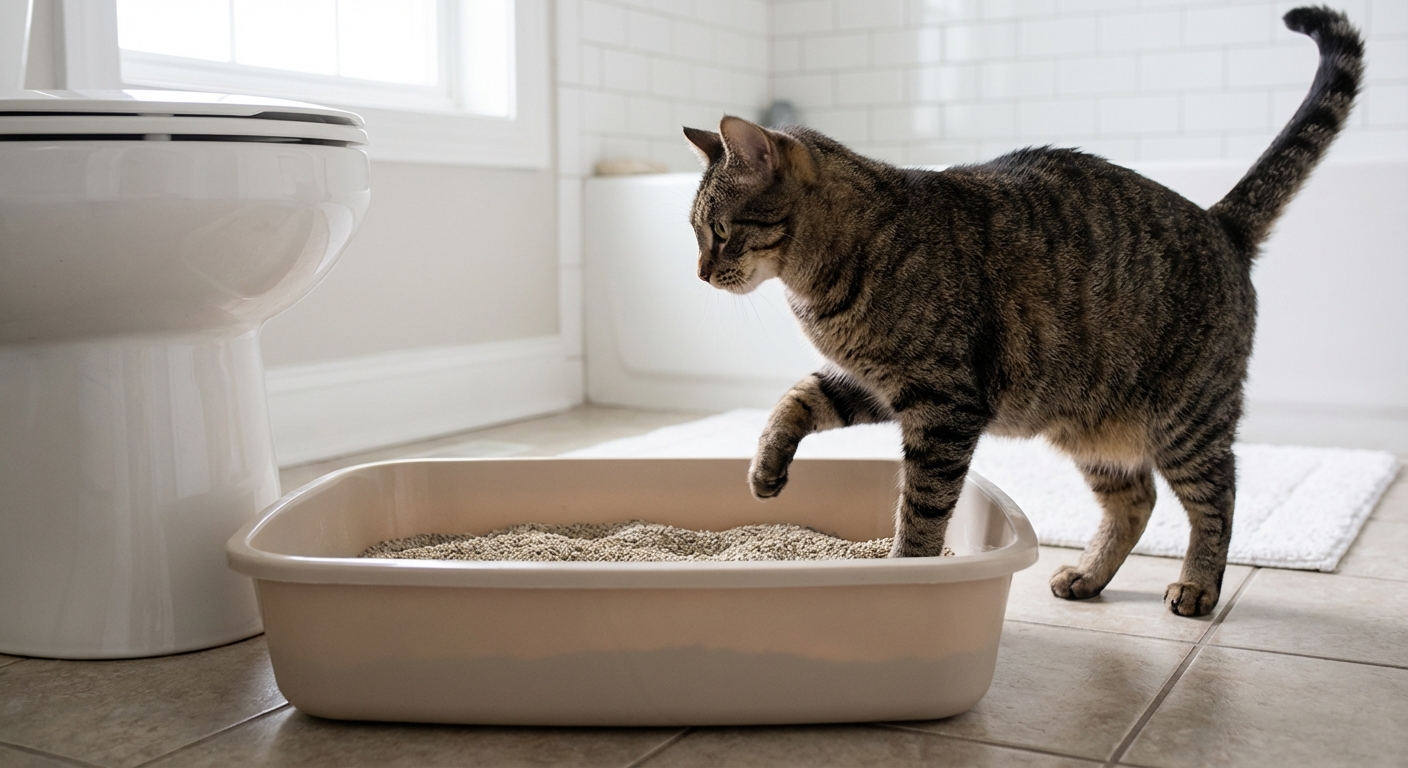
- Accidents outside the litter box because stepping into a high-sided box, squatting, or turning around is painful
- Changes in stool comfort, such as seeming reluctant to posture or spending longer in the box
A quick caution here: urinary and constipation problems are common in cats and can look like “litter box avoidance.” If your cat is straining, making frequent trips with little output, crying in the box, or not producing urine, that is an urgent vet issue regardless of arthritis.
If you are thinking, “My cat does two or three of these,” that is worth a vet conversation. Cats often show multiple small signs rather than one obvious one.
A quick, gentle at-home check
This is not a replacement for an exam, but it can help you notice patterns to share with your veterinarian.
1) Watch the daily routine
For 3 to 7 days, note:
- How often your cat jumps up to favorite places
- Any hesitation before jumping down
- Whether your cat uses furniture like “steps”
- Litter box behavior and any accidents
- Where your cat prefers to be touched, and where they flinch
2) Try the “petting map”
When your cat is relaxed, gently pet from head to tail. If your cat suddenly tenses, flicks the tail, turns to swat, or leaves when you touch the lower back, hips, or legs, that discomfort can be a clue.
One nuance: some cats simply dislike lower-back petting even when they are perfectly healthy. What matters most is a new sensitivity, or a clear change from your cat’s normal baseline.
3) Check nails and coat condition
Arthritic cats may not scratch posts as vigorously, which can lead to thicker nails. They may also struggle to groom the back and hindquarters. These little details help your vet build the full picture.
Tip: If possible, take short videos of your cat walking, jumping, and using the litter box. Videos are incredibly helpful because many cats move differently at the vet due to stress.
Which cats are higher risk?
Any cat can develop arthritis, but these factors raise suspicion:
- Age (middle-aged and senior cats are most commonly affected)
- Extra weight, which increases stress on joints
- Past injuries, fractures, or surgery
- Known orthopedic issues like hip dysplasia or patellar problems
- Low muscle mass or long periods of reduced activity, which can reduce joint support and make mobility changes more noticeable
How vets diagnose feline arthritis
Diagnosis typically includes a history, a hands-on exam, and sometimes imaging. Many cases are diagnosed based on a combination of your at-home observations and your vet’s exam findings.
History and exam
Your vet will ask about behavior changes at home and then evaluate:
- Joint range of motion and pain response
- Muscle loss, especially in the hind limbs
- Gait changes, stiffness, and posture
- Spine and hip comfort
X-rays and imaging
X-rays can show bony changes consistent with osteoarthritis. That said, pain level and X-ray severity do not always match perfectly. Some cats have clear discomfort with mild changes on X-ray, and others show major changes but hide it well.
Also, X-rays mainly show bone and joint structure. They do not capture every soft tissue pain source, so a normal or mildly changed X-ray does not always rule out pain.
Treatment trials
In some situations, your veterinarian may recommend a monitored treatment trial. If mobility and comfort improve, that response can support the diagnosis and help tailor a long-term plan.
Ruling out look-alikes
Because cats are subtle, your vet may also consider dental disease, urinary issues, neurologic disease, constipation, or thyroid problems, depending on what you are seeing at home.
When to call the vet sooner
Arthritis is usually gradual, but there are times you should seek care promptly:
- Sudden inability to jump or walk normally
- Crying out, open-mouth panting, or obvious distress
- Not using the litter box at all, straining, or frequent trips with little output
- Not eating for 24 hours, hiding, or acting “not themselves”
Open-mouth panting can happen with pain or stress, but it can also signal heart or respiratory disease. Either way, it warrants urgent evaluation.
Cats can compensate for a long time, so a sudden change often means something else is going on, or the pain has crossed a threshold.
How arthritis is treated
Most cats do best with a multimodal plan, meaning several small strategies working together. Treatment is individualized, especially for senior cats who may also have issues like chronic kidney disease, which can affect medication choices.
Depending on your cat, your vet may discuss options such as feline-appropriate pain medications, anti-nerve growth factor monoclonal antibody therapy, other supportive pain control, weight management, physical rehabilitation, and targeted home modifications. The goal is simple: better daily comfort and easier movement.
If supplements are part of the plan (often omega-3 fatty acids), ask your vet about dosing and product quality. Quality control varies widely, and “natural” does not always mean safe for every cat.
Pet-friendly ways to help at home
Arthritis care is often most successful when you combine veterinary treatment with simple, cat-friendly home tweaks.
Make movement easier
- Add pet stairs or a sturdy ottoman to favorite sleeping spots
- Use a low-entry litter box or cut one side low (and keep a second box available)
- Put non-slip rugs on slick floors so your cat can push off confidently
- Offer a warm, padded bed in a quiet location
Support a healthy weight
Even small weight loss can reduce joint load. If your cat is overweight, ask your vet for a safe calorie target and a plan that protects muscle mass.
Talk to your vet before giving any pain meds
Please do not give human medications like ibuprofen, naproxen, or acetaminophen. These can be extremely dangerous for cats. There are feline-appropriate options your veterinarian can prescribe and monitor safely.
Questions to ask at your appointment
- Based on my cat’s signs, does arthritis seem likely?
- Should we do X-rays now, or start with a monitored treatment trial?
- What pain control options are safest for long-term use in my cat?
- Could supplements like omega-3 fatty acids be helpful for my cat’s plan?
- Does my cat have other health issues that affect arthritis treatment choices?
- What changes at home would make the biggest difference for my cat?
- How will we monitor response, and how soon should we recheck?
If your cat is jumping less, grooming less, or acting “older,” trust that instinct. Arthritis is common, treatable, and your observations at home are one of the most powerful tools for getting your cat comfortable again.