Needle teeth driving you crazy? Learn why puppies bite, how to redirect fast, use calm time-outs, support teething, build bite inhibition, and know when to c...
Article
•
Designer Mixes
How to Tell If Your Cat Has a Fever

Shari Shidate
Designer Mixes contributor
When a cat feels “off,” it can be hard to know what is going on. Cats are masters at hiding illness, and a fever is one of those problems that can quietly build in the background until your kitty is really uncomfortable.
As a veterinary assistant here in Frisco, Texas, I have seen how much stress a “maybe fever” can cause for pet parents. The good news is you can check for fever safely at home, recognize red flags, and know exactly when it is time to call your veterinarian.
What counts as a fever
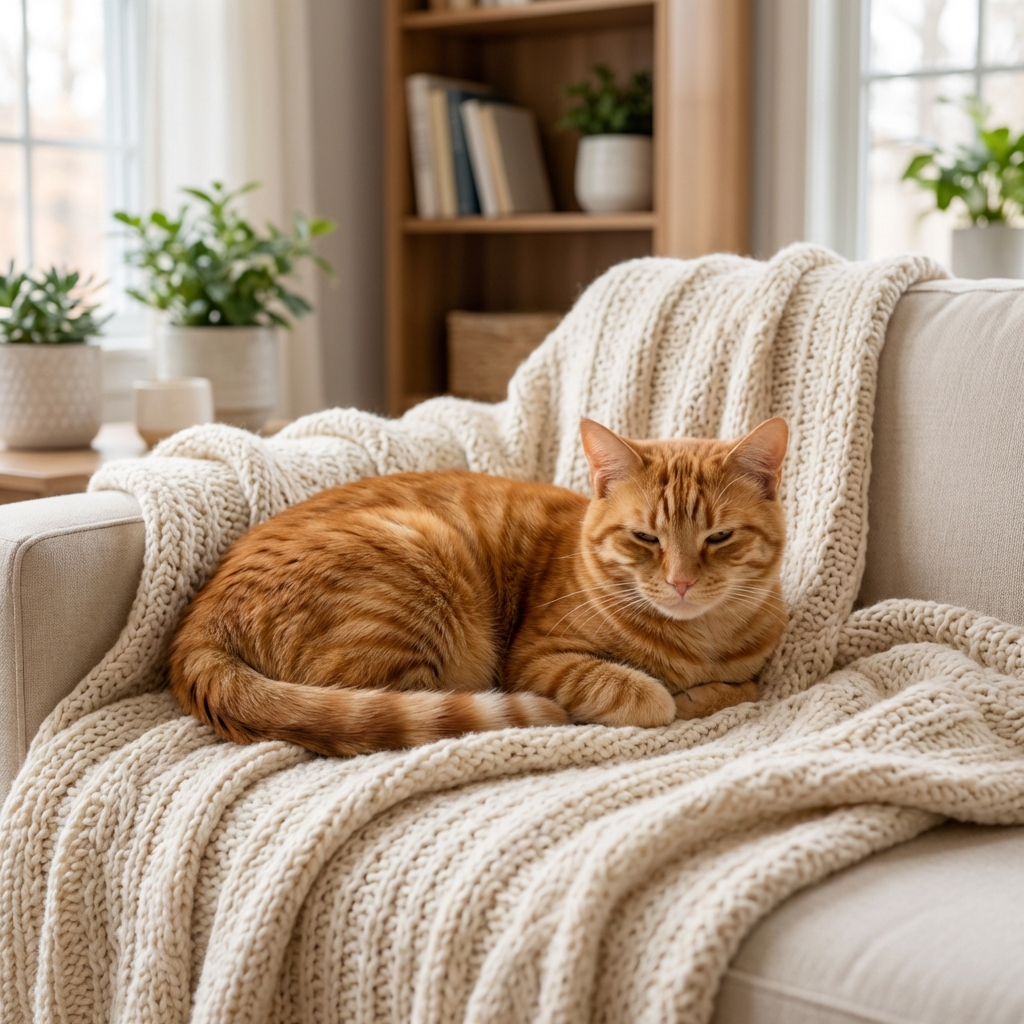
A fever means your cat’s internal body temperature is higher than normal. For most cats, a normal rectal temperature is about 100.4 to 102.5°F (38.0 to 39.2°C), although small variations can occur by individual and reference. A true fever is typically over 102.5°F.
Temperatures at or above 104°F are more concerning and deserve prompt veterinary guidance, especially if they persist. Temperatures 105 to 106°F or higher are often treated as an emergency because the risk of complications rises as the temperature climbs.
Important: Feeling your cat’s ears or nose is not a reliable way to diagnose a fever. Warm ears can happen for many reasons, including a warm room, stress, or recent activity.
Most accurate at-home way
If you want the most accurate answer at home, a digital thermometer used rectally is the gold standard. It is quick, inexpensive, and far more reliable than guessing based on behavior alone.
Many pet parents ask about ear (tympanic) or forehead thermometers. In my experience, they can be inconsistent in cats at home due to ear shape, movement, and placement. If you are worried, a rectal temperature is the clearest data to bring your vet.
What you need
- Digital thermometer (a basic one is fine, but do not reuse a human thermometer for people afterward)
- Lubricant like petroleum jelly or water-based lube
- Alcohol wipes for cleaning
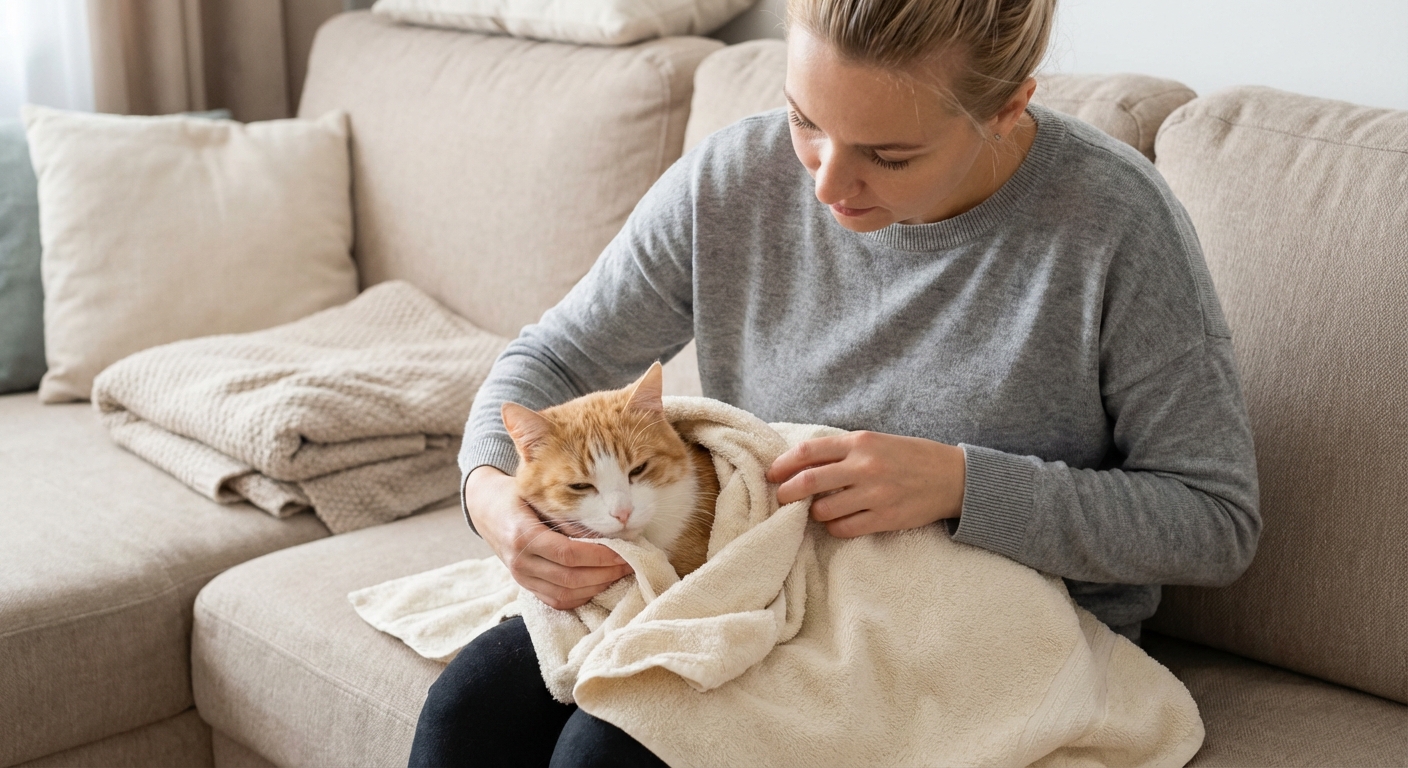
- A towel to gently wrap your cat (a “kitty burrito”)
- A helper if possible
How to take your cat’s temperature safely
- Stay calm and go slowly. Choose a quiet room and speak softly.
- Pick a comfortable position. Many cats do best standing with a helper supporting the front end, or lying on their side in a towel wrap.
- Wrap your cat in a towel with only the rear end accessible. This reduces stress and scratching.
- Lubricate the thermometer tip.
- Lift the tail gently and insert the thermometer about 1/2 to 1 inch (less for kittens).
- Hold steady until it beeps. Most digital thermometers read in seconds.
- Remove and read the number. Clean the thermometer thoroughly afterward.
If your cat becomes very stressed, tries to bite, or fights hard, stop. Safety comes first. In that case, call your vet and let them know you could not get a reading at home.
What the number means
- 100.4 to 102.5°F: typically normal
- 102.6 to 103.9°F: mild to moderate fever, call your vet for guidance
- 104°F or higher: concerning, contact a veterinary clinic promptly (urgent if your cat seems unwell)
- 105 to 106°F or higher: emergency, seek immediate veterinary care
- Below 99°F: concerning low temperature, contact a veterinary clinic promptly
Common fever signs
Even before you take a temperature, you may notice changes that make you suspect something is wrong. Cats with fever commonly show one or more of these:
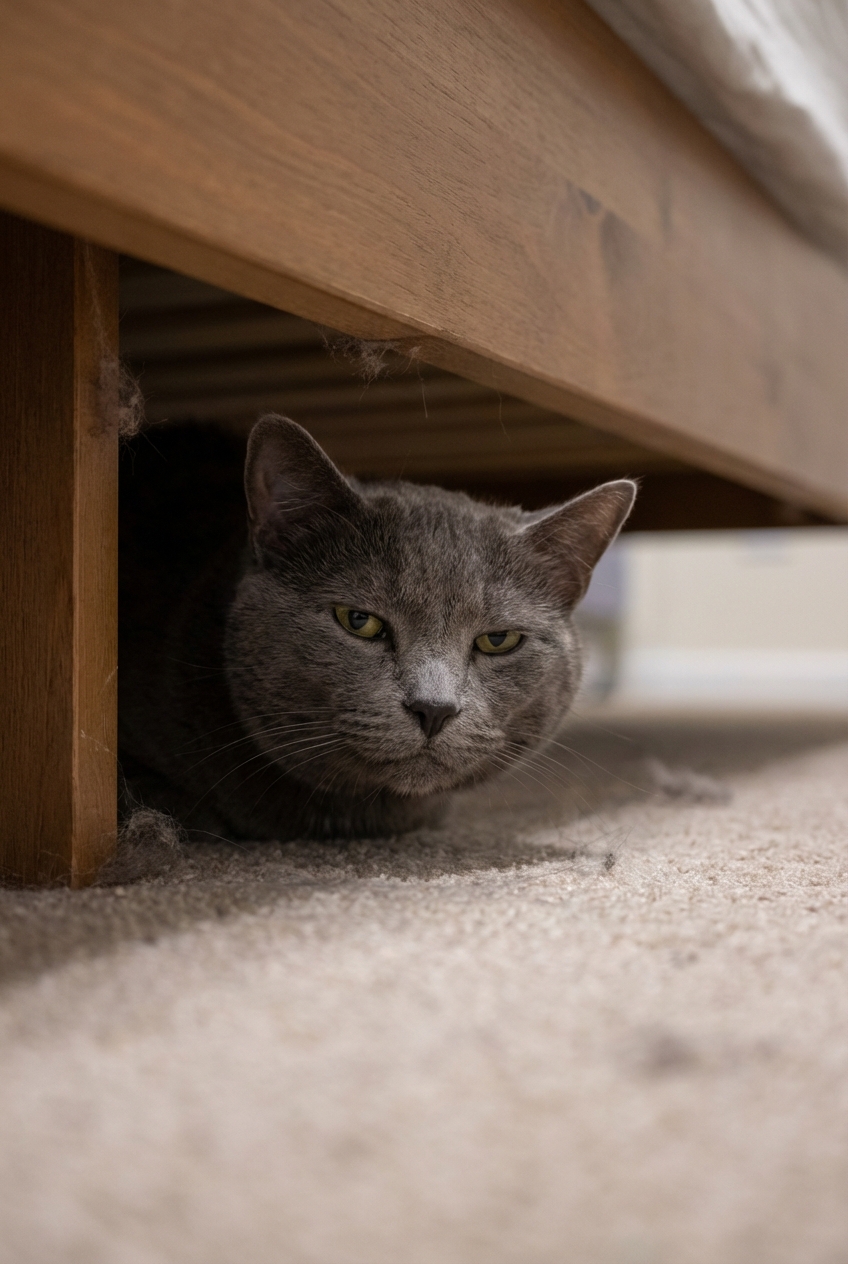
- Low energy or hiding more than usual
- Reduced appetite or refusing treats
- Less drinking or sometimes increased drinking
- Feeling warmer than usual when you touch them (a clue, but not a diagnosis)
- Fast breathing or seeming uncomfortable
- Shivering or trembling
- Possible dehydration (dry or tacky gums, sunken eyes, and overall “not themselves” behavior; skin tenting can be a clue but is not always reliable in cats)
- Behavior changes like irritability or not wanting to be touched
Because these signs can overlap with many illnesses, the thermometer reading helps you move from “I think so” to “I know.”
Common causes
Fever is not a disease by itself. It is usually a sign that your cat’s body is fighting something. Common categories include:
- Infections (respiratory infections, abscesses from bites, dental infections, urinary infections)
- Inflammation (pancreatitis, immune-mediated disease)
- Viral illnesses (some viruses can cause fever and lethargy)
- Reaction to vaccination (a mild fever for a day or so can happen)
- Toxins (including some human medications)
- Heat-related illness (especially if trapped in a hot environment)
One important note: cats can get very sick from bite wounds that look small on the outside. If your cat goes outdoors or has had a scuffle, a fever plus a painful spot or swelling deserves a prompt vet visit.
Also, fever and heat stroke are not the same thing. Fever is driven by the body’s internal set point, while heat stroke is overheating from the environment. If you suspect heat stroke, treat it as urgent and contact an emergency clinic right away.
When it is an emergency
Please call a veterinary clinic right away if any of the following are true:
- Your cat’s temperature is 104°F or higher, especially if it does not come down or your cat seems unwell
- Your cat’s temperature is 105 to 106°F or higher
- Your cat is very lethargic, collapses, or is difficult to wake
- Your cat has trouble breathing, open-mouth breathing, or blue or pale gums
- Your cat has repeated vomiting or cannot keep water down
- Your cat shows signs of pain (crying, tense posture, growling when touched)
- Your cat is a kitten, senior, pregnant, or has chronic illness (like kidney disease or diabetes)
- You suspect toxin exposure (including any human pain reliever)
If you are unsure, it is always okay to call and ask. In veterinary medicine, we would rather you call early than wait until your cat is in crisis.
What not to do
When you see a fever, it is tempting to reach for something in your medicine cabinet. Please avoid these common mistakes:
- Do not give human medications like acetaminophen (Tylenol), ibuprofen (Advil/Motrin), or naproxen (Aleve). These can be extremely toxic to cats. Aspirin is sometimes used in cats, but only in very specific situations and only under direct veterinary instruction.
- Do not force-feed water if your cat is nauseated or weak. This can lead to choking or aspiration.
- Do not “cool them down” aggressively with ice baths. If heat stroke is suspected, a vet needs to guide safe cooling and supportive care.
Support care at home
If your cat seems stable and you are waiting for an appointment, supportive care can help keep them comfortable. This does not replace medical treatment, but it can make a big difference.
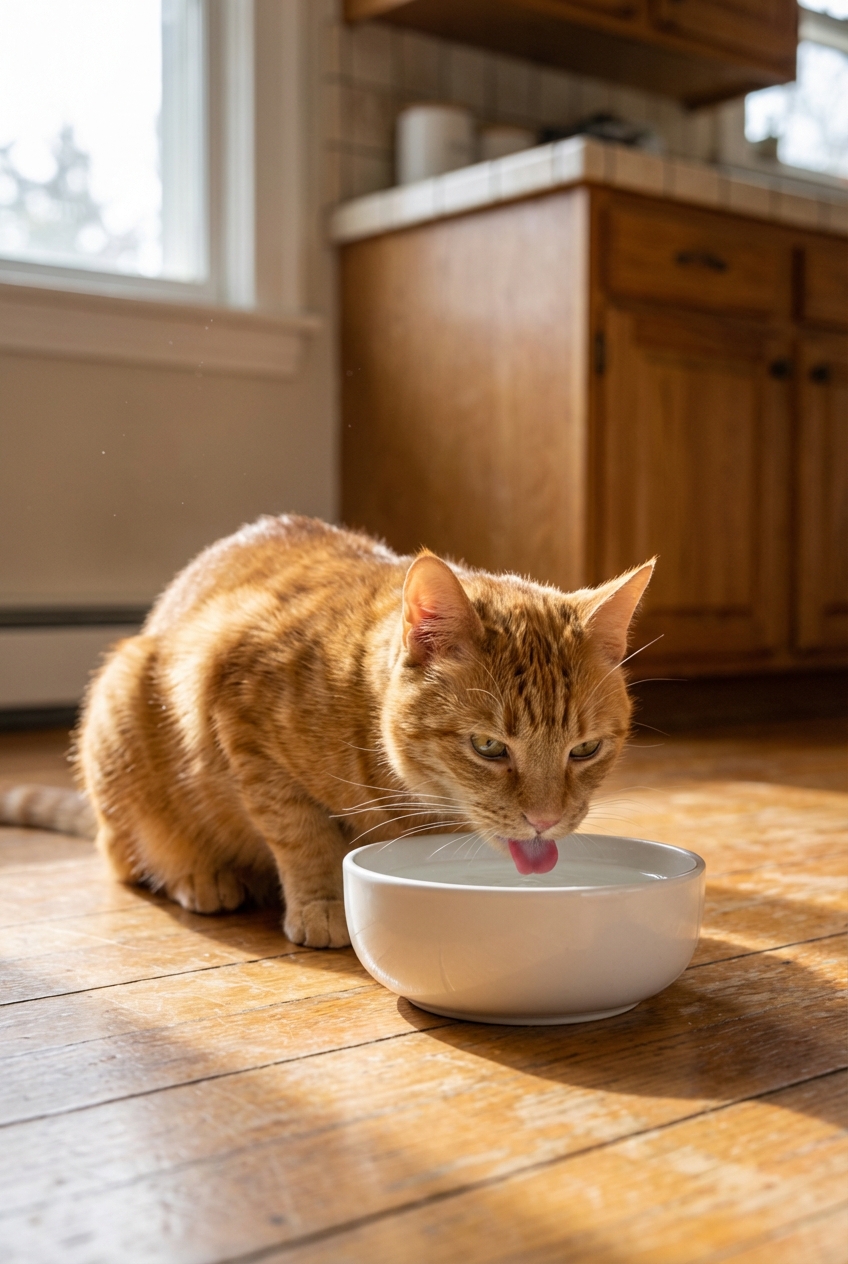
- Encourage hydration: offer fresh water, a pet fountain, or a little low-sodium broth made for pets. Avoid broths with onion or garlic, which can be toxic to cats.
- Keep them in a calm, quiet room: stress can worsen symptoms and make temperature-taking harder.
- Offer warm, smelly foods: warming canned food slightly can increase aroma and entice eating.
- Monitor litter box habits: urination, stool, and any straining matters.
- Recheck temperature only if your cat tolerates it. In many cases, checking every few hours is plenty unless your veterinarian advises otherwise or symptoms change.
If your cat stops eating for 24 hours, that alone is a reason to call your veterinarian. Cats can develop serious complications from not eating, especially overweight cats.
What your vet may do
In the clinic, your vet team will focus on the cause of the fever and your cat’s comfort. Depending on symptoms, that may include:
- A full physical exam and repeat temperature
- Checking hydration and pain level
- Bloodwork to look for infection, inflammation, organ stress, and dehydration
- Urinalysis, fecal testing, or imaging (x-rays or ultrasound) if needed
- Prescription medications such as antibiotics (when appropriate), anti-nausea meds, pain control, and fluids
If a fever persists without an obvious cause, your veterinarian may also discuss a “fever of unknown origin” workup. That simply means a step-by-step plan to look for hidden infection, inflammation, or other triggers.
When we treat a fever, we are really treating the underlying problem. That is why it is so important to avoid guessing and get a professional plan in place.
Quick fever checklist
- Use a digital rectal thermometer for the most accurate at-home temperature.
- Normal: about 100.4 to 102.5°F.
- Call your vet: over 102.5°F, especially with lethargy or not eating.
- Urgent: 104°F or higher with illness signs, and emergency at 105 to 106°F or higher, trouble breathing, collapse, severe vomiting, suspected toxin exposure.
- Never give human fever reducers unless your veterinarian directs you to.
If you are worried your cat has a fever, call your veterinarian or a local emergency clinic for guidance. When you call, it helps to share your cat’s temperature (if you were able to take it), age, symptoms, appetite, and any recent changes like outdoor fights, vaccines, or possible toxin exposure.