Track your dog’s pregnancy week by week with vet-informed milestones, common symptoms, confirmation tests, feeding guidance, whelping setup, labor signs, a...
Article
•
Designer Mixes
How to Tell If a Female Dog Is Pregnant

Shari Shidate
Designer Mixes contributor
As a veterinary assistant here in Frisco, Texas, one of the most common questions I hear is, “Is my dog pregnant or just gaining weight?” It is a fair question because early pregnancy in dogs can look a lot like a normal heat cycle, a hearty appetite, or even stress-related appetite changes or mild stomach upset.
The good news is that with the right timing and a few key clues, you can get a reliable answer and start the kind of care that supports a healthy mom and a strong litter. This guide will walk you through what to look for at home, what your veterinarian can confirm, and how to care for your dog if she is pregnant.
Quick basics
How long are dogs pregnant?
Most canine pregnancies last about 63 days from ovulation. Because most owners do not know the exact ovulation date, timing can feel confusing. Here is the helpful distinction:
- From ovulation: typically about 63 days (often cited as roughly 62 to 64 days).
- From breeding: often about 57 to 72 days, because breeding can happen before or after ovulation.
Your veterinarian may estimate a due window using exam findings and imaging, especially when breeding dates are uncertain.
When can you tell?
- At home: you may notice subtle changes around weeks 2 to 4, but these signs are not definitive.
- Veterinary confirmation: ultrasound and blood testing can often confirm pregnancy starting around day 25 to 30 after breeding (sometimes a bit earlier, sometimes later).
- X-rays: can confirm fetal skeletons later, usually around day 45+, and are often used to estimate litter size close to delivery.
At-home signs
Think of these as clues, not proof. Many early signs can happen with false pregnancy, heat-cycle hormone shifts, or unrelated illness.
Week 1 to 3
- Mild appetite changes: some dogs eat less for a few days, while others seem hungrier.
- More cuddly or more tired: you may notice extra sleep or lower energy.
- Occasional vomiting: some dogs have “morning sickness” type nausea, often mild and short-lived.
Week 3 to 5
This is when physical changes become more noticeable in many dogs.
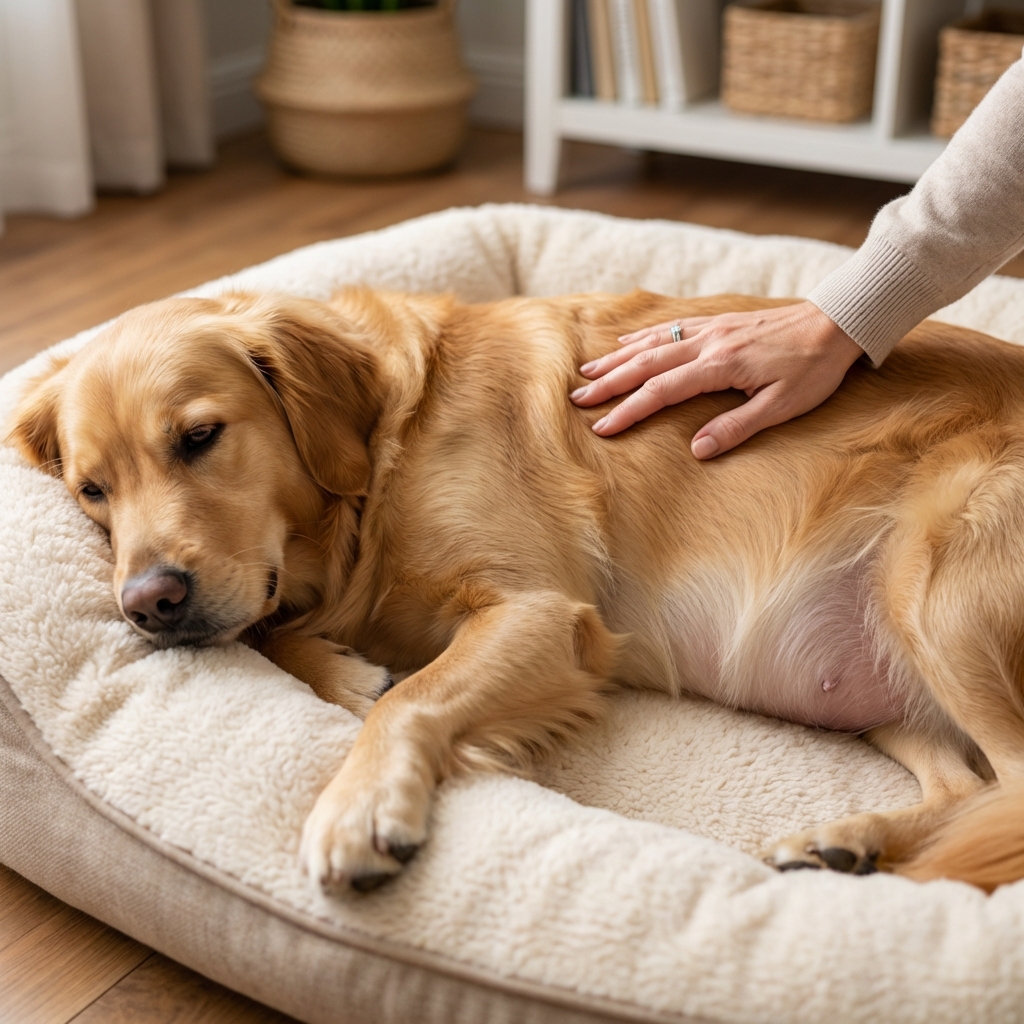
- Nipple changes: nipples may become more prominent and pinker. Hair around the mammary glands can thin.
- Weight gain and rounding: the waist may start to thicken behind the ribs.
- Increased appetite: many dogs begin eating more consistently.
Week 5 to 9
- Visible belly enlargement: especially in medium to large litters.
- Mammary development: glands enlarge; some dogs leak a small amount of milk close to delivery.
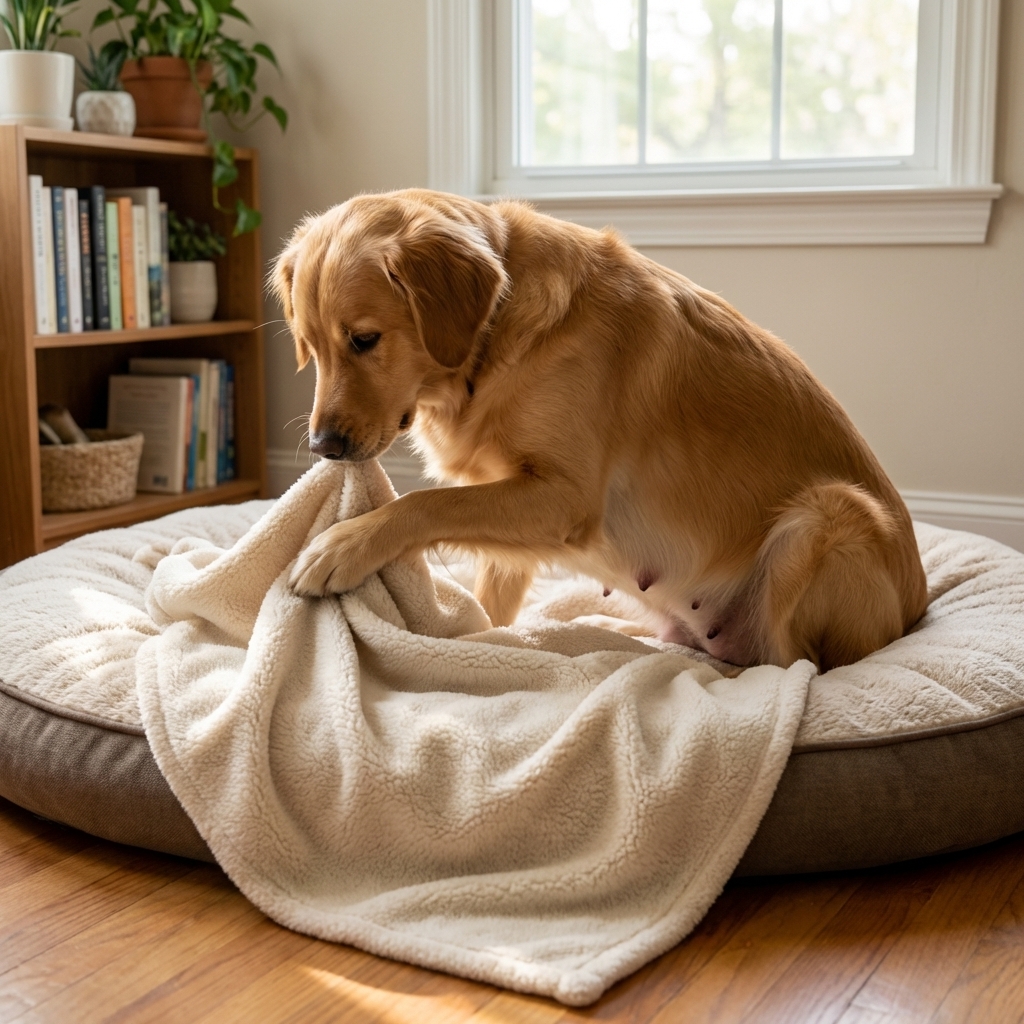
- Nesting behavior: seeking quiet spaces, pawing bedding, or wanting to stay close to you.
- Fetal movement: in late pregnancy you may see or feel movement when the dog is relaxed, though this can be subtle and should be handled gently.
When to worry
If your dog is vomiting repeatedly, has diarrhea, refuses food for more than a day, seems painful, has a fever, or develops vaginal discharge that is foul-smelling, heavy, or green or black, please call your veterinarian promptly. (A small amount of clear or slightly cloudy mucus can be normal in some dogs, but anything smelly, colored, bloody, or worsening should be checked.) Pregnancy does not protect dogs from illness, and some conditions can become emergencies quickly.
False pregnancy
False pregnancy, also called pseudopregnancy, is common in intact female dogs several weeks after a heat cycle. Hormones can trigger behaviors and body changes that mimic pregnancy.
- Milk production without pregnancy
- Nesting and mothering toys
- Enlarged mammary glands
- Weight gain or bloating
This is exactly why veterinary confirmation matters, especially before you increase food or start “prenatal” supplements. Some supplements can be unnecessary or even harmful if the dog is not truly pregnant.
Vet confirmation
Your veterinarian will choose the best method based on how many days it has been since breeding, your dog’s size and temperament, and what information you need, such as confirmation versus litter estimates.
Physical exam and palpation
Some veterinarians can feel uterine changes around days 28 to 35, but palpation is not always reliable. It becomes harder in overweight dogs, tense dogs, or large breeds, and it should be done by a trained professional only.
Relaxin blood test
A blood test for the hormone relaxin can confirm pregnancy in many dogs around day 25 to 30 after breeding. Timing matters. Too early can produce false negatives, and a repeat test may be recommended if breeding dates are uncertain.
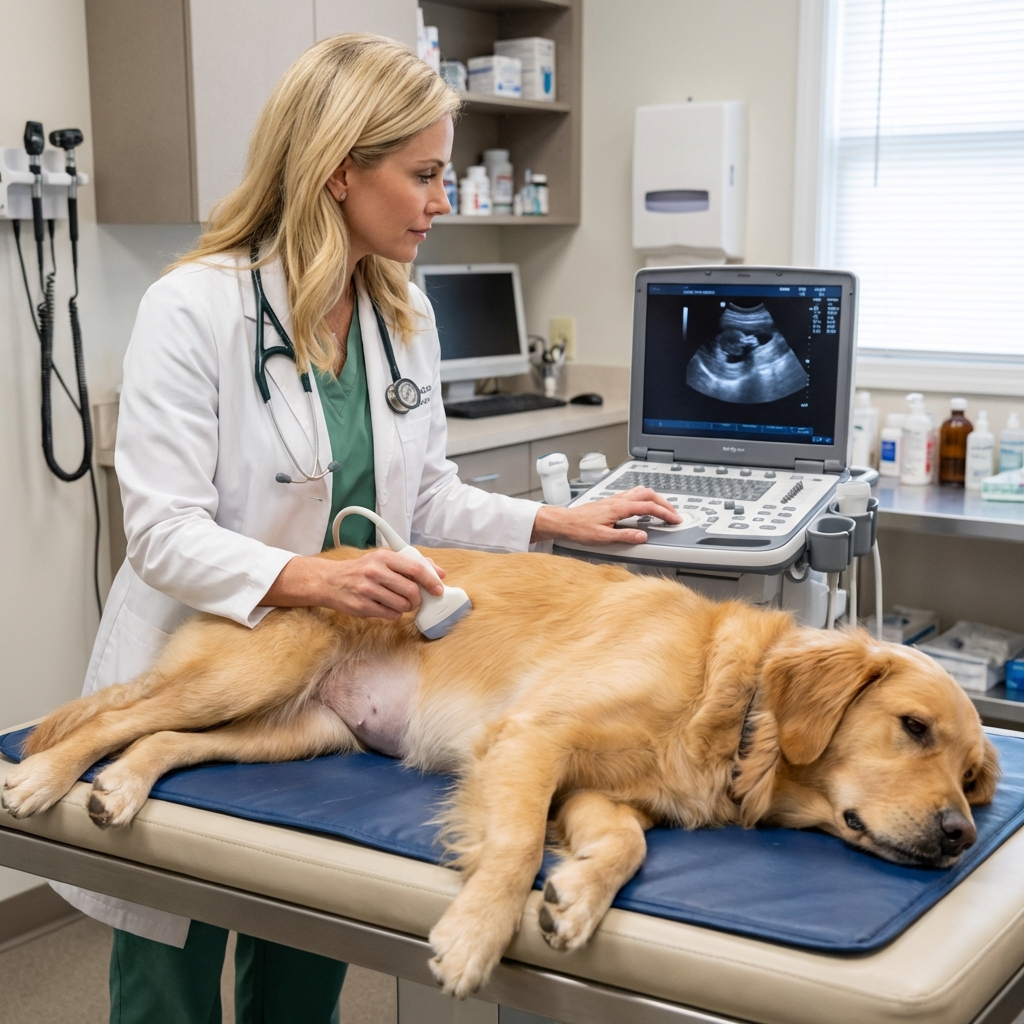
Ultrasound
Ultrasound can often confirm pregnancy around day 25+. Many times, fetal heartbeats are detectable around day 25 to 30, depending on the dog, equipment, and operator. Ultrasound is also useful to check fetal viability, but it is not the best tool for an exact puppy count, especially in larger litters.
X-rays (radiographs)
X-rays are typically most informative around day 45+, when fetal skeletons mineralize. This is often the best way to estimate litter size, which can be important for knowing what is normal during labor and when to call for help.
Note: If pregnancy was not planned, ask your veterinarian about safe options and timing. Medical and surgical options exist, but what is appropriate depends heavily on how far along she is, her health, and your local veterinary guidance.
Care during pregnancy
Once pregnancy is confirmed, your goal is simple: support mom’s health so puppies can develop safely. Most healthy dogs do very well with thoughtful basics.
Schedule the right visits
- Confirmation visit: commonly around week 3 to 4 after breeding (or based on your best estimate).
- Mid-pregnancy check: discuss nutrition, parasite control, and any breed-specific risks.
- Late-pregnancy planning: consider X-rays near the end to estimate litter size and talk through what normal labor looks like.
Nutrition timing
One of the biggest mistakes I see is increasing food too early. In early pregnancy, calorie needs usually do not rise much. In most dogs, energy needs increase more noticeably in the last third of pregnancy.
- Weeks 1 to 5: keep her on a high-quality, balanced diet unless your vet directs otherwise.
- Weeks 6 to 9: gradually increase calories as her appetite and body demands increase. Smaller, more frequent meals help because the growing uterus reduces stomach capacity.
Choose a diet you trust
Pregnancy and lactation are not the time for nutrient gaps. Your veterinarian may recommend a complete and balanced growth or all life stages diet that meets higher needs for calories and key nutrients. If you are interested in homemade feeding, please do it with professional guidance so calcium, phosphorus, DHA, and overall balance are appropriate.
Important: Do not add calcium supplements unless your veterinarian specifically instructs you. In dogs, supplementing calcium when it is not needed can predispose some dogs to calcium regulation problems later (including eclampsia, dangerously low blood calcium) during nursing.
Exercise and routine
- Keep gentle activity: regular walks are great for muscle tone and stress relief.
- Avoid high-impact: no hard jumping, rough play, or intense heat exposure.
- Prioritize comfort: add a supportive bed and keep her away from overly excited dogs.
Parasite prevention and vaccines
Talk with your veterinarian before giving any medication, dewormer, flea and tick products, or vaccines during pregnancy. Some are safe, some are not, and recommendations depend on your dog’s health, region, and exposure risk.
Also ask your veterinarian about pregnancy-safe deworming and stool testing. Managing parasites helps reduce roundworm and hookworm transmission risk to puppies.
What not to do
- Do not give OTC pain meds unless your veterinarian tells you to (many human medications are dangerous for dogs).
- Avoid new supplements, herbs, or “prenatal” products without vet guidance.
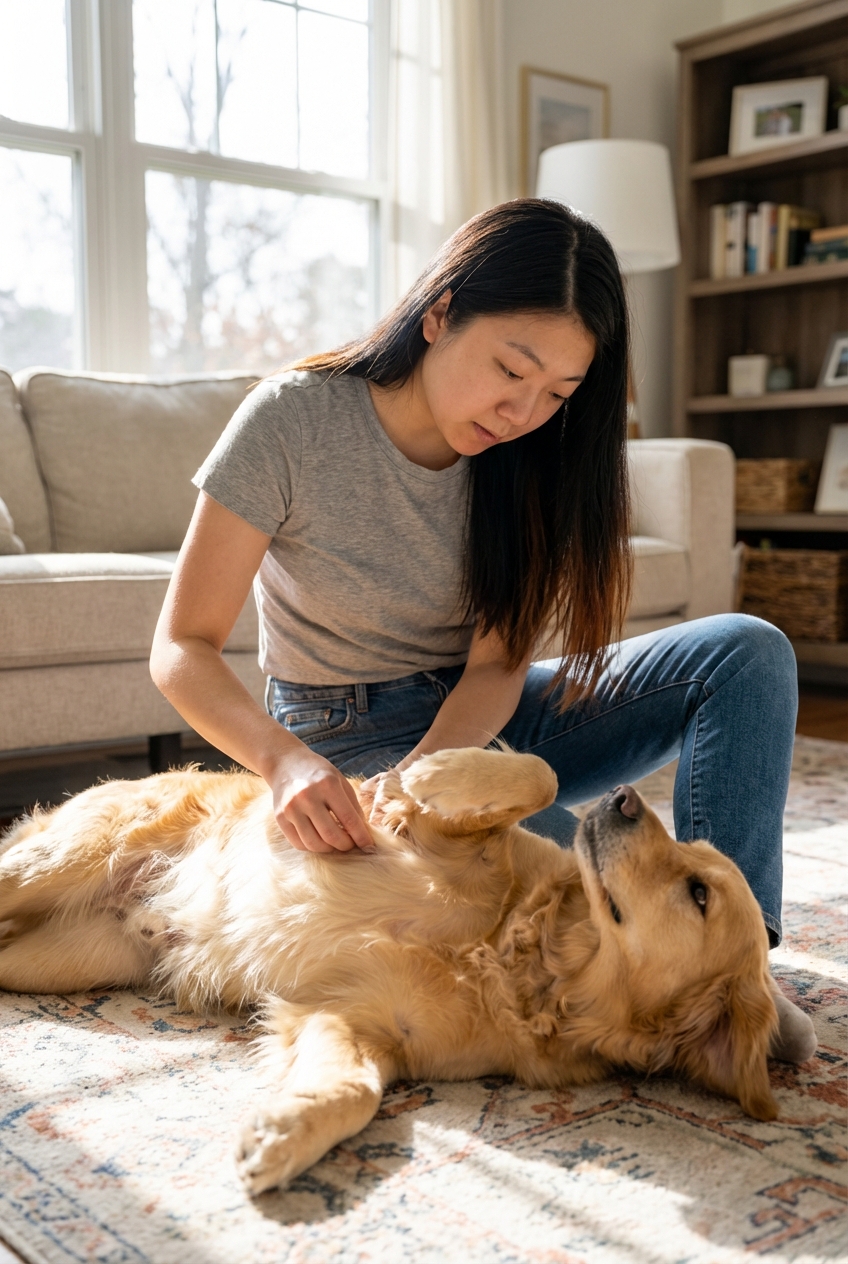
- Do not press on her belly to “feel puppies.” Leave that to trained professionals.
- Do not wait out serious symptoms like persistent vomiting, foul discharge, weakness, or active straining with no progress.
Preparing for delivery
Set up a whelping area
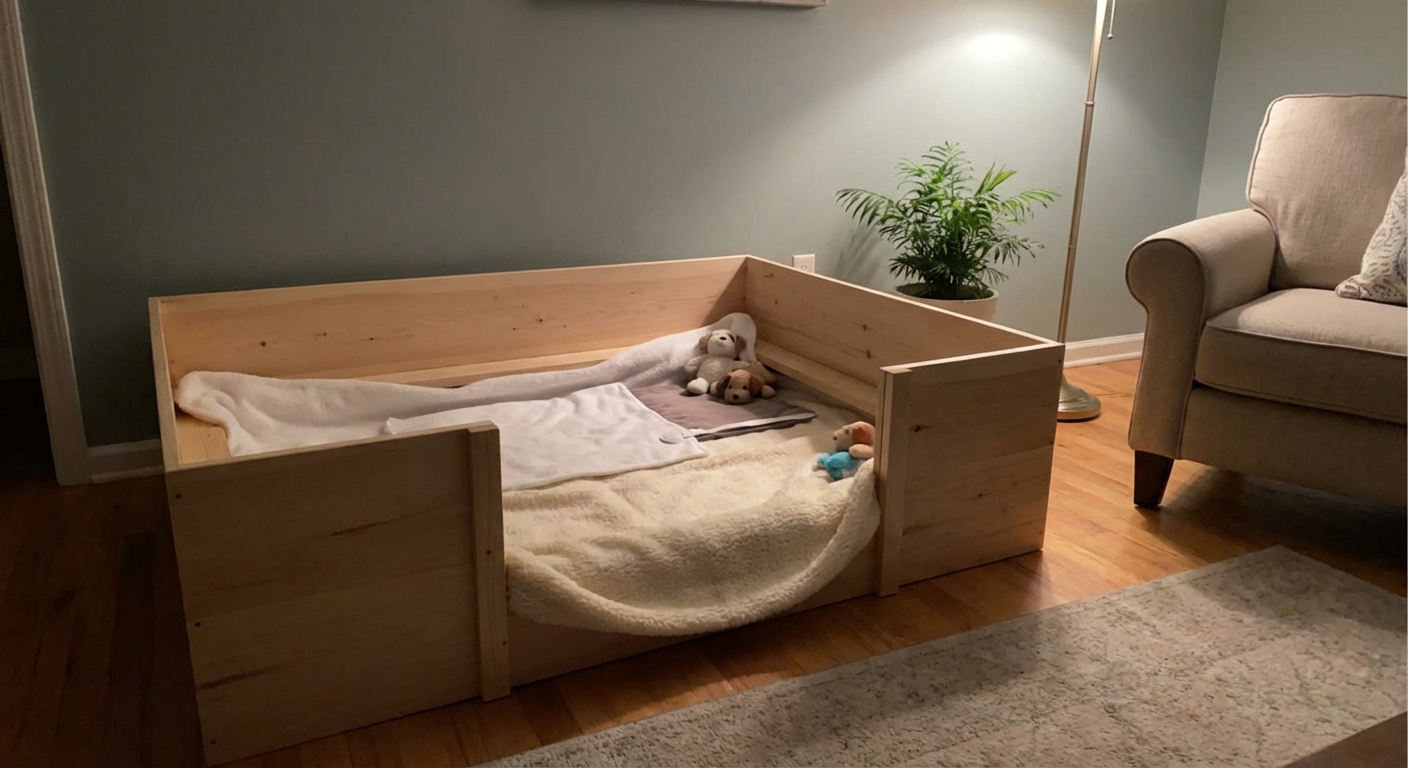
Create a quiet, warm, low-traffic space about 1 to 2 weeks before the due window. Introduce it gradually so she feels safe there.
- Whelping box: easy to clean, low entry for mom, with enough room to stretch out.
- Clean bedding: washable blankets or pads you can rotate.
- Warmth: puppies cannot regulate temperature well at first, so controlled warmth matters. Follow your vet’s guidance on safe heating options.
Know the signs labor is near
- Nesting and restlessness
- Less appetite within 12 to 24 hours of labor in some dogs
- Drop in rectal temperature may occur before labor, but timing is variable and should be discussed with your vet
Have an emergency plan
Before her due window, save your regular veterinarian’s number and the nearest emergency clinic. Some dogs, especially brachycephalic breeds (like English Bulldogs and French Bulldogs) and some toy breeds, have a higher risk of dystocia (difficult birth) and may need extra planning.
When to call the vet during labor
Follow your veterinarian’s specific guidance, but call your veterinarian or emergency clinic if you see any of the following:
- Active straining with strong contractions for 20 to 30 minutes with no puppy produced
- More than 2 hours between puppies, especially if she is actively straining, distressed, or you know more are expected
- Green discharge before the first puppy (can indicate placental separation)
- Heavy bleeding, collapse, extreme pain, or obvious distress
- Mom is weak, trembling, or disoriented (possible eclampsia, especially during nursing)
Common questions
Can I use a human pregnancy test?
No. Human urine pregnancy tests detect human chorionic gonadotropin (hCG), which dogs do not produce in the same way. A veterinary relaxin test, ultrasound, or X-rays are the correct route.
Can my dog be pregnant without showing?
Yes. Small litters, large-bodied dogs, first-time mothers, and overweight dogs can hide pregnancy signs until later. That is why confirmation testing is so helpful.
Her nipples are bigger. Is she pregnant?
Not necessarily. Nipple enlargement can occur with heat cycles and false pregnancy. It is a clue, not proof.
A gentle next step
If your dog may have been bred, the most evidence-based move is to call your veterinarian and schedule a pregnancy confirmation visit based on the date of breeding or your best estimate. In the meantime, keep her routine steady, avoid new supplements, and watch for any red-flag symptoms.
When you get clarity early, you can make calmer choices. And calmer choices are exactly what a pregnant dog needs from us.