
Spot the most urgent poisoning symptoms in dogs, learn common household toxins (meds, xylitol, chocolate, rodent bait), and follow clear steps on what to do ...
Article
•
Designer Mixes
How to Tell If a Dog Is Poisoned

Shari Shidate
Designer Mixes contributor
Poisoning is one of those emergencies that can look like a “weird stomach bug” at first, then turn serious fast. As a veterinary assistant in Frisco, Texas, I have seen how much time matters when a dog gets into the wrong food, medication, plant, or chemical.
The goal of this article is simple: help you recognize the most common warning signs, know what to do in the first few minutes, and understand when it is truly urgent to go in right now.
Quick note: This article is educational and not a substitute for veterinary care. If you suspect poisoning, call your veterinarian, an emergency clinic, or a pet poison hotline right away.

What “poisoned” can look like
Poisoning is not one single set of symptoms. Different toxins affect different body systems. Some hit the stomach first. Others affect the brain, heart, blood, or liver. That is why the same dog can look mildly “off” early on, then become very sick later.
Important: A dog does not need to eat a huge amount of something to be in danger. Some toxins are potent in small doses, especially for small dogs, seniors, or dogs with liver or kidney disease.
Must-know signs of poisoning in dogs
If you see any of these symptoms and you suspect possible exposure to something toxic, treat it as an emergency until proven otherwise.
Stomach and digestive signs
- Vomiting or repeated retching
- Diarrhea, especially if it is watery, black, or bloody
- Drooling more than normal or foaming at the mouth
- Pawing at the mouth or refusing food after chewing something questionable
- Swollen belly, pain when touched, or repeated attempts to vomit with little coming up (this can also be bloat, also called GDV, and it is an emergency)
Neurologic and behavior changes
- Sudden disorientation, “drunk” walking, or stumbling
- Tremors, twitching, or muscle rigidity
- Seizures
- Extreme agitation, whining, pacing, or unusual restlessness
- Sudden collapse or unresponsiveness
Breathing and heart warning signs
- Rapid breathing, difficulty breathing, or noisy breathing
- Blue, gray, or very pale gums
- Very fast heart rate, weakness, or fainting
Other red flags
- Gums that look very red, very pale, yellow, or muddy
- Bruising, tiny red dots on the gums, nosebleeds, or bleeding that will not stop
- Excessive thirst or urination, or no urination
- Sudden weakness, inability to stand, or extreme lethargy

Common poisons and what they can cause
You do not need to memorize this, but it helps to know the patterns so you can describe what you are seeing clearly when you call for help.
- Chocolate, caffeine, energy drinks: restlessness, vomiting, fast heart rate, tremors, seizures
- Xylitol (common in sugar-free gum, mints, some peanut butters): sudden weakness, vomiting, low blood sugar, seizures, collapse, possible liver injury
- Rodent bait: effects vary widely by product and can cause bleeding problems, neurologic signs, or kidney injury. Bring the packaging if you can.
- Grapes and raisins: vomiting, lethargy, loss of appetite, kidney injury
- Medications (ibuprofen, naproxen, acetaminophen, ADHD meds, antidepressants): vomiting, ulcers, agitation, tremors, seizures, organ damage depending on the drug
- Antifreeze (especially ethylene glycol products): early drunken behavior, then worsening depression and kidney failure
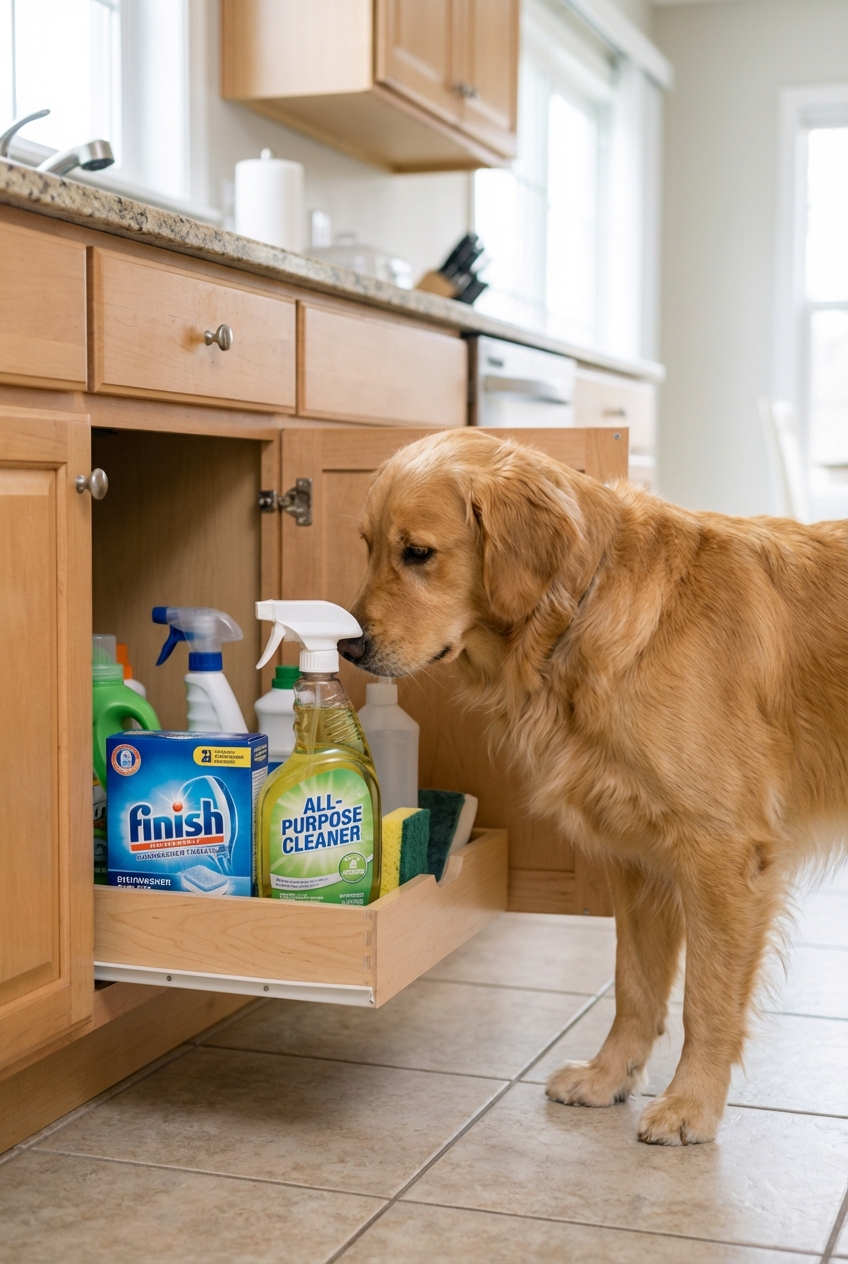
- Household chemicals (cleaners, detergents, essential oils): drooling, mouth irritation, vomiting, breathing trouble, weakness
- Plants (sago palm, some mushrooms, some lilies): stomach upset, neurologic signs, or liver injury depending on the plant. True lilies are especially dangerous to cats, so treat any lily exposure seriously if you have both pets in the home.
If you are unsure whether something is toxic, assume it might be and call. Getting advice early is always safer than waiting for symptoms.
What to do right now
When you think your dog may be poisoned, your job is to stay calm, keep everyone safe, and gather the right information quickly.
Step 1: Get to safety
Move your dog away from the source and keep other pets and kids out of the area. If there are fumes or a spill, ventilate if you can do so safely.
Protect yourself: Use gloves if available, avoid breathing in fumes, and be careful handling a painful or panicked dog. A dog that is scared or sick can bite, even if they have never done it before.
Step 2: Check for immediate danger
- Trouble breathing, seizures, collapse, or severe weakness
- Gums that are pale, blue, or gray
- Repeated vomiting, tremors, or severe agitation
If yes, go to an emergency vet now while someone else calls ahead.
Step 3: If it is on the skin or in the eyes
Topical exposures matter too. If a chemical got on your dog’s coat, paws, or eyes, prevent licking and call for instructions.
- Skin or coat: Remove any contaminated collar, bandana, or harness. If the product label or a professional instructs rinsing, use lukewarm running water. Avoid harsh scrubbing.
- Eyes: Call for guidance immediately. If you are told to flush, use lukewarm water or sterile saline and keep your dog from rubbing their eyes.
If the product is caustic, oily, or unknown, call first when possible. Some substances require specific handling.
Step 4: Collect the details
- What was it? Bring the package or take clear photos of the label and ingredients.
- How much could your dog have gotten?
- When did it happen?
- Your dog’s weight, age, and medical conditions
- Current symptoms and when they started
Step 5: Call the right place
Call your veterinarian, an emergency clinic, or a pet poison hotline for real-time guidance. If you call a hotline, they can often coordinate with your clinic on treatment recommendations.
- ASPCA Animal Poison Control (fees may apply)
- Pet Poison Helpline (fees may apply)
Tip: Put your nearest 24-hour emergency vet number in your phone now, before you need it.
What not to do
- Do not “wait and see” if your dog ate something known to be dangerous like xylitol, rodent bait, antifreeze, grapes, raisins, or a human medication.
- Do not induce vomiting unless a professional tells you to. Some toxins and situations make vomiting dangerous, including caustic cleaners, petroleum products, dogs that are sleepy or seizing, or anything that can be aspirated.
- Do not give home remedies like milk, oil, salt, or baking soda. These can worsen dehydration, cause aspiration, or delay real treatment.
- Do not give human medications to “counteract” symptoms. This can create a second problem on top of the first.

When it is always an emergency
Go to an emergency vet immediately if your dog has any of the following:
- Seizures, tremors, or collapse
- Difficulty breathing or blue, gray, or very pale gums
- Repeated vomiting, especially with blood or severe lethargy
- Suspected ingestion of rodent bait, antifreeze, xylitol, prescription medications, or illicit substances
- Severe weakness, inability to stand, or unresponsiveness
- Known or suspected poisoning in a puppy, toy breed, senior dog, or a dog with kidney or liver disease
Even if symptoms seem mild, your veterinarian may recommend treatment early because it is often more effective and can reduce the chance your dog will need intensive care later.
What the vet may do
Treatment depends on what was eaten, how much, and when. Common steps include:
- Decontamination: inducing vomiting, activated charcoal, bathing off topical exposures
- Supportive care: IV fluids, anti-nausea medications, gut protectants
- Monitoring: bloodwork to check liver, kidney, glucose, and clotting
- Antidotes: when available, such as vitamin K for certain rodenticides
- Hospitalization: for seizures, heart rhythm issues, severe dehydration, or organ risk
If you can, bring a sample of vomit, the chewed container, the product label, or the plant your dog ate. It helps the team identify the toxin faster.
Prevention that works
Most poisonings are preventable with a few simple habits. I like to keep it practical.
- Store medications, vitamins, gummies, and cannabis products in closed cabinets, not purses or nightstands.
- Keep xylitol products out of reach and check peanut butter labels before sharing.
- Use sealed containers for trash. Dogs are experts at finding leftovers.
- Keep rodent bait out of the house whenever possible. If used, place only in secured, tamper-resistant stations.
- Watch for toxic plants in your home and yard. If you are unsure, assume a plant could be risky.
- Save the phone number and address of your closest emergency vet.
If your dog could have gotten into something toxic, trust your gut and call. You are not overreacting. You are buying time, and time is one of the best antidotes we have.