Understand common cat-in-heat behaviors, how long estrus lasts, and vet-approved steps to keep her comfortable and safe. Learn what not to do and when to cal...
Article
•
Designer Mixes
How to Tell if a Cat Is in Heat

Shari Shidate
Designer Mixes contributor
If you have an unspayed female cat, the first heat cycle can feel like it comes out of nowhere. One day she is her normal self, and the next she is vocal, restless, and acting like she is on a mission. As a veterinary assistant, I can tell you this is incredibly common. The good news is that most signs of heat are behavioral, and once you know what to look for, it gets much easier to recognize.
When does the first heat happen? Many kittens have their first heat around 4 to 6 months of age, but it can be earlier or later depending on the individual cat, time of year, and light exposure.
Important note: A cat in heat is not “in pain” in the same way an injury hurts, but she can be very uncomfortable, highly driven to find a mate, and more likely to escape outdoors. If you are unsure whether your cat is in heat or sick, it is always okay to call your vet.
What “in heat” means
When a female cat is “in heat,” it means she is in estrus (the fertile “heat” stage of her cycle). During estrus, hormones prepare her body for breeding and trigger the behaviors that help her attract a male cat.
Most cats are seasonally influenced breeders, meaning longer daylight hours often increase cycling. Many indoor cats can cycle year-round because they are exposed to artificial light.
One helpful detail is that cats are induced ovulators. In plain terms, ovulation is often triggered by mating. If she does not mate, she may continue to cycle on and off during the breeding season.
Common signs of heat
Cats in heat rarely have obvious physical changes you can see, like bleeding. Instead, you will notice a cluster of behaviors, often very suddenly.
1) Loud, persistent vocalizing
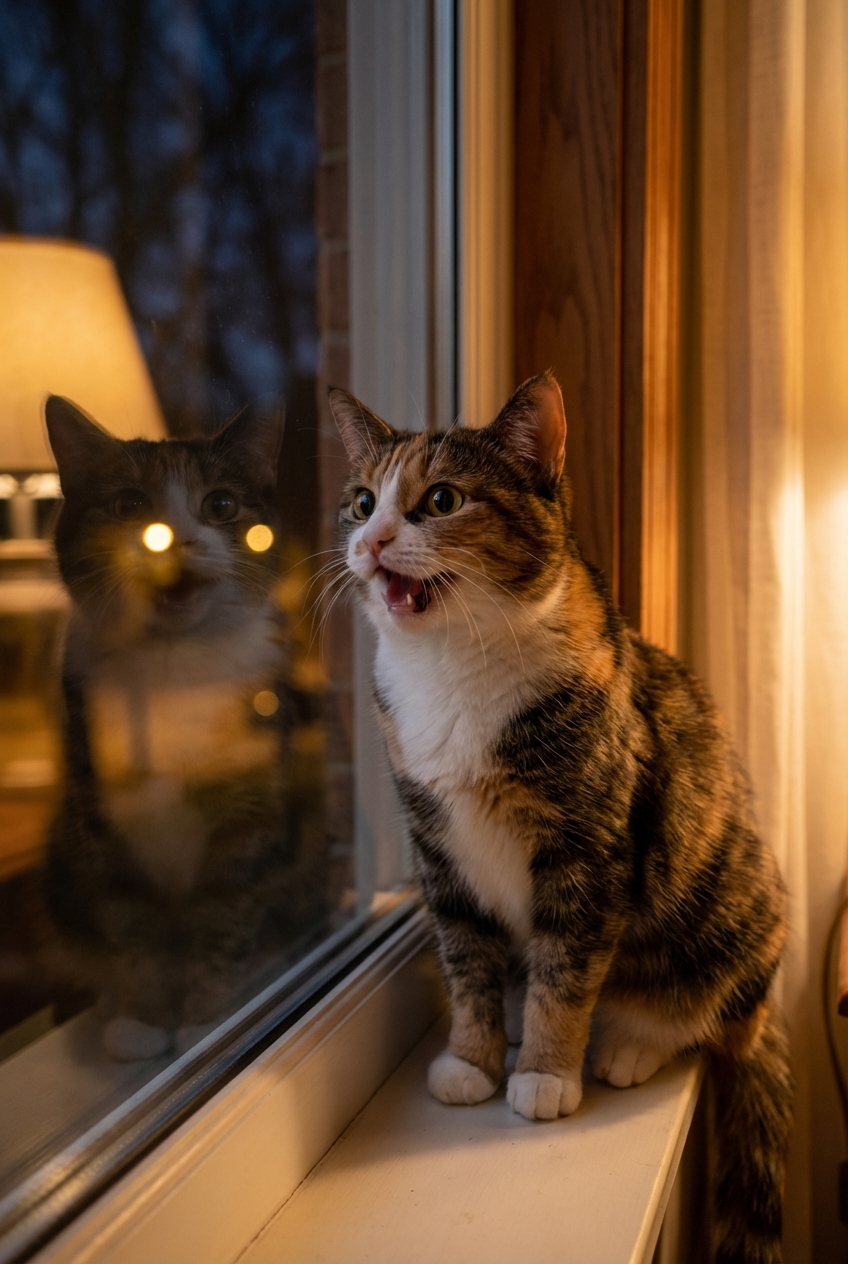
This is the classic sign. Many owners describe it as yowling, howling, or a drawn-out cry that sounds distressed. It is usually most intense at night.
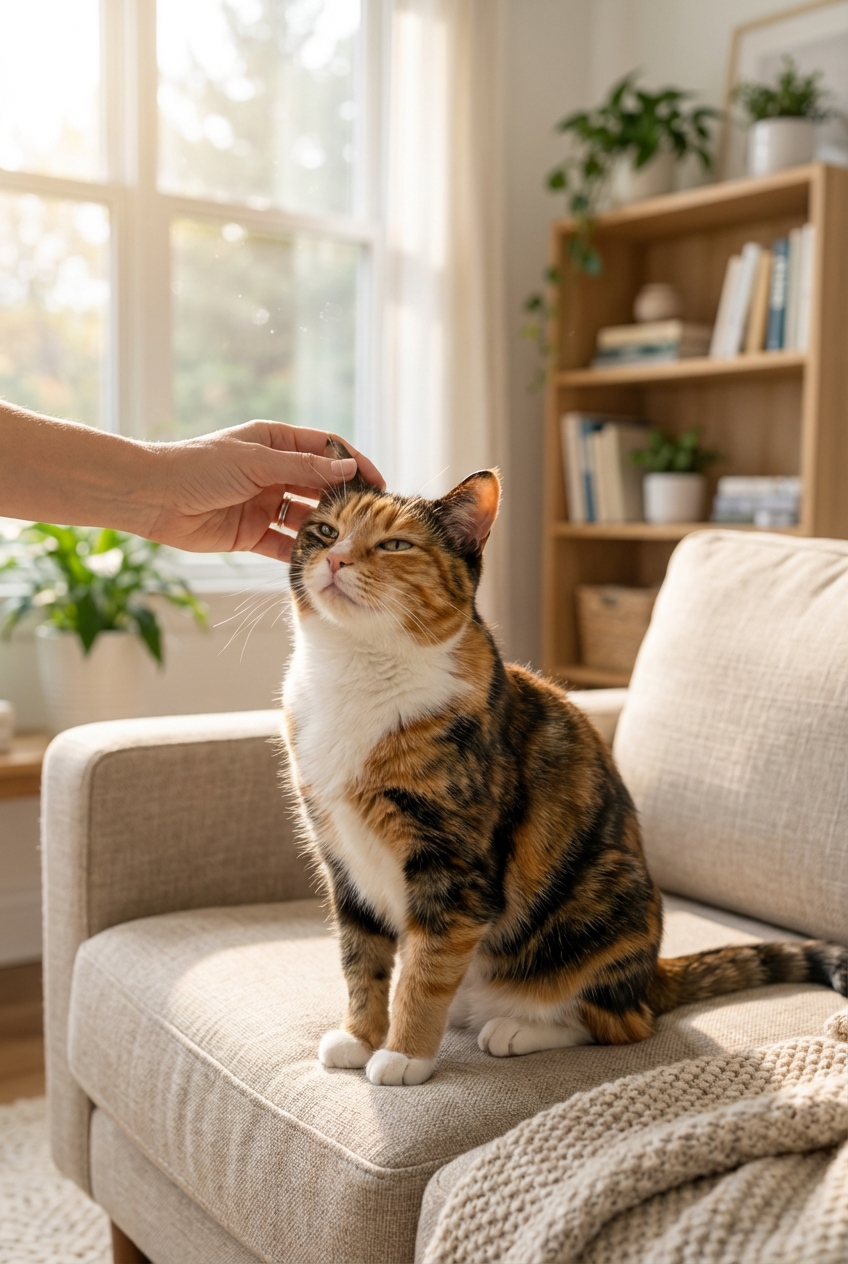
2) Extra affection and rubbing
Your cat may rub her face and body on furniture, walls, and people more than usual. She might roll on the floor, follow you closely, and demand attention.
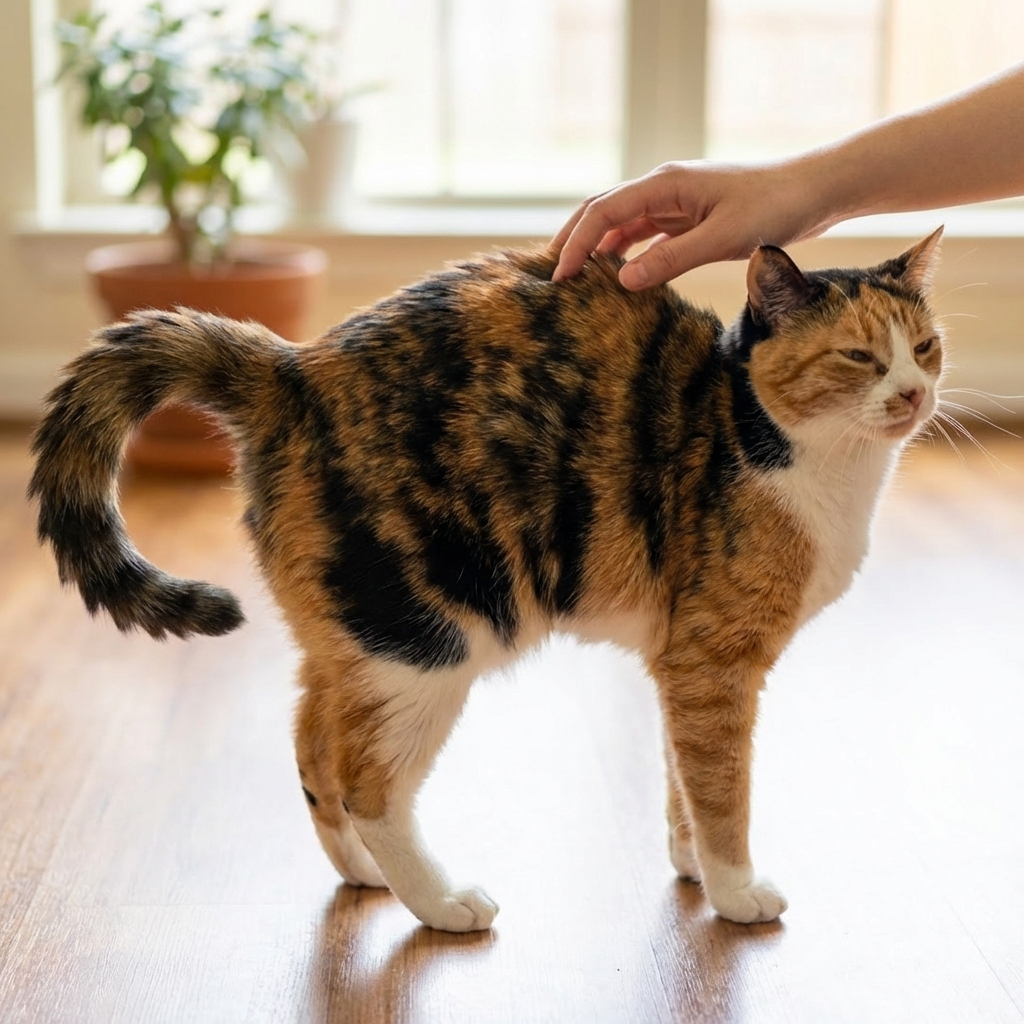
3) The “heat posture” (lordosis)
If you pet her lower back, many cats in estrus will:
- Lower the front half of the body
- Raise the rear end
- Move the tail to the side
- Sometimes tread the back feet
This posture is a strong clue that you are dealing with heat, not just general friendliness.
4) Restlessness and trying to escape
Many cats become determined door-dashers during heat. They may pace, stare at doors or windows, or dart outside the moment they get a chance.
5) Increased interest in windows, scent, and other cats
You might notice your cat watching outdoors more intensely, sniffing doorways, or reacting to neighborhood cats. Female cats release pheromones and may also urinate more frequently to advertise their availability.
6) Changes in appetite
Some cats eat less during estrus. Others stay the same. Appetite alone is not a reliable sign, but a sudden behavior change plus vocalizing often is.
How long heat lasts
Heat patterns vary, but a typical estrus period lasts about 4 to 7 days. Some cats go longer. If she does not mate, she may cycle again in about 2 to 3 weeks, especially during spring and summer months or in homes with long daily light exposure.
That repeated cycling is why heat can feel nonstop for some households.
Do cats bleed in heat?
Usually, no. Unlike dogs, cats generally do not have noticeable vaginal bleeding during heat. If you see blood, significant discharge, a foul odor, or your cat seems lethargic or feverish, that is a reason to call your veterinarian right away.
Heat or something else?
Heat can look dramatic, but the cat often still appears bright-eyed and physically normal. Here are a few key differences that matter.
Heat is more likely when:
- She is an unspayed female (cats do not go through menopause, so cycling can continue throughout life)
- She is eating and drinking fairly normally
- The biggest changes are vocalizing, rubbing, and the heat posture
Call your vet promptly if you notice:
- Straining to urinate, frequent trips to the litter box with little output, or crying while urinating (female cats can have urinary issues too, and any cat that cannot pass urine needs urgent help)
- Vomiting or diarrhea that lasts more than a day
- Lethargy, hiding, fever, or loss of appetite that seems significant
- Swollen abdomen or any pus-like discharge (a uterine infection called pyometra is generally less common in cats than dogs, but it can be life-threatening)
What to do at home
If your cat is currently in heat, your goal is safety, comfort, and preventing pregnancy.
Keep her strictly indoors
- Check doors carefully before opening
- Secure window screens
- Separate her from intact male cats
Offer calming support
- Provide extra playtime to burn off nervous energy
- Give a quiet, cozy space for breaks from stimulation
- Consider a vet-recommended pheromone diffuser in the main room
Do not punish heat behaviors
Yowling and restlessness are hormone-driven. Punishment tends to increase stress without stopping the behavior.
What not to do
Do not give over-the-counter sedatives or use human hormone products unless your veterinarian specifically prescribes them. These can be dangerous for cats.
Spaying is the solution
Spaying prevents heat cycles and pregnancy. It also reduces the risk of serious reproductive diseases later in life. If your cat is in heat right now, some clinics prefer to wait until she is out of heat, while others will spay during heat with appropriate planning. Your veterinarian can guide you based on your cat’s health and their surgical protocols.
If cost is a barrier, ask local shelters or rescues about spay and neuter assistance programs. Many communities have low-cost clinic options.
If mating is possible
If you suspect she got outside and may have mated, call your veterinarian as soon as possible. Cats can become pregnant quickly. Your vet can discuss options, including timing for spay and, in some situations, a spay during early pregnancy (sometimes called a spay-abort) where legal and appropriate.
Quick checklist
- Unspayed female
- Sudden loud yowling, often at night
- Rubbing, rolling, clingier behavior
- Rear end raised, tail to the side when petted
- Restless and trying to escape
- Usually no bleeding
If you check most of these boxes, heat is very likely.
When to call the vet
Please reach out to your veterinarian if:
- This is her first suspected heat and you want confirmation and a spay plan
- The behavior is extreme, and she is not eating or sleeping normally
- You see blood, discharge, vomiting, lethargy, or urinary straining
- You suspect she may have gotten outside and mated
With a little support and a plan for spaying, most households can get through heat cycles safely and with a lot less stress.