A practical, evidence-based guide to caring for feral cats: how to tell feral vs. stray, stay safe, plan TNR, trap and transport, post-op recovery, feeding, ...
Article
•
Designer Mixes
How to Tell If a Cat Is Feral

Shari Shidate
Designer Mixes contributor
As a veterinary assistant here in Frisco, Texas, I hear this question all the time: Is this cat feral, or just a scared stray? It matters because the safest, kindest next steps can look very different depending on the cat’s history with people.
The good news is you do not have to guess based on one moment. With a little observation, you can usually tell whether a cat is truly feral (unsocialized to humans) or a stray (once socialized but currently living outside).
Quick safety note: Avoid handling unknown cats. Aside from bites and scratches, there are disease and rabies-risk considerations, and local guidance can vary. If you are unsure what to do, call your municipal animal services or a local rescue for direction.
This article is general guidance and not a substitute for advice from a veterinarian or animal control.
Feral vs. stray vs. outdoor pet
These labels get used interchangeably, but they describe very different situations.
- Feral cat: Has had little to no positive contact with humans, especially during kittenhood. Typically avoids people and does not seek human interaction.
- Stray cat: Was once a pet or was socialized to people, then became lost or abandoned. Often more likely to approach humans over time.
- Outdoor pet: Owned cat who spends time outside. May look “streetwise” but usually appears comfortable around homes and people.
Many cats fall somewhere in the middle, like a “community cat” who is fed by neighbors but still does not want to be touched.
Quick clues you can observe
You can learn a lot without getting close. In fact, keeping distance is safer for you and less stressful for the cat.
Body language around people
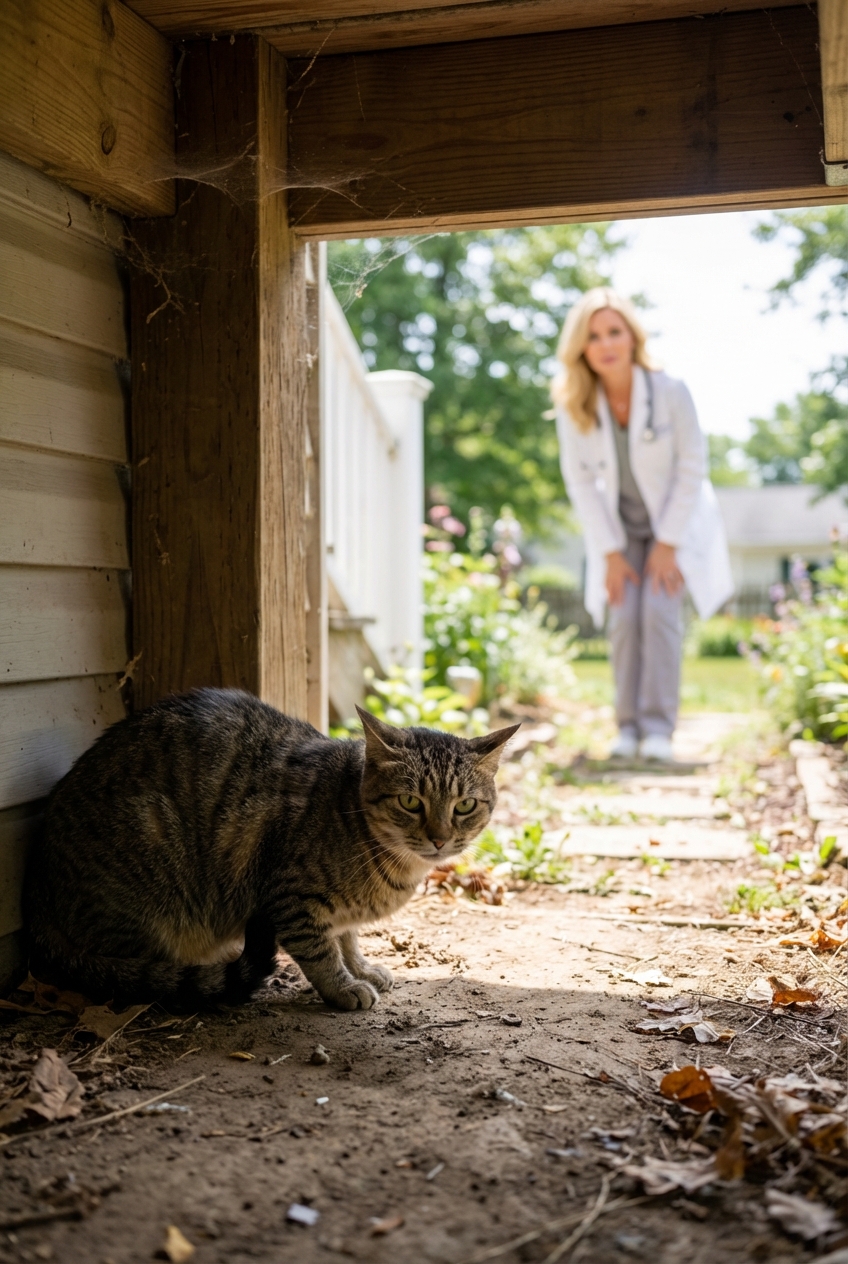
- Feral: Stays low, freezes, hides quickly, or bolts when you appear. May watch you intensely from cover.
- Stray: May keep distance at first but often shows curiosity, approaches slowly, or lingers nearby once you are still.
- Owned/outdoor pet: Moves with a relaxed, confident posture, may meow, rub on objects, or come toward you directly.
Eye contact and facial expression
- Feral: Wide eyes, hypervigilant scanning, minimal blinking, head tucked.
- Stray/pet: More likely to blink, soften the eyes, and hold a neutral or curious expression as they acclimate.
Vocalization
This one surprises people. Many truly feral adult cats are quieter around humans, but it is not a rule.
- Feral: Often does not meow at people. May hiss or growl when cornered.
- Stray/pet: More likely to meow, chirp, or “talk,” especially around feeding time.
Time of day
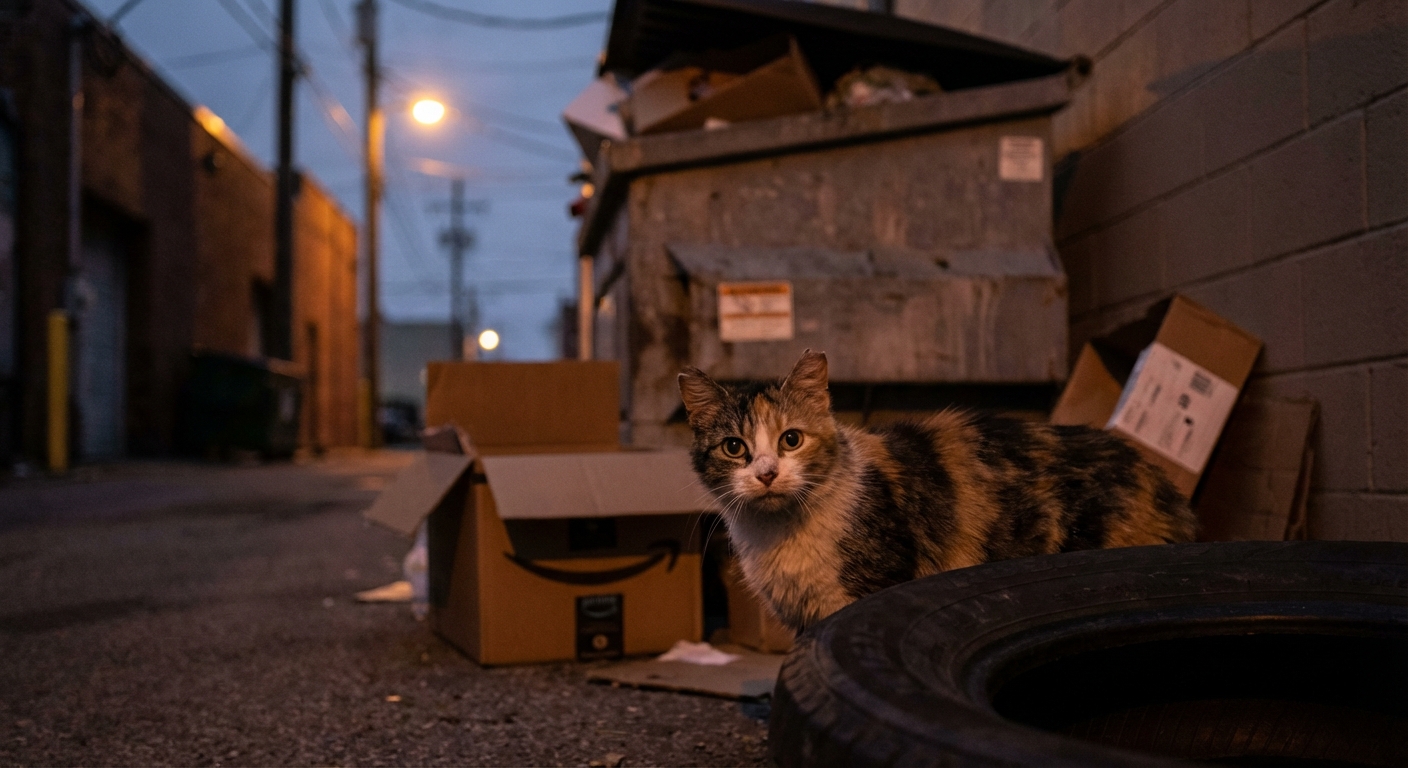
- Feral: Often appears at dawn, dusk, or at night and avoids busy times.
- Stray/pet: May show up during daytime and tolerate normal neighborhood activity.
Physical condition and coat
Coat condition is not a perfect indicator, but it can provide context.
- Feral: Can look surprisingly healthy if supported by a stable colony and food source. Intact males may have battle scars, tomcat cheeks, and a strong odor.
- Stray: Often looks “recently rough,” like weight loss, mats, or dirty fur from sudden displacement.
- Pet: Typically cleaner, with a more maintained coat and fewer injuries.
Collar or ear-tip
- Collar: Suggests ownership, but collars can fall off. Some lost cats hide for days or weeks.
- Ear-tip: A flat, straight edge removed from one ear indicates a cat has likely been through TNR (Trap-Neuter-Return). Many programs tip the left ear, but practices vary by location. Ear-tipped cats can be feral or friendly, but it strongly suggests they are part of a managed community cat effort.
Touching the cat (and why to avoid it)
Trying to touch an unknown cat is risky. Even friendly cats may scratch or bite when scared, and bites can become infected quickly.
If you must assess friendliness, do it indirectly:
- Stand sideways and avoid direct staring.
- Speak softly.
- Offer food and let the cat choose distance.
- Watch whether the cat relaxes after several minutes rather than escalating to hissing, swatting, or fleeing.
Important: A hungry feral cat may come closer for food. That does not always mean they are socialized.
If you are bitten or scratched: Wash the area right away with soap and water and contact a medical professional promptly for guidance.
Signs a cat is likely feral
Any single sign can be misleading, so look for a pattern.
- Mostly seen at night or very early morning.
- Immediately hides or runs when a door opens or a person appears.
- Will not eat while you are nearby, or grabs food and retreats to cover.
- Hissing, growling, or lunging if approached.
- Stays out of reach and uses barriers like bushes, fences, cars, or crawlspaces to maintain distance.
Feral cats are not “mean.” They are acting out of self-protection. Their survival strategy is avoidance.
Signs a cat is likely stray
- Approaches after repeated calm exposure, especially at consistent feeding times.
- Meows, vocalizes, or responds to your voice.
- Looks for human structures like porches, garages, patios, and doorways.
- May allow slow proximity after days, then eventually tolerate being near your feet or sitting in your line of sight.
- May appear during the day and remain visible, not always hiding.
If you suspect the cat may be a lost pet, do not assume “someone dumped them.” Many indoor cats that escape become quiet and hide due to fear.
Kittens are a special case
Kittens can look feral simply because they are tiny and terrified. The most important factor is age, but every kitten is an individual and prior handling matters too.
- Under about 8 weeks: Often easier to socialize with consistent, gentle handling.
- 8 to 12 weeks: Socialization is still possible, but it takes more time and skill.
- Older kittens and adults: Some will tame, many will not, and forcing it can be stressful for everyone involved.
If you see kittens, also look for mom. Separating too early can harm kitten health, and mom is usually the best caregiver until they are weaned.
What to do next
1) Start with safety and basics
- Do not corner the cat.
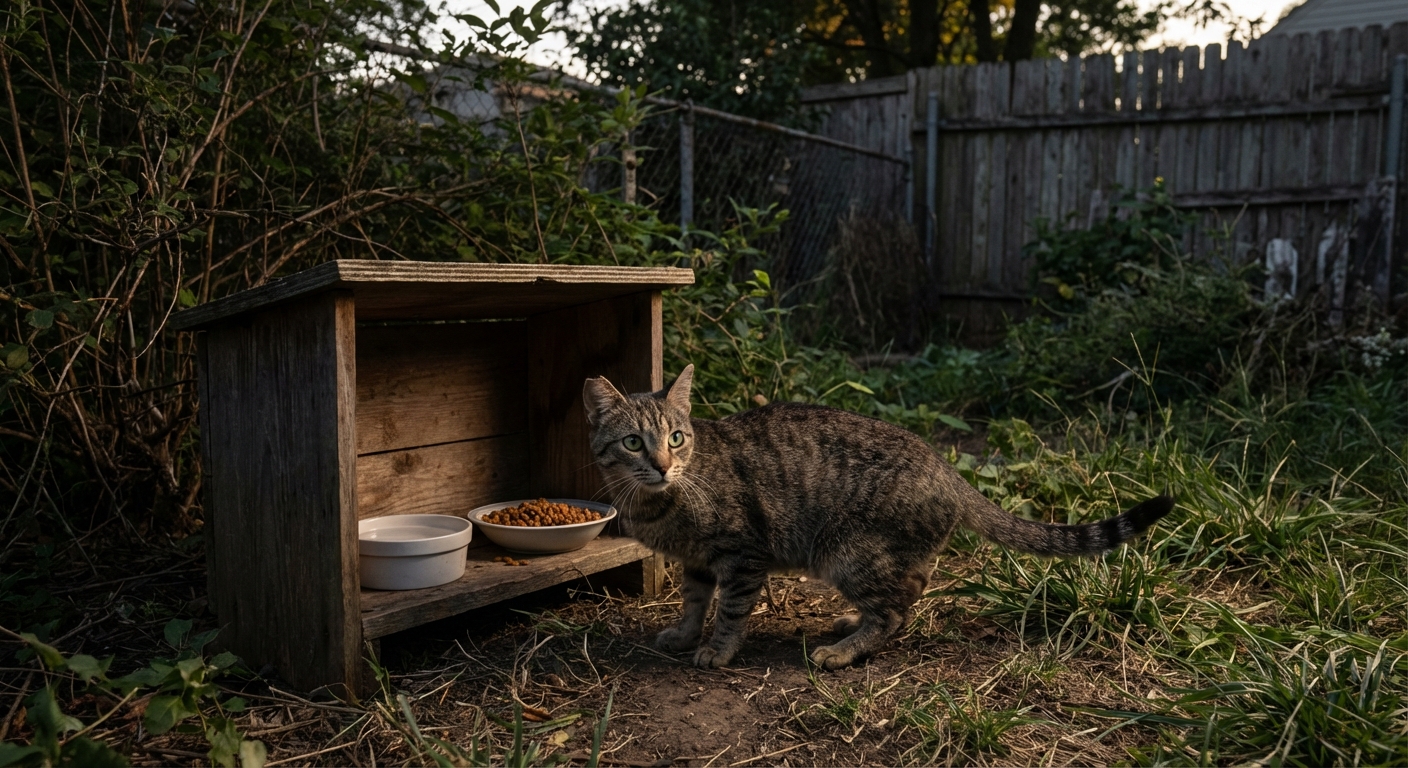
- Provide fresh water and food at consistent times.
- Use a sheltered feeding spot away from heavy foot traffic if possible.
- Keep your own pets separated and wash hands after contact with bowls, bedding, or areas the cat frequents.
2) Document what you observe
Over 3 to 7 days, note:
- Time of appearance
- Distance tolerance
- Eating behavior while you are present
- Any signs of injury, limping, discharge from eyes or nose, or labored breathing
3) If the cat seems friendly, check for ownership
- Ask neighbors.
- Post in local lost-pet groups.
- Contact local shelters, rescues, or vet clinics about scanning for a microchip (many will scan at low cost or free).
- Check for an identification tattoo (more common in some older cats).
4) If the cat seems feral, consider TNR
For many true feral adult cats, TNR is a widely used, humane approach that can reduce future litters and often decreases nuisance behaviors like fighting and roaming. Outcomes are best when programs are consistent and include ongoing monitoring and care. For more details, see resources like Alley Cat Allies or the ASPCA.
Local rescues and community cat programs can often help with trap lending, scheduling low-cost spay and neuter, and guidance on recovery.
Avoid harmful approaches like poison or inhumane deterrents. They can be illegal, unsafe for pets and wildlife, and inhumane.
5) If the cat is sick or injured, prioritize veterinary help
A cat that is weak, severely underweight, struggling to breathe, or covered in wounds needs help quickly. If you are not sure how to transport safely, contact animal control or a local rescue for guidance. Avoid attempting to handle an unknown cat with bare hands. A humane trap or secure carrier is usually the safest option.
6) Use local resources
If you are in the Frisco area, check your city or county animal services and municipal shelter websites for current guidance, community cat programs, and stray-hold rules.
Common myths
Myth: “All feral cats are skinny and dirty.”
Not always. Cats in a stable area with a food source can look healthy. Behavior around humans is often a better indicator than coat alone.
Myth: “If it eats near you, it must be friendly.”
Hunger can override fear. Some feral cats will eat closer over time while still remaining untouchable.
Myth: “A hissing cat is aggressive.”
Hissing is usually fear and a request for distance. Respecting that signal helps prevent bites and scratches.
Quick checklist
If you want a simple way to pull it all together, use this checklist.
- Likely feral: avoids humans consistently, often quiet, more active at night, will not relax within view, panics when approached
- Likely stray: curiosity appears over days, may vocalize, may approach at feeding time, shows increasing comfort, stays near homes
If you are unsure, treat the cat as fearful and give space. Observe for a week, then decide whether the best next step is owner search, foster support, or TNR.
When to call for help
You do not have to do this alone. Reach out to a local rescue, community cat organization, or your municipal shelter if:
- You see kittens and are unsure whether to intervene.
- The cat appears injured or ill.
- You want to pursue TNR but need traps or low-cost clinic options.
- The cat is friendly and may be adoptable, but you cannot safely contain them.
With the right support, many outdoor cat situations have kind, practical solutions that protect both cats and community.