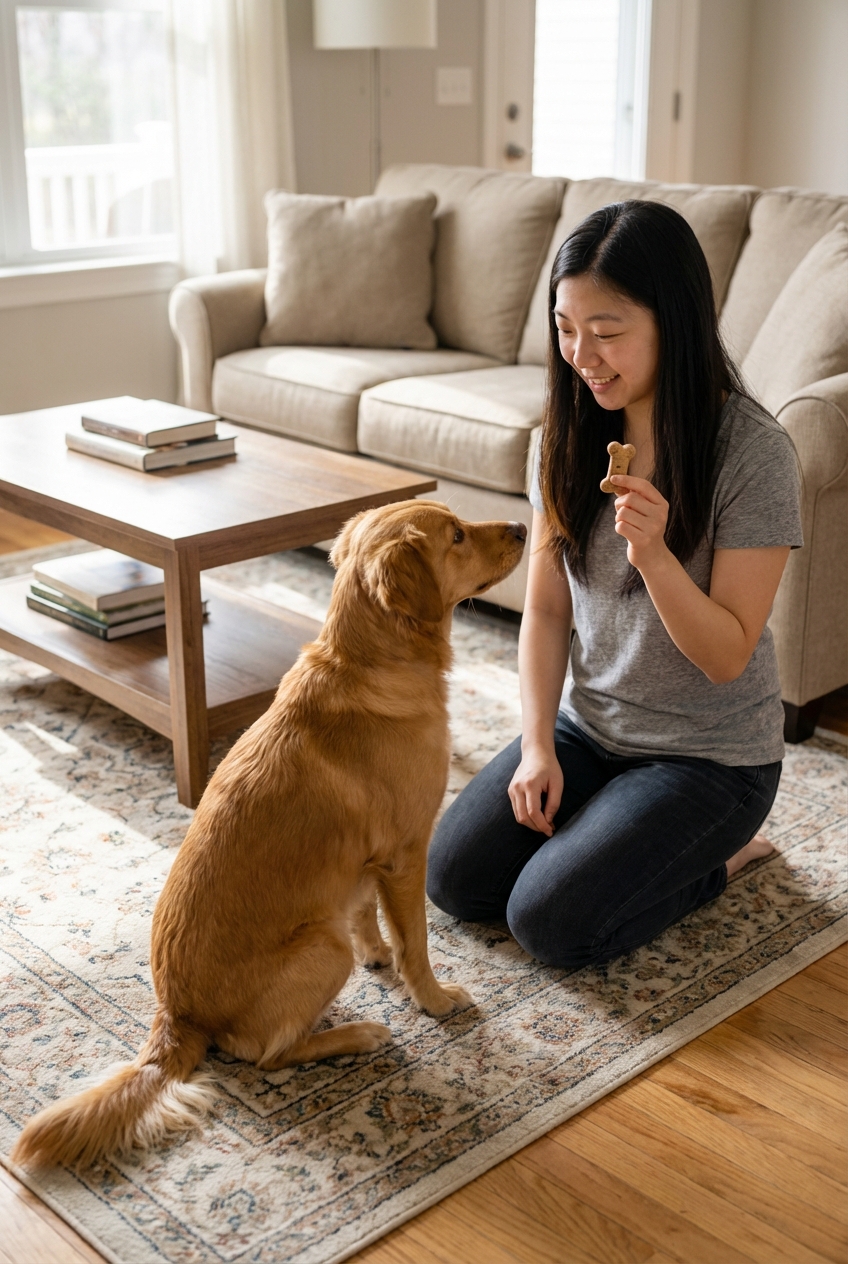
Teach a reliable “down” in short, fun sessions. Follow simple lure steps, add the cue at the right time, fade treats, troubleshoot setbacks, and use a 7-...
Article
•
Designer Mixes
How to Teach Your Dog to Lie Down

Shari Shidate
Designer Mixes contributor
Teaching a dog to lie down is one of those deceptively simple skills that can change daily life. “Down” helps with polite greetings, calm behavior around kids, safer doorways, and even easier vet visits. As a veterinary assistant here in Frisco, Texas, I love this cue because it gives dogs a clear, comfortable job to do when they feel excited or unsure.
The best part is you do not need a loud voice, a firm hand, or a lot of time. You need a plan, a few tiny treats, and a little patience.
What “Down” means
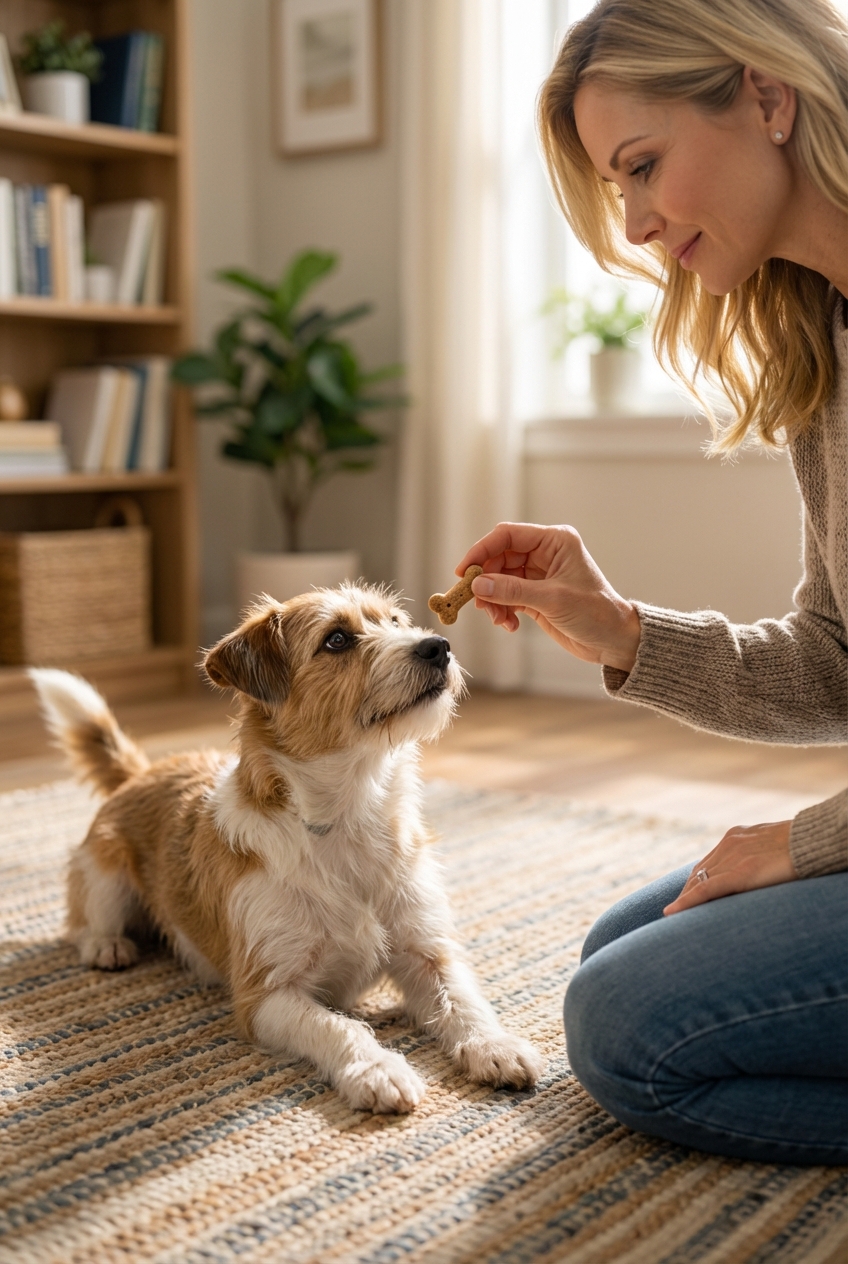
In training, “down” means your dog’s elbows and body settle on the ground (chest and belly on the floor) and they stay there until you release them. It is different from “off” (as in off the couch) and different from a “bow” or play posture.
For some dogs, lying down can feel vulnerable. That is why a warm, positive approach matters. When your dog learns that “down” is safe and rewarding, you will see faster progress and fewer refusals.
Before you start
Pick the right rewards
Use soft, pea-sized treats that are easy to chew. Think tiny bits of cooked chicken, turkey, or a commercial training treat. If your dog is not food motivated, try a favorite toy or a quick game as the reward.
Choose the right surface
Many dogs hesitate to lie down on slippery floors. Start on carpet, a yoga mat, grass, or a bath mat so your dog feels stable.
Train when your dog is calm
A slightly hungry dog after a walk is often the sweet spot. Keep sessions short, about 2 to 5 minutes, and end while your dog still wants more.
Quick training note: A “marker” is a sound (like “Yes!” or a click) that tells your dog the exact moment they got it right.
Method 1: Lure from sit
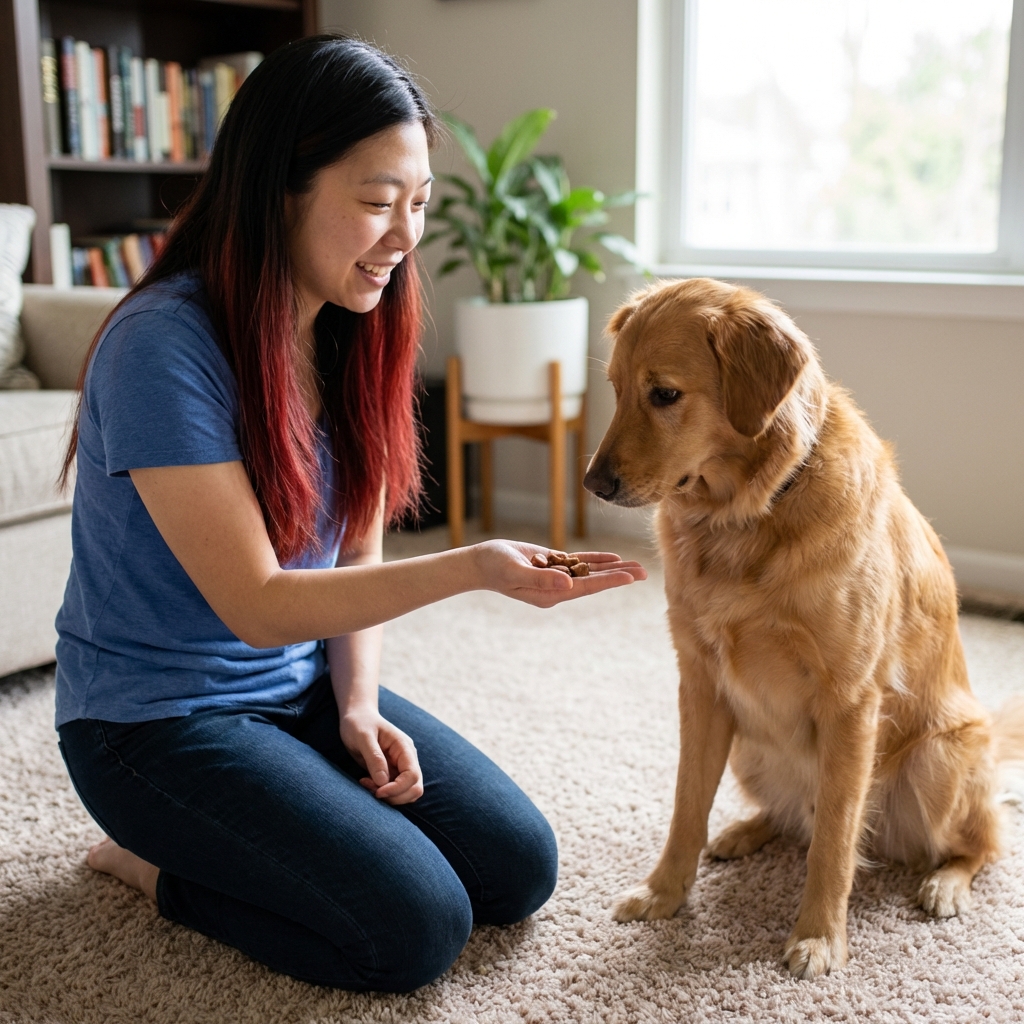
This is the classic approach and works beautifully for many dogs.
- Step 1: Ask for sit.
- Step 2: Put a treat right at your dog’s nose.
- Step 3: Slowly move the treat straight down to the floor, then pull it along the floor away from your dog a few inches. This creates an “L” shape and encourages a smooth, sphinx-style down.
- Step 4: The moment elbows touch the floor, mark it (say “Yes!” or click) and give the treat.
- Step 5: Repeat 3 to 6 times, then take a break.
Pro tip: Move slowly. If you pull the treat away too fast, many dogs pop up or try to chase your hand instead of folding into a down.
If “sit to down” is hard: Some dogs (especially deep-chested dogs or dogs with tight hips) struggle to lie down from a sit. Try starting from a stand instead, or lure onto a soft mat where they can shift their weight more comfortably.
Method 2: Under the leg
If your dog keeps standing up when you lure, create a gentle “tunnel” with your body.
- Sit on a chair or kneel with one knee raised.
- Lure your dog’s nose under your leg with a treat.
- Most dogs will naturally lower into a down to fit.
- Mark and reward as soon as the down happens.
This method is especially helpful for tall, wiggly dogs who have a hard time staying in place.
Method 3: Capture it
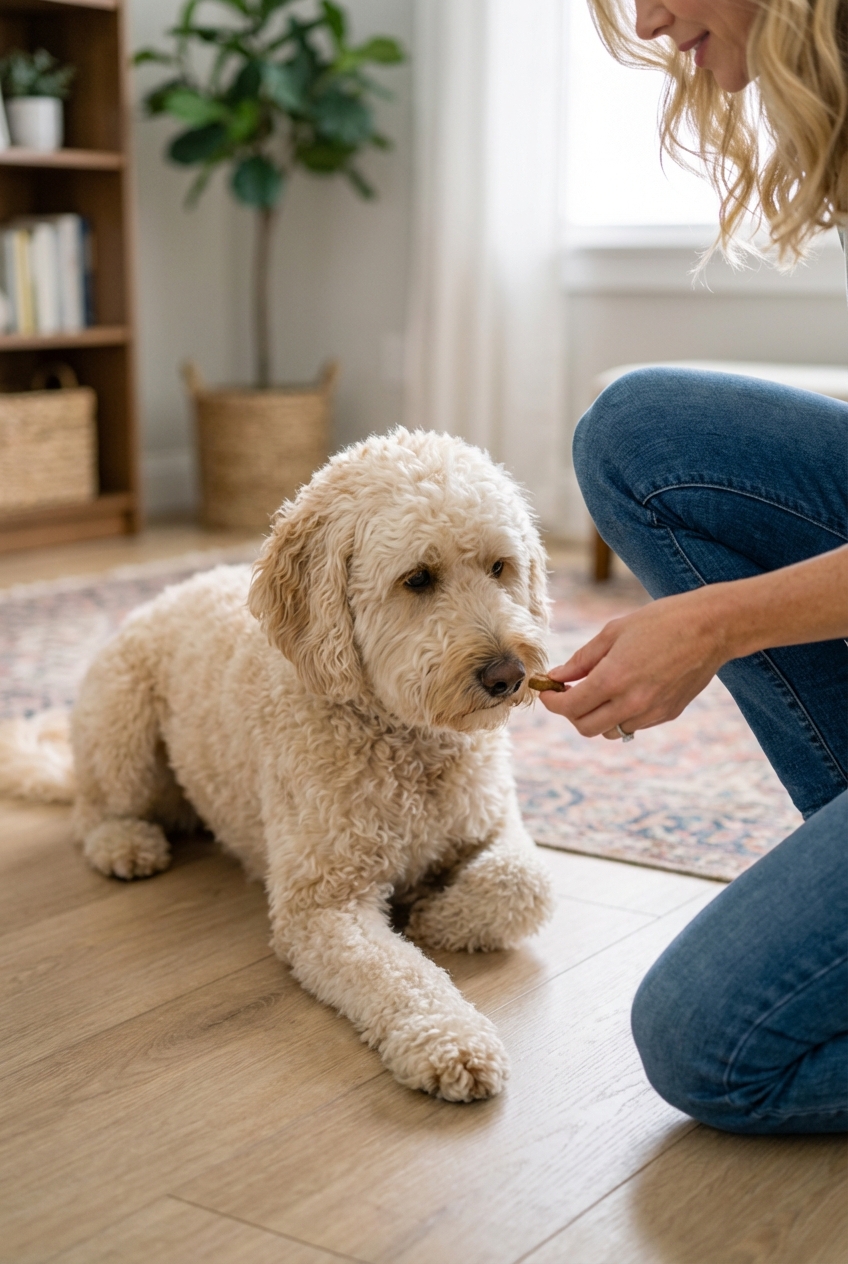
Some dogs offer downs naturally when they are calm. You can use that to your advantage.
- Keep treats in your pocket.
- When your dog lies down on their own, calmly say “Yes!” and place a treat between their paws.
- After several repetitions, start saying “Down” right as they begin to lie down.
This method can create a very reliable, low-stress down because your dog is choosing it.
Add the cue
A common mistake is repeating “Down, down, down” while the dog is still figuring it out. Instead, add the cue when the movement is predictable.
A helpful guideline is this: once your dog is successfully lying down about 8 out of 10 times with the hand motion, say “Down” about one second before you lure. Soon, your dog will connect the word to the action.
Make it reliable
A true “down” is more than a quick flop. It is your dog staying there until released.
Duration
- Reward your dog for staying down: treat at 1 second, then 2 seconds, then 5 seconds.
- Feed the treat low, between the paws, so your dog stays in position.
Release word
Teach a clear release cue like “Okay” or “Free.” This prevents your dog from guessing when the exercise is over.
Distractions
Practice in easy places first (living room), then gradually move to moderate distractions (backyard), then harder environments (front yard, park). If your dog struggles, it is not stubbornness. It is a sign the difficulty jumped too fast.
Fade the lure
Luring is a great way to teach the motion, but you do not want your dog to only respond when they see food.
- Once your dog is getting it, do the same hand motion with an empty hand, then mark and reward from your other hand or from a treat pouch.
- Over time, make your hand signal smaller, and start rewarding randomly (not every single repetition) so your dog keeps trying even when they are not sure a treat is coming.
Common problems
“My dog crawls forward but will not lie down.”
Try a softer surface, slow down your lure, and reward any progress like elbows bending. Some dogs need a few sessions to build confidence.
“My dog lies down, then pops right back up.”
Reward faster at first, then start feeding treats between the paws for staying down. Add your release cue so your dog learns that staying is part of the job.
“My dog seems uncomfortable lying down.”
Rule out physical discomfort. Arthritis, hip pain, or spinal issues can make downs hard, especially for older dogs or larger mixes. If you notice stiffness, limping, or reluctance to sit or climb stairs, check in with your veterinarian.
“My dog gets mouthy when treats come out.”
Use calmer delivery. Toss the treat on the floor after the marker word, or use a treat pouch and slower hand movements. You can also work on “take it gentle” separately.
Safety notes
Training should never look like wrestling. Avoid pushing your dog’s shoulders down or using force. Besides being stressful, it can create fear around handling.
If your dog has recently had surgery, is recovering from an injury, or has a known orthopedic condition, ask your veterinarian what positions are safe to practice. Sometimes we swap “down” for a “settle on a mat” goal while a dog heals.
Down vs. settle
If your dog finds “down” stressful, or if you need a calmer everyday option, teach a simple “settle on a mat.”
- Put a bath mat or small dog bed on the floor.
- Toss a treat onto the mat. When your dog steps onto it, mark and reward again on the mat.
- Wait quietly. Many dogs will sit, then eventually lie down. When they do, mark and place treats between the paws.
This creates a comfortable habit that is perfect for meals, guests, and busy evenings.
7-day plan
- Days 1 to 2: 3 short sessions per day using luring on a non-slip surface.
- Days 3 to 4: Add the word “Down” right before the hand motion. Begin rewarding 1 to 2 seconds of staying down.
- Days 5 to 6: Add a release word. Practice in two rooms of the house.
- Day 7: Practice in the backyard or on a quiet walk. Keep treats high value and expectations low.
If your dog needs more time, that is normal. Age, excitement level, comfort, and past experience all affect speed. Consistency beats intensity every time.
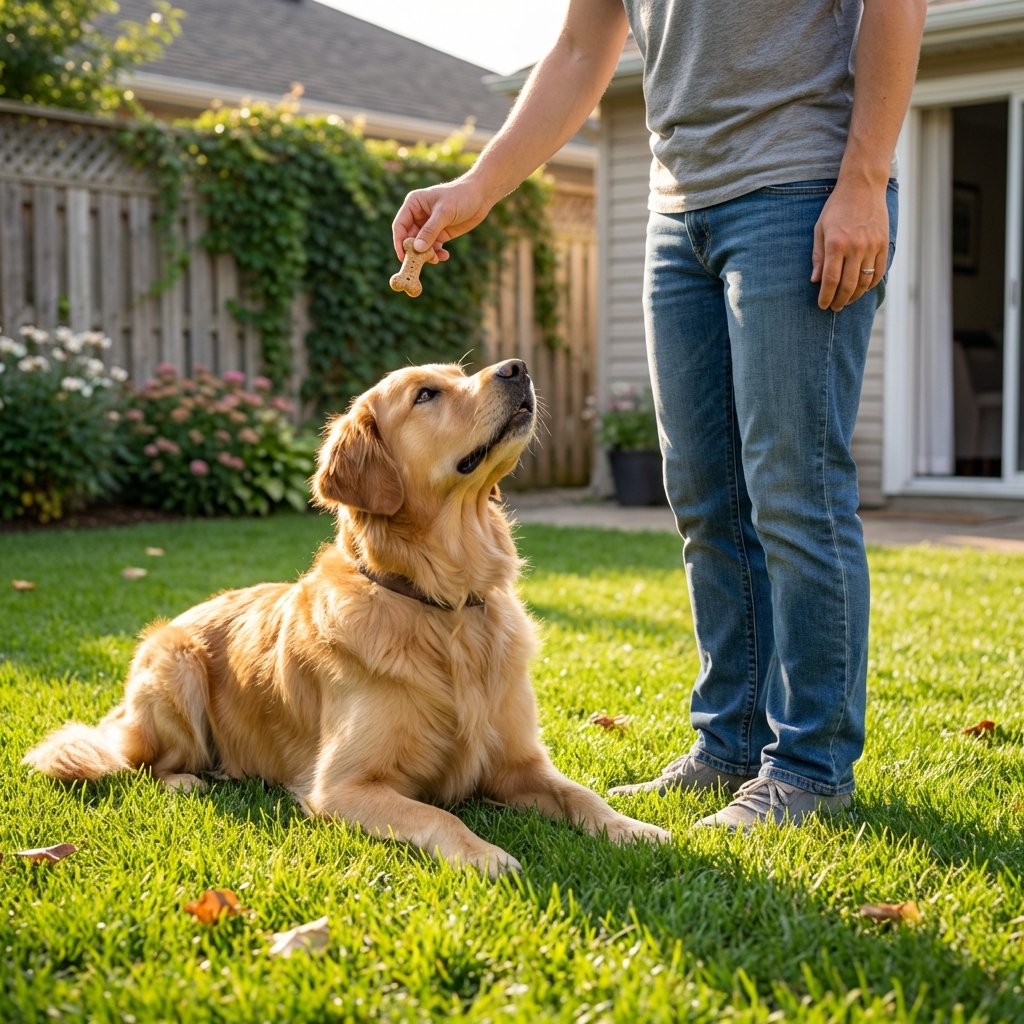
Bottom line
Teaching “down” is about trust, clear steps, and rewarding the right moment. Go slowly, keep it positive, and make the floor a comfortable place to be. With steady practice, many dogs become reliably responsive in a week or two, and plenty need longer. Either way, you are building a calmer dog who understands exactly what you are asking.