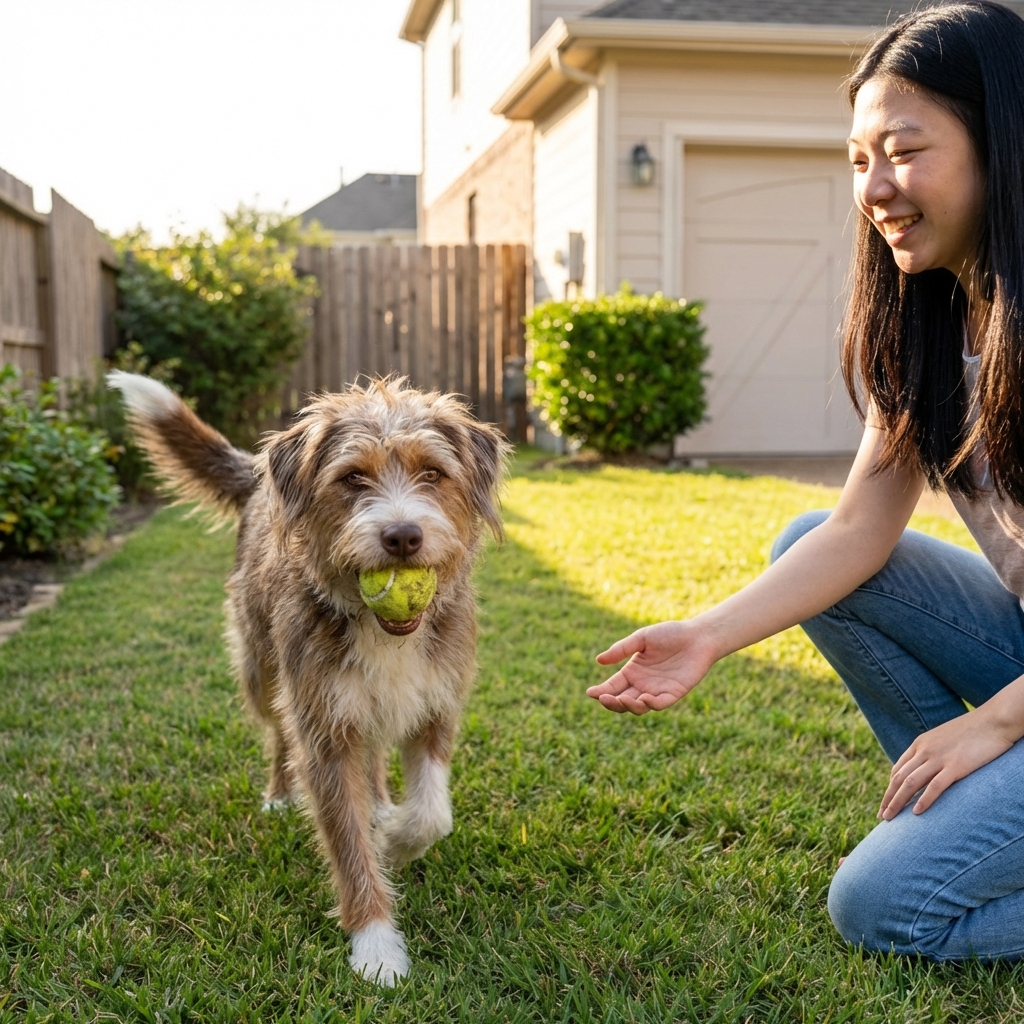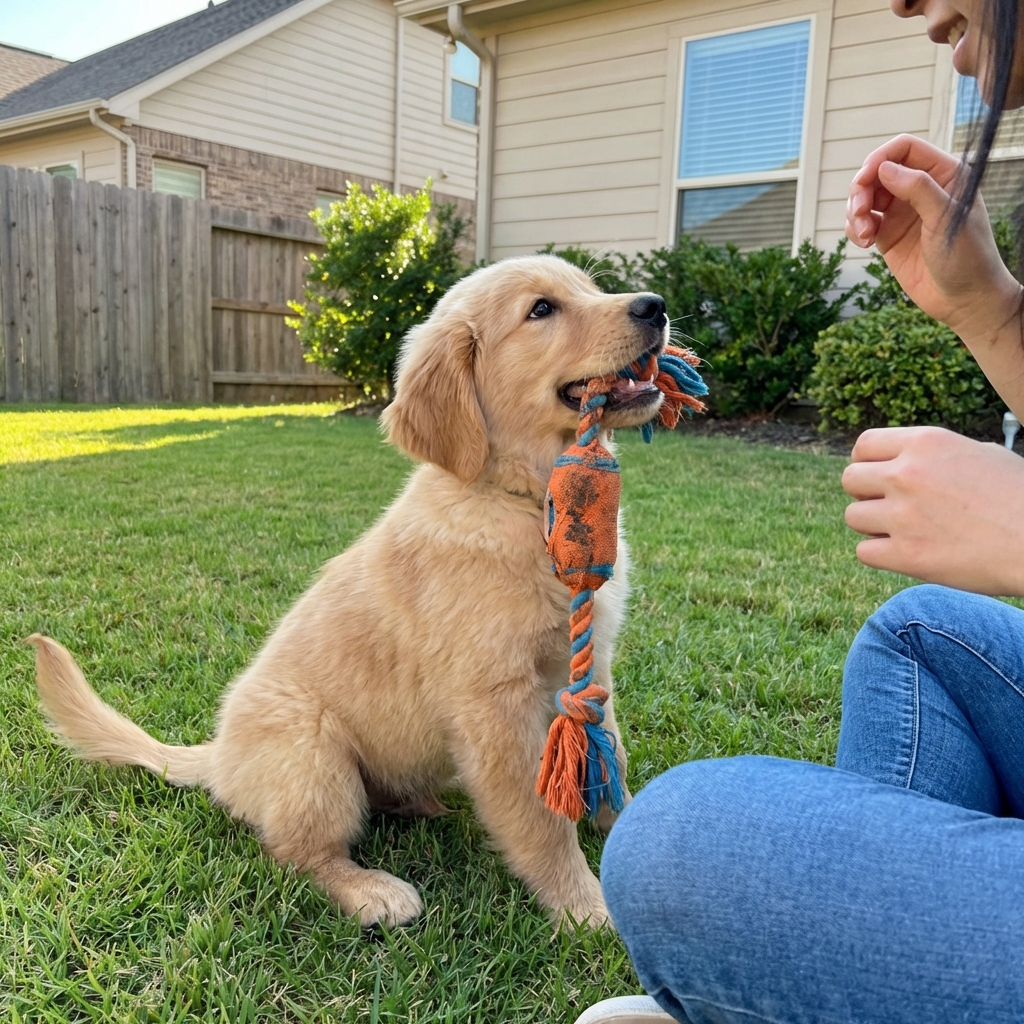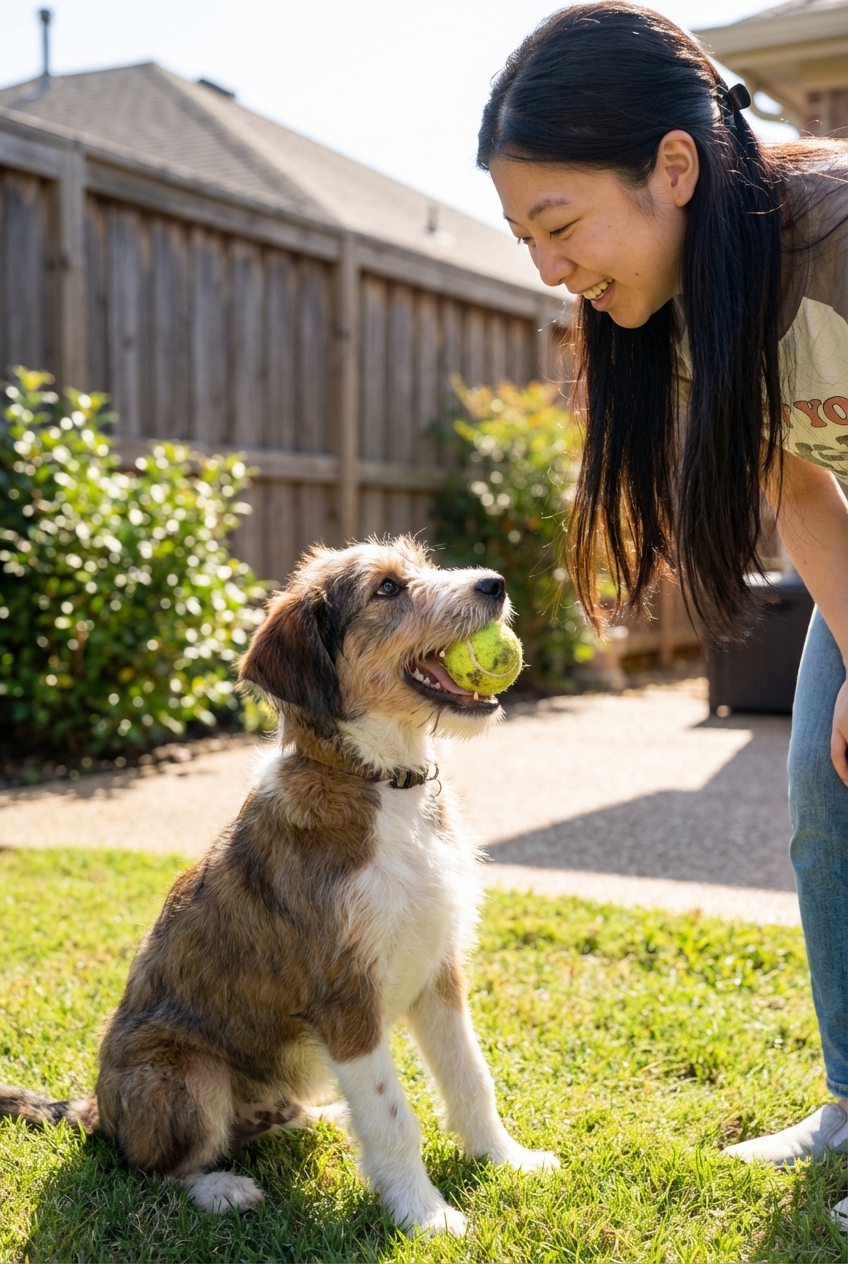
Fetch is a chain of skills. Learn how to teach take it, a reliable return, and drop it with reward-based steps, plus fixes for keep-away and safety tips.
Article
•
Designer Mixes
How to Teach Your Dog to Fetch

Shari Shidate
Designer Mixes contributor
Fetch looks simple, but it is actually a whole wellness skill set: healthy movement, mental focus, impulse control, and safe teamwork with you. As a veterinary assistant in Frisco, Texas, I love fetch because it can be tailored for almost any dog, from bouncy puppies to senior sweethearts. The key is keeping it fun, low-pressure, and physically safe.
This guide walks you through teaching fetch step-by-step, plus the health and safety tips that protect joints, teeth, and confidence along the way.
Before you start: set your dog up for success
Many dogs learn fastest when the environment is calm and the reward is clear. A few quick adjustments can make fetch click in a handful of short sessions instead of feeling like a long project.
Pick the right space
- Start indoors or in a fenced yard with minimal distractions.
- Use good footing: grass, rubber mat, or carpet. Slick floors can increase the risk of slipping and injury.
- Keep throws short at first, just a few feet.
Choose the safest toy
- Soft fetch toy or rubber ball that fits your dog’s mouth comfortably.
- Avoid rocks, sticks, or very hard balls that can crack teeth or injure gums. (Stick-chasing can also cause serious mouth and throat injuries, so it is best to skip it.)
- Use two identical toys if your dog loves keep-away. Two toys make trading much easier.
Know if fetch is a good fit today
Skip intense fetch and choose gentle enrichment instead if your dog has lameness, is recovering from surgery, has breathing trouble, or is overheated. If you notice limping, repeated yelping, or reluctance to jump or run, stop and check with your veterinarian.
One more permission slip: some dogs simply do not enjoy fetch, and that is okay. If your dog is not into it, try tug (with rules), scent games, scatter feeding, or short training sessions instead.
The building blocks of fetch
Fetch is really five mini-skills:
- Interest in the toy
- Chasing
- Picking it up
- Returning toward you
- Releasing into your hand
Some dogs naturally do 3 of these and struggle with 2. That is normal. We teach each piece, then stitch them together.
Step-by-step: how to teach fetch
Session tip: keep early lessons very short, about 1 to 3 minutes, and stop while your dog is still eager.
Step 1: Make the toy “come alive”
Hold the toy and gently wiggle it on the floor like prey. Praise any sniffing, nudging, or grabbing. Keep sessions short so your dog ends wanting more.
- Goal: your dog chooses the toy happily.
- Tip: for shy dogs, use a soft fleece tug toy instead of a ball.
Step 2: Teach “take it”
Present the toy right in front of your dog’s mouth and say “take it”. The moment they grab it, praise warmly.
- If your dog mouths and drops: that still counts. Praise and repeat.
- If your dog is not toy-motivated: rub a tiny bit of wet food on the toy, then fade it out over time.
Step 3: Teach the release, gently
A reliable release is the secret to peaceful fetch. Use “drop it” with a trade, not a tug-of-war argument.
- Hold a treat right at your dog’s nose.
- As you present the treat and your dog starts to open their mouth, say “drop it”.
- Give the treat, then immediately offer the toy again.
This teaches your dog: letting go makes good things happen, and the fun continues.
Step 4: Add a tiny toss
Toss the toy just 2 to 6 feet. If your dog looks at it, moves toward it, or picks it up, celebrate. Many dogs need a few repetitions to realize chasing is part of the game.
- Goal: your dog runs to the toy and puts it in their mouth.
- Keep it easy: roll the toy instead of throwing it through the air.
Step 5: Teach the return
Some dogs grab the toy and take off. That is not stubbornness, it is simply the most rewarding part of the game to them.
Try this:
- As your dog picks up the toy, run a few steps away from them and cheerfully call their name.
- Many dogs will chase you back. When they move toward you, praise.
- When they arrive, show the treat and ask for “drop it”.
If your dog still plays keep-away, use a leash or, even better, a long line (10 to 20 feet) during training so you can calmly guide them back without grabbing or cornering.
Step 6: Put it together with a simple cue
Once your dog is reliably chasing, returning, and releasing, add “fetch” right before your toss. Keep your tone upbeat and consistent.
- One throw at a time during training.
- End early while your dog is still excited, not when they are exhausted.
Wellness benefits of fetch (and how to keep them healthy)
Healthy movement without overdoing it
Fetch can support a healthy weight, strengthen muscles, and burn stress energy. But repetitive sprinting and sharp turns can strain shoulders, knees, and backs, especially in young dogs whose growth plates are still developing (often a bigger concern for large-breed puppies) and in older dogs with arthritis. When in doubt, ask your veterinarian what intensity is appropriate for your dog’s age, breed, and body condition.
- Warm up: a few minutes of easy walking before faster throws.
- Choose straight lines: long, gentle tosses instead of rapid side-to-side throws.
- Limit high jumps: avoid encouraging mid-air catches, which can lead to awkward landings.
Footing and surfaces
Joint safety is not only about distance. It is also about where your dog is running.
- Aim for even, softer ground like grass when possible.
- Avoid repetitive high-speed retrieves on concrete or very uneven terrain, which can increase wear and the risk of slips and strains.
- Watch the turns: if your dog is skidding or cutting hard, shorten the throws and slow the pace.
Hydration and heat safety
Texas heat is no joke. Dogs can overheat quickly during fetch.
- Bring water and offer it every few minutes.
- Avoid the hottest part of the day.
- Stop immediately if you see heavy panting, drooling, bright red or very pale gums, vomiting or diarrhea, wobbliness, or a dog that cannot settle.
Teeth and mouth health
Tooth fractures are a frequent reason for veterinary dental visits, and very hard chew toys are a common culprit. Choose slightly flexible rubber and replace toys that are cracked.
- Rule of thumb: if you cannot dent it with a fingernail, it may be too hard for heavy chewers. (This is not perfect, since some durable rubbers are safer than hard nylon or antlers, so use it as a quick check, not a guarantee.)
- Check gums and teeth after play, especially if your dog suddenly favors one side of the mouth.
Common fetch problems and gentle fixes
“My dog chases but will not pick it up”
- Switch to a softer toy or a tug toy.
- Try a scented toy or rub a tiny amount of treat on it.
- Reward any mouth contact at first, even a quick touch.
“My dog grabs it and runs away”
- Use two toys and trade.
- Run away from your dog to trigger the chase back to you.
- Use a leash or long line temporarily for calm guidance, then fade it out.
“My dog will not drop it”
- Do not pry the mouth open. That can create guarding.
- Train drop it with a treat trade, then reward with another throw.
- Practice drop it separately from fetch for a few days.
“My dog gets too intense or obsessive”
Some dogs find fetch so stimulating that they cannot stop. For wellness, we want a dog who can play and also settle.
- Keep sessions short: 3 to 8 throws.
- Add breaks: ask for a sit, a down, or a sniff break between throws.
- End with a calming activity like a chew, a lick mat, or a slow walk.
Fetch plans by age and body type
Puppies
Focus on soft, short, low-impact play. Avoid repeated long-distance sprints and jumping catches. Think of fetch as skill-building, not conditioning.
Seniors
Use shorter throws, softer toys, and gentler pacing. Watch for stiffness afterward. A warm compress can help ease stiffness, and a slower walk can help with a calm cool-down.
Flat-faced breeds and mixes
Dogs with shorter noses may overheat faster. Use brief indoor fetch, hallway rolls, or low-intensity retrieves and stop early.
Long-backed dogs
For long-backed breeds and mixes, avoid twisting leaps and sudden pivots. Roll the toy straight and keep it close.
When to call your veterinarian
Fetch should leave your dog happily tired, not sore or stressed. Check in with your veterinarian if you notice:
- Limping during or after play
- Reluctance to run, jump, or climb stairs after fetch
- Coughing, gagging, or trouble breathing during exercise
- Broken tooth, bloody drool, or sudden mouth sensitivity
- Repeated vomiting, collapse, or signs of heat illness
If something feels off, trust your instincts. Early care is often simpler and more effective.
A simple 7-day fetch routine
If you love structure, here is a gentle plan you can repeat.
- Days 1 to 2: toy interest + take it + drop it (no throwing)
- Days 3 to 4: short rolls, reward picking up and returning
- Days 5 to 6: add the cue “fetch,” 3 to 6 reps per session
- Day 7: increase distance slightly, add a short cool-down walk
Remember, any progress counts. A dog who retrieves once with confidence is learning the game.