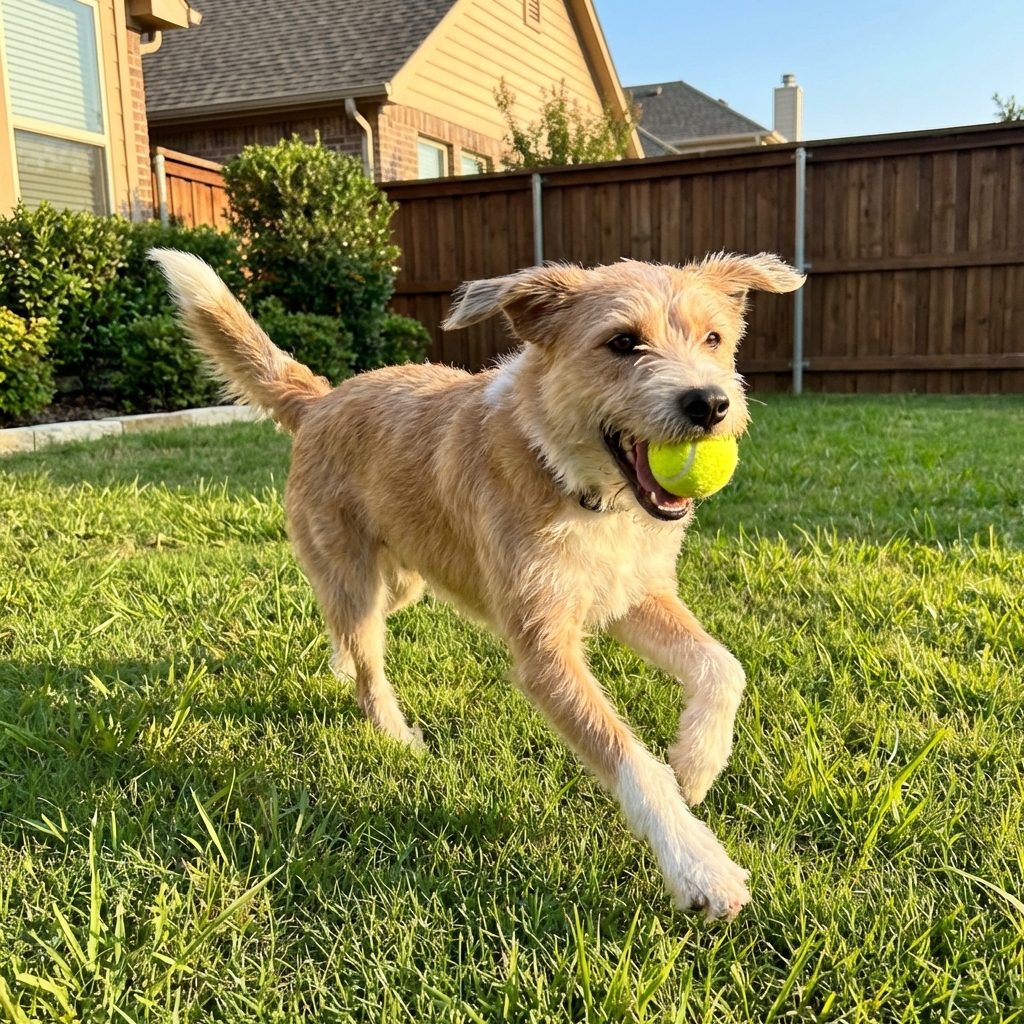
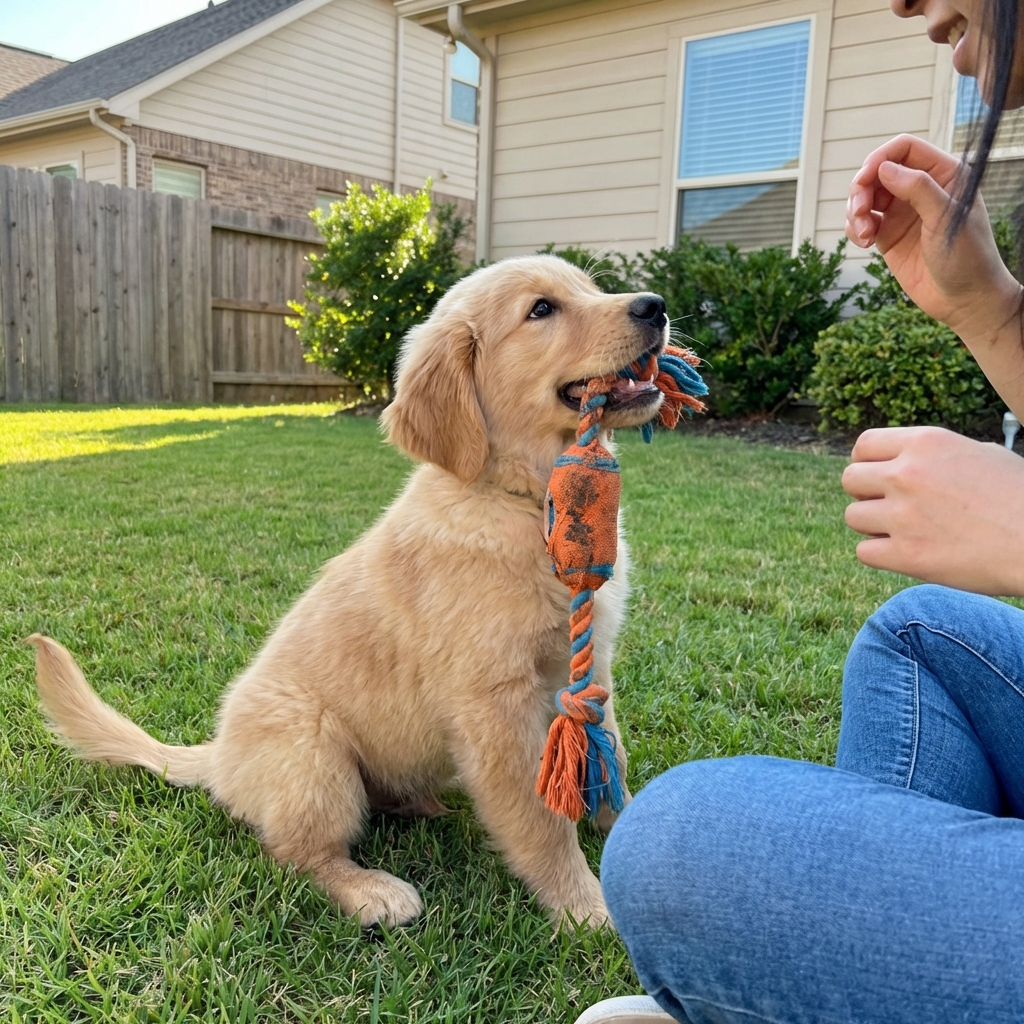
Learn to teach fetch with calm, short sessions: take it, drop it, return, and cue “fetch.” Includes safe toy choices, joint and tooth protection, heat sa...
Article
•
Designer Mixes
How to Teach Your Dog Fetch

Shari Shidate
Designer Mixes contributor
Fetch looks simple, but for a lot of dogs it is actually a chain of skills: chase, pick up, bring back, and release. Some dogs love the chase but never return. Others return proudly but will not let go. The good news is you can teach each piece in a kind, clear way using rewards and short sessions.
As a veterinary assistant here in Frisco, Texas, I also want to say this up front: if your dog has limping, breathing trouble, or seems sore after play, check in with your veterinarian before you ramp up fetch. Fetch should build fitness and confidence, not wear joints down.
Before you start
Pick the right toy
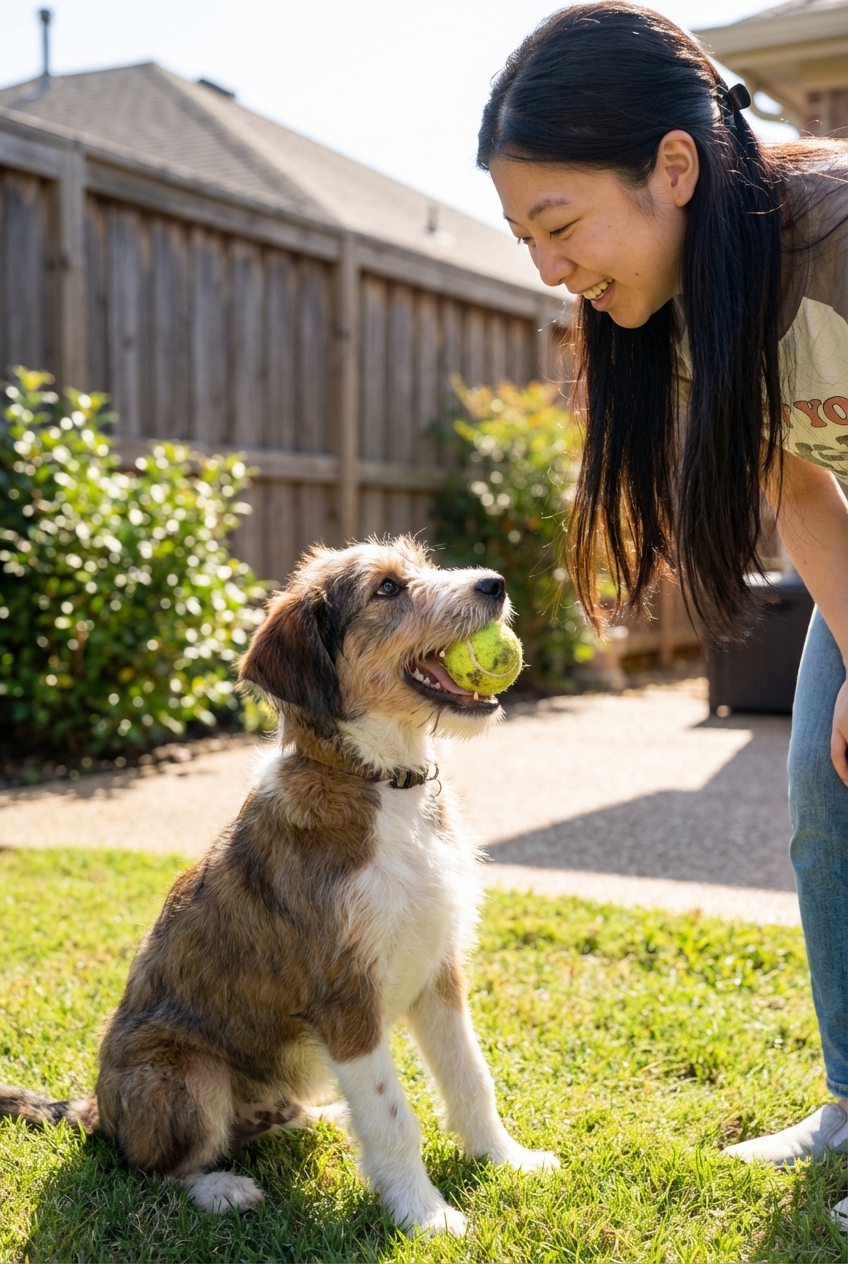
Choose something easy to grip and safe for your dog’s mouth. Many dogs learn faster with a soft toy or a rubber ball that is slightly larger than what they could swallow.
- Ball dogs: a medium rubber ball or dog-safe tennis ball sized appropriately (monitor wear and replace if it starts to shred)
- Tug dogs: a soft tug toy or fleece toy (often easier for teaching “bring it back”)
- Scent-driven dogs: a toy you can rub with a tiny bit of treat smell can help early on
Choose a low-distraction space
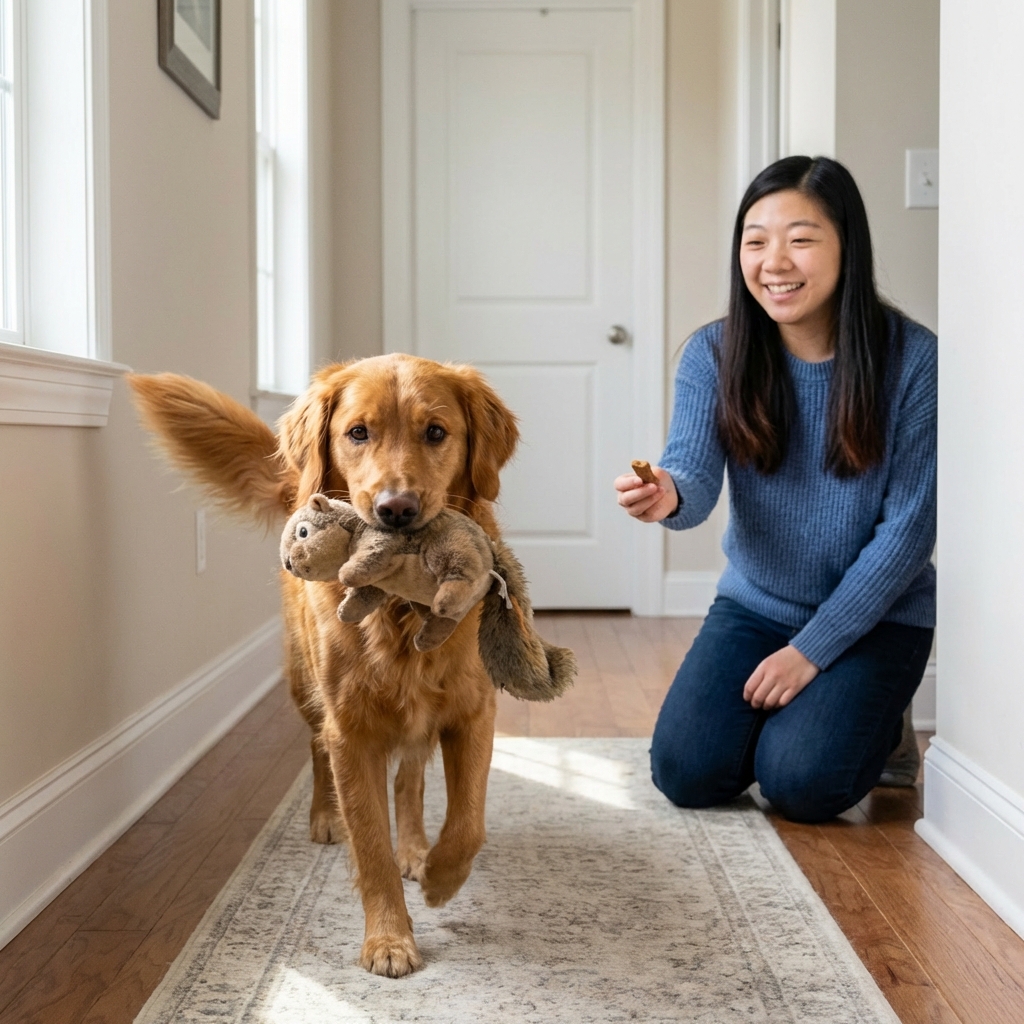
Start indoors, in a hallway, or in a fenced yard. A hallway is perfect because it naturally guides your dog back toward you.
Get your rewards ready
Modern reward-based training uses reinforcement and smart setup, which means your dog repeats what pays off.
Tip: If your dog gets overexcited with treats, you can use part of their regular meal as rewards, then upgrade to a tastier treat for the hardest steps like “drop it.”
Quick note: When I say “mark,” I mean a short signal that tells your dog, “That is it.” This can be a clicker or a marker word like “Yes!”
The fetch skills
Step 1: Make the toy exciting
Before you ever throw, build interest. Wiggle the toy, toss it one foot, or gently roll it. The goal is simple: your dog learns the toy predicts fun and a payoff.
- Mark the moment your dog engages (a happy “Yes!” works great).
- Reward for any interaction: looking, sniffing, touching, or mouthing.
Step 2: Teach “take it”
Hold the toy still. When your dog puts their mouth on it, mark and reward. If they already love grabbing, this step may be quick.
If your dog will not grab the toy, try a softer toy, reduce pressure, and reward tiny progress. Some dogs need to build confidence with new textures.
Step 3: Teach the return
This is where many games fall apart. Instead of throwing far, do very short rolls and reward your dog for coming all the way back to you with the toy.
- Roll the toy just a few feet.
- When your dog picks it up, run backward or make a happy sound to invite them toward you.
- When they reach you, reward at your legs (or right in front of you). This helps prevent the habit of stopping just out of reach.
In a hallway, your dog has fewer options, which makes “returning” much easier to learn.
Teach the drop
“Drop it” is the key that keeps fetch from turning into keep-away. You do not need a power struggle. You need a trade.
Option A: The treat trade
- Let your dog hold the toy.
- Place a treat right at their nose.
- When they open their mouth to take the treat, say “Drop it”.
- Give the treat, then immediately give the toy back and celebrate.
Giving the toy back is important. It teaches your dog that dropping does not end the fun. That is what makes them more willing next time.
If you see guarding: If your dog stiffens, growls, or snaps over the toy, pause fetch practice and use management (put toys away between sessions) while you contact a qualified positive-reinforcement trainer. These issues are very workable, and getting help early keeps everyone safe.
Option B: Two-toy game
Use two similar toys. When your dog brings one back, show the second toy. When they drop the first to grab the second, say “Drop it,” then throw the second toy.
Safety note: Avoid yanking toys out of your dog’s mouth. It can create guarding behaviors and may strain teeth or neck.
Put it together
Once your dog can take, return, and drop, you can start building a smooth routine:
- Say “Fetch” (or “Get it”).
- Throw or roll the toy a short distance.
- When your dog returns, cue “Drop it.”
- Reward, praise, and throw again.
Keep early sessions short. Start with just a few reps or about 1 to 3 minutes, then take a break. Quit while your dog still wants more.

Common problems
Chases it but will not pick it up
- Switch to a softer toy or a tug.
- Reward for touching the toy first, then for mouthing, then for lifting.
- Try rolling instead of throwing. Some dogs find air throws too exciting to think.
Grabs it, then runs away
- Use a hallway or a small fenced space.
- Do not chase your dog. Chasing can reward the “keep-away” game.
- Run backward and reward for coming toward you.
- Practice “come” separately with treats, then combine with the toy.
- If you are outdoors, consider a long line for safety while you teach reliable returns.
Returns but will not drop
- Go back to the treat trade.
- Use higher-value treats temporarily.
- Give the toy back after the drop so your dog trusts the cue.
Loses interest after a few throws
- End sessions earlier and make it a success.
- Try a different toy style.
- Mix in short “find it” treat scatters between reps for variety.
Gets too amped up
Over-arousal is real, especially for young dogs. Pause fetch and do a calming reset: a few treats for sitting, sniffing time, or a short leash walk. Then return to shorter throws.
Health and safety
Fetch is exercise, but it is also repetitive. A few small changes can protect your dog’s body long-term.
- Warm up first: 3 to 5 minutes of walking before intense chasing.
- Avoid slick floors: Hardwood and tile increase slipping risk.
- Limit sharp turns: Long throws with sudden pivots can stress knees and shoulders.
- Avoid “sky balls” and repetitive high jumps: Jumping and twisting mid-air can be tough on shoulders, backs, and knees. Keep throws low and easy, especially for puppies.
- Watch the heat: In Texas, summer fetch can overheat dogs quickly. Play early, offer water, and stop if panting becomes heavy.
- Choose safe balls: Avoid tiny balls that could be swallowed and ultra-hard balls that can crack teeth. If you use tennis balls, choose dog-specific ones when possible and replace them when they get rough or shredded.
If your dog is a puppy, a senior, or has orthopedic history, ask your veterinarian about safe exercise limits. For many puppies, the safest version of fetch is short, low-impact reps on soft footing, not repeated sprinting and leaping.
A simple 7-day plan
If you like structure, here is a gentle schedule that works for many dogs:
- Days 1 to 2: Build toy interest, teach “take it.”
- Days 3 to 4: Short rolls in a hallway, reward returning all the way in.
- Days 5 to 6: Add “drop it” using treat trade or two-toy game.
- Day 7: Combine into a handful of full fetch reps, then end on a win.
Go slower if your dog seems confused or stressed. Training should feel like a game you both enjoy.
When to get help
Reach out to a qualified positive-reinforcement trainer if you see growling over the toy, snapping during trades, or intense guarding. These are solvable issues, and getting support early keeps everyone safe.
And if you notice limping, stiffness, coughing, or unusual fatigue after fetch, schedule a veterinary visit. Sometimes the best “training tip” is catching discomfort early.
Fetch is not just a trick. It is communication. When your dog learns that coming back to you is the best part of the game, everything gets easier.