
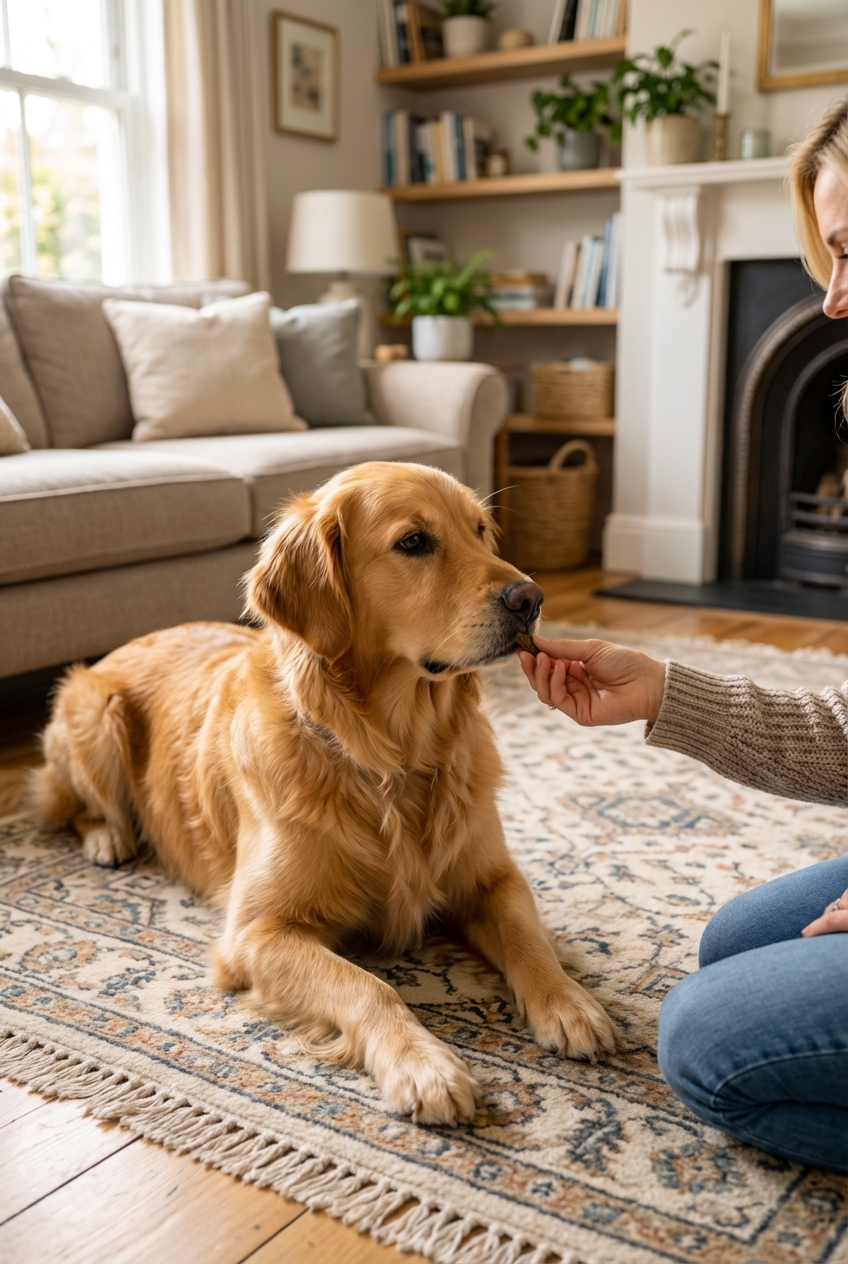
Teach a reliable “Down” with simple lure, capture, or shaping methods. Learn how to add a cue and release word, build duration, troubleshoot issues, and ...
Article
•
Designer Mixes
How to Teach a Dog to Sit

Shari Shidate
Designer Mixes contributor
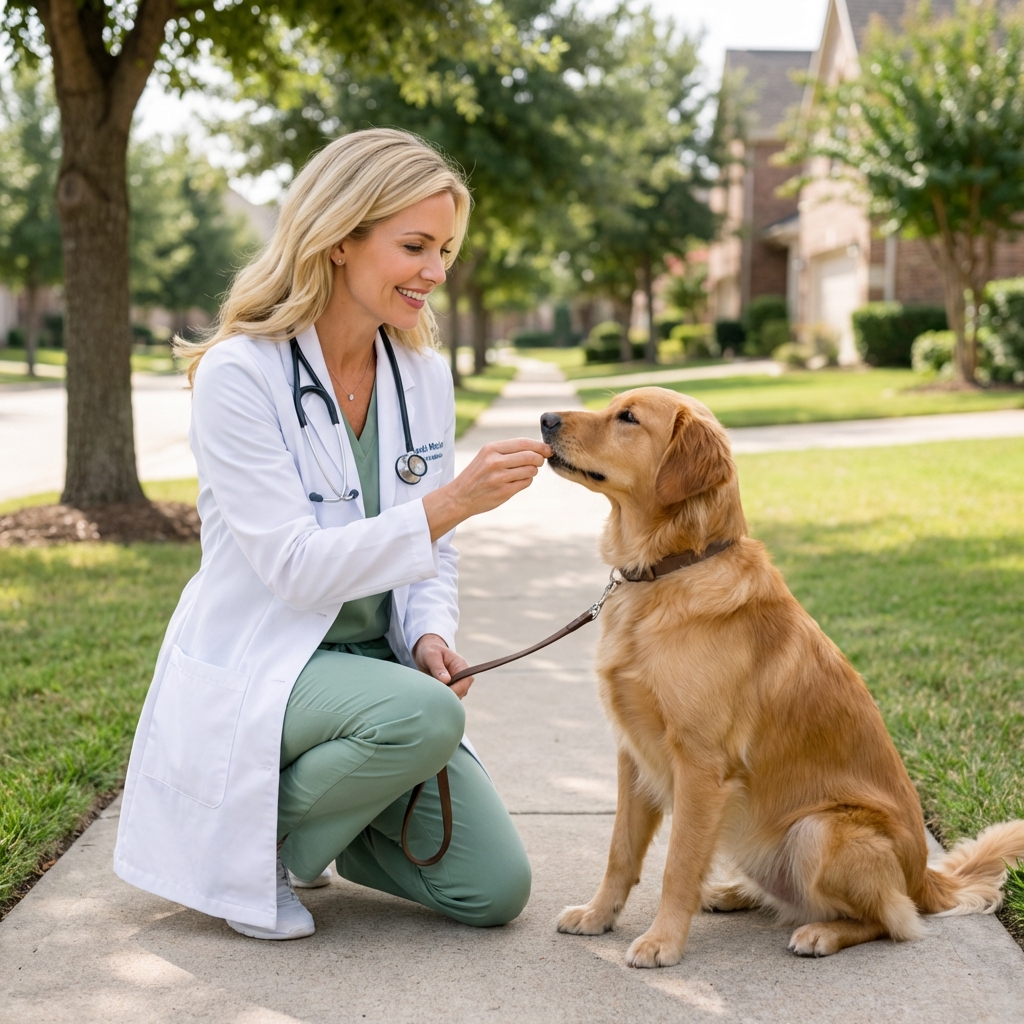
As a veterinary assistant here in Frisco, Texas, I can tell you one simple truth: “Sit” is the gateway skill. It builds impulse control, makes everyday handling easier, and gives you a polite default behavior you can reward again and again. The best part is that most dogs can learn it in a few minutes when you make it clear, rewarding, and consistent.
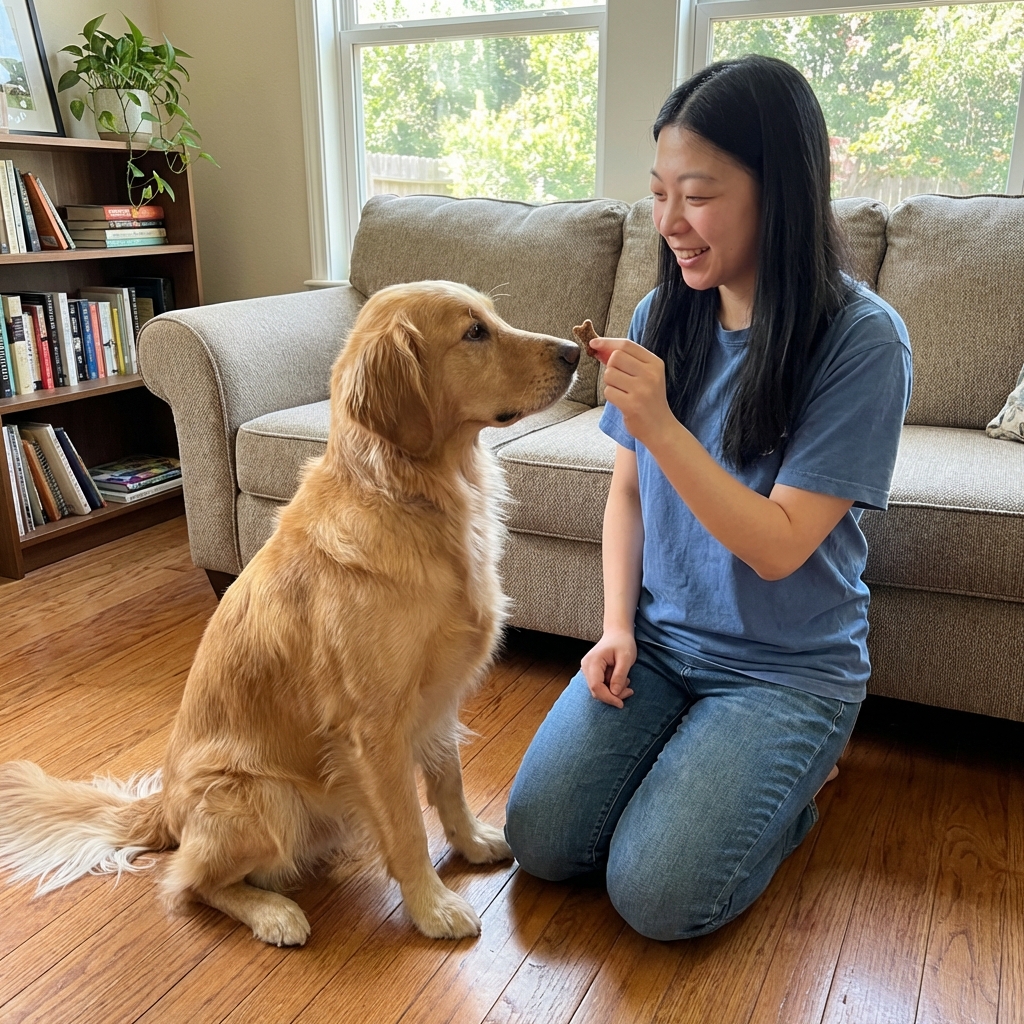
This guide walks you through exactly how to teach “sit,” what to do if your dog seems stuck, and how to make the behavior reliable in real life, not just in your kitchen.
Before you start
Pick the right rewards
Use something your dog truly wants. For many dogs that is a pea-sized soft treat, but you can also use kibble, a toy, or praise if your dog loves attention.
- High value treats: tiny pieces of chicken, cheese, or commercial training treats.
- Low mess option: your dog’s regular kibble if they are food-motivated.
- Timing tip: deliver the reward within 1 second of the sit so your dog connects the dots.
Set up a calm training space
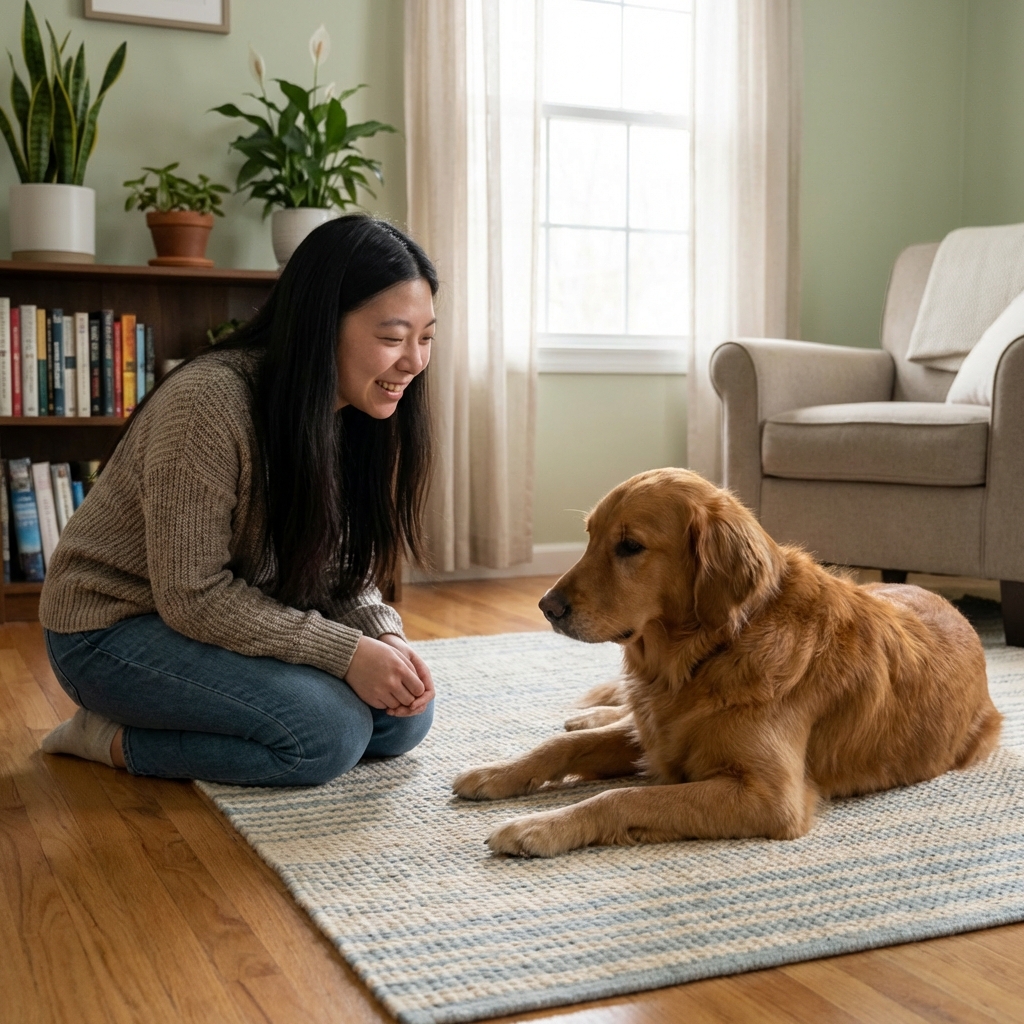
Start where it is easy: inside, low distractions, non-slippery flooring. Slick floors can make some dogs avoid sitting because it feels unstable.
Keep sessions short
Think in micro-sessions. Aim for 1 to 3 minutes, then take a break. Most dogs learn faster with multiple short sessions than one long one.
Method 1: Lure into a sit (fastest for most dogs)
This is the classic technique and it works because it uses your dog’s natural movement. You are not pushing their rear down. You are guiding their head so the sit happens on its own.
Step-by-step
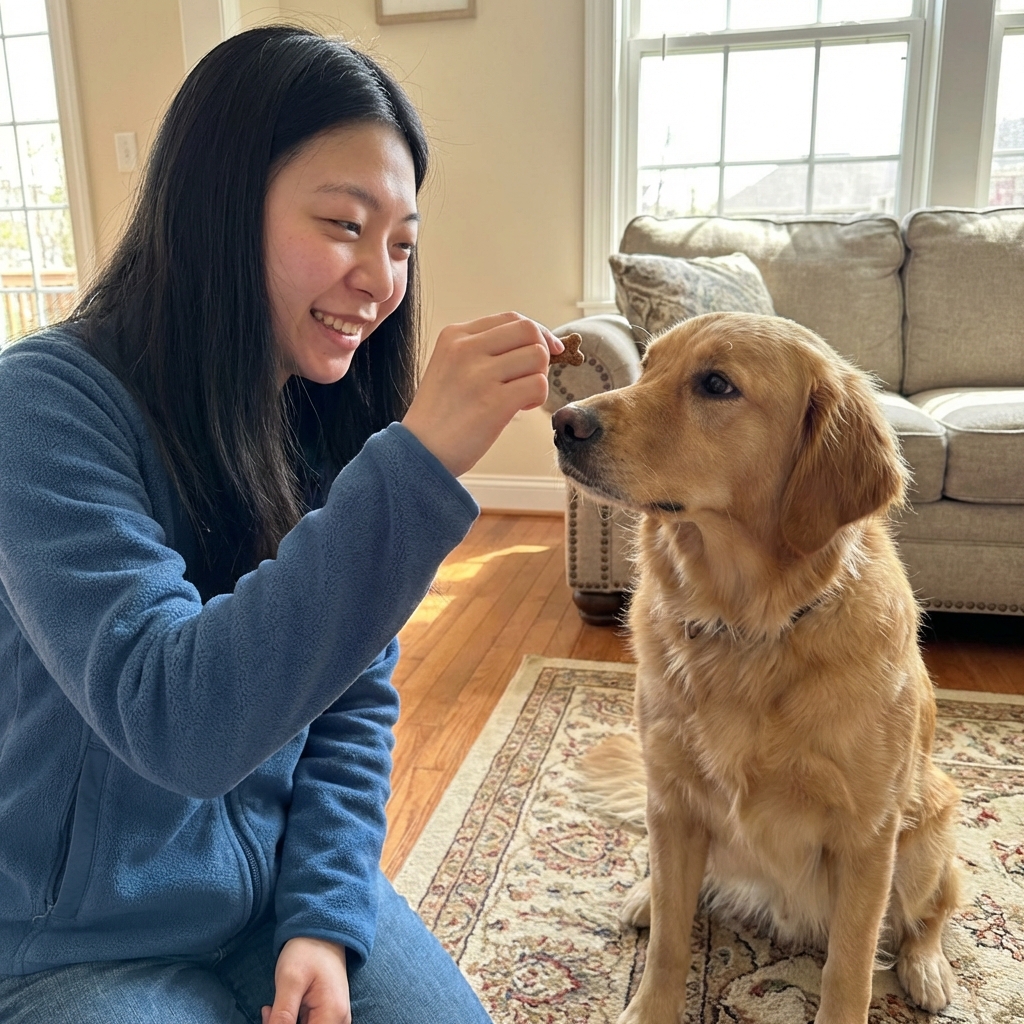
- Hold a treat at your dog’s nose level so they can smell it.
- Move the treat slowly back and slightly up over your dog’s head. As their head goes up, their rear usually goes down.
- The moment their rear touches the floor, mark it with a happy “Yes!” or a clicker.
- Reward immediately with the treat.
- Reset by taking a step away, then repeat.
Goal: 5 to 10 successful sits in a row with minimal frustration.
When to add the word “sit”
Once your dog is reliably sitting from the hand motion, add the cue:
- Say “Sit” one time.
- Then do the same lure motion.
- Mark and reward when they sit.
After a few sessions, start making the hand motion smaller until your dog responds to the word and a simple hand signal.
Method 2: Capture the sit (great for sensitive or jumpy dogs)
If your dog gets mouthy with treats, jumps, or seems overwhelmed, capturing is gentle and effective. You simply reward the sit when it happens naturally.
How to do it
- Keep treats in your pocket or a pouch.
- Wait quietly.
- When your dog sits on their own, mark “Yes!” and reward.
- Repeat throughout the day.
After your dog starts offering sits more often, add the cue “sit” right as you see them about to sit, then reward. Over time they will connect the word with the action.
Common problems and simple fixes
My dog backs up instead of sitting
You may be moving the treat too high or too fast. Try:
- Move the treat slower and in a smaller arc.
- Train with your dog in front of a wall or couch so they cannot back up far.
- Reward any partial progress, like a head tilt up or a brief bend in the knees.
My dog jumps for the treat
Jumping usually means the treat is too exciting or the dog has learned that jumping works. Try:
- Start with the treat at the nose, not above the nose.
- Use lower-value treats at first, then increase value once they understand.
- Reward only when all four paws stay grounded and the rear hits the floor.
My dog will not sit at all
First, consider comfort. Some dogs avoid sitting because it hurts or feels unstable.
- Check the surface: use carpet, a yoga mat, or a non-slip rug.
- Check your dog’s body language: stiffness, limping, or yelping is not a training issue. It is a vet visit issue.
- Try an alternative: teach “down” or “touch” first, then circle back to sit.
My dog sits only when they see food
That is normal early on. The solution is to fade the lure and switch to rewarding unpredictably.
- Do the cue “sit” with an empty hand, then reward from your other hand or pocket.
- Once your dog is consistent, reward every other sit, then every third sit.
- Mix in praise, petting, or a quick game as the reward.
Make “sit” reliable in real life
Dogs do not automatically generalize skills. A sit in your kitchen is not the same as a sit at the park. Build reliability with three simple strategies: location practice, distractions, and duration.
1) Practice in new places
- Kitchen
- Living room
- Backyard
- Driveway
- Quiet corner of a park
2) Add distractions gradually
Start easy, then increase difficulty:
- You take one step back
- You clap softly
- A family member walks by
- Training outside with birds or squirrels at a distance
If your dog fails, it is not stubbornness. It is feedback that the distraction level is too high. Make it easier and rebuild.
3) Add a little duration
Once your dog sits, wait 1 second, then reward. Slowly build to 3 seconds, then 5 seconds. Release with a cheerful cue like “Okay!” so your dog knows when the sit is finished.
How “sit” supports better behavior
“Sit” is more than a trick. It is a calm behavior you can plug into everyday situations:
- Greeting guests: sit before petting.
- Leash manners: sit before clipping the leash and before exiting doors.
- Mealtime: sit before the bowl goes down.
- Jumping prevention: sit becomes the polite alternative to jumping.
When you consistently reward calm choices like sitting, you are teaching your dog how to succeed in your home and out in the world.
Safety notes from a vet assistant
- Avoid physical forcing: pushing a dog’s rear down can create discomfort and resistance.
- Keep treats tiny: you will be giving a lot of them. Use pea-sized pieces and reduce meal portions slightly if needed.
- Watch for pain signals: reluctance to sit, shifting weight, or yelping warrants a call to your veterinarian, especially in senior dogs.
Quick training plan (3 days)
Day 1: Learn the motion
- 3 sessions of 1 to 3 minutes
- Use the lure method
- Reward every successful sit
Day 2: Add the cue
- Say “sit” once, then lure
- Start reducing the lure movement
- Practice in two rooms
Day 3: Real-life practice
- Ask for sit before meals and going outside
- Practice in the yard or driveway
- Begin short duration, 1 to 3 seconds
If you stay kind, consistent, and reward-focused, your dog will usually start offering sits on their own. That is when training gets really fun.